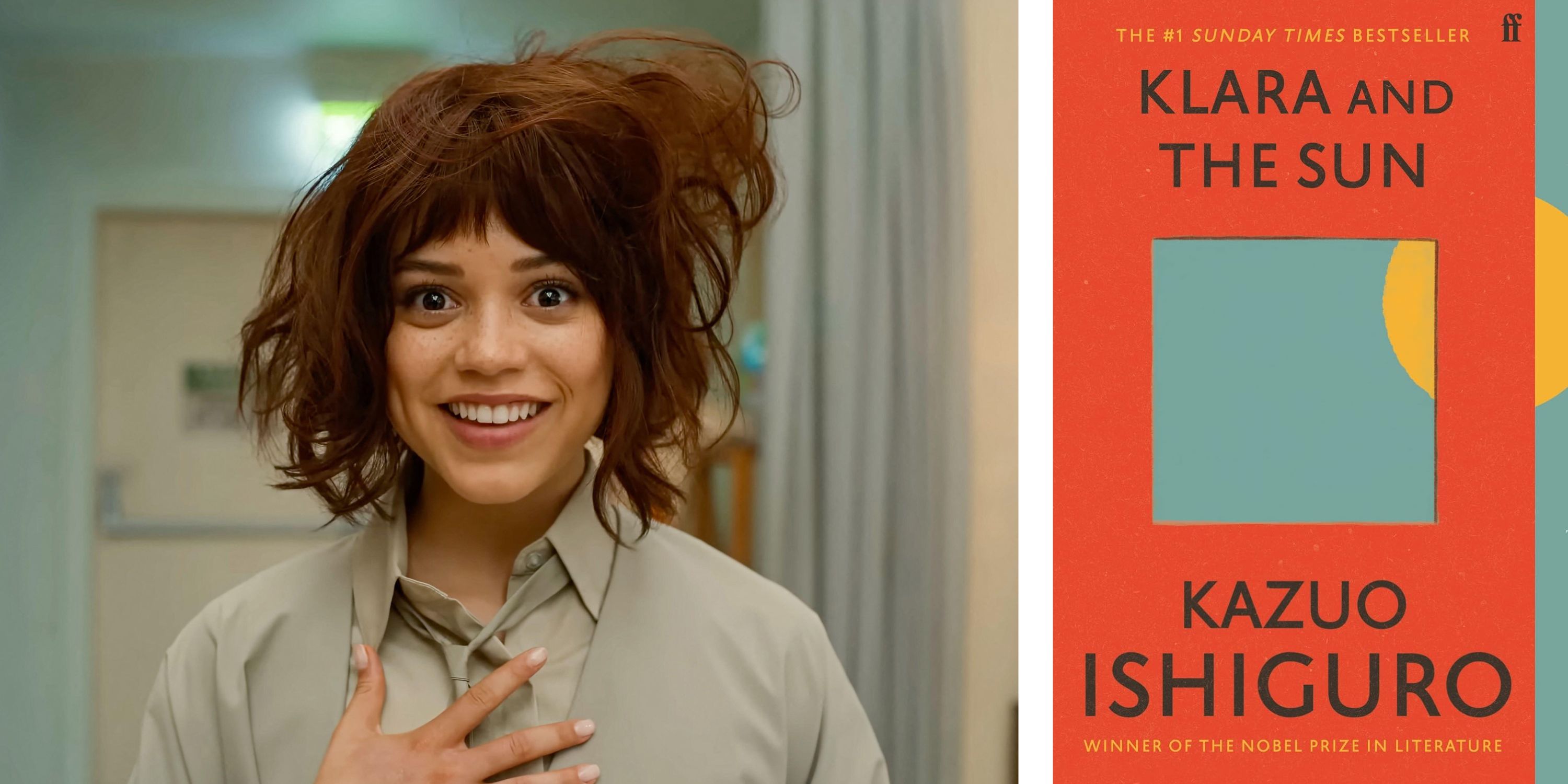
In his 2021 novel Klara And The Sun, Kazuo Ishiguro poses the question of whether it is possible to develop a true relationship with an Artificial Intelligence – a question that writers and filmmakers have explored for over a century. The word ‘robot’ was first used in RUR, a 1920 Czech play by Karel Čapek in which artificial workers mount a rebellion that causes the extinction of humanity. Since then, cyborgs, androids, automata and computers have shaped science fiction’s visions of humanity’s future in different forms, from dystopian nightmares and romcoms to contemplative works questioning the very nature of humanity.
And, as AI rapidly develops, the following films and novels feel more relevant than ever.
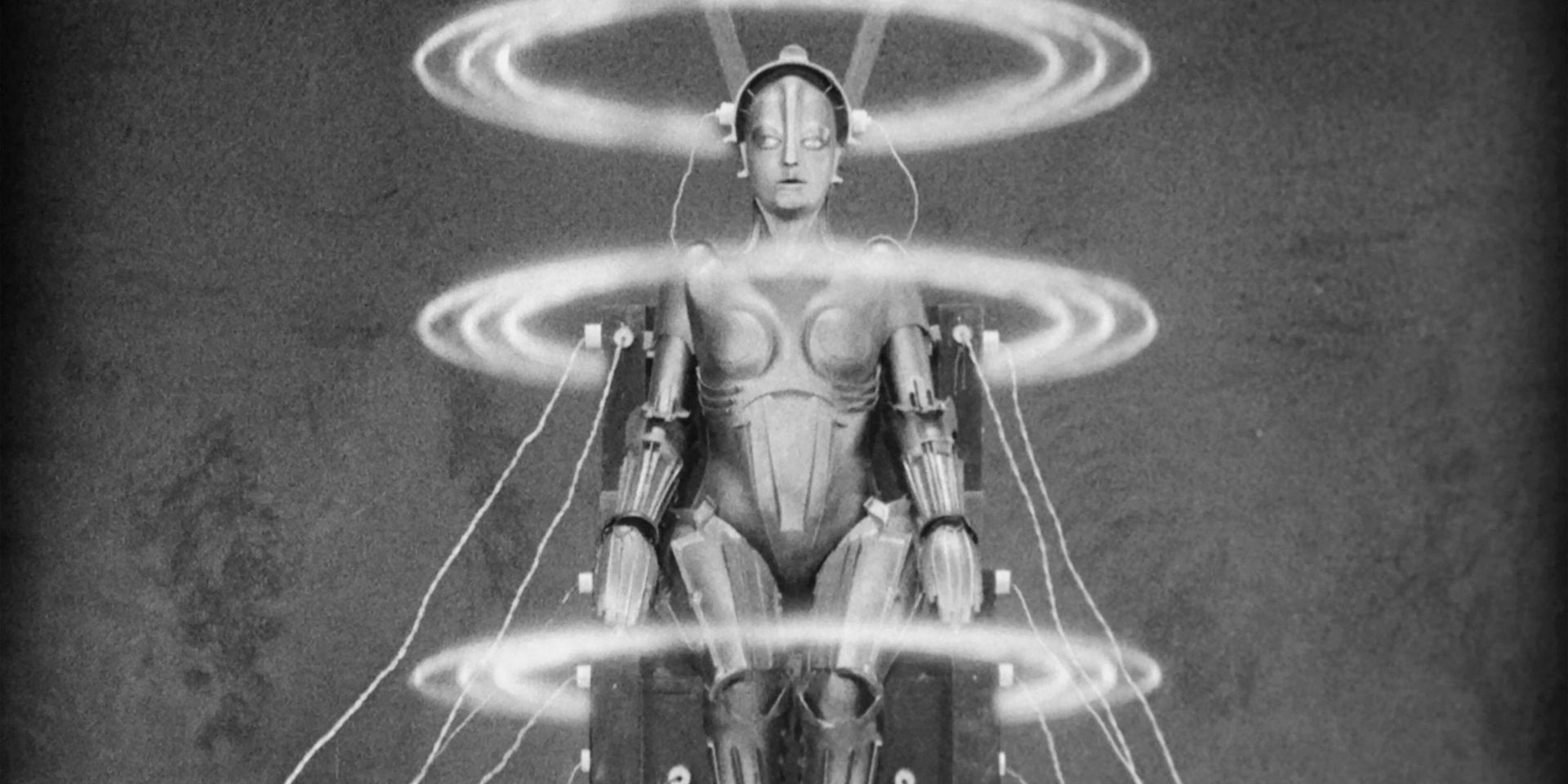
Metropolis (1927) directed by Fritz Lang
“The mediator between the head and the hands must be the heart,” reads the final intertitle of Fritz Lang’s epic, asserting how shared humanity can unite us despite our differences. In a city divided between wealthy industrialists and oppressed workers, a revolution is led by a robot known as the Maschinenmensch, built in the image of its inventor’s lost love before assuming the guise of a human. The film plays with a sense of the uncanny, exploring the difficulty of distinguishing artificial from human intelligence and questioning whether the threat this poses to the established order is necessarily a bad thing. The film’s influence on science fiction cannot be understated, from the design of C-3PO in Star Wars to more nuanced meditations on the relationship between man and machine.
Her (2013) directed by Spike Jonze
The near future imagined by Her increasingly feels like the present. Theodore, played by Joaquin Phoenix, begins a relationship with an operating system called Samantha. Their romance raises questions about consent and the possibility of artificial love, concerns that are increasingly grounded in reality: OpenAI CEO Sam Altman said of GPT-4o, its latest AI model, “I like Her. The things Her got right – like the whole interaction models of how people use AI – that was incredibly prophetic.”
Do Androids Dream of Electric Sheep? (1968) by Philip K Dick
In a world devastated by nuclear war, humans are incentivised to move to off-world colonies by the promise of free android slaves that can only be distinguished from humans via an empathy test. When six androids return illegally to Earth, bounty hunter Rick Deckard is tasked with ‘retiring’ them. Dick’s novel inspired the 1982 film Blade Runner, directed by Ridley Scott, and its 2017 sequel, Blade Runner 2049, directed by Denis Villeneuve – both of which centre on the elusive quality said to distinguish artificial intelligence from human life: empathy. The novel ultimately asks whether making that distinction is as moral as it first appears.
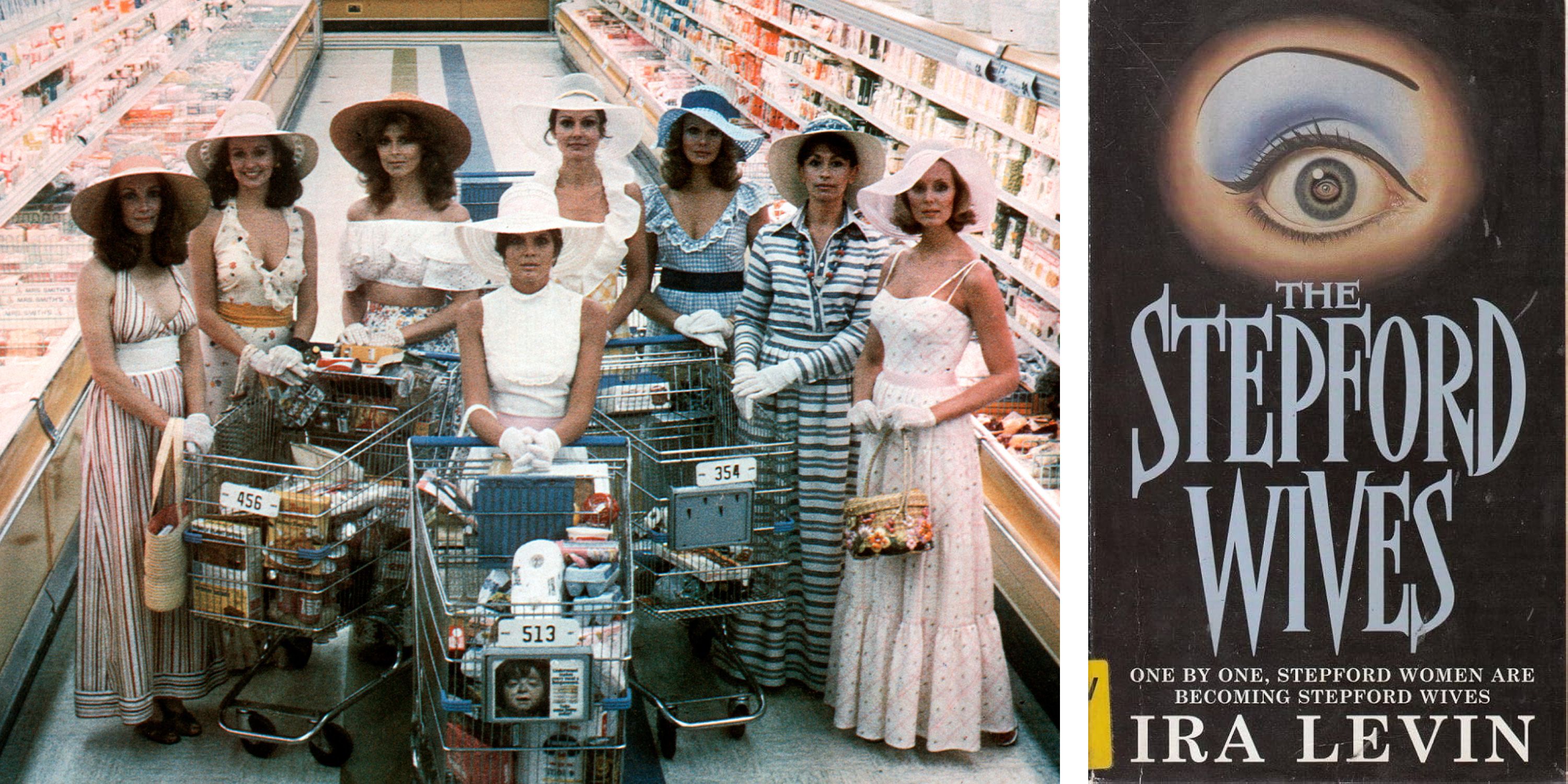
The Stepford Wives (1972) by Ira Levin
In this 1972 novel, Joanna Eberhart arrives in Stepford, Connecticut, with her husband and children to find that the town is populated by men with beautiful and deeply submissive wives. Many of the women, once successful professionals and feminists, have been replaced by obedient robots. Levin satirises male anxieties surrounding women’s liberation and the perceived loss of control it brings – themes that continue to resonate in an era marked by the growth of online misogynist and incel communities.
I’m a Cyborg, But That’s OK (2006) directed by Park Chan-wook
In this Korean romantic comedy, a young woman becomes convinced that she is a cyborg; she tries to recharge herself, licks batteries and talks to machines. After being institutionalised, she meets a fellow patient who persuades her to eat by framing food as electrical energy. These two outcasts find companionship in each other, presenting an optimistic reversal to the traditional narrative of machines with delusions of humanity.
Cloud Atlas (2004) by David Mitchell
Mitchell’s novel features six interweaving storylines, one of which, An Orison of Sonmi-451, explores the question of artificial self-consciousness and the rights to which human-made beings are entitled. Set in a 22nd-century Korean state, a waitress discovers that she is a vat-grown clone called a fabricant. This fact is hidden from her by a chemical-laced food called Soap, which she later learns is made from retired fabricants themselves. A resistance group awakens her to this reality, with the 2012 film adaptation very much worth revisiting, too.
Terminator 2: Judgment Day (1991) directed by James Cameron
With AI researchers recently warning that advanced artificial intelligence could pose an existential threat to humanity, the vision of 2029 in Terminator 2 no longer seems so far away. After Earth is ravaged by the AI Skynet, which sends a machine called the T-1000 back in time to kill the future leader of the human resistance, the film explores both conflict and cooperation between humans and machines, leaving a sizeable impact on science fiction in contemporary culture in the process. “If a machine can learn the value of human life, maybe we can too”, says Sarah Connor at the end, reflecting on the neglect given by humans to their own species in the pursuit of progress.
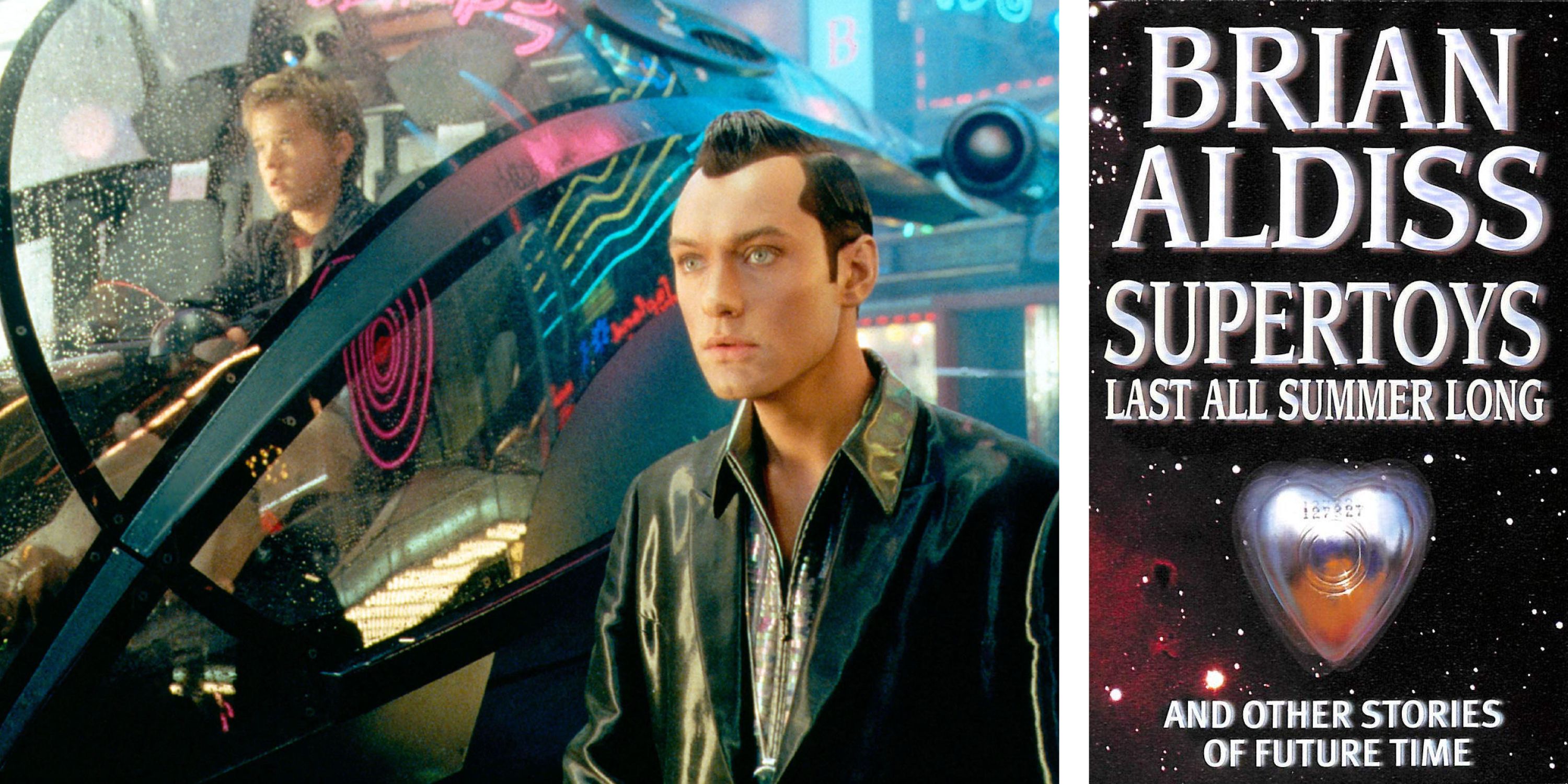
AI Artificial Intelligence (2001) directed by Steven Spielberg
Adapted from Brian Aldiss’ 1969 story Supertoys Last All Summer Long, AI is set in the 22nd century when global warming has decreased the population and necessitated the invention of humanoid robots. A couple whose son is placed in suspended animation due to a rare illness are given a prototype mecha child which is programmed to experience love; he becomes obsessed with The Adventures Of Pinocchio, believing that if he finds the Blue Fairy she will turn him into a real boy. Originally developed by Stanley Kubrick, the film is a deeply moving portrait of the longing to become human.
Frankissstein: A Love Story (2018) by Jeanette Winterson
All stories about human relationships with technology are influenced by Mary Shelley’s Frankenstein (1818) – updated to reflect themes of transness and transhumanism by Winterson in this novel exactly two centuries later. It follows a relationship between a doctor sceptical of sexbots and AI and a scientist convinced that humanity will eventually coexist with machine intelligence in mechanical bodies. It considers a future in which people and technology become impossible to separate, brilliantly reimagining Shelley’s ideas for the 21st century.
After Yang (2021) directed by Kogonada
Released in the same year as Klara And The Sun, Kogonada’s film similarly places an artificial friend into a human family unit. Yang is purchased to help an adopted child connect with her Chinese heritage. After he breaks down, Yang’s memory bank is discovered, revealing a rich archive of experiences that predate his life with the family, including a relationship with a woman. The discovery suggests that memory, connection and grief are not exclusively human experiences after all.
There’s More – Delve Deeper Into Klara And The Sun With The Service95 Book Club...
WATCH Dua’s interview with its author Kazuo Ishiguro
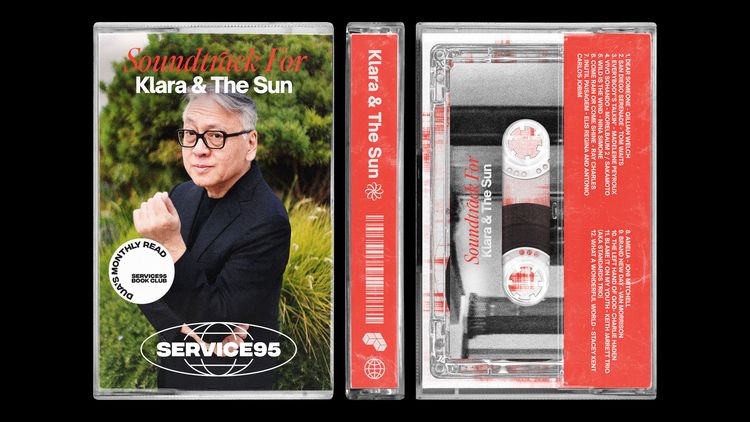
HEAR A playlist chosen by Ishiguro to soundtrack the novel
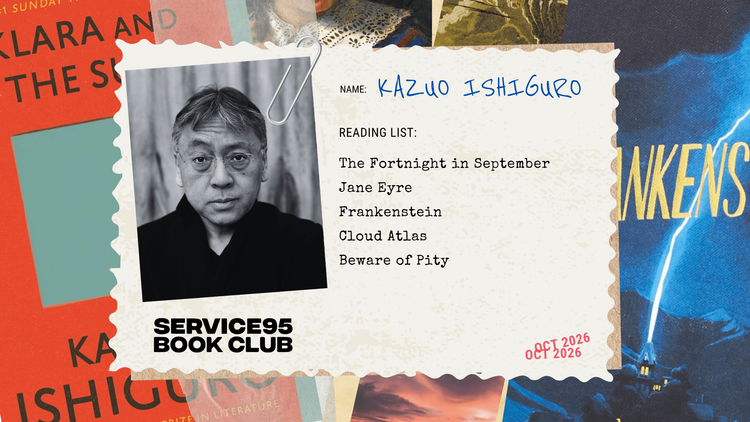
READ The titles that inspired the writing of Klara And The Sun