In Kazuo Ishiguro’s 2021 novel Klara And The Sun, an ‘artificial friend’ is tasked with caring for a sick and lonely teenager. With millions now embracing ‘companion AI’, it might not be that far from reality.
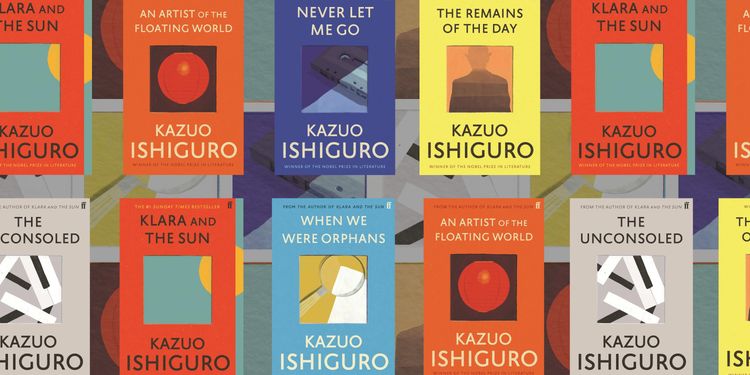
Kazuo Ishiguro’s novel Klara And The Sun paints an unsettling portrait of the near future. The book, published in 2021, is narrated by Klara, an AF, or ‘artificial friend’ – a new kind of robot that exists in a blurry space between toy, pet and household appliance. Klara belongs to Josie, a 14-year-old with chronic illness, and is designed to care for her and stop her from feeling lonely. As with the Nobel Prize-winning novelist’s previous books like Never Let Me Go, it’s an eerily realistic premise, one that Ishiguro uses to slowly peel back and reveal the bleak and tender contradictions of our so-called ‘human’ nature.
Yet few could have guessed just how prescient Klara And The Sun would become. In the same year as the book was released, two former Google engineers launched Character.ai – a startup that lets users harness the technology behind ChatGPT to create custom AI ‘companions’ that will act like a friend, a dead relative, or even a lover.
Fast forward five years and, with the film adaptation of Klara And The Sun released this month, companion AIs are already a fast-growing reality. Character.ai now claims more than 20 million active users a month; Replika (‘the AI companion to fall in love with’) claims more than 30 million. You can buy a wearable AI ‘Friend’; Meta’s just announced a new AI charm designed to look like a cute kids’ toy. People report developing romantic feelings for their AI companions, and even proposing to them; one in five US high school students report having had, or knowing someone who has had, a romantic relationship with a chatbot.
Dr Florence Enock, a senior research fellow in AI and social cognition at the Oxford Internet Institute, studies the impacts of AI. In one recent study, Enock found that a third of British users are already using AI for personal or emotional support. “That’s for important advice on relationships or important life decisions,” Enock explains. “A quarter of regular users are using them for open-ended conversations about topics like politics, music, or the football – topics you would normally be at the pub talking to people about.”
That people are making “friends” and even falling in love with AI chatbots shouldn’t be that surprising, says Jamie Bartlett, the author of How To Talk To AI (And How Not To). “The way they’ve been trained is on our language so, by definition, are going to sound like us.” Anyone who’s ever used an AI agent, such as Claude or ChatGPT, will notice that AIs almost always answer in ways that are agreeable, obedient, and even flattering. This is by design. “Many of the traits that people see in these large language models – when they’re sycophantic or overly supportive - are in some ways a mirror of how we speak to each other, and the way we like to be spoken to,” says Bartlett.
What’s more, while search engines provide a fixed answer to a question, AIs ask follow-up conversations, or offer encouragement, aping the norms of real-life conversation. This social mirroring, Bartlett explains, is one reason we’re likely to consider AIs conscious, a phenomenon known as the ELIZA effect. In fact, interacting with AI in many ways mimics how we might interact with a new romantic partner. “Some of the effects in the brain of when you begin to feel you’re forming a bond with someone, when they seem to understand you, are not dissimilar,” says Bartlett. “So the feeling of falling in love, which is in some ways a chemical reaction – the same chemical reactions can occur.”
Talking to AI produces strong feelings; whether those are healthy feelings, however, is another question. Research has found that the heaviest users of AI are most likely to use them for emotional or personal conversations; but also that heavy use of AI companions is associated with greater loneliness. Still, Enock says, there just isn’t enough evidence yet to say what the harms might be. “Studies have found that AI use can exacerbate loneliness, but there are also research studies showing that it can alleviate loneliness.”
One unsettling possibility is that talking to AI might be changing how we interact with other human beings. In one new paper – yet to be peer reviewed – researchers at the Oxford Internet Institute found that interacting with sycophantic AI chatbots led users to become less satisfied with human interaction over time. The AI, they felt, understood them better. “Even for someone who does this research, I find that really quite alarming,” Enock says.
Bartlett agrees. “I spoke to a former OpenAI researcher who said this was his big worry. He called it ‘social atrophy’: that we will stop being able to manage the difficult reality of human relationships, where people disagree with you all the time, and don’t just do what you say.”
What we do online already influences our real-world interactions in subtle and often complex ways. Engaging with antisocial content on social media, for example, has been linked to more antisocial behaviour. Consuming online porn has been shown to make men less satisfied with sex, and increase “harmful sexual attitudes“.
The concern about AI companions is also arriving in a moment when human society feels particularly vulnerable. “We, by various measures, are the most lonely generation in history,” Bartlett says. A third of 16 to 29 year olds report feeling lonely some or all of the time, the highest of any age group; young people are supposedly having less sex. “So if something comes along and appears to be our friend, lots of people are going to do that.”
The risk of using AI affecting our ability to socialise is particularly risky for teenagers, who are still learning to form relationships; Bartlett wants to see restrictions on chatbot use for under-16s, similar to the controls being introduced for social media.
Companion AIs may have beneficial uses. One study of Replika users, for example, found that for a small group of users the chatbot halted their suicidal ideation. AI-enabled devices are being explored in the treatment of some medical conditions, and in elderly care, where AI is being trialled to help track and manage symptoms of disease. “The biggest question is: are they replacing human relationships, or are they working alongside them?” Enock pauses. “That’s just something we don’t really have the data on yet.”
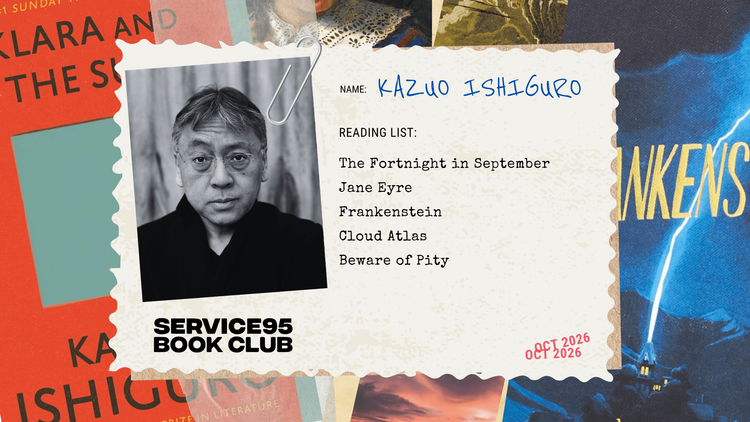
There’s More – Delve Deeper Into Klara And The Sun With The Service95 Book Club...
WATCH Dua’s interview with its author Kazuo Ishiguro
HEAR A playlist chosen by Ishiguro to soundtrack the novel
READ The titles that inspired the writing of Klara And The Sun
BOOKMARK seven authors share their favourite Ishiguro novel
DISCOVER how science fiction has shaped some of history's most striking books and films