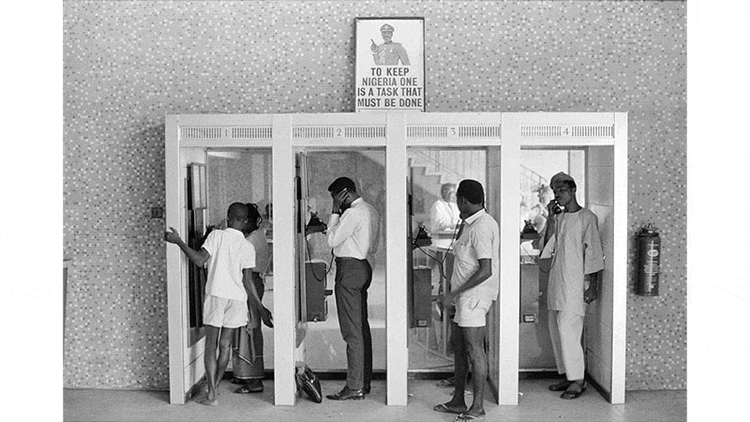
Chimamanda Ngozi Adichie’s epic narrative Half Of A Yellow Sun takes place in the context of the fracturing of post-colonial Nigerian society into ethnic and regional divisions. The title refers to the symbol which appeared on the flag of the short-lived Biafran Republic
Nigeria gained independence from Britain in 1960. This was followed by a turbulent period including a coup, counter-coup and the murders of political leaders. In 1966, thousands of Igbo people were massacred in Nigeria’s largely Muslim northern region, and many more forced to flee. In May 1967, the Republic of Biafra declared independence from Nigeria as a homeland for the Igbo people in south-eastern Nigeria, sparking a devastating civil war.
After secession was declared, Nigeria’s federal government sent in its military and began an economic blockade, preventing the entry even of humanitarian aid into breakaway Biafra. Hundreds of thousands of people starved to death and died from disease. The full death toll is still disputed, but it is thought to be at least one million people. Adichie’s characters give names and lives to represent people who might otherwise become a statistic, lost even to historical memory.
While the Biafran cause seemed noble to many, only a few countries recognised the new republic. Both Britain and the Soviet Union sent substantial military aid to Nigeria to help it reconquer the Igbo territories and enforce the blockade. Britain, as the former colonial power and the main supplier of arms to Nigeria, was concerned to protect its oil interests in the Niger Delta. British government papers released almost 30 years after the war ended reveal that its primary concern was to back what it judged to be the winning side.
Biafra’s motto was: ‘peace, unity and freedom’; however the dictatorial military leader Colonel Emeka Ojukwu had any rivals and many colleagues shot without trial for supposed ‘sabotage activities’, fatally weakening his own war effort. The war ended in January 1970 when Ojukwu fled into exile.
He was later allowed to return, and on his death in 2011 was given a burial with full national military honours, attended by the then-Nigerian President Goodluck Jonathan. Even so, while some memorial events are still held in honour of those who died, remembrance of the war remains a sensitive issue in Nigeria. Adichie’s novel is therefore at least partly an effort to ensure that this painful recent piece of history, and the sacrifices made by people on both sides, are not forgotten.
Lagos 1967 credit: © Bruno Barbey/Magnum Photos; Biafra Protest during Nigerian civil war, Westminster Bridge London, 1967 credit: Rolls Press/Popperfoto via Getty Images/Getty Images); Protest Westminster London, June 1967 Credit: Evening Standard/Photos/Getty Images; Lieutenant Colonel Okumegwu Ojukwu, July 1967, Biafra Nigeria Credit: Keystone-France/Gamma-Rapho via Getty Images; Enugu, Nigeria 1967 credit: © Bruno Barbey / Magnum Photos; Nsukka, Nigeria credit: © Bruno Barbey/Magnum Photos; Nsukka, Nigeria 1967 credit: © Bruno Barbey/Magnum Photos; Nsukka, Nigeria credit: © Bruno Barbey/Magnum Photos; University of Biafra, Enugu, Nigeria 1967 Credit © Bruno Barbey/Magnum Photos