“What is home?” That’s the question from which Beirut-based photographer Laura Menassa’s series of the same name began. As she works with Action Aid to document what’s happening on the ground in Lebanon, where more than one million people remain forcibly displaced, Laura asked this very question to those who had to flee. The answers can be found in the images below: a poignant insight into the items that make a person. Here, Laura introduces the fragmented reminders of a life once lived, brought into a new reality.
I always wondered what I would take with me if I had to leave my home in an emergency.
After the Beirut Port blast in 2020 and the earthquake in early 2023, the question grew inside me. I started asking my friends and those I encountered what they would take if they had to leave everything behind.
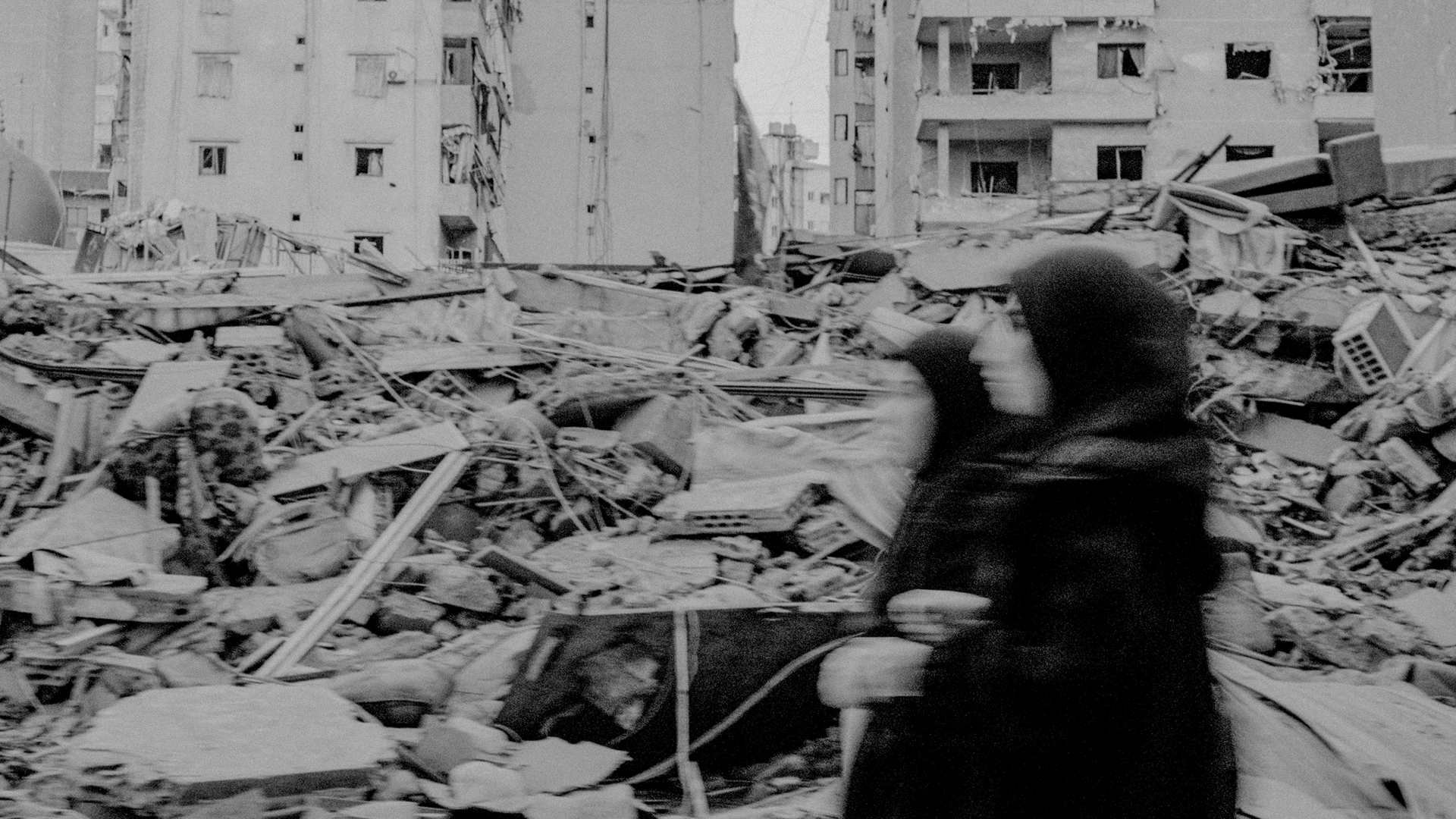
At the end of 2023, when the genocide in Gaza began and, later, when the war started in southern Lebanon, that question became a reality. Back then, we didn’t know we would go through two consecutive wars in less than four years. Or perhaps it is the same war that never truly stopped.
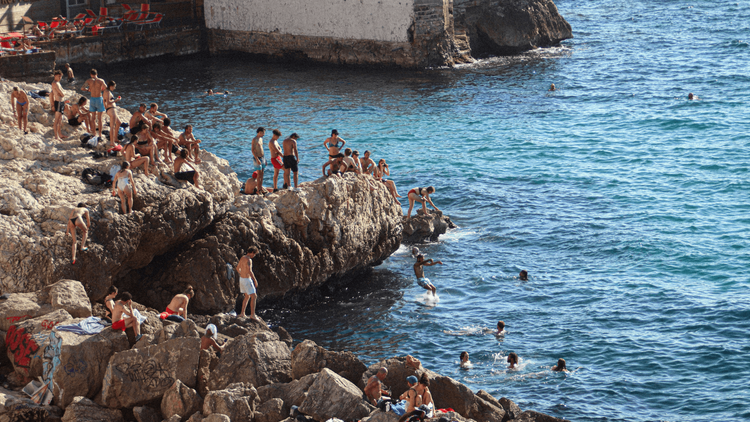
In March 2026, as the aggression on southern Lebanon, Beirut’s suburbs, Beirut and the Bekaa intensified, more than one million people were forcibly displaced. Some had the chance to be hosted, or to rent another place, but many found refuge in the streets of Beirut, in Biel [the seafront area surrounding the Beirut International Exhibition & Leisure Center] and in schools.
For three years prior, I’d asked people what they would take. These days, I’ve found myself asking instead: What could you take with you? What did you take with you? When I spoke to women who had been displaced by the war, they all thought of utilities, official papers and the basic necessities for their dependants. Most of them did not have the luxury of gathering memories or sentimental belongings.
When fleeing is no longer hypothetical but a matter of survival, choices are reduced to what is necessary.
“The details of a person live inside a house,” says Tharwat – a woman whose belongings I photographed below. Perhaps, once these objects are taken away from their space, they stop being fragments of home. They become traces of what was left behind.
Zaynab: “I Wish We Could Go Back To Our House, But We Have Nowhere Left To Go”
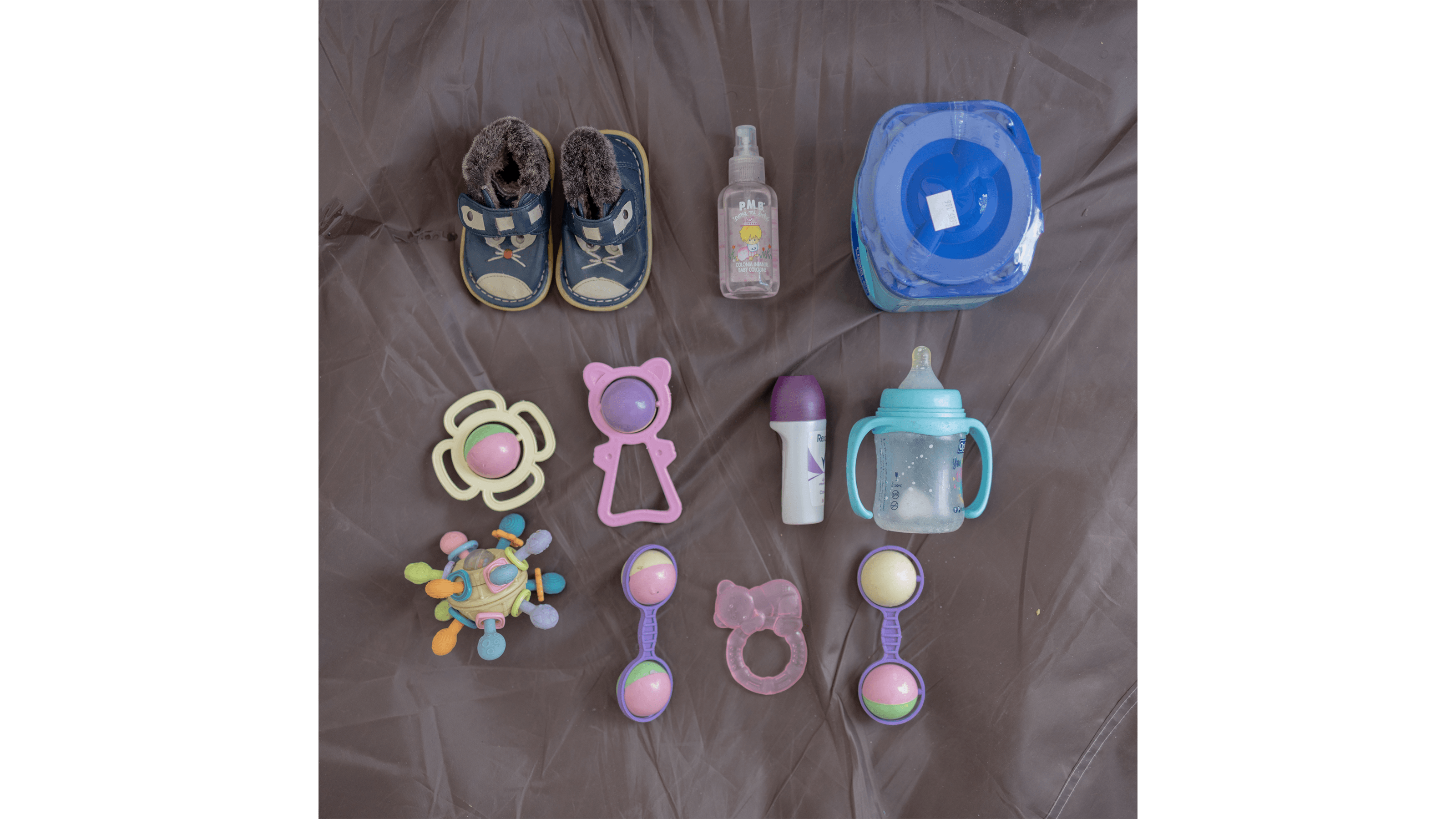
Zaynab is a Lebanese mother who was first displaced with her husband and children during the 2024 war with Israel. Originally from a small village in southern Lebanon, the family moved to Choueifat, in Beirut’s southern suburbs, before being displaced once again to a tent at Biel. Her three eldest children are able to attend school during the day, while she remains in the shelter with her baby. Their house was destroyed, leaving them with nowhere to return. “I wish we could go back to our house, but we have nowhere left to go,” Zaynab says. Other than their official papers, Zaynab explained that they left with almost nothing: a few toiletries and only the essentials for the baby, including milk, a bottle, a teether, toys and a small amount of clothes and shoes.
Abir: “The Most Important Thing For Me Was The Dogs, To Get Them Out”
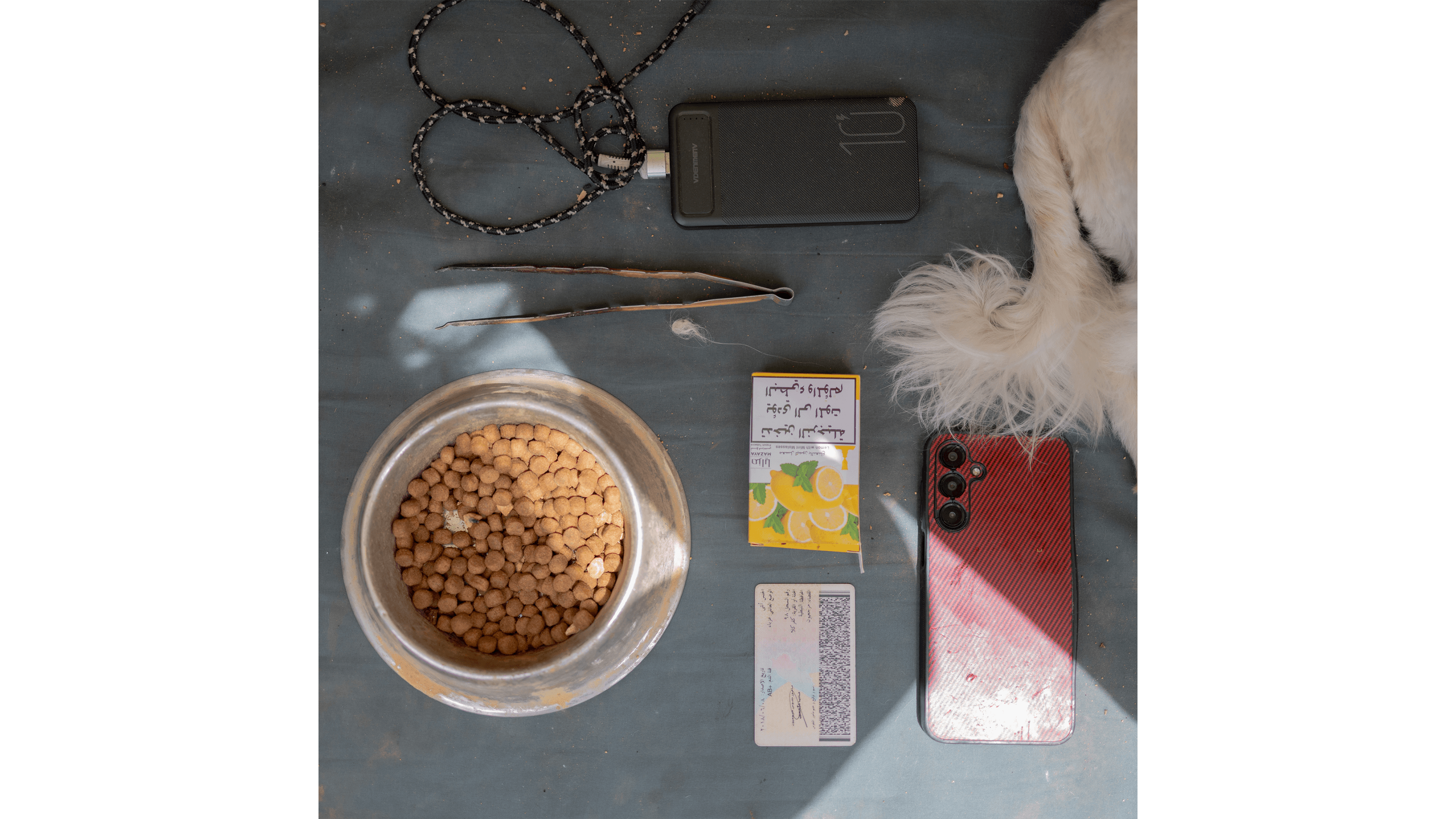
Originally from Kfarkila, a village on the southern Lebanese border, Abir is a young Lebanese grandmother. She is displaced from the city of Nabatieh, where she worked in a beauty centre and organised events. She fled to Biel with her daughter and grandchild. After the temporary ceasefire in April 2026, her daughter moved to Dahiyeh, on the suburbs of Beirut, with her family, while Abir remains alone in a small tent she shares with her two dogs. Abir tried renting a hotel room and an apartment but, because of her dogs, nobody accepted her. Not wanting to burden anyone, she decided to stay in Biel. “The most important thing for me was the dogs, to get them out” she says. With her, she carries only her official papers, telephone, power bank, her dogs and their food, and her nargileh [pipe], which she now enjoys smoking in front of her tent.
Rita: “We Were Outside, Coming Back Home At The Time Of The Airstrike”
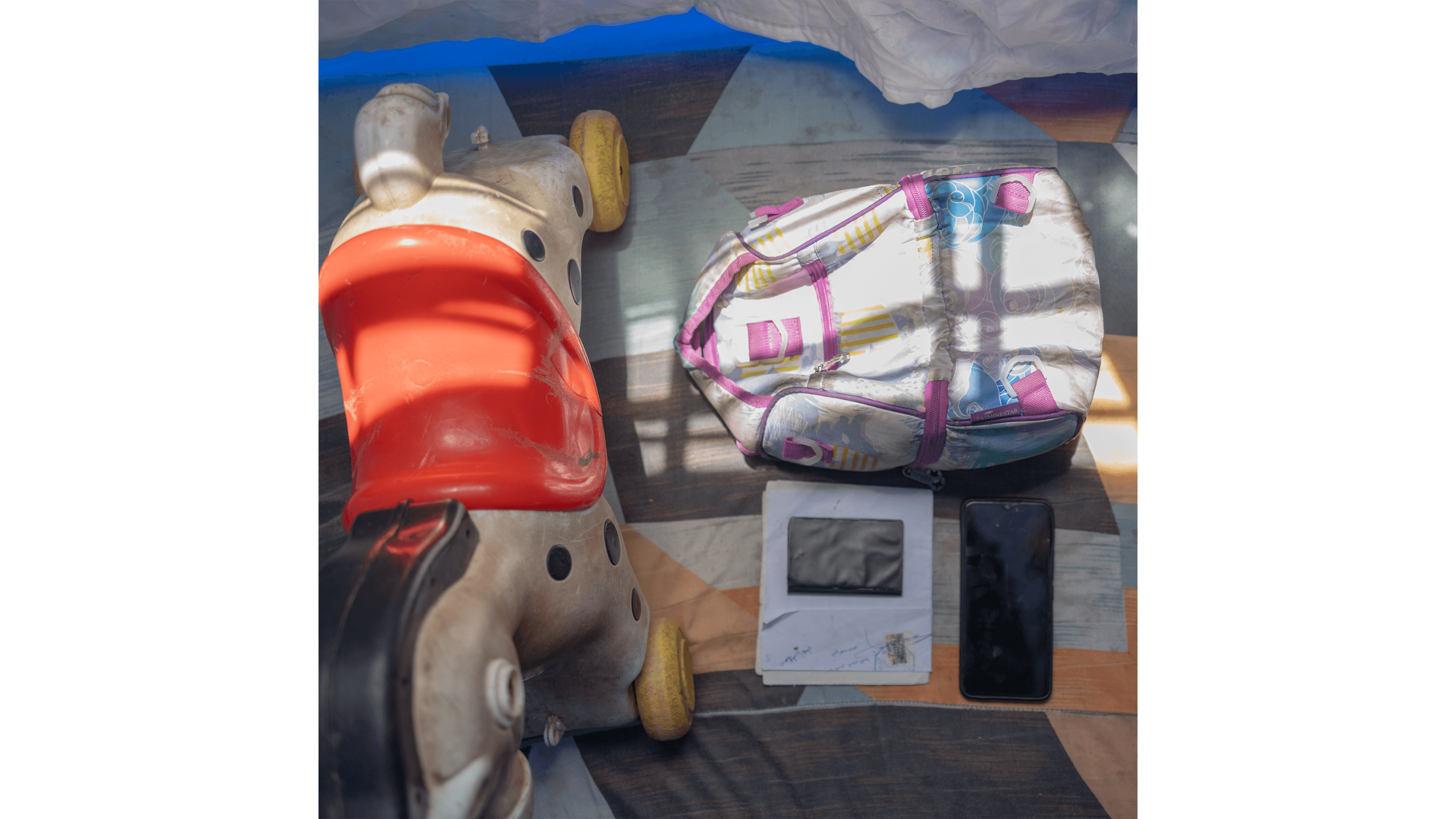
Rita is a 31-year-old Lebanese mother who used to live in Ghobeiry, in Beirut’s southern suburbs. She fled with her husband and their three children (aged ten, five, and five months) after their street was struck during a targeted airstrike. They are now staying in a tent in Biel. “We were outside, coming back home at the time of the airstrike,” Rita explains. “Because we knew where the strike was, we thought we should go to Biel” After arriving, they were removed from one spot to another, alongside other displaced families. Rita’s tent is filled with recent donations, as they left home with barely anything: a few clothes, the children’s school bags, the family’s official papers and a toy belonging to her youngest son, Youssef. Rita highlights the lack of communication and coordination within the shelter, explaining that aid distributions often happen without informing displaced families. “If I didn’t leave the children and come out of the tent,” she says, “I wouldn’t have known they were distributing milk.”
Suma and Shahida: Friends Before The War, Now A Community Of Refuge
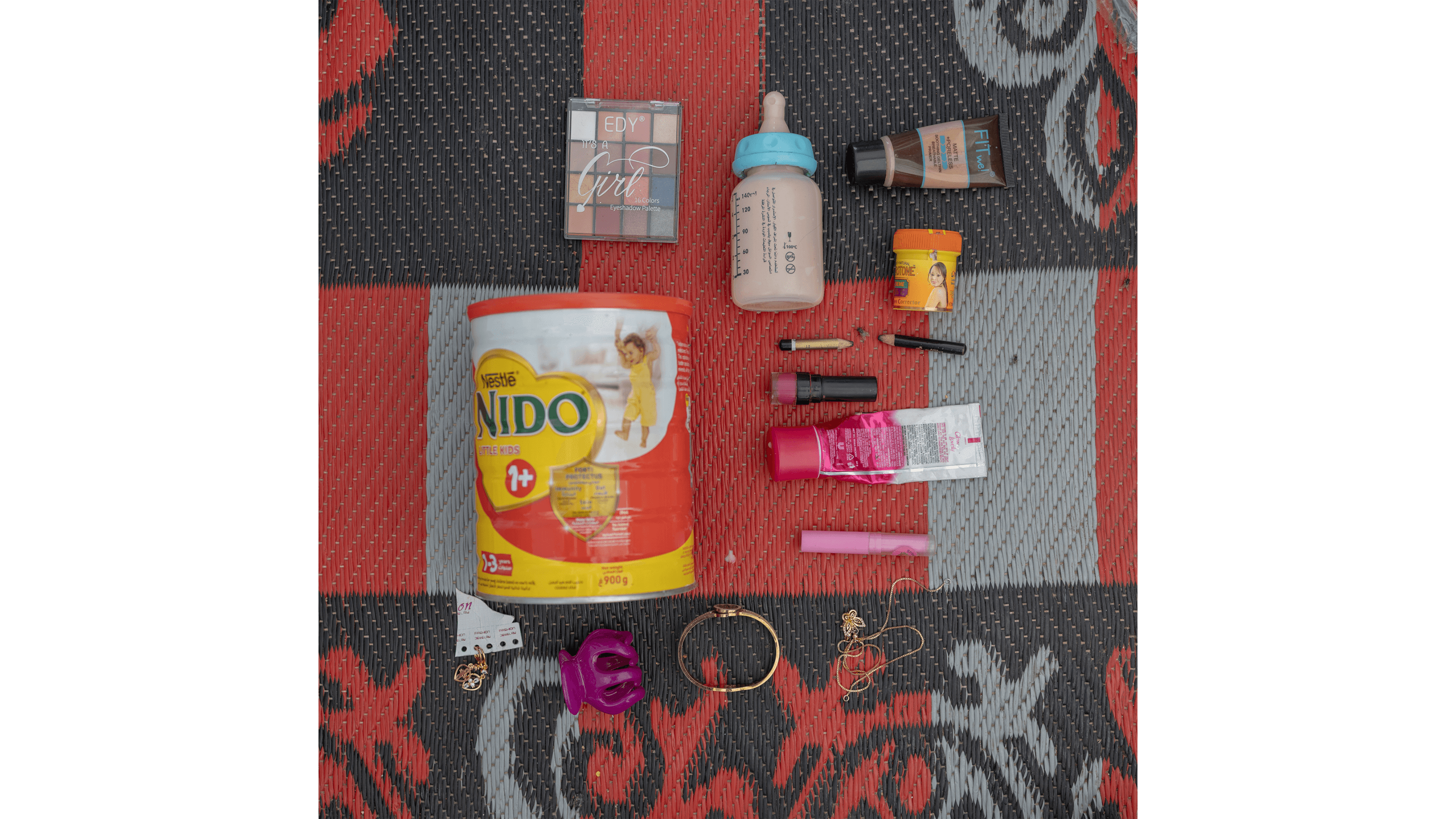
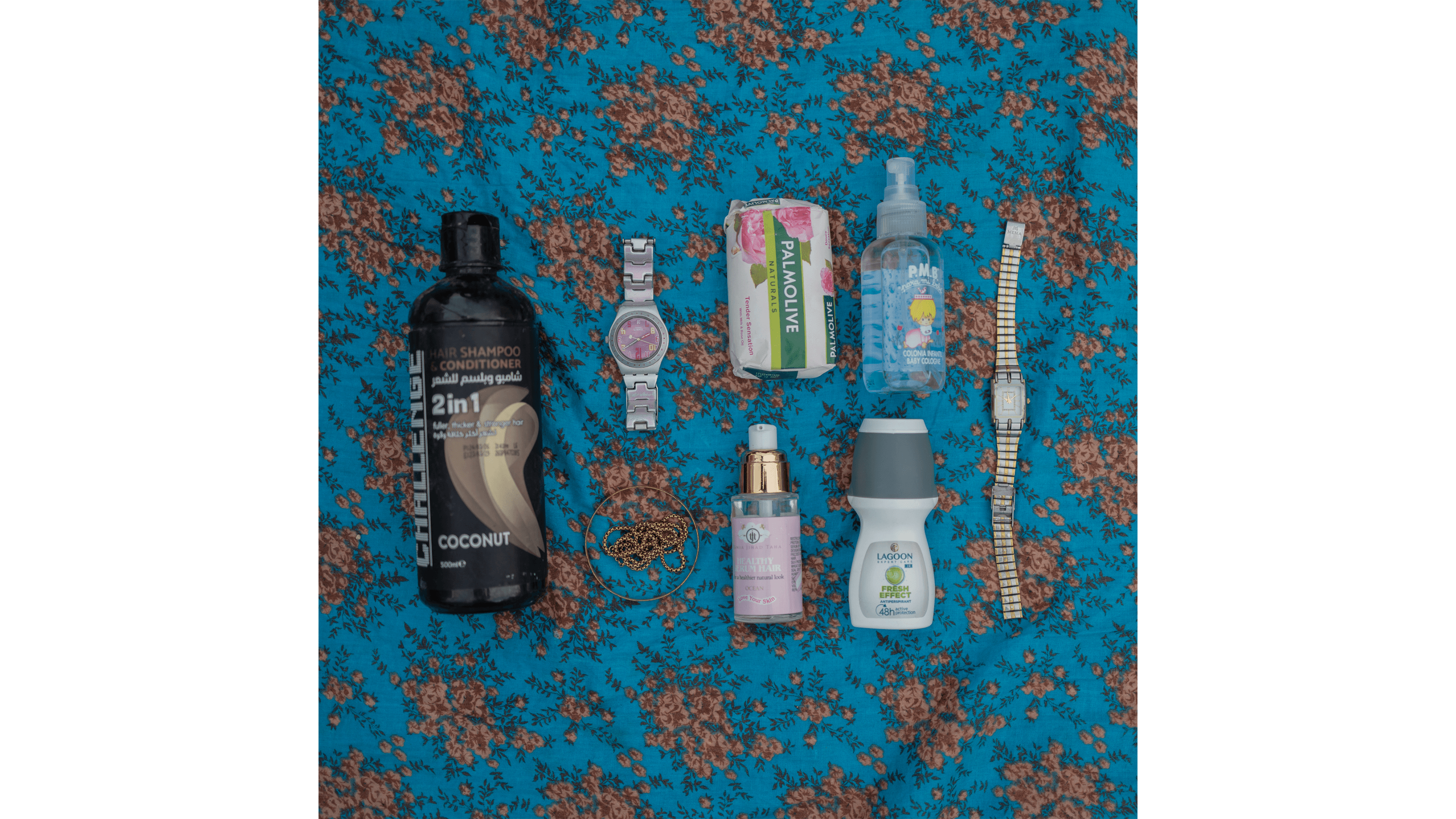
Suma and Shahida are two Bangladeshi women who came to Lebanon many years ago. Displaced from Nabatieh in south Lebanon, Shahida fled to Biel alongside Suma, her daughter, her aunt and her sister. After being asked to move to another area, they rebuilt their shelter from scratch, constructing a shared space of three small tents that allows them to share meals with a degree of privacy. These friends had all lived together before the war.
When I asked Shahida to display the objects she carried with her – a watch, baby perfume, shampoo, soap, and deodorant – Suma placed her own watch in the photograph, while her aunt added her necklace, as if they were sharing their belongings. Although most of the products they now use come from donations, Suma went back to her tent to show the makeup she managed to save, alongside a few items for her daughter Fatuma, including milk and a baby bottle. Suma’s husband was killed in an Israeli airstrike near their home. “There was an airstrike,” she said. “My husband was injured by pieces of the collapsing building and he died from his wounds.”
Tharwat: “There Are Things That May Seem Meaningless To Others”
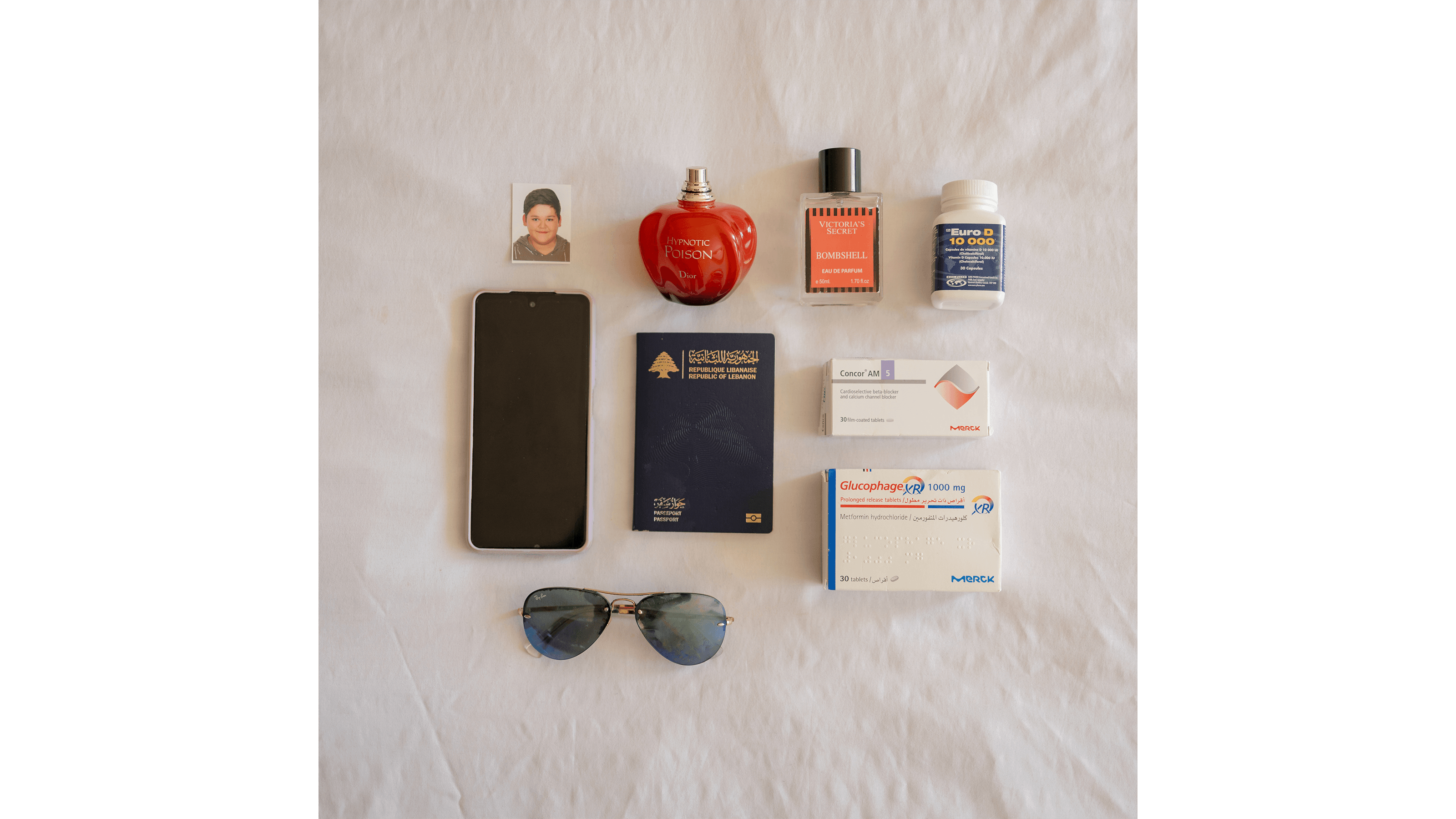
Originally from Hermel, in Lebanon’s Bekaa region, Tharwat and her family live in Dahiyeh, Beirut’s southern suburbs. She fled the area with her relatives the morning after Israeli airstrikes began targeting their neighbourhood. Around 20 family members – including her son, her parents, her brother, his wife and seven-month-old daughter – took refuge in a hotel near Jounieh, where they continue renting rooms. Alongside her official papers and telephone, the first things Tharwat took with her were her parents’ medicine, a photograph of her son as a child, two perfumes, her vitamins and sunglasses. “There are things that may seem meaningless to others,” she said. “It can be a small antique, a book, maybe a photograph. The details of a person live inside a house. So when someone loses their house, do you know what that person is feeling?”