Correction, 29 March 2026: This article has been updated to remove incorrect information – the original version included a story about Saed listening to footage of a father grieving his son Sepehr. The young man’s name was misspelled as ‘Sefer’, and the footage described in the original piece also incorrectly contextualised his death as a result of US-Israeli airstrikes. The original video is dated from January, before the war, and shows a father searching through body bags of protesters killed by the Islamic Republic for his son. We apologise for this error.
More people are forcibly displaced today than at any point on record. From southern Lebanon to Cox’s Bazar, the world's displaced are no longer running once: they are running out of places to run to.
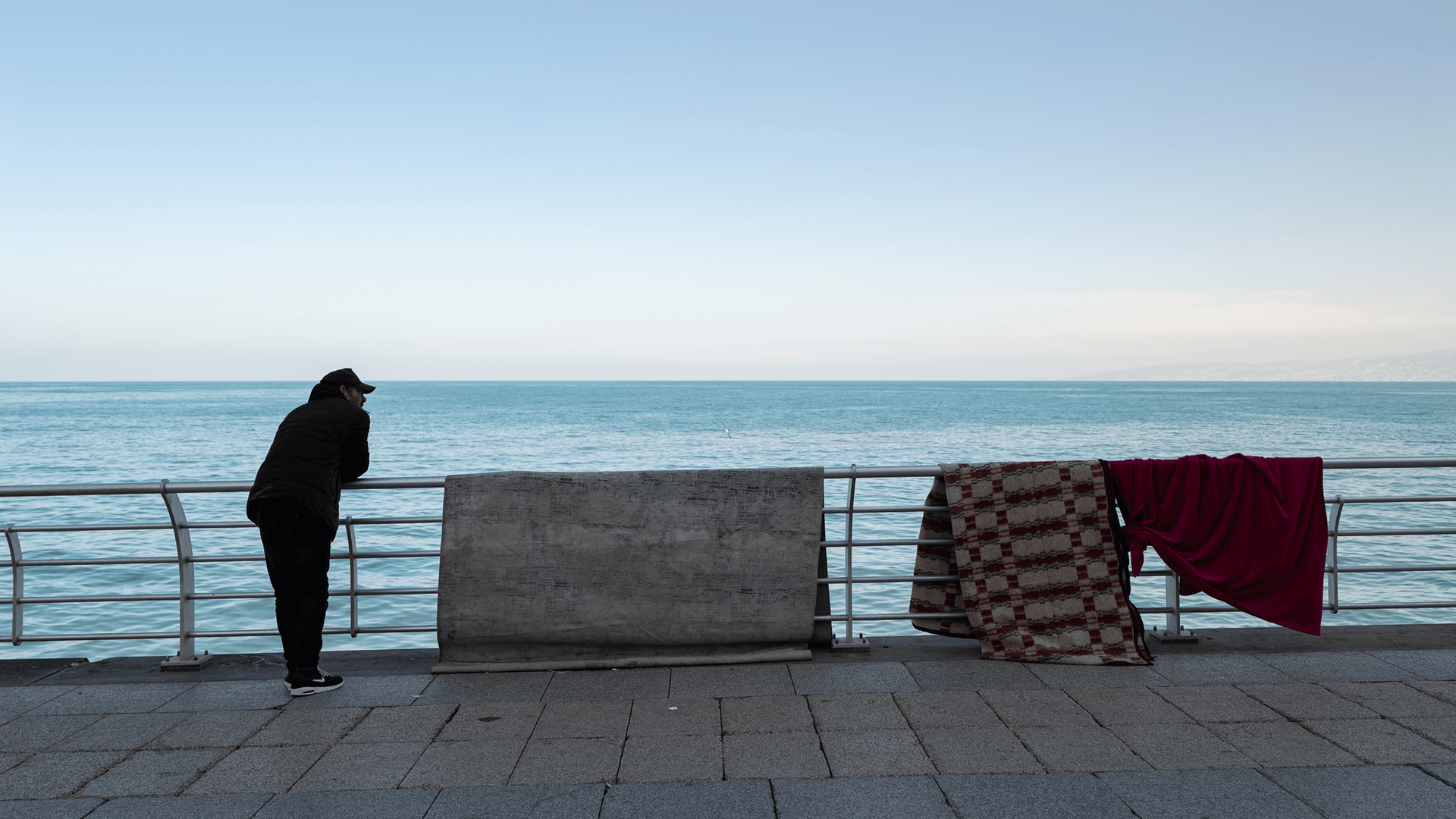
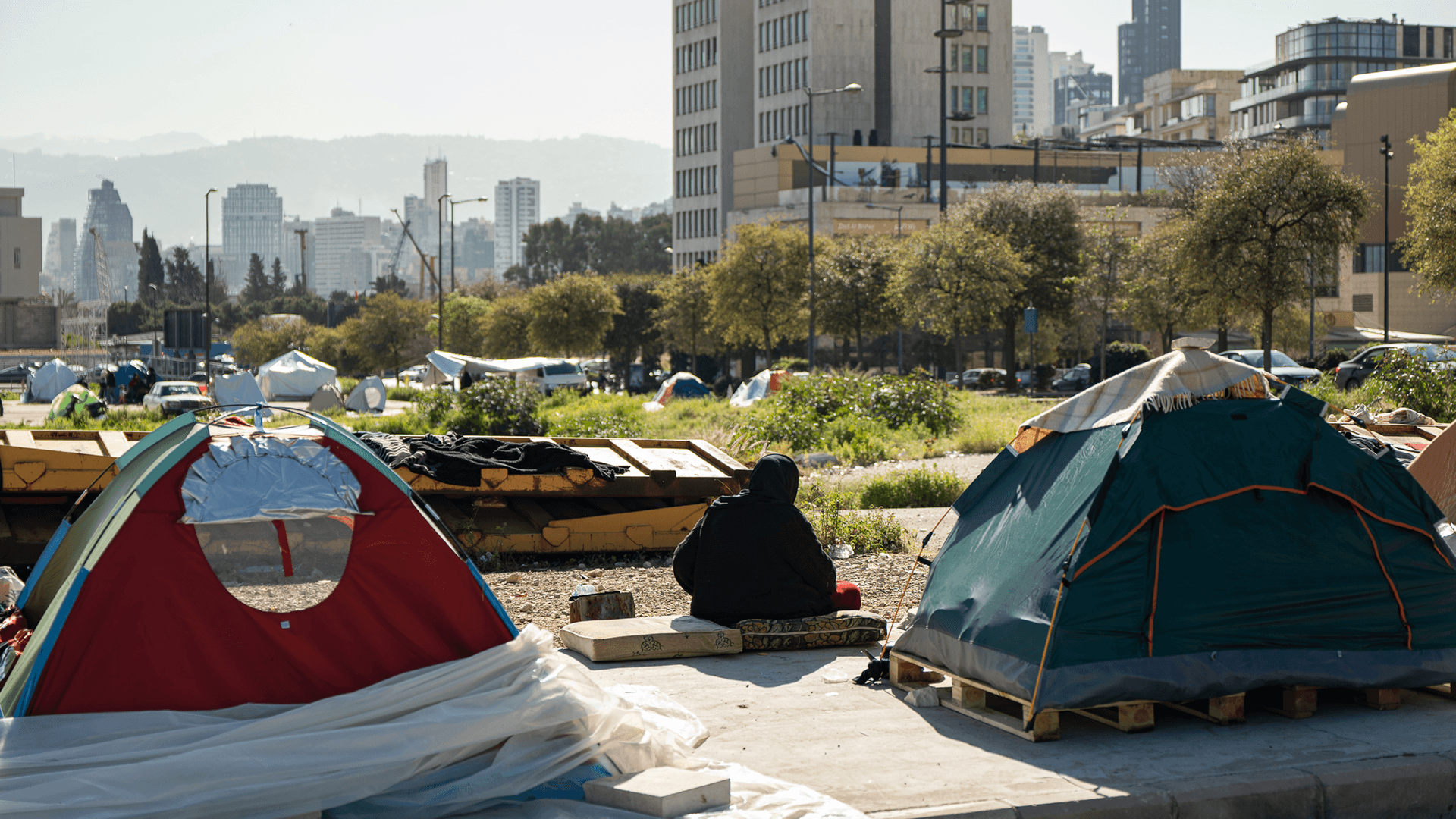
Just inland from the Mediterranean Sea, the Montana shelter in southern Lebanon was once a place where families came from Beirut for long weekends by the coast. It was a modest hotel with pink walls and cool marble floors, where people drank coffee on balconies in the evening heat. But for nearly three years now, it has been home to more than 120 families sleeping in rooms that were never built for this.
When Ghina arrived with her family from Odaisseh, near Lebanon’s southern border – a frontline village emptied in 2023 as fighting between Israel and Hezbollah escalated after the Gaza war – five of them shared one room. Perhaps, she thought, that was the worst of it.
Then, the bombs followed them north and the rooms filled beyond anything they had been built to hold: 30 people pressed into spaces once meant for a handful; the corridors thick with damp and the smell of cooking. The children began to learn the warning sounds of incoming fire in the way children elsewhere learn how to ride a bike: gradually, carefully, until it becomes second nature.
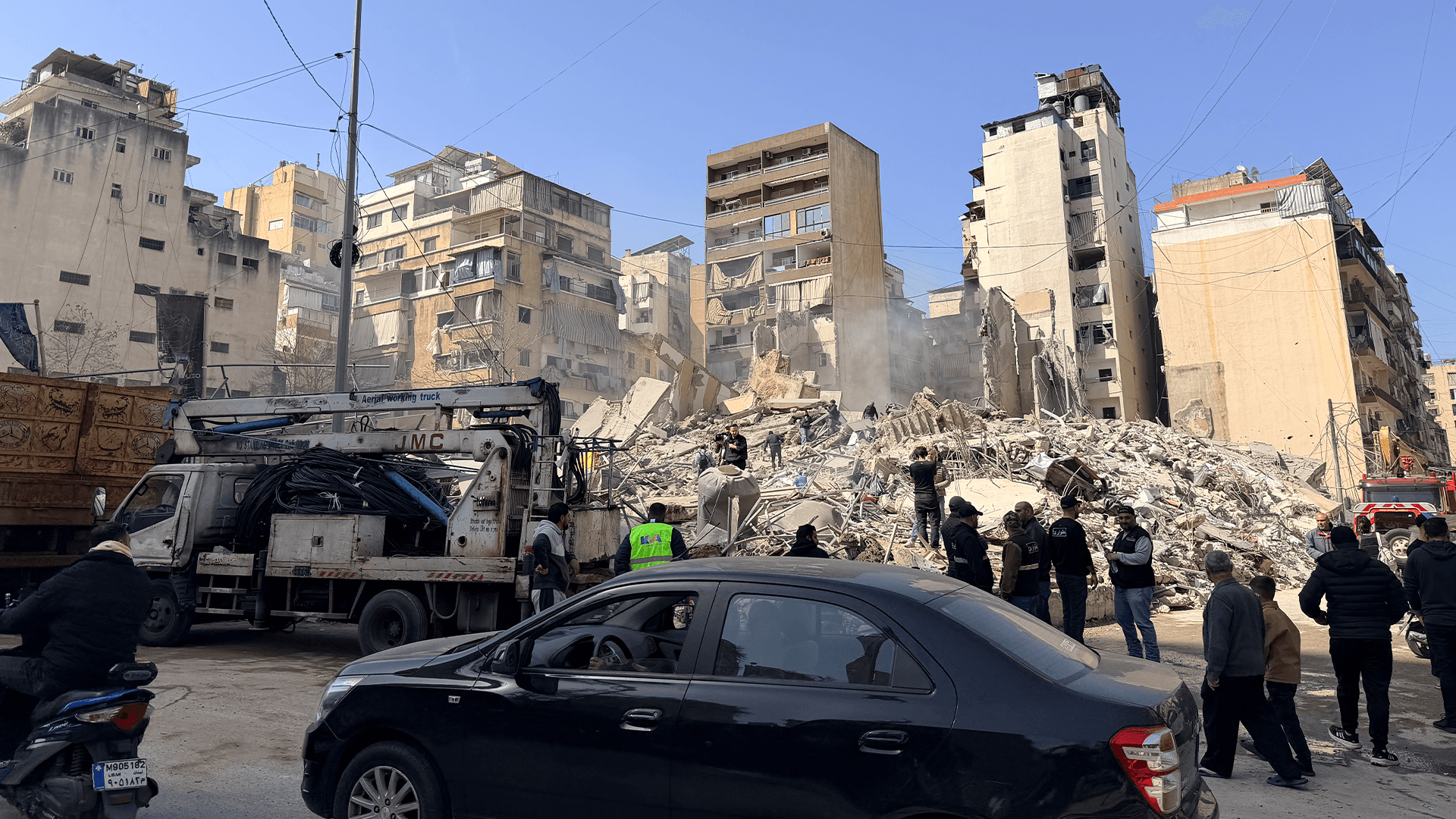
On the morning of 12 March, an Israeli airstrike landed barely 150 metres from the shelter, close enough that the whole building seemed to lift and shudder in its foundations. “It hit without warning and very close to our shelter. The entire building trembled and the children started crying. I am tired of this situation,” Ghina says.
She is one of more than 330,000 people newly displaced by the region’s latest escalation. Globally, the number is far higher. According to UNHCR, more people are now forcibly displaced than at any point on record – a figure that has more than doubled over the past decade.
It’s the kind of statistic that lands heavily and then slips quickly into abstraction. Numbers have a way of flattening crises, turning the movement of entire communities into something that can be filed, compared and eventually forgotten. But across the world – from Lebanon’s shattered border villages to the swamps of South Sudan and the crowded camps of Bangladesh – people are not simply fleeing once. They are being displaced again and again, each time with fewer options, less money and a diminishing sense that there is anywhere left to go.
Lebanon has become one of the world’s most heavily displaced countries, with the share of the population forced from their homes surging from around 2% to 22% amid escalating violence. More than 1.2 million people are now displaced, including 134,439 sheltering in 636 overcrowded collective sites. The Israeli evacuation orders now cover roughly 14% of Lebanese territory, instructing civilians from nearly 200 villages and towns to move up to 50 kilometres from the southern border. Civilians are being driven north not by a single front line but by a shifting one, where airstrikes, evacuation orders and uncertainty move faster than people can plan.
A thousand kilometres away, at the Kapikoy border crossing between Iran and eastern Turkey, a 58-year-old man named Saed was trying to reach his family in Istanbul. His wife and children had already left Tehran and insisted he follow. To plan the journey at all, he had paid the equivalent of around US$40 for four gigabytes of internet. Without it, there was no way to communicate, no way to arrange anything. “Having no internet is a form of torture,” he said, speaking from the Iranian border, where a steady stream of people are crossing through to safety.
Before leaving Tehran, he had watched the Israeli airstrikes come close enough to shake the windows of his building. Saed was not planning to return to Tehran, but with no Turkish visa he did not know what would happen next. “We Iranians cannot pretend to be happy,” he said.
The outflow from Iran is smaller than usual flows of refugees during war but growing – driven by airstrikes, fear of escalation and the breakdown of basic infrastructure, including communications. Some cross temporarily, others without knowing if they will go back. UNHCR has warned of potential “onward movements” into neighbouring countries. The region already hosts 24.6 million forcibly displaced people, many in countries where support systems were stretched long before the latest escalation.
“This situation is about life and death. Without food, water and shelter, survival here will not be possible”
For those in South Sudan, the reasons for flight are more familiar but are no less brutal. Moses is 77 years old and lives under a tree. He fled his home in Lankien, Jonglei State, in late February as fighting between government and opposition forces swept through the area, burning houses to the ground and closing the Médecins Sans Frontières hospital. (The independent medical orgaisation is the only health provider for roughly 250,000 people living in the area.) He walked for days through swampland to reach Chuil. “I have lived through many wars, but this kind of displacement has never happened before,” he says. “I have never seen civilians’ homes burned to ashes on such a scale.”
More than 291,000 people have crossed from South Sudan into Sudan since late 2025, according to UNHCR – fleeing into a country already fractured by its own civil war, which has killed hundreds of thousands since 2023. At least 25,000 people have arrived in Chuil alone. Of children under five screened there by Médecins Sans Frontieres, 54% were acutely malnourished. People have shared that they’re surviving on boiled leaves. Nyamai, a mother of three, said: “This situation is about life and death. Without food, water and shelter, survival here will not be possible.”
Aid agencies warn that these crises are no longer isolated. “What we are seeing is displacement layered on displacement,” said a senior International Rescue Committee analyst in recent briefings on global displacement trends. “Each new conflict is hitting populations that have already exhausted their ability to cope. The system is under strain.”
That strain is visible far beyond active war zones. In Bangladesh, more than one million Rohingya refugees remain in camps, years after fleeing conflict. Around 750,000 have fled violence in Myanmar since 2017, joining those who sought refuge in the country decades earlier. Most of these refugees are based in Cox’s Bazar, with no clear path to return.For many, displacement has become permanent and increasingly precarious.
In Camp 11, in the southeast of Bangladesh, an elderly woman named Lalu Bagum lives alone. She has a chronic illness. In February, a fire broke out near the road by her shelter and spread quickly – a common occurrence in these densely packed environments, where shelters are made from flammable bamboo and tarpaulin. Combined with open-flame cooking, unsafe wiring and limited access for firefighting, even a small spark in these camps spreads rapidly and becomes devastating. She got out, but could barely move. Everything else – her belongings, her papers, the small accumulation of objects that had made a life in a camp feel, marginally, like a life – was gone. “I lost all of my belongings but, as well as my belongings, I lost my hope,” she says. “I have nothing. How can I survive?” She had already been displaced once. This was the second unmaking.
In these places where people continue to, and must, flee – Lebanon, Iran, South Sudan, Bangladesh – the causes of flight differ. For some, it’s airstrikes and evacuation orders. Others, it’s civil war, state collapse and fires in overcrowded camps. But the pattern is increasingly the same: people are being forced to move not once, but repeatedly, from one system at breaking point to another.
The impact for civilians across the region is “profound” and poses a “terrible humanitarian challenge,” UN refugee agency chief Barham Salih told Euronews’ morning show Europe Today. The situation is “very dire” and around “600,000 to a million households in Iran” have already been affected, with “more than a million people” displaced in Lebanon, he added.
“The region cannot afford these cycles of violence,” he said. “Human lives are at stake,” added Salih, who insists that what the Middle East needs is peace.
Back in the Montana shelter, Ghina remains – despite the evacuation orders now covering the area around it. The building, once considered safe, no longer is. She knows this, but leaving would mean finding somewhere else in a country where the somewhere elses are filling up, one by one.
She is not alone. Somewhere else, behind every comparison, every statistic, every carefully sourced figure about the scale of what is happening across the globe, there is a woman standing outside a hotel that is not a hotel anymore, saying she is tired. She has been saying it for years. And again, she must move on.