When we think of ancestry, we often look back: to the people and cultures that came before us. But what about the ancestors we are set to become? What can we do now to prepare for the legacy we will leave behind? Here, Service95 brings together two people who are actively working to shape what generations to come will inherit: Tamika Abaka-Wood interviewed by Nour Batyne. Here’s what they had to say.
Tamika Abaka-Wood is the artist behind Dial-an-Ancestor, a participatory project exploring ancestral wisdom and intergenerational connection, encouraging people to leave voicemails – advice, stories, even recipes – over the next 100 years, which generations to come can listen to. My own practice, through my creative studio One of Many, creates experiences that connect people to what it means to be a future ancestor.
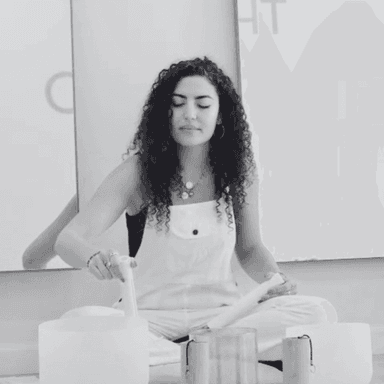
Before our conversation began, I gave Tamika a tour of my studio at Curtidas in Barcelona, showing her my very first purchase for the space, a jasmine, in honour of my grandmother from Nazareth, who loved the plant. We begin with an embodied water practice, a guided sound meditation created by One of Many Studio, inviting participants to slow down and open pathways of connection between themselves, water and the natural world through visualisation and deep listening.
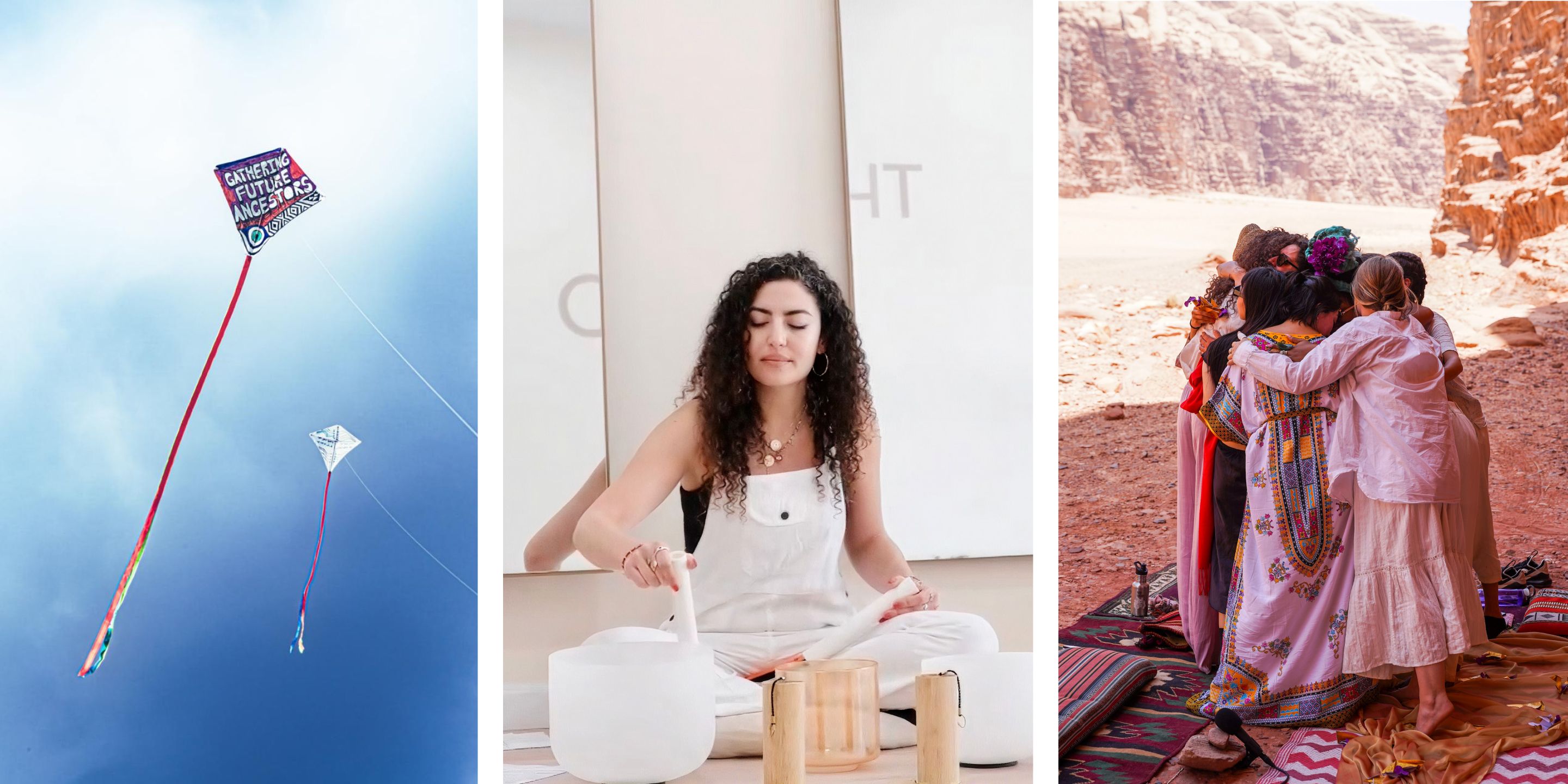
Nour: My family's from the Galilee, which is the northern part of what's known today as Jordan, occupied Palestine, South Syria, the Golan Heights and Lebanon. My ancestral lands have become five different countries. I wonder if we can slow down time for ourselves a little bit. This Embodied water practice is an experience intended to open pathways of connection between ourselves, water and the natural world within and around us. It is part visualisation and part practice of deep listening.
[Eleven minutes later, as the embodied water practice comes to a close.]
“Your body is made of approximately 60 percent water, the same water that rises to the sky and falls to the ground every day around the world. What we do to the waters, we do to ourselves. What we do to ourselves, we do to each other. We are gathering among unseated waters. These waters hold the legacy of ancestors who stewarded them with humanity in the face of violence and inhumanity. We honour them. Engaging in this practice of acknowledgement allows us to acknowledge the full continuum of the human experience, both the injustices we do not seek to repeat, as well as the joys we wish to replicate. Through acknowledgement, we infuse our individual experiences with the collective experience, with the land that lives below us and the skies above us, with the bodies of water that hold us, and the waters held by our own bodies, for we are one and the same. I invite you to bring your attention back to the room, back to your body and breath. Take a final stabilising breath and as you seal up this practice, leave this space knowing that you are not alone, that you are One of Many.”
Tamika: What a journey! Such a gift.
Nour: I'm curious what body of water you travelled to.
Tamika: I went to Cape Coast in Ghana. Three years ago, during a residency, I had a psychotherapy session and saw my grandma, whom I'd met twice in this earthly plane. She's in a boat, relaxed, her feet are up, wearing traditional kente, but loosely. She told me two things: I need to put my feet up more often and I need more fish. I expected something complex and poetic and she was like, “No, girl. Eat fish.”
Nour: Have you been putting your feet up and eating more fish?
Tamika: I have been! I'm receiving the wisdom in a very practical way and I'm so grateful for it. Sound is such an incredible portal. It's ungovernable. You can't police sound.
Nour: I'm doing a sonic residency where I'm transforming the space into a sanctuary for deep listening through water. Sound travels five times faster through water than through air. I believe water holds memories.
Tamika: When you're talking, it's conjuring up Drexciya, these underwater worlds where a different story is being created through our collective imagination about what happened, or could have happened, to our ancestors in those waters.
Our ancestors perished in unimaginable, violent ways across these waters. But if Drexciya exists, with this otherworldly life and community full of spirit, then sound travelling faster through water makes entire sense to me.
Nour: Thank you for naming the violence that's also part of water. Being in Spain, there are bodies of teenagers, Algerian teenagers most recently, washing up on the shores of Formentera. The Mediterranean Sea is also the sea of my ancestors.
How can we keep bearing witness to this violence through water and land and life still go on as normal? What does it mean to you to leave a legacy in this moment?
“You have to look back in order to move forwards. Legacy is about being attuned to the cyclical nature of time and being alive” – Tamika Abaka-Wood
Tamika: There's a Ghanaian Adinkra symbol, the Sankofa bird. You have to look back in order to move forwards. Legacy is about being attuned to the cyclical nature of time and being alive, which also means being aware of death.
Nour: I think about what it means to leave this planet a little better than when we came to it. For me, that's what it means to be a future ancestor. What does the term “future ancestor” mean to you?
Tamika: The term “future ancestor” to me is about creating conditions for a deeper time of humility.
We do not dominate over nature. We are of nature. We are one and the same. I think keeping that principle alive and clear within the decisions that we make is what a future ancestor does. For Dial-an-Ancestor, we created a fictional department for future ancestry in a recreation centre last month. We had listening stations where people could listen to ancestors who came before on the hotline and a recording room with prompts for thinking about future ancestry.
There was one person in his eighties who left a recording that could be summed up in two words: ask questions. He wished he'd been curious enough to ask more questions of his people and the people around him.
Nour: There's a question that Ruha Benjamin named that I find very inspiring: “What if we are our descendants' wildest dreams?” That is also what it means to be a future ancestor: moving through the world knowing that you can be the wildest dreams of descendants in the future.
And I think we have descendants even if we are not mothers. We have ancestors regardless of our relationship to our parents or how connected we are to our ancestry. I move through the world knowing James Baldwin is an ancestor. When we say ancestor and future ancestor and descendants, it's not so literal. We are all kin to each other in that way.
Tamika: Oh, absolutely. Some of the times I've felt most like a descendant of someone have been people I have no blood relation to. I saw a Zora Neale Hurston documentary about 10 years ago, and I felt so connected to the idea of this woman being in the world. I suddenly felt like I understood myself and my role in an ecosystem of change.
And I think that Ruha Benjamin question sums up so much of the practice for me, and the ambition of Dial-an-Ancestor. There's a reason I'm intending for it to last 100 years.
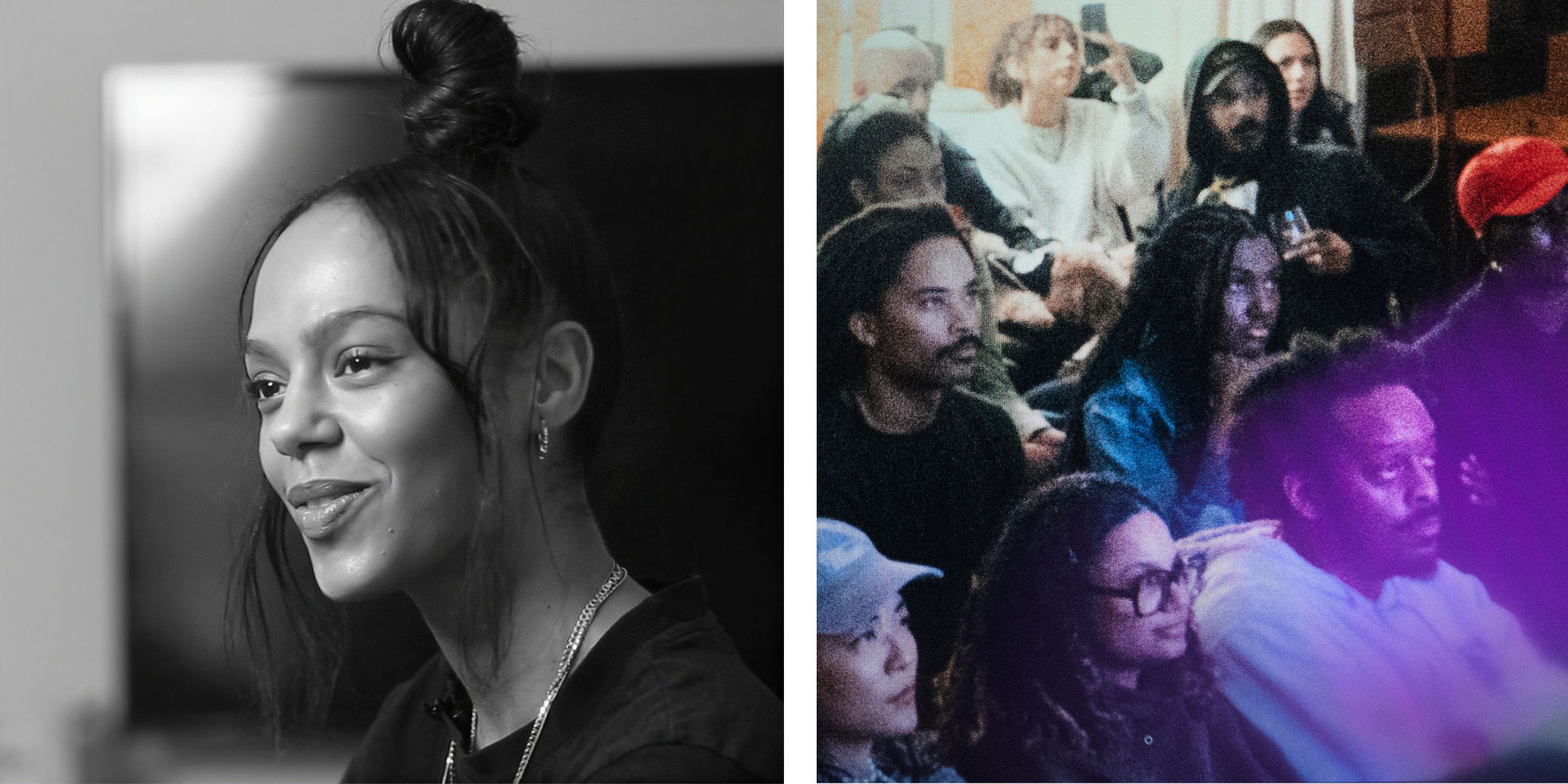
For all the ground we covered, Tamika closes on something small enough we can all do, often. “Pay attention to the work or the types of questions you keep being called to over your lifetime,” she says. “Join an intimate group of people already doing that work, and then find your role and play it well. This is how we create ecosystems of change.”
The world, as she sees it, wants us “depoliticised, isolated in our own realities and self-soothing that pain through consumption”. She asks us to fight that when we are able to and to remember what we already carry. “We don’t have to create anything from scratch,” she says. “History, blueprints and context are gods, wrapped in books, art and your body.”