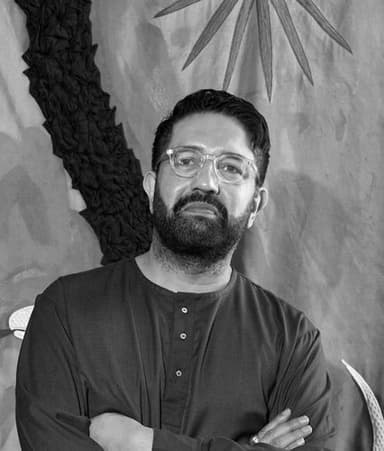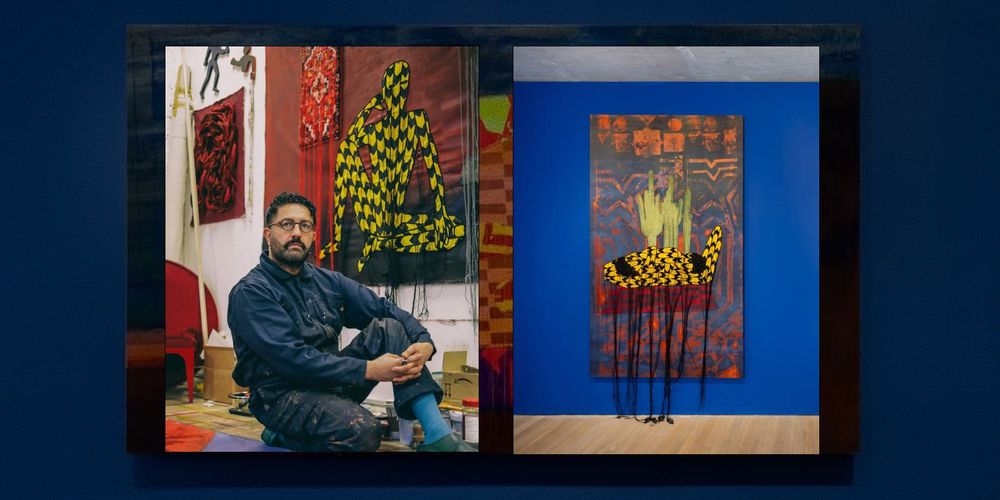
Dua’s Monthly Read for September is Martyr! by Kaveh Akbar, a story of a newly sober poet coming to terms with his mother’s death. A quote that encompasses its sentiment comes from both Kaveh’s novel and his earlier poem, The Palace: “Art is where what we survive survives.” Here, artist Osman Yousefzada explores the intrinsic link between the art and the artist – and how history and inheritance can live on through it.
My father had migrated from Pakistan clutching an address in the 1960s, destined for Birmingham in the UK. He could not read or write in any language, and neither could my mother. They interpreted their surroundings through signs and symbols. Others from the same village had already arrived in their thousands: mostly men, nearly all non-literate, unable to write their name. They signed their immigration papers with an X.
I did not always carry the language to articulate Kaveh Akbar’s haunting poetic line but I have spent most of my life living inside its atmosphere, trying to translate a language that had never been written down.
It was the last hurrah of Britain’s post-industrial capitalism, which relied on cheap labour from the former colonies to make its industries competitive again. My father was a skilled carpenter; he had built mosques, tiled domes and carved mahogany doors in Pakistan. In England, his hands were his only currency. He was funnelled into the heavy foundry industries of Birmingham, where the bodies that laboured did not require tongues.
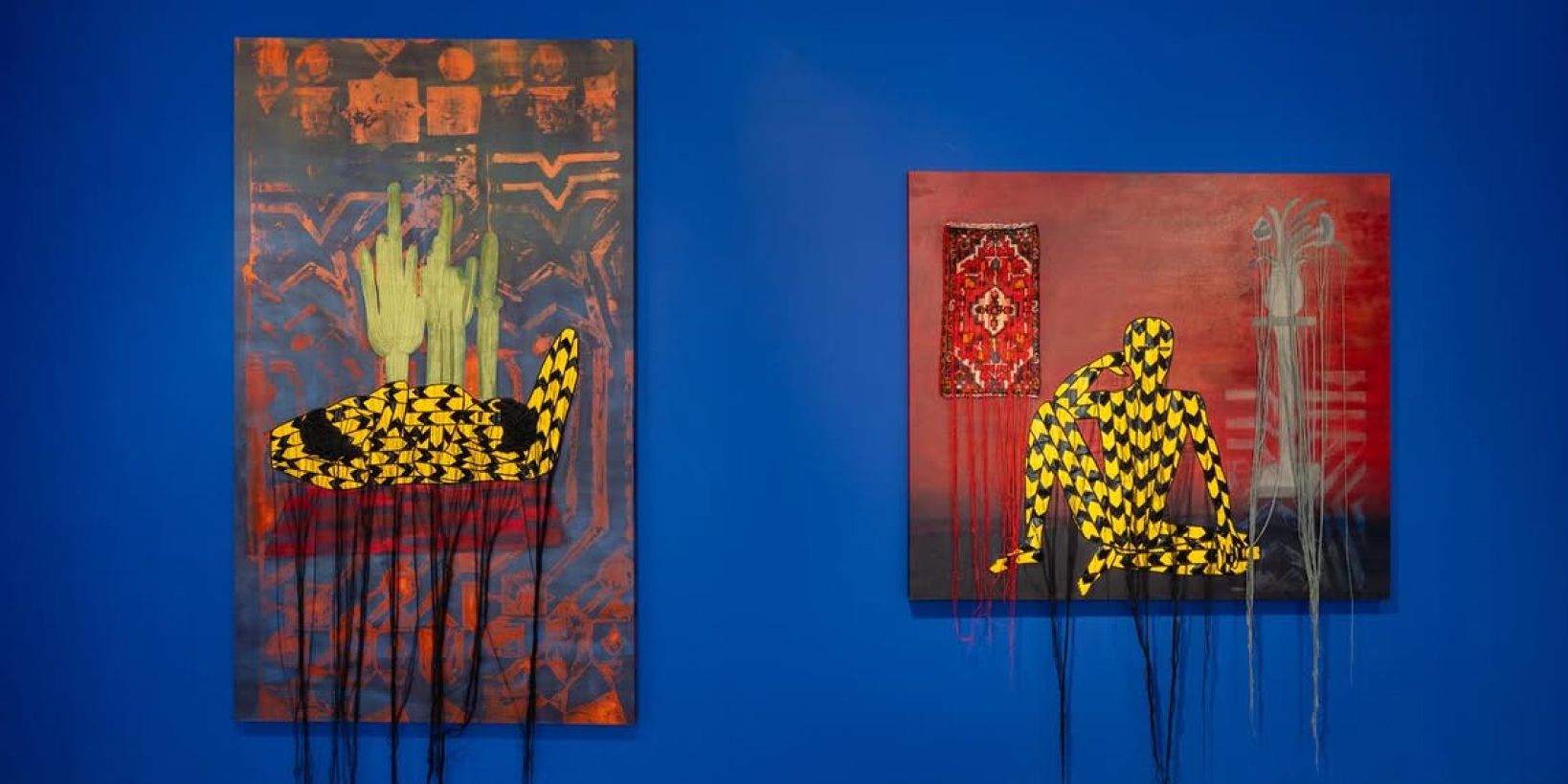
My mother arrived nearly ten years later, to work from our backroom as a seamstress. It took me decades to shed the shame of this marginal working-class history. Art and writing became the way I reconstructed it, writing me into understanding that I had grown up inside an artist’s studio all along. Our home became an oracular space, unfolding itself through rituals and intergenerational knowledge. My parents, two artisans who perceived the world through materials – yet neither would have called themselves an artist.
This space also belonged to a larger familial community, with its own kinships and methods of survival and resistance. Not every community wants to be documented, or its stories carried into unknown terrains. To belong here, you had to conform.
When I told my mother I was writing a book about the women of our community, she replied that it was “the most stupid idea anyone had ever had – who ever wrote a book?” I understood then that her refusal was her own kind of protection and survival. So where did I belong? It’s the question that I always come back to. What spaces can hold me, when the very community I draw from resists being seen or interpreted? Perhaps that is why I say I copied my mother in becoming an artist – as belonging for diaspora and queerness is never fixed. It is a place that has to be renewed every time.
That question does not belong to me alone. It crosses the Atlantic, in Kaveh Akbar’s poem The Palace, where he asks: how do we live in America? In a land idealised for its opportunity, dreams come true only by being fed to the imperial belly – the immigrant’s price of neo-liberal success. For Kaveh, in America, he lives by “reading poems, breathing shallow” and “spinning lettuce”.
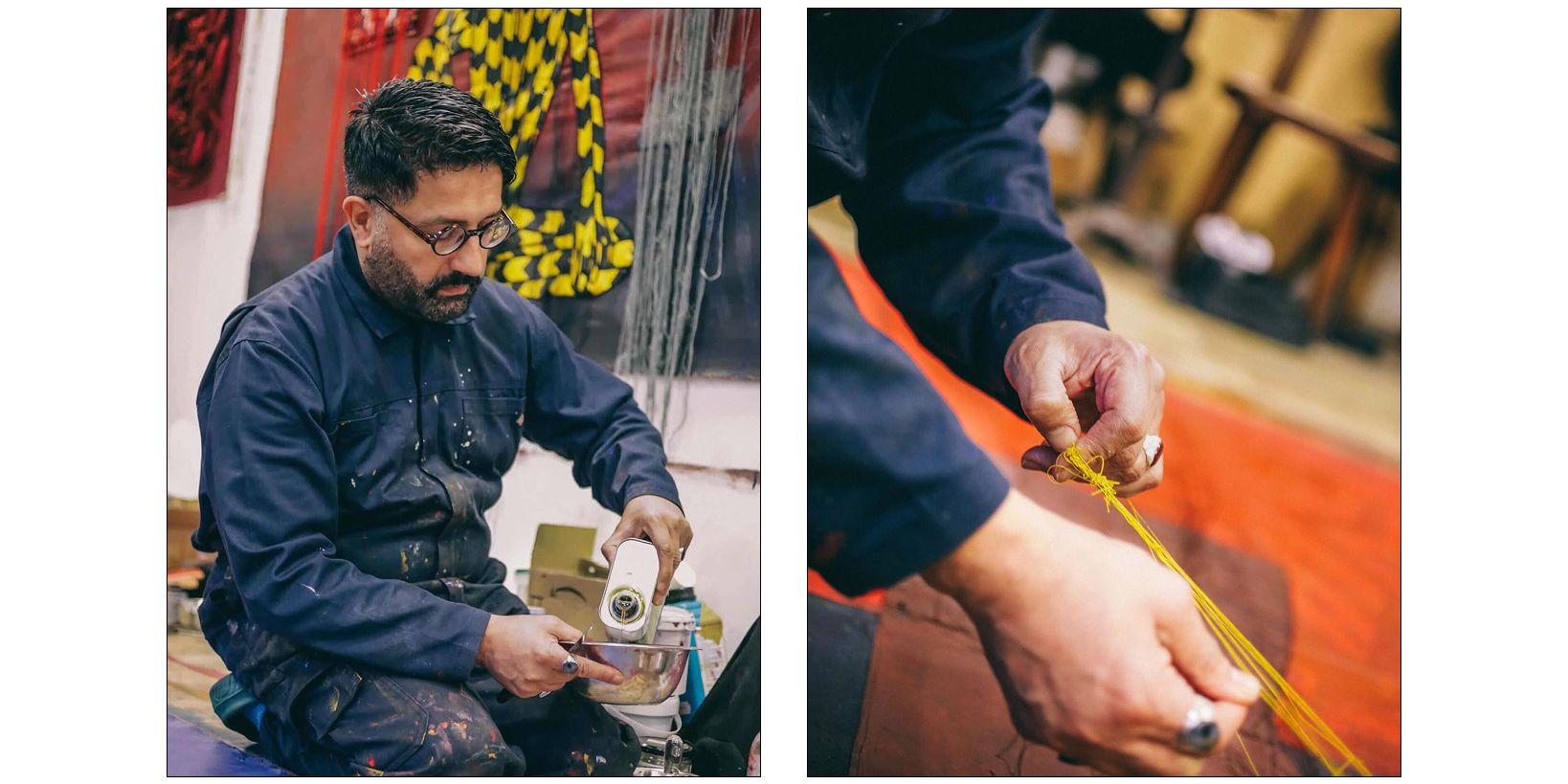
I had always seen lettuce spinners as vessels of sophistication, two bowls that sat inside the other. The inner bowl pierced with a colander worth of holes. When it’s sealed, a mini cyclone is twisted into being, and miraculously all the lettuce is dry. We never had one; it was something I dreamt towards. This was “to be American”, and this was to be British, lands of promise that turned every struggle into convenience, erasing every visible trace of labour.
When my mother had arrived in England, she thought the TV was watching her. She never turned it on, choosing instead to cover it with a cloth she had embroidered. It was an unfamiliar god and she was trying to learn to live alongside it.
Kaveh’s “mother fries eggplant”. While the “dead keep warm under America” he writes in his poem The Palace. In England my mother smoked aubergines on the gas stove, its dark glossy skin sizzles with a little mustard oil. The skin blisters and splits into a dish called Bharta. While it cooks – the smell moves through the house, climbing the stairs. The smoke carries its sweetness into the front garden. Her cooking is conversing with the outside, as the gas man arrives to check our meter. He lingers and asks what the smell is – concerned that the barbarians are cooking on open fires.
When he leaves, I tell my mother. She laughs and tells me that I should have invited him to eat - “they like our food”. Hospitality is survival. For art is encountered through the window of hospitality, inviting someone in and invariably giving something of yourself away. For my mother it was hospitality that survived, sweetening a stranger’s mouth, so they might come to know us better. Food in their belly and sweet words on their lips. This is what lingers, this is what survives, this is art.
There’s More – Delve Deeper Into Martyr! With The Service95 Book Club...
WATCH Dua’s interview with its author Kaveh Akbar
HEAR a playlist picked by author Kaveh Akbar to soundtrack his novel
READ five books that inspired Kaveh Akbar to write Martyr!
DISCOVER the true story of Iran Air Flight 655 – an event that plays a pivotal role within the book
BOOKMARK ten titles to read when you’re having an existential crisis