The day Alice Wong died – 14 November 2025 – you could find me sobbing at the bar, my mind cast back to another place, another time when I first discovered her work.
I was 23 years old, and less than a year into acquiring Long Covid – an umbrella term for a litany of issues, at least two which left me using a cane and still needing extensive medical intervention. Year Of The Tiger, a balm to tired souls anywhere, found me in the Barnes & Noble bookshop on 5th Avenue in New York. At the time, I was supremely vulnerable, anxious, totally unsupported and uncared for by the medical professionals who were supposed to provide care. There was nowhere left for me to turn; her words, woven together with all the others I have since read across her many projects, saved me. There is no other way to describe it.
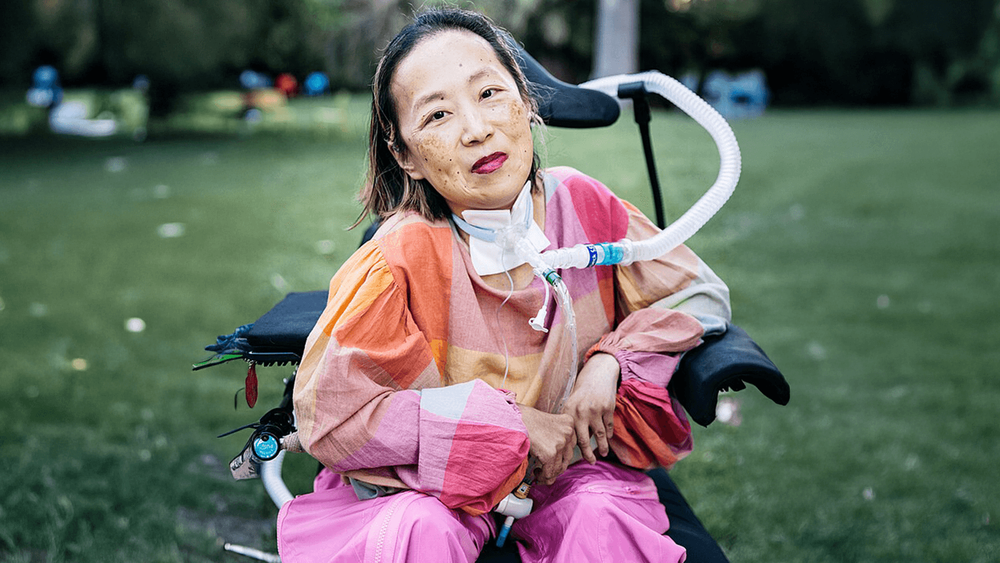
An activist, writer and self-described “disabled oracle”, Alice Wong was born in the US in 1974. A life lived as an advocate for the world’s largest minority group, she was the founder and director of the landmark Disability Visibility Project, dedicated to creating, sharing and amplifying disability media and culture. She wrote and edited several books; other efforts included campaigns including #CripTheVote, a social media movement encouraging disabled people to vote in the 2016 US presidential election. To live a life unapologetically is something we rarely see; Alice died at the age of 51, leaving behind an incredible legacy.
Even most cautious estimates put the number of disabled people globally at more than 1.3 billion, and yet, we are so rarely seen in the mainstream. From shoutouts to books such as the manifesto Who Wants Normal? by Dr Frances Ryan or guest essays like Immigrant Rights Are Disability Rights, Wong’s Disability Visibility Project has been instrumental in creating a vital space for so many people placed at intersecting identities.
A statement posted following Wong’s passing – written in her own words and posted by her friend and fellow activist Sandy Ho at her request – read: “We need more stories about us and our culture. You all, we all, deserve the everything and more in such a hostile, ableist environment....” Underneath the post are comments after comments of people remembering Wong’s work – from her behind-the-scenes support to her unfailing commitment to advocacy. She taught us that to see people like you reflected back at yourself is to know you are not alone. That care work, usually done by women, has a place and should never be forgotten. Her one final sentence stays with me: “Don’t let the bastards grind you down. I love you all.”
“We need more stories about us and our culture. You all, we all, deserve the everything and more in such a hostile, ableist environment... Don’t let the bastards grind you down”
Alice Wong
The organising power of disabled women should never be underestimated. And Wong has been a key player in harnessing this power. Her memoir Year Of The Tiger reveals her desire for change from a young age. The book includes a letter she wrote to Time Magazine aged 16, on the subject of the right of disabled people to employment. She notes: “The people who think disabled people can only do a few things are the ones who really have limits on what they can do.”
In the disability rights movement, women have often been the ones to create lasting change. In the UK, activists such as Barbara Lipsicki campaigned for the passing of the 1995 Disability Discrimination Act, while the US had Judy Heumann, the mother of the disability justice movement. Wong taught us that we owe a debt to those who came before us, whom she would refer to as “disabled ancestors” – the idea that the people of my community are somehow all connected.
Her vision for a better world was evident via campaigns such as #AccessIsLove, which she cofounded in 2019 with fellow disability activists Mia Mingus and Sandy Ho. The premise was to create a world where acts of access around disability – a ramp for a wheelchair user to get into a building, for example – are framed not as a burden, an obligation, a cumbersome afterthought or a cynical token gesture, but as acts of love.
Whether organising relief efforts during the pandemic, amplifying fundraising drives or raising awareness about Gaza, Alice Wong was unapologetically intersectional. She was a feminist, and always allowed space for our various identities to be held in tandem, not in conflict with each other.
And the books, how lucky we are to have her books! My favourite will always be Disability Intimacy: Essays On Love, Care & Desire, a mediation on the meaning in intimacy when disabled. The day I began to use a cane in public – a support for my Long Covid diagnosis which impacts my legs – I was attacked in public. A man thought it appropriate to target me as a ‘corrective’, a retribution for a ‘crime’ of existing as a disabled woman. That included verbal abuse, running and throwing objects at me, threatening and acting out violence. In the aftermath, I wouldn’t leave my home, not trusting anyone to even interact. The book’s essays of explorations, such as the state-employed act of giving care, to the sexual exploration of BDSM, were my permission to fully inhabit ‘woman’ + ‘disabled’ + ‘feminist’. I still pass this book to all my friends. In its resonance, it remains my guiding force.
For now, we grieve – and we share our sadness in talking, writing and the making of art. Our world is all the poorer without Alice Wong, but the work she left behind now must continue, for a better, kinder world.