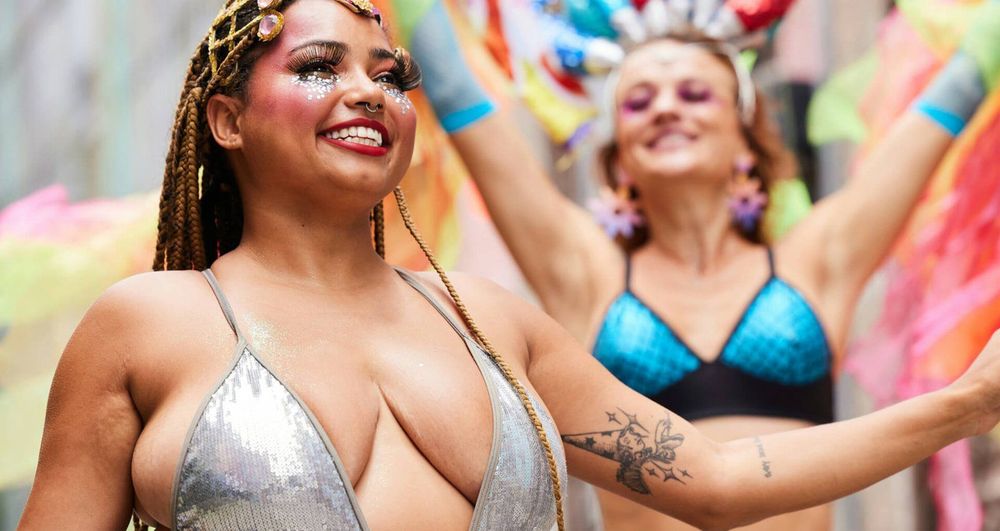
Many will know samba as the dance, song and spirit of Brazil’s spring Carnival season. Since the first parade in 1932, its spellbinding beats and moves have become synonymous with celebrations, costumes, colour and life, especially in the coastal city of Rio de Janeiro: where over two million cariocas (Rio locals) and tourists hit the streets daily over the five-day festivities.
In the early 20th century, the samba rhythms now associated with Carnival formed within the Afro Brazilian communities of Bahia in northeastern Brazil. Faiths and festivities began to cross-pollinate and Afro-Brazilian spiritualisms including Candomblé and Umbanda emerged, inspiring the beats, songs, moves, processions, costumes and stories of samba.
As a curious person with Portuguese ancestry, I set out to learn more about the messages of samba – and its relationship to Afro-Brazilian activism and spirituality – on an alternative tour of the city...
The Spirit Of Samba
I meet Brazilian TV personality Alinne Prado, who explains how ingrained the spirit of samba is in Rio city life. “I was born and raised in a favela, Morro do Dendê, and have paraded since I was a child,” she says. “My mother paraded pregnant with me.”
For Prado, samba embodies “one of the greatest manifestations of resistance of the Black people. When they enter the avenue of samba, they incorporate kings and queens. They exalt their faith in religions of African origin... sing their faith in the orixás (deities), tell their trajectories of strength, struggle and ancestral wisdom.”
One of the best-known of these deities is Candomblé ocean goddess Yemanja. She is said to protect those at sea – harking back to the treacherous conditions enslaved Africans were subjected to on their way to Brazil. Each year on 1 January, thousands run into the sea wearing white to make their offerings to her.
Samba Schools & The Favelas
Samba schools started growing in popularity in 1920s Rio as a way for blocos (neighbourhoods) to avoid oppression, as Afro-Brazilians were often targeted by the police for street carnival activities. In this way, the samba schools became beacons resistance, born in the city’s favela communities. Many of the schools are now government funded, with some of the primary ones boasting up to 50,000 members.
You can see them in action at the Sambadrome Marquês de Sapucaí – an arena built in 1984 to host the annual parade of samba schools during Carnival. Visit the free museum Centro de Referência do Artesanato Brasileiro, where you can learn about the history of the spirits, beliefs and rituals and how samba came to life in the favela of Mangueira (home of the revered school Primeira de Mangueira).
“Mangueira is in my story, it is in my life and I would even say that my blood is green and pink,” professed samba singing legend Alcione in 2023, about her beloved school and its emblematic colours that represent the mangueira (mango) tree. In 2007, the school celebrated the 80th anniversary of Carnival by opening its percussion drums section to women for the first time. Thereafter – inspired by that pink and green pioneering feminist spirit – many drummer queens have reigned in schools across the city.
Pequena África & Pedra do Sal
An area of numerous overlapping neighbourhoods make up Pequena África, or Little Africa, “a neighbourhood of total Black effervescence,” as described by Marcelo Freixo, a local socialist politician and human rights activist. Must sees here include the Muesum of Afro-Brazilian History and Culture, Largo de São Francisco da Prainha and Tia Ciata’s House.

Prado recommends visiting the area surrounding the port-adjacent monument Pedra do Sal. “There you can connect by going to the Cemitério dos Novos Pretos, a site where the souls of slaves are honoured – and understand more about Black cariocas pain and resistance. At the Cais do Valongo old dock, you will find historical records linked to the transatlantic slave trade, to the African diaspora.”
Sacred Spaces & Objects
Prado is a typical carioca, with her blended faiths and influences. “I grew up in an evangelical home, but started to go to the Candomblé terreiros [places of worship] as an adult,” she says. “I still love the gospel, but my heart loves the sense of collectivity and belonging that exist in the houses of Candomblé and Umbanda.”
Eduardo Possidonio, a professor of African religious history, has written about how African-Brazilian religious objects have been used as a means to scaremonger or justify racism by the police, the press and the general public. He cites the Sacred Objects exhibition at the Museum Of The Republic as an act of justice and reparation. According to him, the exhibition – which honours terreiros such as Ilê Omolu e Oxum and Abassá Lumyjacarê Junçara – is a sign that the museum sector in Rio has “turned its attention to anti-racist education”.
The Sounds Of Carnival
Listening to Alcione is a great entry point to samba, along with any anthems from the major schools such as Mocidade and Vila Isabel. Contemporary samba pop innovators such as Seu Jorge are known for their modernisation of the genre, while DJ K leads the musical collective Bruxaria Sound on hyped label Nyege Nyege, inventing an outrageous, peculiar strain of percussion and storytelling vocals.
Outside of Carnival period, Freixo recommends visiting the samba compounds: ‘‘Warehouses that are working at full speed preparing for the next Carnival. We have community-based tourism being carried out in the favelas, with locals who will introduce you to the culture of Rio’s outskirts, the street dance of passinho, funk and food.” There are also countless rodas de samba (collective communal dancing circles for all to join) that take place all day long in every corner of the city.
Alexandra Pereira is a freelance travel writer whose work has appeared in publications including Suitcase, Condé Nast Traveler and Adventure.com