There is a time, all across South Asia, when mangoes take over. The season begins in Southern India in spring, lasting deep into the summer heat across the whole region, from Bangladesh to Nepal, Pakistan to Sri Lanka.
It’s part of the morning breakfast table and evening rituals; blended into milkshakes or used to flavour ice creams.
A box of mangoes is the highest-quality gift – they’re associated with prosperity. Communities across the region have their own favourite types and families negotiate with their preferred mango vendors or farms to get the best of the crop.
Mangoes aren’t just seasonal fruits; they are part of the culture. For the South Asian diaspora, the mango connects them to home. Many of those living in London, for example, will have a favourite store from which the annual supply is secured. For me, it’s Aeliya Foods on Ilford Lane in East London. Where there is access to hotter climates and terrain similar to the one they left behind, people will always try to grow a mango tree to carry part of the land with them.
The Alphonso, king of mangoes, may reign supreme internationally but, locally, Anwar Ratol, Chaunsa, Dasheri, Langra or the Totapuri are preferred, depending on the region. Chaunsa is the variety my family harvests in Multan, Pakistan. I was due to fly back in late May, for the earliest part of this year’s harvest, but the current unrest in the Middle East derailed plans.
So, I resolve to live through updates from family and friends. Those friends include Indian photographer Gorkey Patwal, who has been travelling to farms in Meerut, outside New Delhi, to capture the farming communities during mango season. He’s been spending time with the newer generation taking on the role – such as Mohsin Khan, whose farm is harvesting the same Chunsa mangoes as my family. Here are the stories from his last trip.
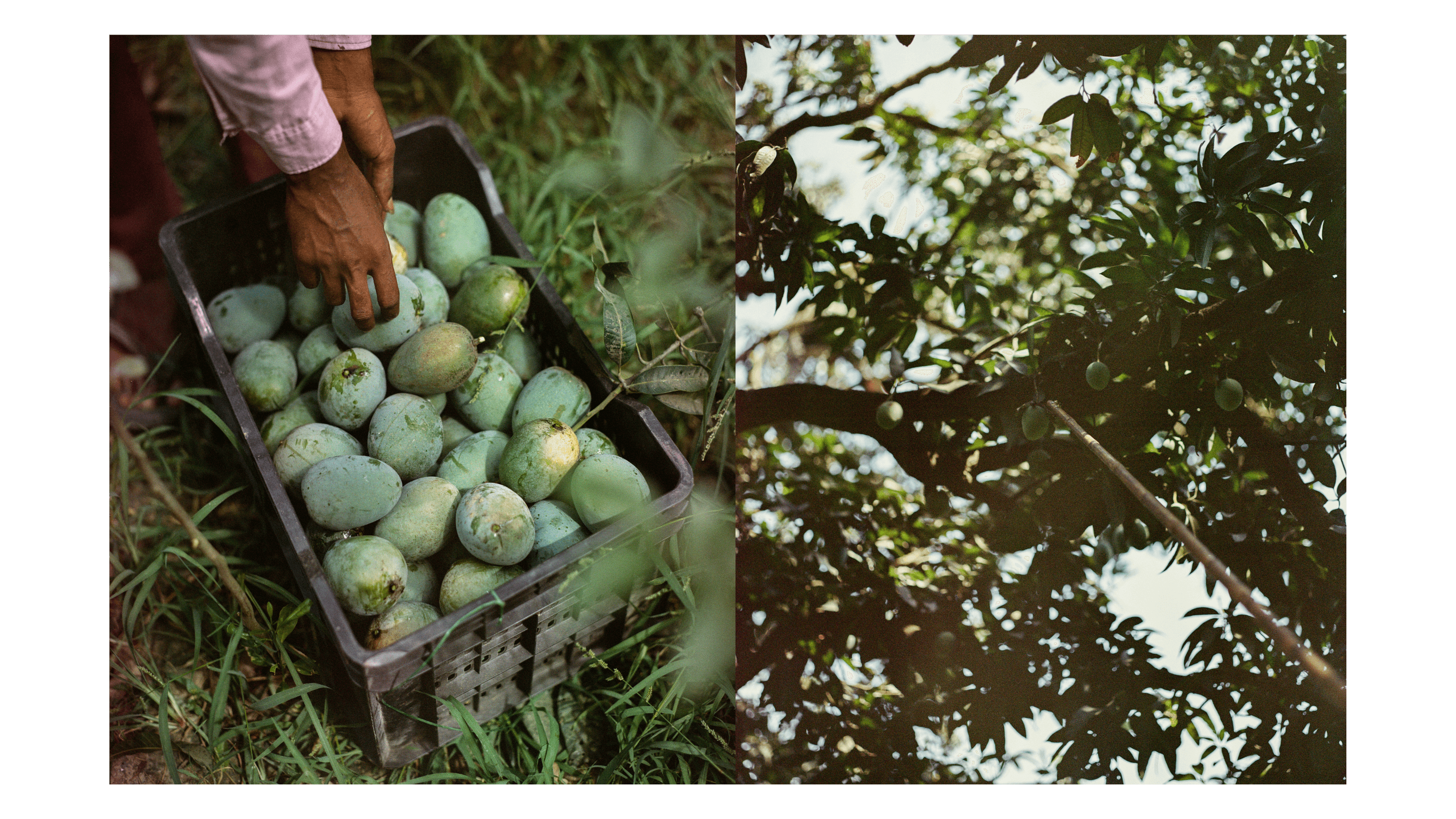
A mango tree bearing fruit at Mohsin Khan’s farm in Meerut, India. Mangoes are notoriously sensitive to changes in climate. Over the course of history, many have tried, but mostly failed, to produce varieties that can be transported long distances. Such is the appetite for mangoes that most harvested, including these, are for local consumption. Only a small fraction are sent overseas.
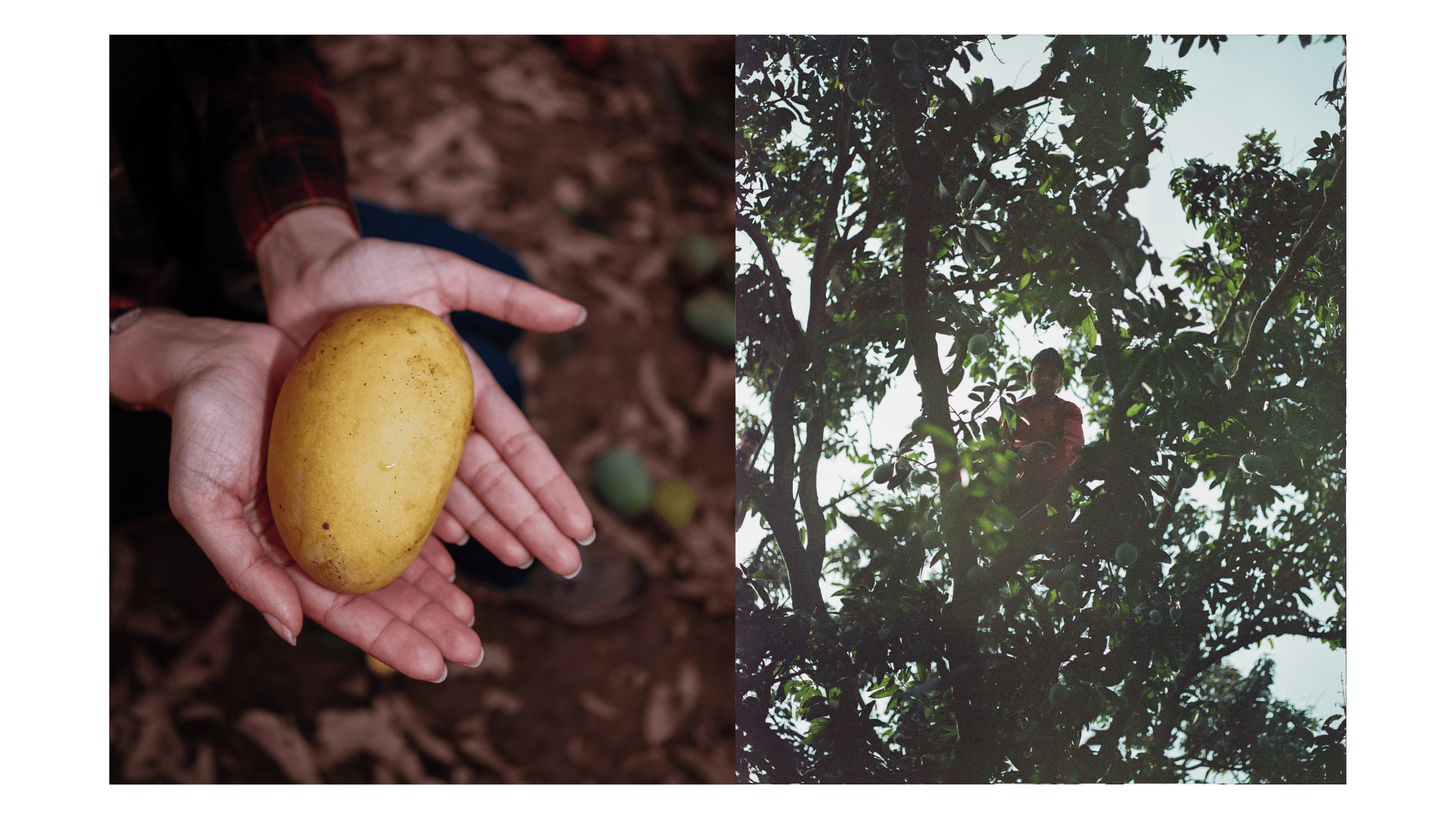
A mango is a prized possession, treated with great care. One eaten from an ice-cold bath of water or the fridge drawer is part of daily life in the summer. Mango farming is a labour-intensive process and these images feature a newer generation of farmers at work, tending to each tree and its fruits individually, scaling the branches to reach them and often working in extreme heat.
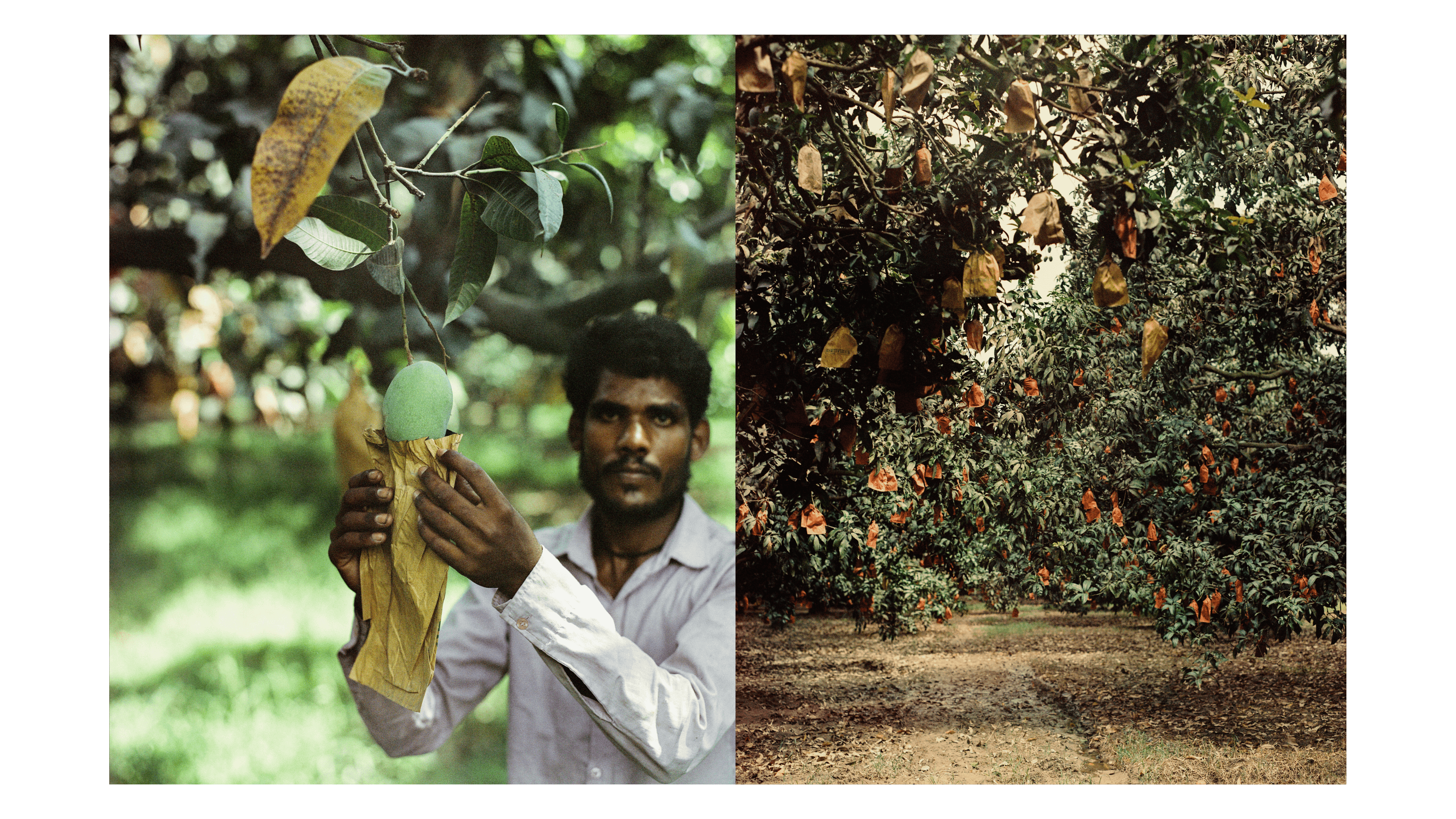
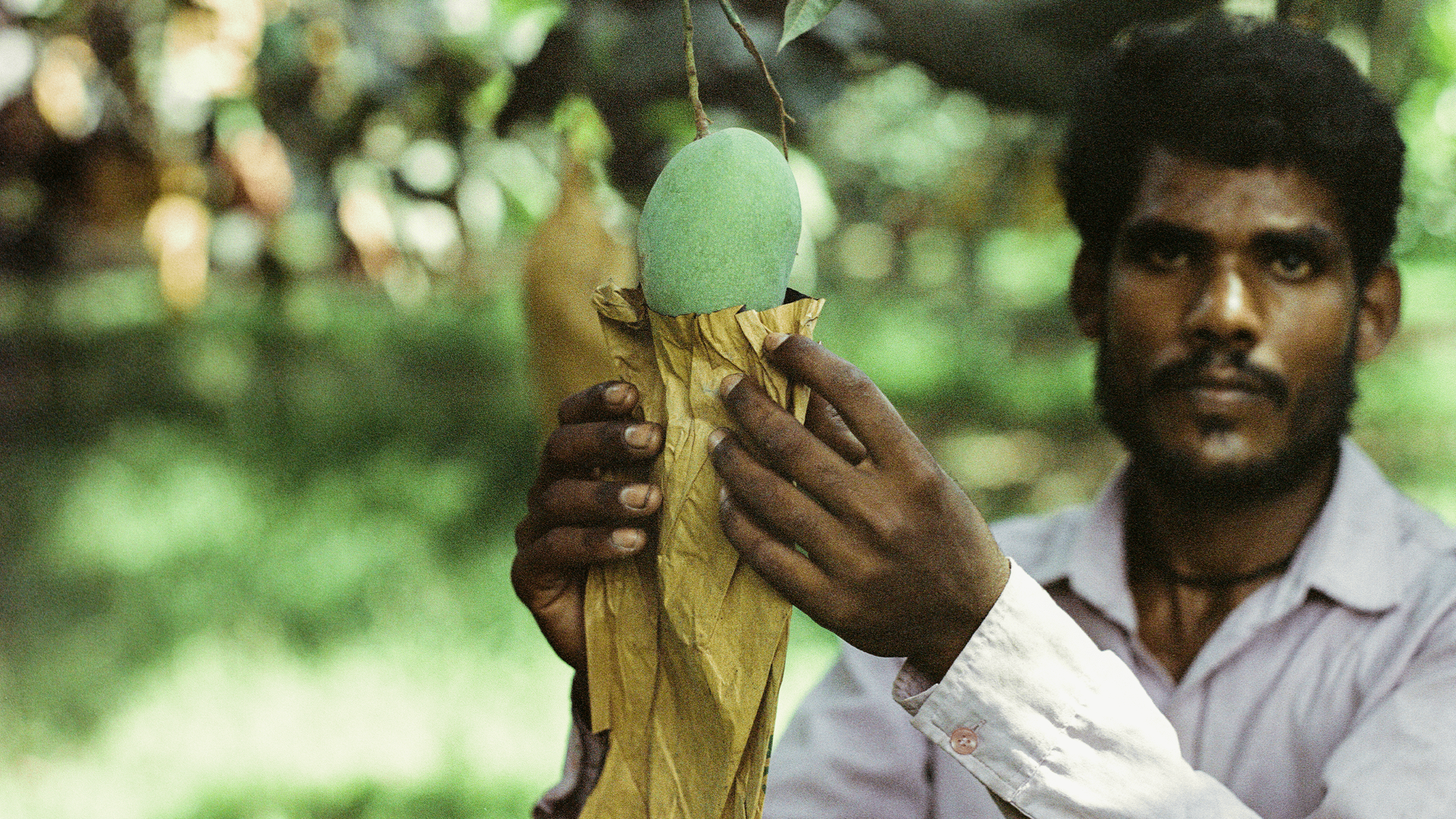
Individual mangoes are covered in a cloth or paper case on the tree to protect them from extreme sunlight exposure and pest infestations. This packaging allows them to reach the final stages of ripening.
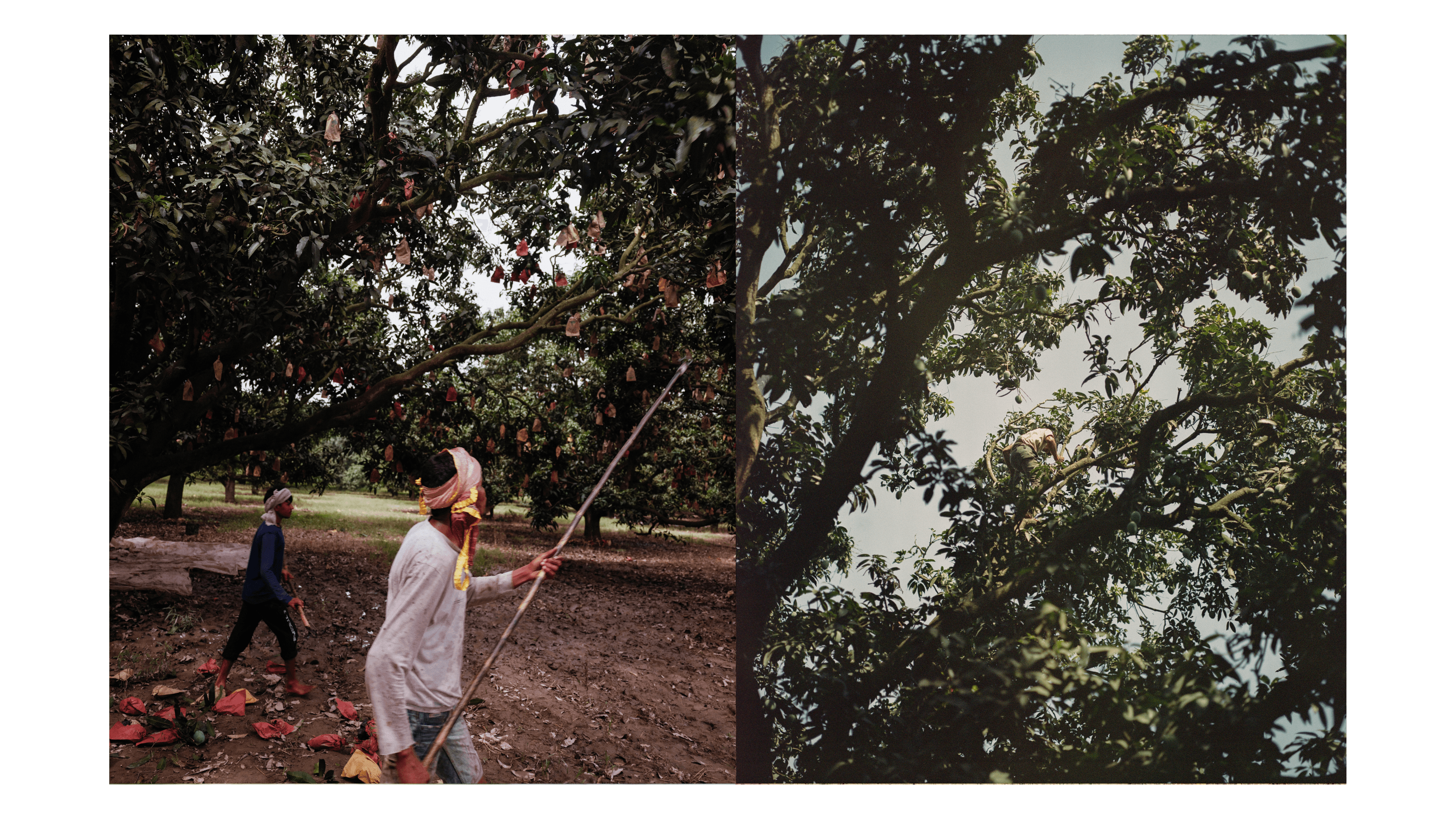
A shared love of the final product creates a festive atmosphere on the farm during harvest time, which plays out through singing and poetry recitals as workers tend to the trees.
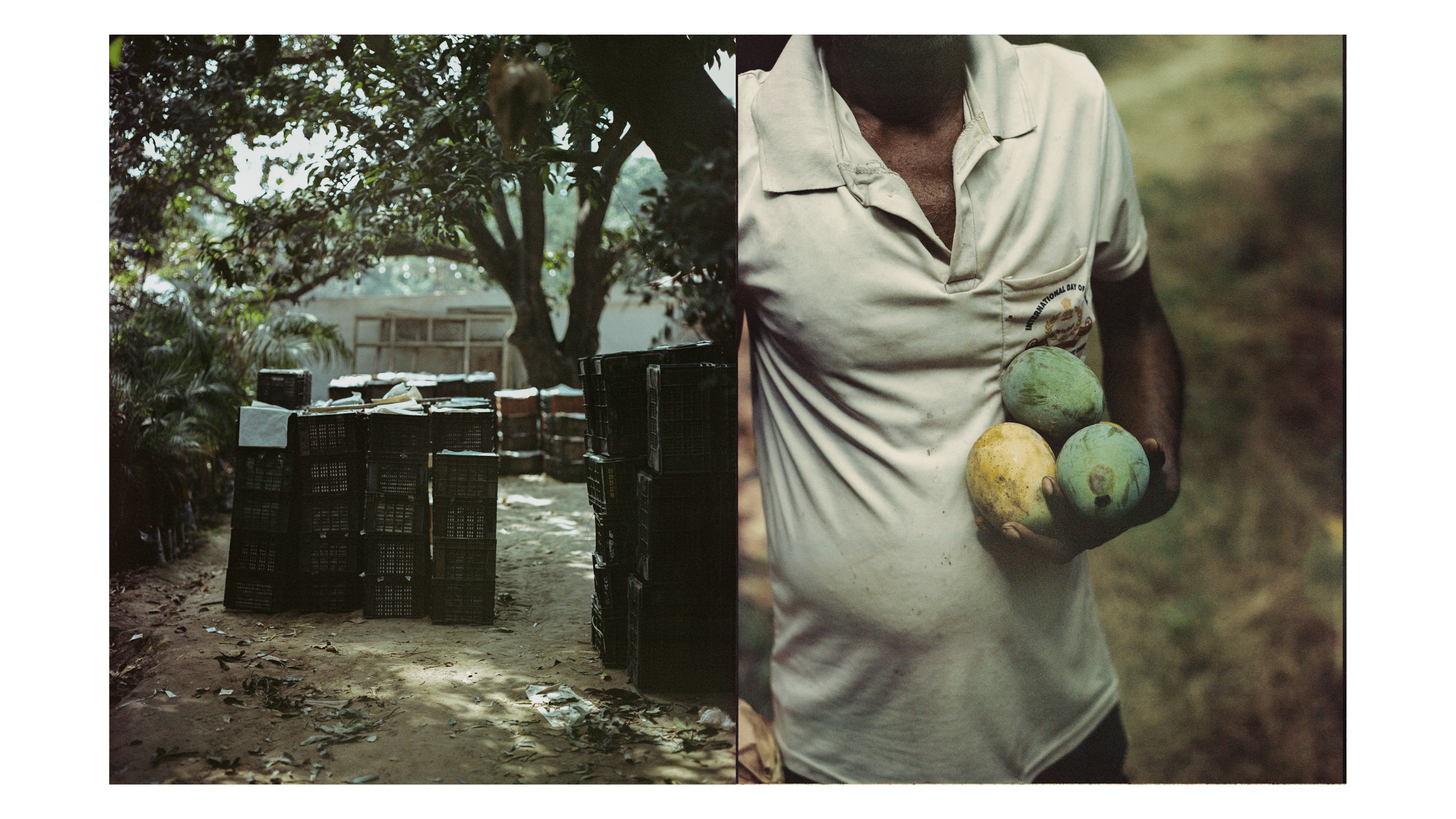
Mangoes stacked in crates at harvest. Many families host parties on the farms during this period; deghs (large pots cooked on open fire) of biryani or pulao are cooked to feed those who work tirelessly. Once the day is done, they will feast – a meal that concludes with plenty of mangoes.
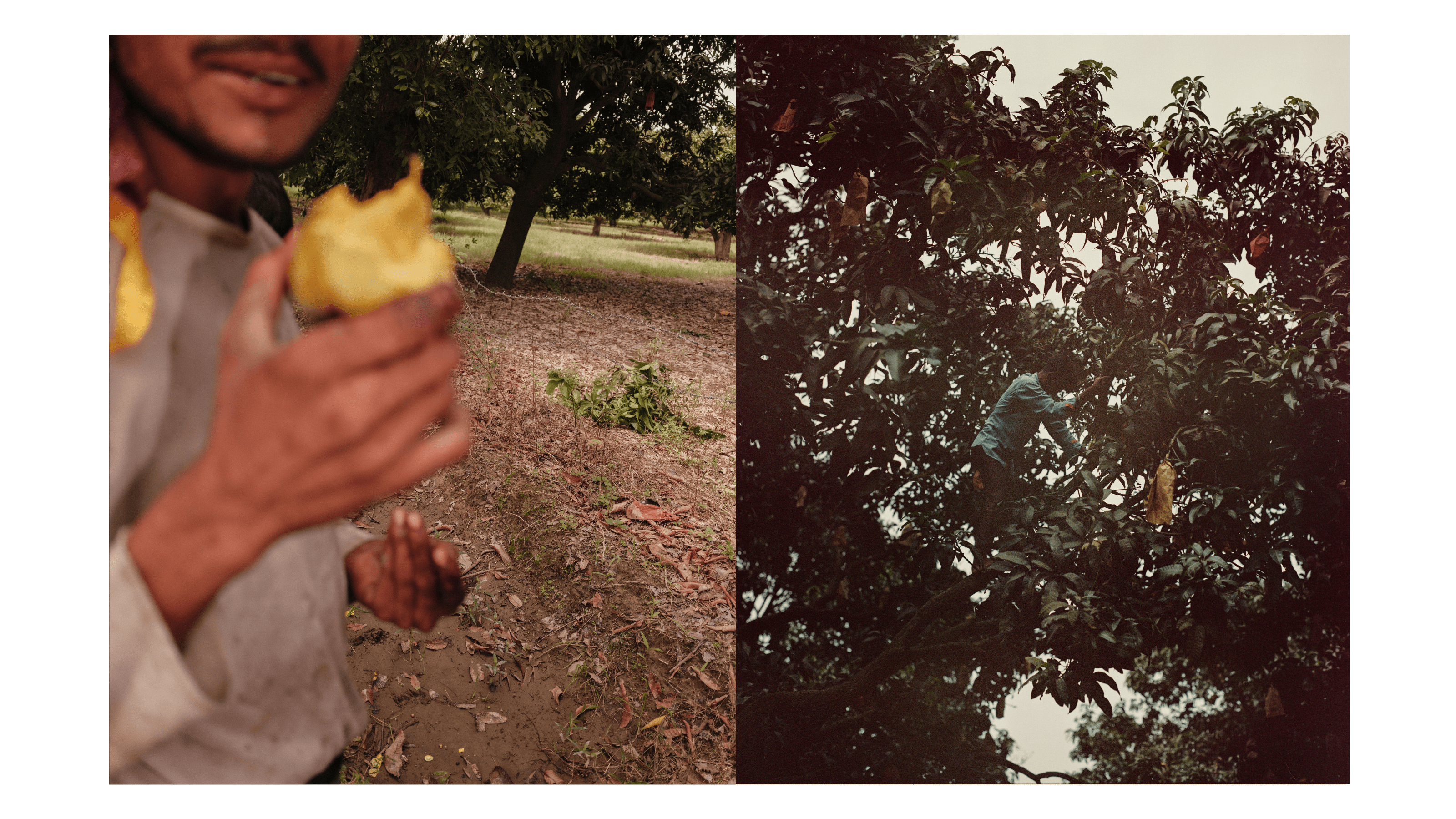
Farmers reap the rewards of their tireless efforts with the first pick of the crop.
Gorkey Patwal views storytelling as an emotional release, a visual ode to our everyday feelings. Born in India, he possesses a natural instinct for capturing genuine human connections. His striking visual language lends a distinct cinematic feel to his work. Driven by social commentary, human connection, and unifying traditions, Gorkey’s creative process transforms storytelling into art. He is drawn to the intersection of old and new, capturing the collision between heritage and modern life.