Growing up, I loved to play badminton and cricket. In rural Pakistan, we didn’t have dedicated athletic facilities, so my neighbours, brothers and I played in the street or on the top of our flat-roofed house. Sometimes a ball was just plastic bags held together with rubber bands. When I became a teenager, though, I had to stop playing. In our conservative, patriarchal society, it was considered immodest and dishonourable for women to compete in sports.
But as a young adult, I’ve returned to my childhood obsession. I run and lift weights, golf, ski and play padel tennis. And I love to watch women’s sports. It’s such a thrill for me to cheer from the stands while strong, talented athletes battle it out on the field or the court. Sometimes, though, it makes me wistful – I wish I’d grown up playing on a team with other girls, and that I could experience how it feels to win a game together.
Though women’s sports are more popular than ever, too many girls are still left out. A recent study in the UK found that 43% of teenage girls who once actively enjoyed sports drop out after primary school, compared with 24% of boys of the same age. The statistics are similar for the US and many other Western countries – and much worse in parts of the world where strict social norms keep girls on the sidelines.
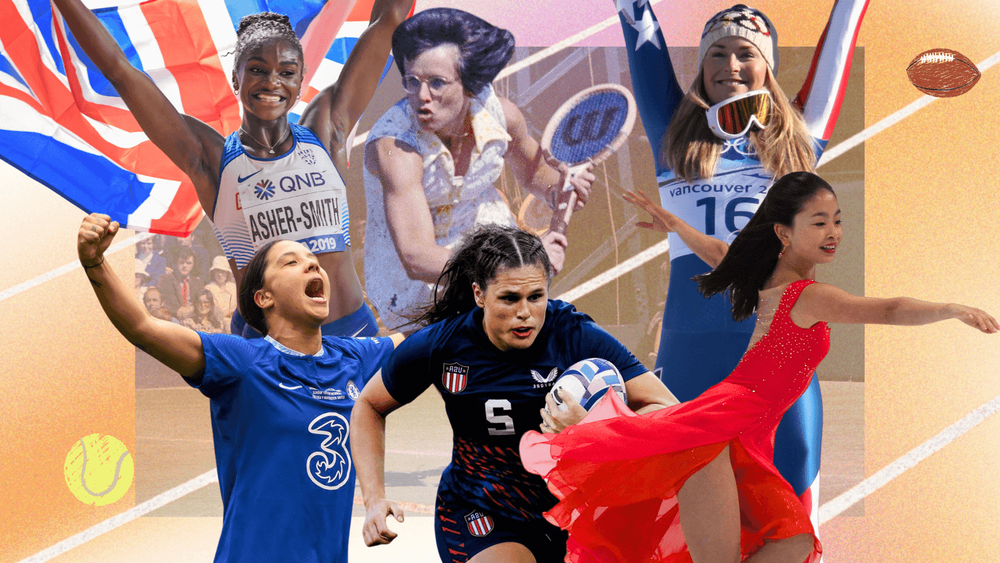
That gap isn’t just about numbers; it’s about lost potential, confidence, and opportunity. To understand how girls navigate these challenges, I asked some legendary athletes who have broken barriers in their sports to talk about their lives as young athletes, and what advice they have for girls who want to stay in the game:
- Ilona Maher is a US rugby sevens Olympian and social media personality, known for her viral Olympic TikToks and advocacy for body positivity.
- Billie Jean King is a tennis legend and gender equality advocate, famous for her 39 Grand Slam titles and the ‘Battle of the Sexes’ match that increased recognition of women’s sports around the globe.
- Lindsey Vonn is a decorated alpine skier with four World Cup overall championships and three Olympic medals.
- Maia Shibutani is an ice dancer and two-time Olympic medallist and three-time World Championships medallist, known for promoting diversity in figure skating.
- Dina Asher-Smith is a British sprinter and World and European Championship medallist who holds national records in the 100m and 200m.
- Sam Kerr is an Australian soccer star, all-time top scorer for the Matildas, and a leading advocate for women’s sports.
Together, these women’s experiences show not only what’s at stake when girls are excluded, but also the power of persistence, mentorship and opportunity to change the game...
Malala: Who was the first person who encouraged you to play – and who made you believe you could do it?
Ilona Maher: My dad, Michael, is a big reason I get to call myself an Olympian. He had only daughters but knew that he would never treat us any different than if we were boys. He believed sports were an amazing way to build confidence, and encouraged my sisters and I to try pretty much every sport that was offered.

Billie Jean King: My first coach, Clyde, was a regular guy – a retiree in his 60s who gave free tennis lessons to blue-collar kids like me at a public park. I was 10 when I met him. By 11, I knew I wanted to play tennis for the rest of my life. I asked Clyde if he could make me a champion. His reply: “No, but with hard work, you can.”

Lindsey Vonn: My entire family always believed in me and sacrificed a lot to get me into ski racing. We moved from Minnesota to Colorado so that I could ski and, for a family of seven, it was no small feat. Without them I never would have made it.
Maia Shibutani: I was four years old when I started skating. My parents made sure that my first coach was a woman who was very kind and playful. Having a positive and enthusiastic teacher protected the natural joy that I felt on the ice.
Sam Kerr: My mum has always been a big supporter. She drove me up and down the city to be able to play different sports throughout my childhood.
Malala: What barriers did you face, particularly early on in your career?
Dina Asher Smith: As a young Black girl, there was a lot of pigeon-holing into what people thought I should be, should sound like or should represent without taking the time to take a step back and look at my character. A lot of doors were closed for me, particularly commercially.

Maia Shibutani: When I was coming up in ice dancing, I wasn’t sure if I had what it took to be successful. I didn’t doubt my skating skills or passion, but I quietly wondered if my “look” would ever be seen as “elite.” All of the women I saw winning at the Olympics were tall, lean and blonde.
Sam Kerr: In my early career, I struggled with the constant battle of playing football with no financial safety. There were always people telling me I needed to get a job and earn money as female athletes never earned a lot of money. I had to risk my education to pursue my career with football. My first few years I earned barely any money, but I did it because I loved it.
Ilona Maher: I never really dreamed of being a pro athlete. I went to college and studied nursing, knowing when I graduated I’d have a well-paying job. But as I continued getting better at rugby, I was getting looked at by the national team. I had to decide whether to pursue a sport that really wouldn’t pay anything, or stick with what would be a secure job in nursing.
Billie Jean King: When I won my first Wimbledon singles title in 1966 at 22 years old, the US Lawn Tennis Association paid players a per diem of $14-$28 a day – my only income from sports. Even when I started earning bigger sums in prize money, it was always a fraction of what my male counterparts won. I was proud to lead the charge for equal pay in tennis, but we still have so far to go in women’s sports overall.
Malala: When doors were closed to you, how did you get through anyway?
Maia Shibutani: Instead of trying to emulate anyone else’s performance style or look, I have embraced my own uniqueness. In 2018, I became the first Olympic medallist of colour in the history of ice dance. Even though I had never seen other athletes of colour succeed at the highest level in my discipline, I was able to handle the pressure and break that barrier because I had developed a strong sense of self.

Ilona Maher: A lot of times as female athletes, we aren’t going to be paid a lot through our sport – we have to give up security and comfort to pursue our dreams. I made barely anything [in rugby], which is actually more than some female athletes make. I’m happy I stuck with it, but it wasn’t easy.
Dina Asher Smith: I only pursue off-track opportunities that feel true to me. The process may be a little longer, but I would rather take my time than do anything that wasn’t authentic, or did not represent women like me.
Billie Jean King: I had to become an activist for equal pay in tennis. It was a second job, all the strategizing, organising and mobilising. But that was a gift because it gave me the skills to work on other issues I care about: the fights against AIDS, racism and homophobia.
Malala: What advice would you give to a girl who is, directly or indirectly, being told “that’s not for you”?
Sam Kerr: If you love it, keep going. Sport has given me so much – confidence, resilience, friends and experiences I could never have dreamed of. It’s not always easy, but the hard parts make you stronger.

Dina Asher Smith: There’s nowhere you don’t belong. If you’re facing financial or racial barriers, there are organisations to support you. In the UK, charities like Sport England and the Women’s Sports Trust have initiatives to address these challenges. There are local clubs, and free after-school activities you can join. Speak up and seek support because there will be people out there who will help you in your journey.
Maia Shibutani: In life, you’ll find that people always have commentary or opinions about what others should do. The good news is that sports are a fantastic way to find and build a community who will support and care about you. They will help guide you through your early years in sports.
Lindsey Vonn: Never forget that no one always wins. You’ll fall and fail and that’s ok. It doesn’t mean you aren’t good enough, it means you have an opportunity to get better.