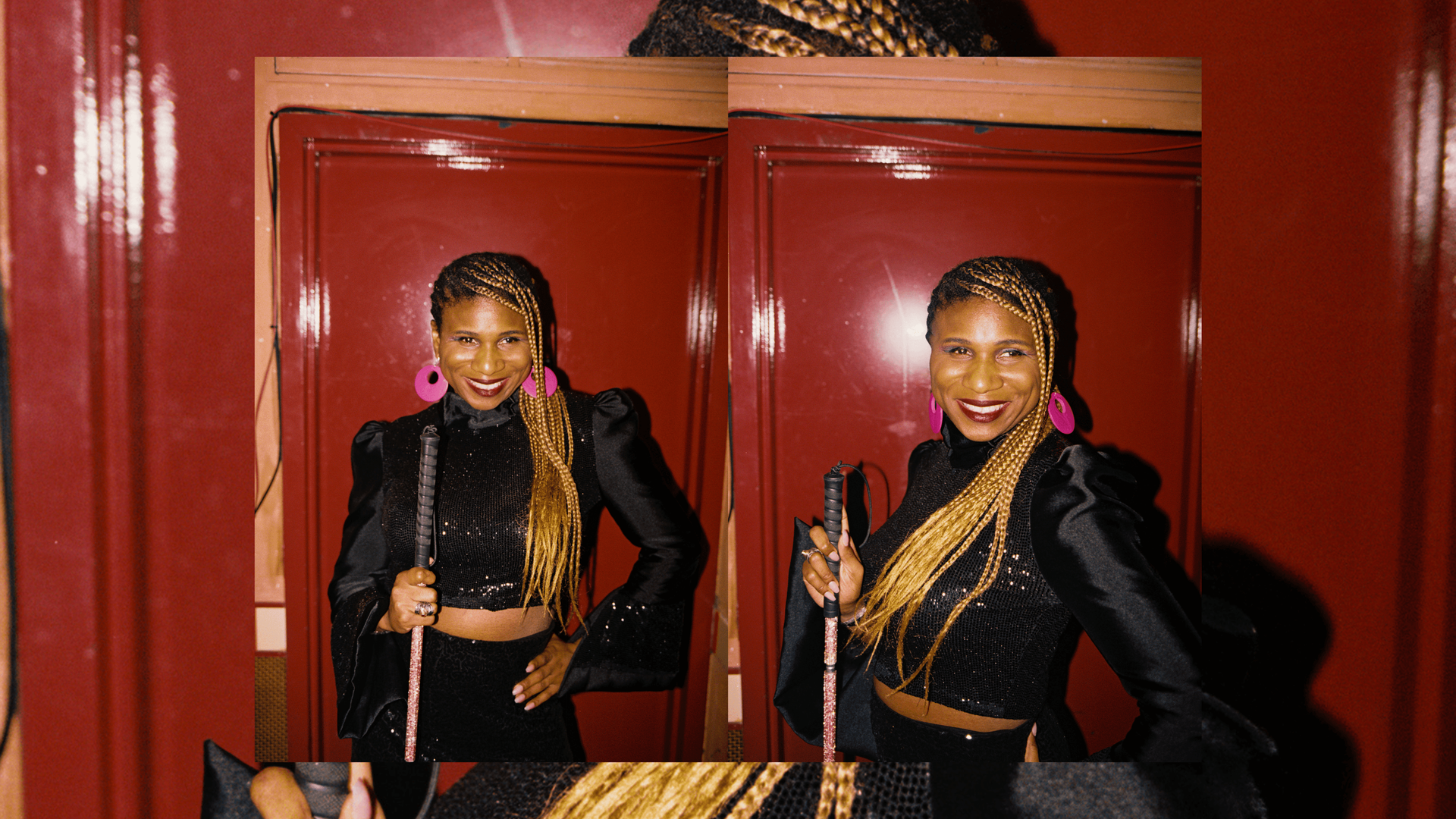
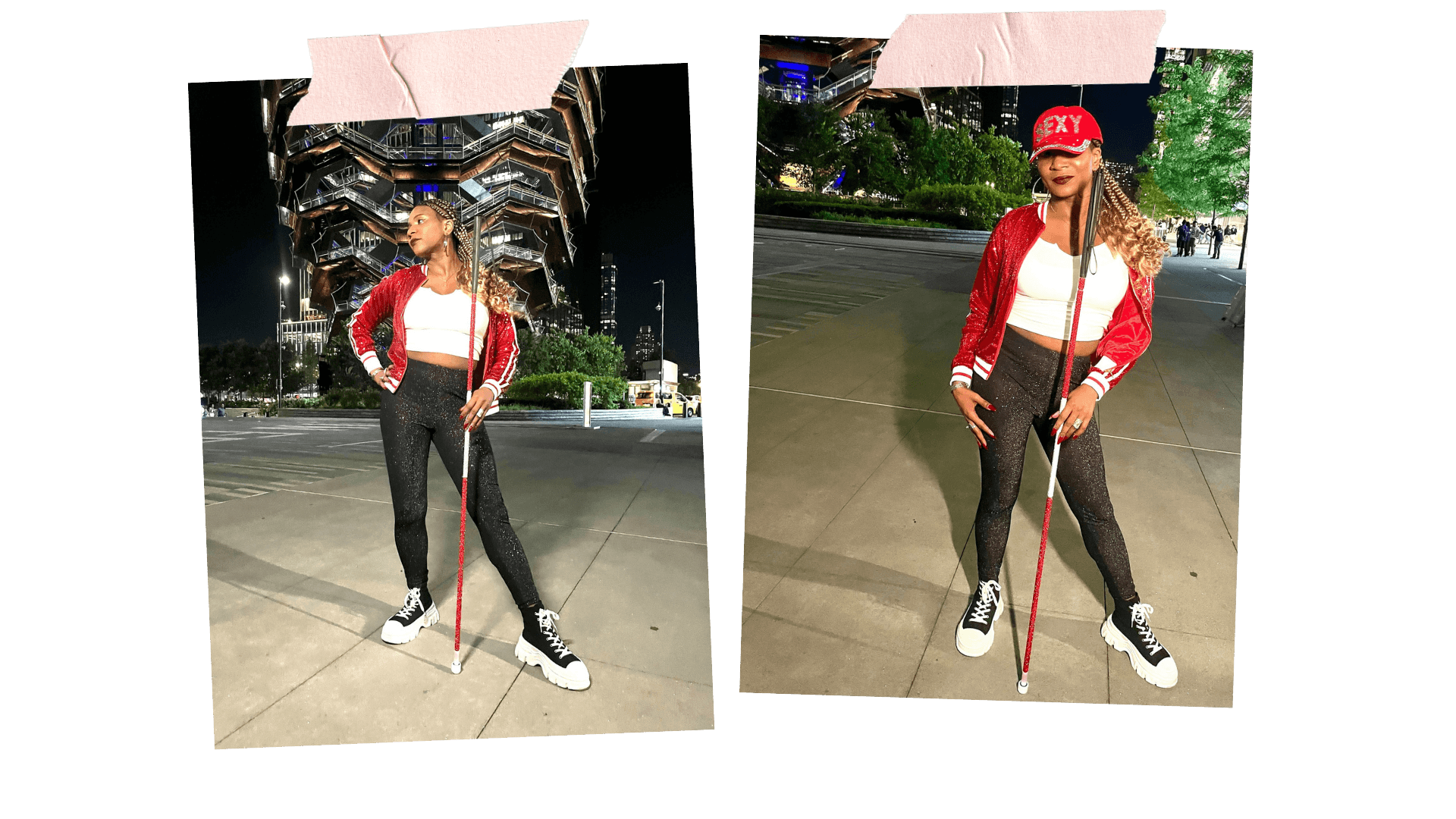
Lachi is a living declaration. She announces herself – she/her, Black woman with cornrows, legally blind, neurodivergent, New Yorker, Aries – and then she gets down to business. Since founding RAMPD, the coalition for recording artists and music professionals with disabilities, she has become the first openly disabled, blind and neurodivergent person elected as a National Trustee of the Recording Academy, produced a Grammy-nominated album and, in January, published I Identify as Blind, a book she describes as “raunchy, cultural and fun”.
Ahead of Lachi’s appearance at Dinner Service in New York this month, we spoke about her new book and single, what the disability movement has to learn from queer communities, and the most glamorous canes in the market.
When did you know you wanted to write your first book?
“I had been reading a lot about disability and there was this very academic, very sanitary tinge to most of it. I kept thinking: no one knows how to talk about this without it feeling weird, and because of that we mask it. So I asked: can we have fun while we talk about it? I ran around the globe and spoke to 60 people. I did a deep dive into the history of disabled art and how disability and pop culture have always worked together and wove all of that around my general story, a bunch of jokes, some rap bars and some poetry.”
The title is a declaration versus a description. When did “I identify as blind” become your lived experience?
“I found these prominent voices in the disability space saying things like, ‘I happen to be blind.’ That rubbed me the wrong way. It felt tacked on, like ‘this is not part of who I am’. But that was the whole reason I had been struggling – I had spent years trying to say exactly that. So I started opening my shows with it. My manager said it was too long, make it punchier.
“So I said: ‘My name is Lachi, she/her, I am a Black woman with cornrows and I identify as blind.’ People started clapping. Then PBS put me in an interview about Ray Charles. I opened with that line, we spoke for 45 minutes, the video went on YouTube, and every single comment was about the one sentence I said at the top. Not a word about Ray Charles. Then Google put me in a Super Bowl ad. Twenty million impressions. Same thing. I realised I was touching something. So I kept going.”
Why does it hit such a nerve?
“The logic is: you can’t identify as blind, you’re either blind or you’re not. I got into a high-profile argument on LinkedIn with the parent of a blind child who said he’d never want his kid around other blind people. He didn’t want the weakness to define him. And I thought: the strength you gain from claiming this identity is exactly what you’re taking from your child.”
RAMPD was born from a panel discussion that went viral because disabled professionals in the music industry had felt quite alone for years. What do you think that tells us about who gets to belong in which room?
“I interviewed 50 music people with disabilities. Everyone said something different about what they wanted to see change, but the one thing every single person said was: isolation. They felt they were the only one. And I thought – there is no way all 50 of you are the first. So I put everyone on a Zoom. That is RAMPD.
“What I want people to understand is that we were not do-gooders. We were not allies helping from the outside. We are talented. We want to build our own power. We want to be the managers, the agents, the people in the boardrooms and green rooms writing the cheques. We need the ramp to get into the room. We need the chair to sit at the table. And we need to be making the decisions right alongside everyone else.”
By the time we finish speaking, it’s clear every strand of Lachi's work is running the same argument through a different medium. The book makes the cultural case; RAMPD makes the institutional one. The music makes it on a dancefloor. And Glam Canes – her fashion line reimagining mobility aids as style objects rather than medical equipment – makes it in a wardrobe. The tools disabled people rely on daily, her logic goes, deserve the same design attention as anything else you choose to put on your body.
It is the same instinct, expressed everywhere she goes: that disability is an identity to show up for and not a condition to be minimised, accommodated or quietly set aside. She has been making that argument for years and the rest of the industry is slowly catching up.
Lachi attended Dinner Service New York on June 2. Her book, I Identify As Blind, is published by Tiny Reparations Books, an imprint of Penguin Random House. Plus, discover Lachi’s guide to New York’s accessible after-dark spots here.