I am not, by nature, a theatre person. I say this as someone who has spent my life and career inside culture, but typically in mediums that allow for a habit of pause and return to grasp the message – books, films, music. Theatre has felt more intimidating, like you needed to do a series of lectures and tests before they let you in. Then a friend told my husband and I to go and see Counting and Cracking at NYU Skirball in 2024. We went, and I was not prepared for what we encountered.
There is a moment that replays vividly in my mind, even today. A family arrives by boat on Australian soil and invokes the 1951 Refugee Convention. Growing up in Australia in the ’90s, under John Howard's “turn back the boats” politics, I had absorbed that story as a headline and political position. On that stage, it became a person; actually several people. A community with entire lives preceding that moment, all of it present in the room with us, depicted in previous scenes.
I cried for the character Thirru (a Tamil engineer who is thought to be dead but has survived torture in prison) and the dangerous journey he felt he had no option but to embark on. I cried for the others in the boat with him. But I think the depths of my anguish were for the millions he represents who never get depicted – fictionally or otherwise.
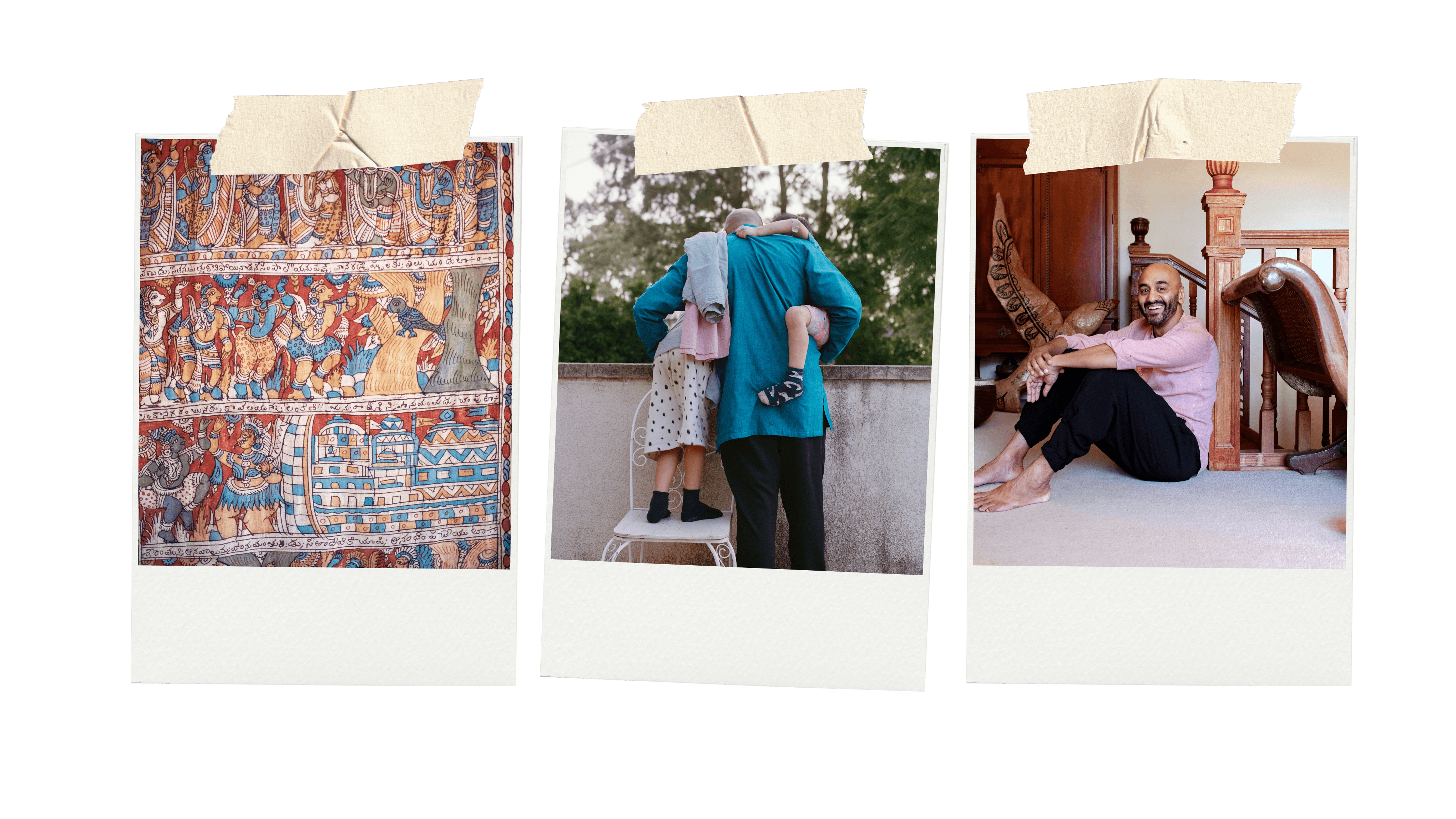
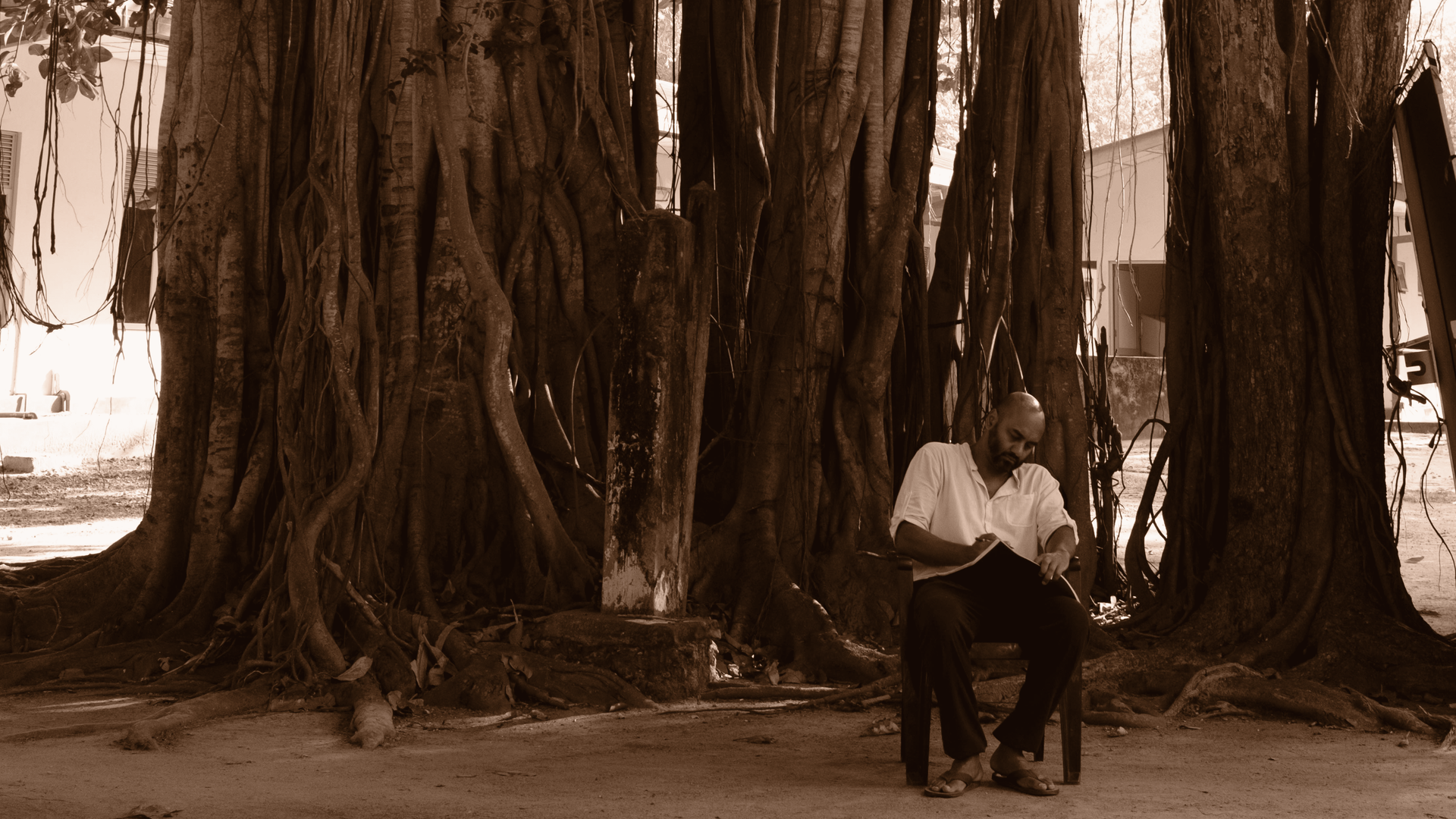
Born in Sri Lanka and raised in Western Sydney, S Shakthidharan – or Shakthi to most – is the playwright, educated by a shoebox of his great-grandfather's letters found on a trip to Colombo in his late twenties. Counting and Cracking spans four generations, two countries, six languages and three and a half hours. Its companion piece, The Jungle and the Sea, won the 2024 Victorian Premier's Literature Prize. Last week when we spoke, Shakti had just been announced as a winner of the Windham Campbell Prize.
Characteristically, he is much more interested in talking about what this acknowledgement means to the community than to him.
__________
The shoebox of letters: did you know it existed?
No idea. I grew up closely linked to Tamil arts and culture – my mum is a Bharatanatyam dancer – but inside that was almost a black hole in terms of knowing anything about my family’s history. I think sometimes that sheen of culture can be used to feel like you're carrying on a legacy, when actually it’s used to run away from harder truths.
My grandmother's sister's son put a shoebox on the table. I thought they'd be typical Tamil uncle letters: “study hard, I expect great things”. All of that was there. But in looking further, I found my great-grandfather went to Oxford, came back and was the only Tamil in the first post-independence cabinet of Sri Lanka. He believed in democracy as a vehicle to make people equal. He watched that vision fail. Then he became one of the first people to develop the idea of Tamil Eelam. It also made me grow up. I feel like it's less about talking about injustice and more about figuring out what your small role is in creating a world with less of it. And it was so tender – it's weird for two Sri Lankan men to sit and read letters to each other. Not something we do much.
What do you think theatre gives us that political journalism can’t?
A million different things happen at once, and the way they come together creates what happens next. Political journalism fights against that – it’s about a certain number of words, a category on the website. I get why. But that’s not how democracy works. Theatre lets you show the multitude of factors that lead to a city descending into violence without being didactic. And the big ensembles are the opposite message: proof that we can work together to make miracles happen.
__________
On any given night, about a quarter of the audience has never seen theatre before. One Sri Lankan uncle came by himself and sat next to a stranger. In Act One the stranger laughed a lot. When Act Two started and things got intense, the stranger began to cry. And this uncle just put his hand on his knee. And kept it there for the next two and a half hours.
Shakthi has built that audience deliberately. For years the community told him the play sounded like stupid nonsense. When it opened, tickets were being scalped like a music concert. He spent hours every day hunting down tickets for the same uncles and aunties who'd refused to come and were now saying they had to. “It was very funny,” he said. “Now they want access before everyone else in Australia.”
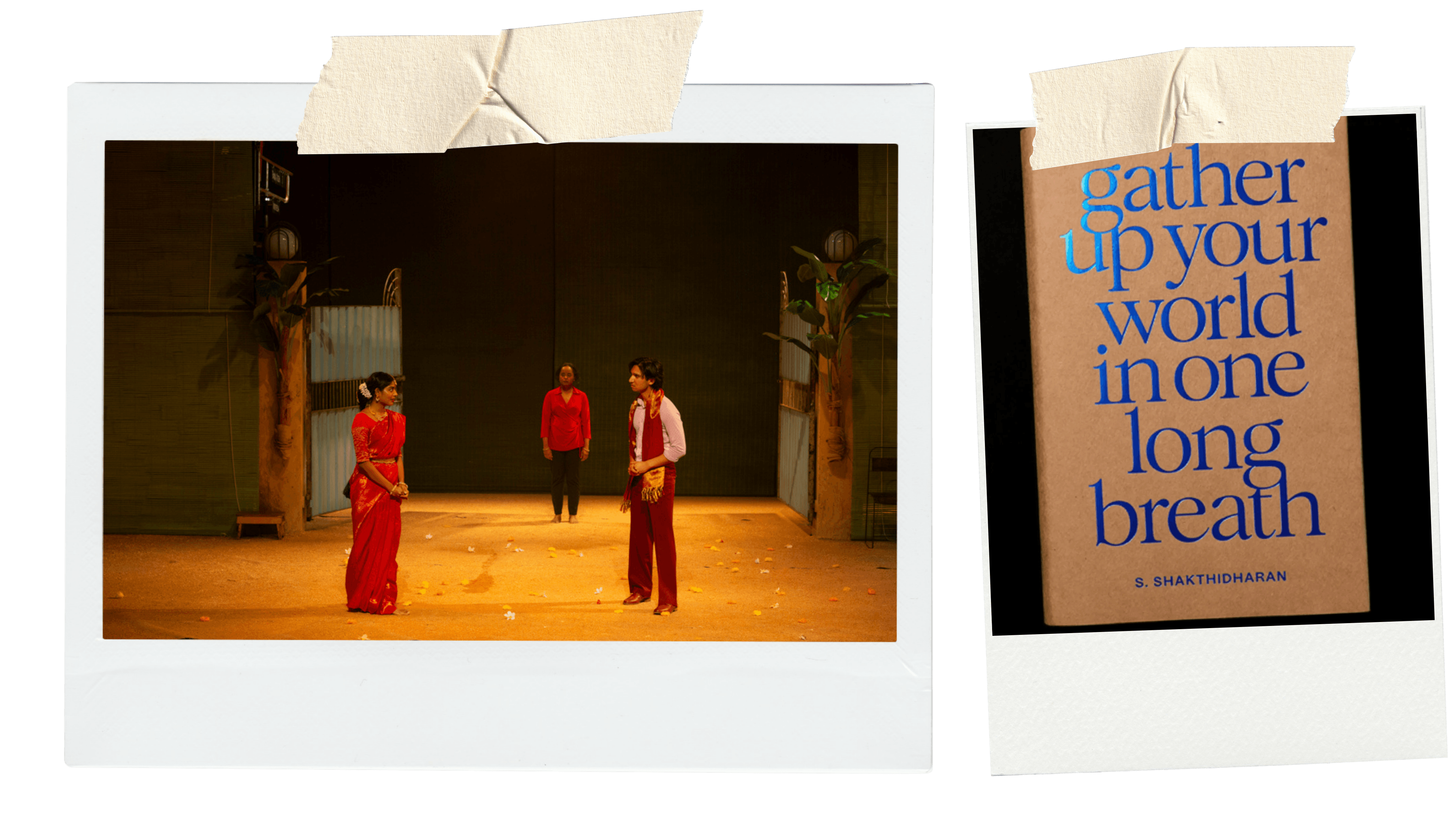
We are speaking the week of Tamil and Sinhala New Year – the holiday that falls in April, tied to the harvest and the movement of the sun rather than any arbitrary civic calendar. I ask if it is meaningful to him.
“I've always loved that we have a new year in April on a philosophical level: you can make up whatever the hell you want your new year to be,” he says. “As a kid it just felt liberating, knowing that how the West structures time doesn't have to be how you structure your life. And as I've got older, I really appreciate the calendars we have left that are related to how the natural world works. The system of harvests, the moon, the seasons moving through Sri Lanka — that's what all the important days are linked to. January 1 is just a made-up day.”
It is, it turns out, exactly where his next body of work began.
__________
Your last play, The Wrong Gods, approaches climate change from an Asian perspective. What does that lens change?
We’ve known the solutions [to climate change] since the ’80s. So the reason we're not acting has to be cultural. And my own culture already has the answers – Tamil classical poems express love through landscapes; the ragas were suited to a particular time of day, a particular place. There was a scale you played for a forest at midnight. The clues sit in how our ancestors used to live.
And then there is the furious part of me. The West put carbon into the air that cannot be taken back, and the people bearing the brunt contributed the least. A quarter of the world lives in South Asia. They need to lead that conversation. They don’t, at the moment.
__________
Shakthi is also making a film, The Laugh of Lakshmi: a mother sends her 10-year-old son from Sri Lanka to Sydney after the rest of the family goes missing. The film tracks their parallel lives over 25 years – hers being communal and tethered to the land, his driven by money and the hope of finding her.
__________
Is the slow life versus cultural ambition something you're working out in the script, or in your own life?
Both. The system for telling stories is not outside of capitalism. It's a system that will kill you if you let it. And when I think about everything I've learned from the thousands of people whose truths are in all my plays – none of their truths talk about dedicating your life to that. We exist, I think, to sit inside a scale we can actually grapple with. We yearn to belong with a small group of people we love. I haven't figured out how the way I make art can be in alignment with the way I'd like to live. That's what the characters battle with in the film.
__________
Before we finish, I tell him what the boat scene had done to me.
“Those images in the media – people in boats – are real people with real stories,” he says. “They’re much easier to deny if we think they're not three-dimensional beings. That's when they become concepts.”
He has two boys who are six and eight. A book out. A film coming. Three plays. Somewhere in Sydney, an uncle whose politics he disagrees with is already queuing for the next one.