Photography by Gorkey Patwal
It’s just off 6pm in Deep Park, South Delhi. The sun is about to set and a group of young male rappers are gathered under the dappled light of the trees, circled around a portable speaker, spitting bars. “All of my music is about these issues... caste, poverty, class differences, corruption,” says artist psykeman. “I can freestyle about women’s rights for an hour.”
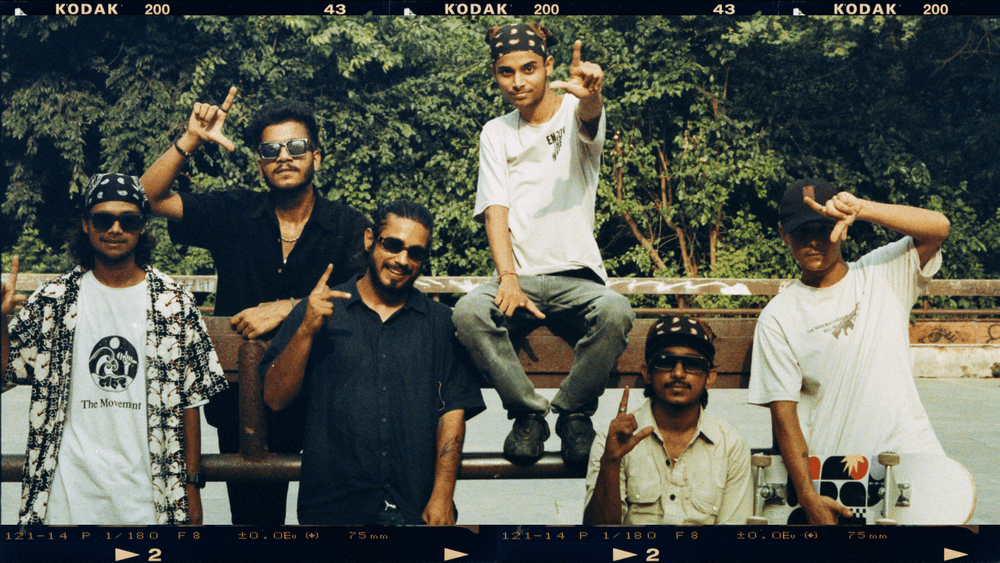
For the past eight years, a growing number of Indian hip-hop artists have been hitting the streets for cyphers – high-energy DIY rap battles, hosted by music collective Lehar. Taking cues from the street culture of 1970s New York, artists gather in public spaces and bust rhymes about life, love and society, often dressed in silver jewellery and patterned bandanas. The flow shifts fluidly between English, Hindi and Punjabi – often weaving all three into the same freestyle.
These cyphers aren’t just about competition, they’re a vibrant form of grassroots storytelling and community building. They offer a platform for young voices to speak truth to power, addressing issues like inequality, faith and political unrest, all while pushing the boundaries of language and expression. The energy is raw, frenetic and unfiltered, creating a sense of belonging and rebellion at once. It’s a movement that’s galvanising underground artists, bridging traditional sounds with global hip-hop culture and inspiring a new generation to claim their own space in the narrative.
Journalist Arielle Domb and photographer Gorkey Patwal joined the crowd at one of Lehar’s cyphers for a glimpse into that world – the voices, the energy and the underground spirit bringing Indian hip-hop to the streets...

It all started in 2017. Randhir Singh Sandhu, a sociology student and rapper, saw that hip-hop was becoming more popular in India, but it seemed like artists were siloed. His goal was to create more of an in-person scene. “I wanted people to be on the streets,” he said, “Less on the internet.”

Sandhu began organising weekly cyphers on the streets of Chandigarh, where he lived, then in cities across India: Delhi, Jaipur, Patiala. He named the movement Lehar, the Punjabi word for a wave or a social movement.

Word spread quickly. Crowds grew. Beats boomed. Sometimes 70 people showed up a rap battle. In addition to the beats and lyrics, these cyphers often have an informal, communal vibe – a space to hang out and learn from one another.

Rappers spit bars about love, religion and sociopolitical challenges, such as caste discrimination and political corruption. “Being in a cypher feels electrifying. It’s like pure energy – everyone feeding off each other’s words,” artist Nickakuma told Service95.

For some rappers, being at a cypher is a form of mindfulness – a type of trance that connects you to the moment, and to each other. “Self-awareness is the biggest part of this cypher... It helps people to learn discipline, how to behave in public,” says AP Muzik, who organises the cyphers in Delhi. “If I don’t listen to anyone, why will someone listen to me?”
Gorkey Patwal is a Bombay- and Delhi-based photographer and filmmaker. Discover his work here.