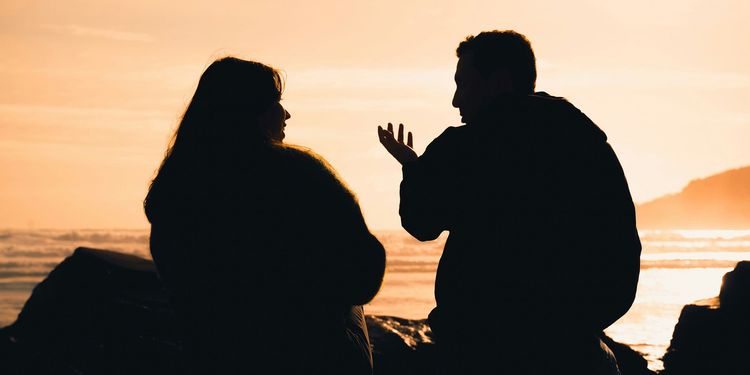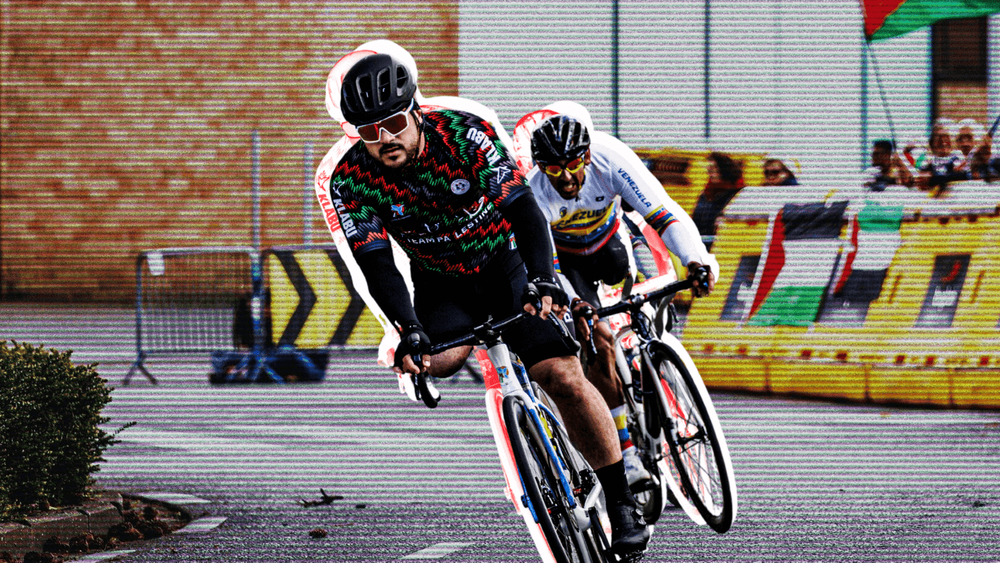
Despite everything they have endured, the first thing Karim Ali and Alaa al-Dali do when we connect on a video call is make me laugh. As members of the Gaza Sunbirds, a para-cycling team from Gaza, Palestine, they’re speaking to me from Rose, Belgium, just two days before competing in the UCI Para-cycling World Championships, which took place last weekend. It’s an unlikely moment of levity, considering the weight they carry: their families and friends are under Israeli siege in Gaza, currently facing a man-made famine. Yet here they are – smiling, joking, lifting the mood. Their humour is not a distraction, but a testament to the resilience that has brought them, against all odds, to the world stage.

The Gaza Sunbirds was founded under siege conditions in the Gaza Strip by Alaa, an elite cyclist who lost his leg in 2018, and Karim, his co-founder and the Sunbird’s manager. The team was born from Alaa’s determination to reclaim freedom through cycling after his injury – and each athlete is an amputee injured by Israeli forces. Alaa races alongside fellow cyclist Mohamed Asfour and in May 2025, Alaa became the first Palestinian to finish in the top 20 of a UCI Para‑Cycling World Cup road race.
Beyond sport, the Sunbirds have evolved into a grassroots aid network. Since the 2023 war began, they’ve distributed food, water, tents, and psychosocial support while still ensuring their athletes and families survive amidst the ongoing crisis. In everything they do – on the bike or on the ground – they carry a message louder than words. Their very existence is both athletic yet deeply political: their bodies, injuries and presence at international competitions demand the recognition of not only the Palestinian struggle, but of Palestine itself.

“Any athlete has a story of struggle,” Karim tells me. “They have a story of the obstacles that they have to overcome in order to achieve their objectives. In our situation, those obstacles happen to be a genocide. They happen to be losing your leg. They happen to be losing your cousin, losing your loved ones, having no food, losing your bikes, being in a consistent state of grief and of depression. We are not politicising ourselves; it’s just our existence is unfortunately inherently politicised. The objective of the team has always been about showing the world the struggles that these athletes face.”
In 2018, Alaa, who was hoping to compete internationally, was shot in the leg by a sniper during the Great March of Return protests, led by Palestinians in Gaza demanding the right to return to ancestral lands and an end to the Israeli blockade. They were met with lethal force that killed hundreds and injured thousands, including many who were left amputees. The injury resulted in Alaa’s leg amputation, derailing his Olympic aspirations. After meeting Karim through the cycling community in Gaza, he adapted a bike to suit his single leg, and relearned how to ride just two months after surgery.

“Palestine has no international sporting rights,” Alaa says, explaining the reason why he felt motivated to represent Palestine in sporting events. “I always wanted to leave Gaza a champion – this has kept me motivated.” Karim smiles in response, adding, “Ironically, for me, it’s the opposite. I always wanted to go back to Palestine – go back with a purpose.” Starting the Gaza Sunbirds from where he was living in London at the time was his opportunity to visit Palestine: “I wanted to go back having done something for my motherland. It was my desire to connect with home as well.”
Just two years later, in 2020, the two men launched Gaza Sunbirds with around 10 members. Their aim? To open up sporting opportunities for disabled cyclists in Gaza – a space where such chances were nearly nonexistent. Fast forward to today, and the team has grown to include dozens of cyclists and a wide network of supporters – hundreds of people helping out behind the scenes with everything from press and marketing to distributing aid. They also created The Great Ride of Return, inviting participants of all ages to gather and cycle peacefully under the Palestinian flag, and raise funds for displaced families and disability rehabilitation. The event now draws thousands. What started as a team is now a fully fledged movement – not only shining a light on Palestinian athletes but amplifying the voices of amputee athletes, too.
Though their journey is clearly one of persistence and purpose, it shouldn’t be over-romanticised. The Sunbirds have faced enormous struggles. For years, sourcing equipment was a major challenge – sometimes taking more than a month to acquire, and securing funding took up to a year due to financial regulations and international red tape.

Still, by October 2023, the team had 20 cyclists, training regularly with hopes of reaching international competitions like the Paralympics and World Championships. But those dreams were suddenly put on hold. When Hamas militants led an attack on Israeli civilians on 7 October, killing more than 1,200 people, and Israel responded with military bombardment of Gaza and its civilians, the Gaza Sunbirds pivoted from competition to humanitarian aid, distributing food, meals, toys and essential items – often delivering them by bicycle through dangerous and devastated terrain. Since then, they have delivered more than $400,000 USD of aid, including 120,000 kg of food parcels and 15,000 hot meals, along with toys and baby supplies. It’s a staggering feat – not just of logistics, but of heart.
Of course, the situation has only worsened. The Guardian reports that “scholars, lawyers and human rights activists, including Israeli academics and campaign groups, say Israel is committing genocide in Gaza, citing the mass killing of civilians and imposed starvation”. The death toll in Gaza has reached at least 62,686 people in Israel’s 22-month offensive on the strip, and wounded 157,951 (as of August 2025 via Al Jazeera). Thousands more remain missing.
Among the lives lost was Ahmed al-Dali, Alaa’s cousin – a founding amputee member of the Sunbirds and bicycle mechanic. He was killed in an Israeli airstrike in Khan Younis in May this year. He was just 33, and he leaves behind four children. The grief is immense – but for Alaa, it seems to have only deepened his resolve. He’s more determined than ever: to train harder, compete stronger and continue the Sunbirds’ humanitarian mission in the face of unimaginable loss. “Since the ceasefire collapsed in February, there’s no more food,” says Karim. “That is just the reality of it. Our team was starving for a very long time. But since we’re not your traditional aid team, our structure isn’t so sensitive. We can continue working if there’s no aid shipments coming through the borders because that’s not the only type of intervention we do.”

Since July, the team has been doing far more than riding. They’ve been repairing tents in refugee camps and schools, helping with water distribution and running psychosocial activities with children, who make up the majority of Gaza’s population, and who have suffered the most fatalities. Despite facing their own challenges, the Gaza Sunbird athletes – all living with disabilities and often supporting families of five or six – continue to show up for their community. A basic income scheme, funded through outside donations and fundraising, has helped keep them going, allowing them to balance survival, sport and service in one of the world’s most difficult environments.

“The first reaction [from people] was tears – and they felt a lot of hope seeing our aid workers,” says Alaa of the moment the Sunbirds began delivering aid in refugee camps, or during Ramadan activities. “The reason that we wanted to go out and give aid is because we wanted to show people that even with disabilities, we’re not going to give up. We’re going to keep fighting and we’re trying to give people the spirit and the hope to stay on their land, to stay in their homes, to keep resisting what’s happening.”
Even under the weight of trauma and displacement, the Sunbirds continue to pursue their athletic goals on the world stage. After Alaa was evacuated from Gaza to Egypt and later Belgium in 2024, he competed in a World Cup road race in Oostende, placing 19th and qualifying Team Palestine for the 2025 Para-cycling World Championships. The moment was a breakthrough. Over the weekend, Alaa placed 16th and Mohammed placed 17th in the individual road race at the championships, leading to a historic moment as Team Palestine secured their first-ever three top-20 finishes in the individual road races. “Insha’Allah [hopefully], next time we will place in the top 10,” he says, radiating humble determination.
Of course, the team needs to go easy on themselves. The team carries not only the expectations of sport, but the emotional toll of war – stress, anxiety and ongoing trauma. Still, Alaa insists their drive is fuelled by something deeper: “Despite the situation in Gaza, our motivation comes from knowing that the people in Palestine are proud of us,” he says, “We are training hard because the pride from the people of Gaza and Palestine is inspiring us.”
Both Alaa and Karim are determined to put Palestine on the global sporting map. Hearing “Palestine” being shouted out at the roll call during events fills the team with pride – knowing that they’re taking up rightful space and proving themselves champions. “We are ambassadors for Palestine,” says Karim. “We’re always putting the best face forward for Palestine. And it pays off because paracycling is a small community and people are in it for the right reasons, with the objective of improving diversity in sport. I think our presence goes a very long way for people.” Indeed, for them, showing up isn’t just about medals; it’s about visibility, representation and dignity. “We want to bring Palestine’s story into places it doesn’t normally get to. Cycling is a very European-dominated sport. People of colour have virtually no representation in this sport,” adds Karim.

So, what’s next? The LA 2028 Paralympics, they tell me, plus expanding the team to include more categories – especially women – and eventually building long-term community infrastructure, such as a school, in Gaza. “We can build a functional society together; it’s a communal effort,” says Alaa. “The Gaza Sunbirds has become far greater than the sum of its parts,” adds Karim, “because we’ve been able to connect activists and lawyers and technology geeks and cycling nerds with cyclists, with athletes, with politicians, with journalists. Everyone together tells a story that is rooted in resistance, rooted inherently in overcoming obstacles and continuing to fight.”
As Alaa and Karim embrace, smiling wide before parting ways to rest ahead of the championship, Alaa admits he’s “nervous, of course”– but above all, he’s proud. They tell me that they have become like brothers now. It’s a quiet but profound reminder: their bond is not only forged through shared Palestinian struggle, but through the deep, unshakable spirit of true sportsmanship – a spirit that keeps them moving forward, together, no matter how impossible the road may seem.
If you’d like to support the Gaza Sunbirds’ on-the-ground relief efforts in Gaza, you can donate here