Rewind to April this year, when Karol G was making history at Coachella. Headlining successive Sunday nights with her sharp choreography and fresh spin on reggaeton, the Colombian artist became the first Latina woman to top the bill in Coachella’s 27-year history – an extended absence she was quick to point out on stage. “It feels late,” she told the 60,000-strong crowd.
As one of the festival’s most memorable recent headline sets, it was also a high-water mark for Colombian artistry overseas. Karol G joins a succession of Spanish language artists – Bad Bunny, Rauw Alejandro and her Colombian compatriot J Balvin included – in continuing reggaeton’s explosive expansion to mainstream that’s put Latin culture centre-stage worldwide.
Yet perhaps not surprising for a country that spans the Andes to the Amazon rainforest, Pacific shoreline to the Caribbean coast, Colombia’s music is defined by its diversity. A month on from Coachella and another side of the country’s music heritage was making itself known in London’s Barbican Centre. Here, against a frenzied backdrop of marimba percussion and twirling dancers, Pacific coast singer Nidia Góngora’s full-throated vocals raised the audience to their feet as her set reached a crescendo.
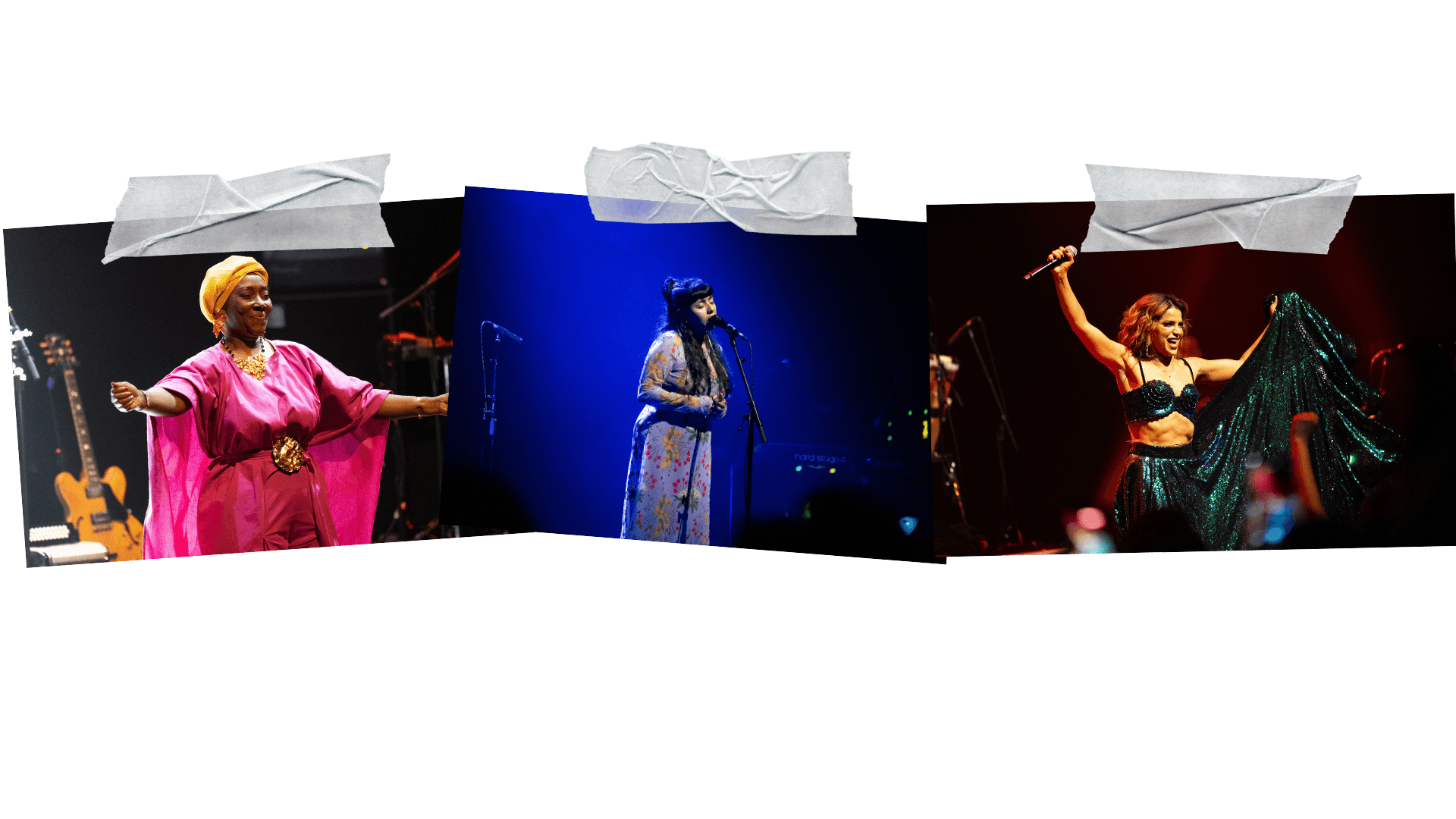
A standout from this year’s La Linea Festival (London’s longest-running Latin music event), Las Poderosas – Colombian Queens united three women artists for an evening shaped by music, heritage and activism. Earlier that evening, La Muchacha had silenced the same crowd with haunting folk-protest songs; later, established star Adriana Lucía would channel her Caribbean roots through a spirited sound shaped by gaita flutes, Afro-Colombian drumming and brass-band flourishes.
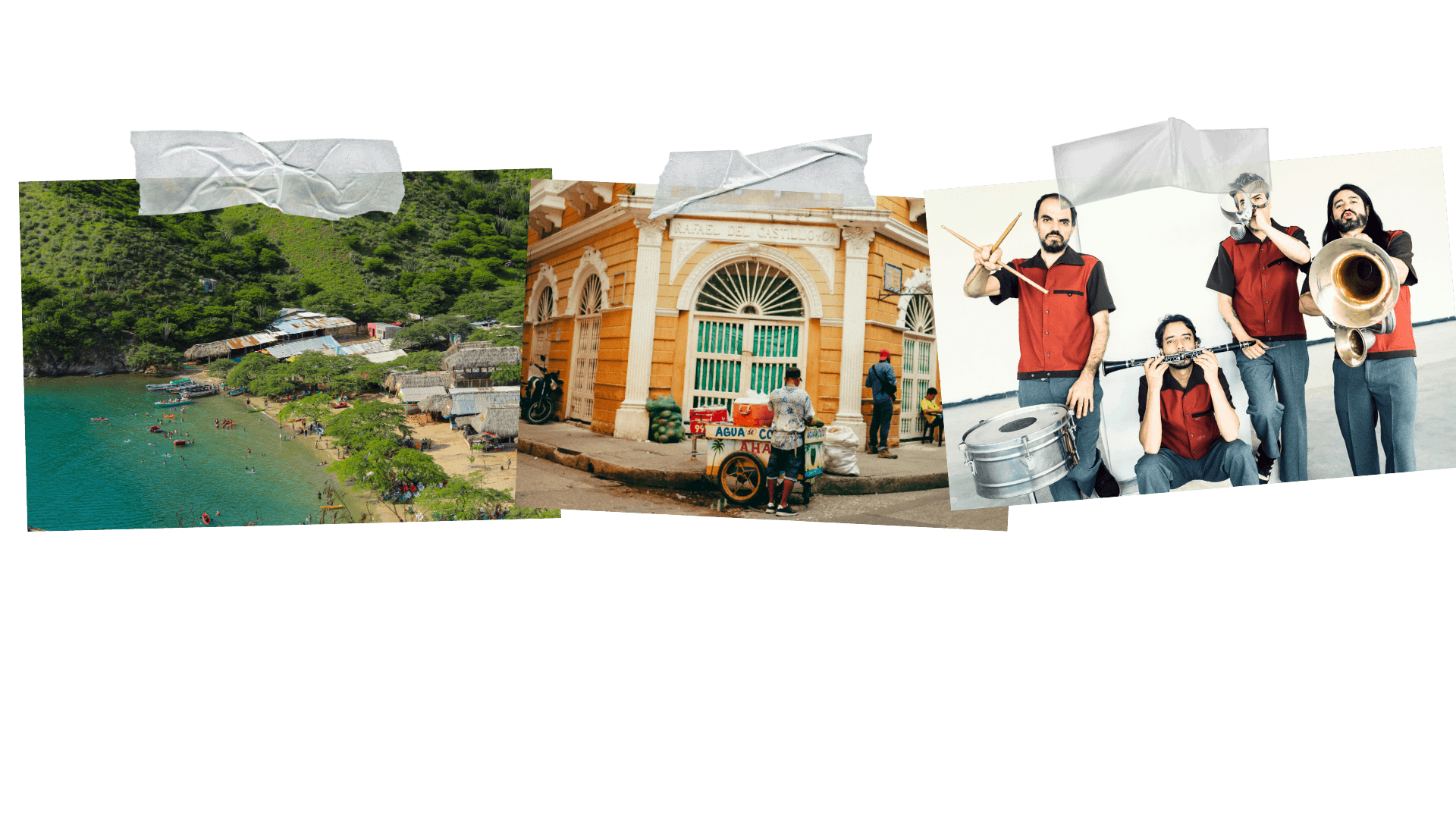
“I want to be a bridge that links people to these traditions,” Adriana tells me backstage, explaining how she came from a port town where the arrival of Spanish, Arabic and African people collided with Indigenous populations, with cultural exchanges and colonial rebellion leaving their mark on her music and along the Caribbean coast. Here, from Córdoba to Santa Marta, bars, squares and roadside shacks reverberate to bass-driven champeta, vocal-led bullerengue and the accordions of vallenato.
Yet for all the vibrancy associated with Colombia’s musical traditions, Adriana notes how much of the story stems from a complex recent past, which has seen decades of armed conflict displace millions and disproportionately affect Afro-descendent communities, themselves brought to the country as slaves by Spanish colonisers. “Colombia is a very musical country but we come from a history of violence. The territories where the most music is made is very closely related to where the most violence has happened – and I don’t think that’s happened by chance,” she says. “Music has helped to heal and rebuild the social fabric.”
Cumbia emerged from Colombia's Caribbean coast during the Spanish colonial era and has been a musical mainstay for generations. One band who have done plenty to further its evolution is Bogotá-based Frente Cumbiero. “Cumbia is defined by the mysticism of its Indigenous melodies, the dynamism of the Black drumming and the European influence found in the lyrics,” says singer Mario Galeano Toro. “Its origins, and Colombian culture more widely, can be defined by this concept of mestizaje – a mixing that has been important for our identity as a society, across food, language and culture.”
“Colombia is a very musical country but we come from a history of violence. Music has helped to heal and rebuild the social fabric” – Adriana Lucía
With a sound inspired by the country’s vinyl culture of the 1950s and 1960s as well as dancefloor-focused electronic elements, Frente Cumbiero’s collaborations with musicians as far afield as Bucharest and Tokyo ensure boundaries continue to be explored. “Global awareness of cumbia has changed a lot and that’s to do with internet culture,” says Mario. “It's still evolving and we’re very much in tune with how it’s developing overseas, too.”
From the sound system culture and a fast-rising Afrobeat movement along Colombia’s coastlines to its mountainous interior, where a world-class club scene has emerged out of Bogotá and Medellín, a new wave of artists are embracing ancestral sounds. “The most exciting direction right now is how young artists honour their roots while completely breaking the rules,” says Elena Beltrami, director of London-based Latin music promoter Como No, which curates La Linea Festival. “There is an explosion of ‘electro-tropical’ and Pacific-fusion sounds, with musicians taking ancient rhythms and plugging them into synthesisers, heavy basslines and punk mentalities. It feels fresh because it isn't a nostalgic look backwards. It is futuristic, politically conscious, inclusive and custom-built for modern dancefloors.”
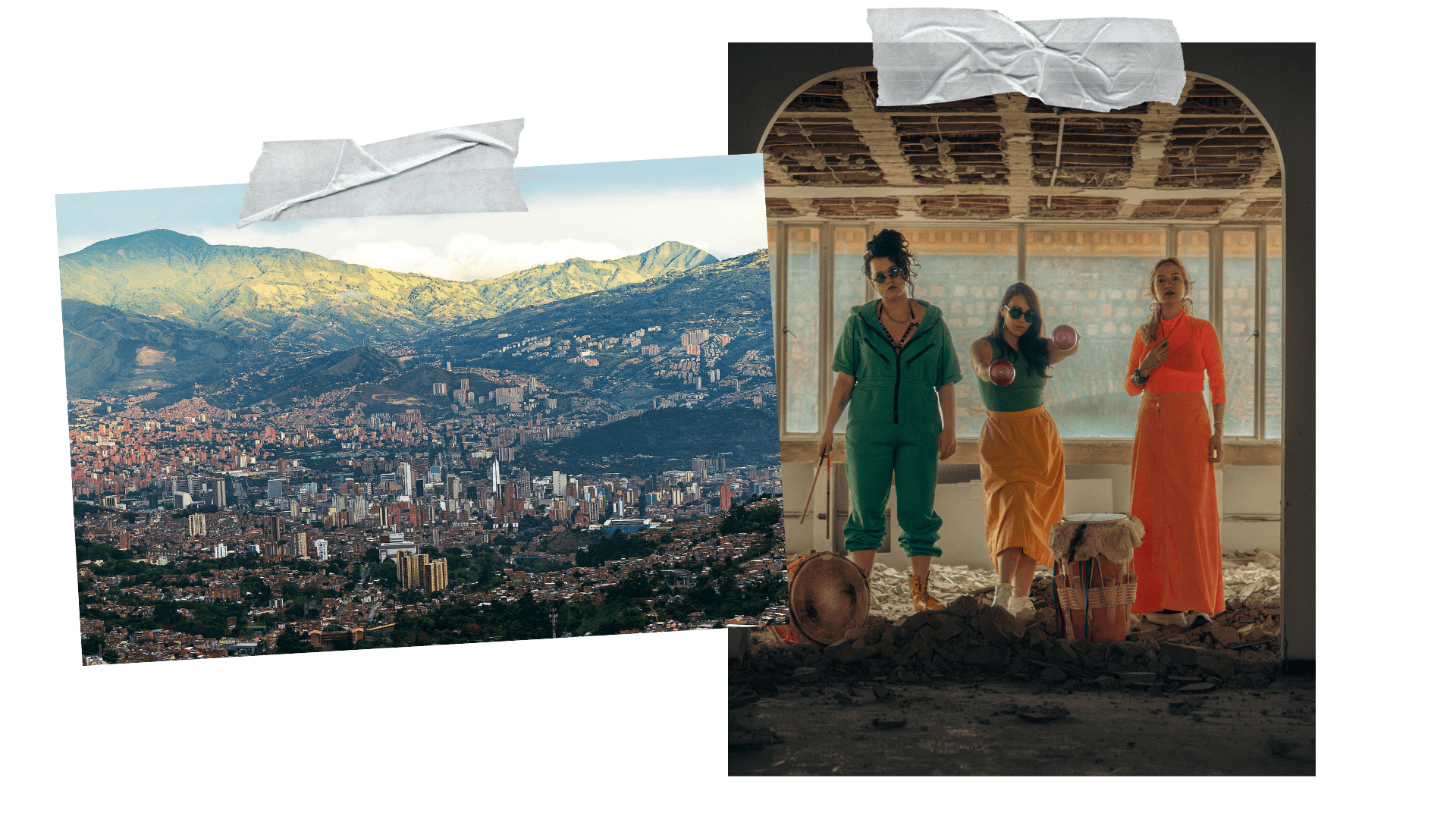
Among the diverse mix of artists inspiring Beltrami right now, including the “Latincore” movement championed by record label MUAKK and Afro-folkloric rap collective Kombilesa Mí, is Bogotá-based La Perla, an all-women three-piece whose sound is shaped by traditional instrumentation, rap and raw energy.
Between shows, they explain how, despite the dominance of reggaeton, there is a growing interest among young people in Colombia’s musical heritage. “Today’s youth has more environmental, cultural and social awareness. They want to know where they come from to know where they are going,” says drummer Giovanna Mogollón, before singer Diana Sanmiguel explains what makes Colombia’s musical heritage so distinct. “There are hundreds of rhythms created with instruments seen only in Colombia,” she says. “We are an Indigenous, Afro and mixed-race country – and that makes music with the power to bring together and channel many cultures into one.”