Between sterile surgical rooms and desolate wastelands, the world of Japanese horror (or J-horror) films reveals an intimate, cerebral voice, crafting a distinct atmosphere with deliberate precision. Its filmmakers don’t rely on shock or spectacle; instead, they build unease slowly, turning silence, repetition and ritual into sources of dread. The result is a kind of horror that lingers – a quiet disturbance that seeps under your skin and refuses to leave.
Renowned for its distinctive aesthetic and its surge of global influence in the late 1990s and early 2000s, Japanese horror is as much about mood as it is about mythology. Drawing on centuries of folklore, ghost stories and spiritual belief, these films reimagine traditional fears for a modern, fractured world. From vengeful spirits to haunted videotapes and cybernetic nightmares, Japan’s horror cinema captures the tension between ancient superstition and contemporary anxiety with unmatched elegance.
What makes J-horror so enduring is its ability to reflect our deepest discomforts – fear of isolation, technology, decay and emotional repression – with an almost poetic restraint. These are not just tales of terror; they are meditations on grief, guilt and the fragility of human connection. Whether exploring the horrors of domestic life, the distortion of identity through technology, or the unnerving boundaries between body and mind, J-horror transforms fear into art.
Because ultimately, horror is not just what makes us flinch, it’s what refuses to let us go. Here are seven films to step into the haunting world of J-horror this Halloween...
House (or Hausu, 1977, directed by Nobuhiko Ôbayashi)

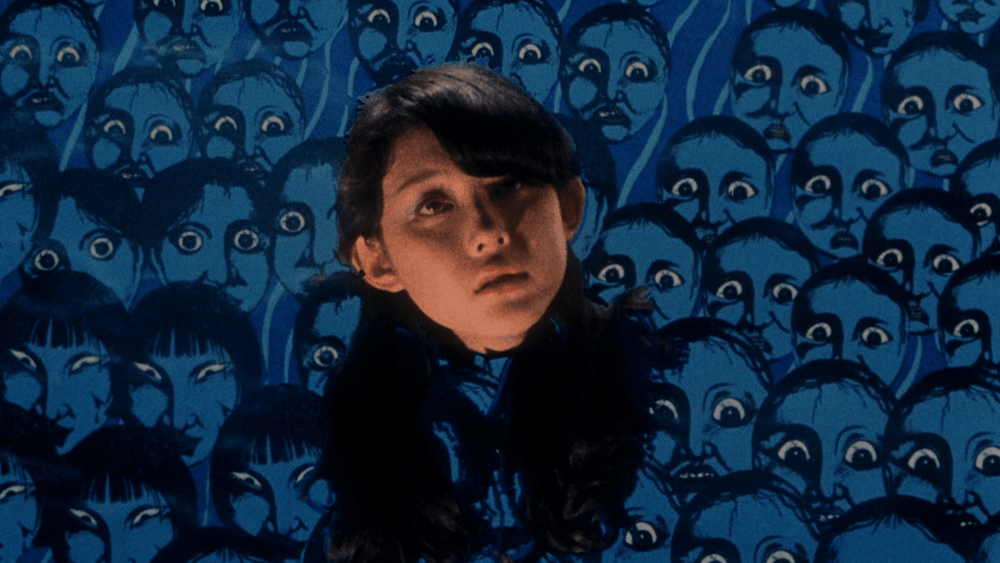
Blending collage-style animation with the frenetic rhythms of Nobuhiko Ôbayashi’s advertising career, House is a hallucinogenic journey that defies logic and genre. A simple premise – a group of schoolgirls traveling to a remote country house – quickly dissolves into a delirious carnival of the macabre as the girls are consumed, literally and metaphorically, by the house itself, presided over by a ghost who feeds on youth. Bleeding grandfather clocks, floating heads, carnivorous pianos and flaming logs create a surreal spectacle, while hand-painted backdrops, cartoonish sound effects and disjointed editing heighten the chaos – and ideas from Obayashi’s 11-year-old daughter add dreamlike unpredictability.
Made in the lingering shadow of postwar Japan, the film’s manic energy disguises reveries on generational divide, lost innocence and the lingering trauma of a nation rebuilding itself. Nobuhiko bubble-wraps these wounds in layers of whimsy so relentless it becomes disorienting – until the laughter curdles and the absurdity begins to feel like the only honest response to horror. Funny, tragic and utterly alive, House is a handcrafted fever dream to be experienced.
Noroi: The Curse (2005, directed by Kōji Shiraishi)

Kōji Shiraishi’s Noroi: The Curse is a Lovecraftian masterclass in found-footage horror, following a journalist’s investigation into a series of supernatural events linked to the ancient demon Kagutaba. Shot with unsettling realism, its grainy footage and fragmented structure cultivate an atmosphere of quiet dread. Noroi pays homage to Japanese mythology, featuring sorcerous cabals, mountains of corpses and a nightmare tunnel – blending modern rationality with the lingering animist beliefs that underscore much of Japan’s spiritual imagination. The film evokes existential unease, acknowledging how superstition and ritual can feel increasingly dissonant in a rapidly accelerating modern world.
The Face of Another (1966, directed by Hiroshi Teshigahara)

What remains of the self when the body, its tangible and visible anchor is effaced? Can identity survive the disjunction between body and mind? Does personhood originate inwardly, or is it shaped under the constant gaze of society? These questions form the backbone of Hiroshi Teshigahara’s New Wave masterpiece – a film of meticulous architectural precision. Mirrors, glass and metallic sculptures dominate the set, reflecting a world obsessed with surface.
The story follows a facially disfigured engineer who undergoes an experimental procedure and is fitted with a lifelike mask. As his exterior transforms, his sense of self unravels, triggering moral and psychological decay. Shot in stark monochrome, the film is both sterile and hypnotically elegant, an exploration of identity, alienation and the terror of self-reconstruction in a society ruled by appearances.
Helter Skelter (2012, directed by Mika Ninagawa)

Drawing on Mika Ninagawa’s background in fashion photography, Helter Skelter is a sensory avalanche with a pulsating soundtrack and a glossy, hyper-stylised set design. The film is a neon-drenched descent into obsession, following supermodel Lilico as her surgically sculpted beauty begins to unravel from risky black-market procedures, leading to a gradual mental decline under the weight of public scrutiny. It takes note of cultural pressures to conform, and the ruthless exploitation of women’s insecurities for profit. Ultimately, Helter Skelter invites us to confront how identity is staged, sold and scrutinised in a media-saturated world.
Audition (1999, directed by Takashi Miike)

Salacious and satirical, Takashi Miike’s Audition shocked audiences at its 1999 Vancouver International Film Festival premiere, provoking mass walkouts. Adapted from Ryu Murakami’s 1997 novel, the film begins as a deceptively gentle exploration of loneliness and desire, following Aoyama, a widower seeking connection. His plan to audition women for a fictitious film role becomes a vehicle for his own longing, luring both him and the viewer into complacency. Things quickly take a turn when Asami, the enigmatic woman he selects, reveals a meticulously orchestrated agenda, punishing Aoyama’s arrogance and nascent masochism in odious scenes.
Spiral (or Uzumaki, 2000, directed by Higuchinsky)

Adapted from the legendary manga artist Junji Ito’s horror masterpiece, Uzumaki is director Higuchinsky’s bizarre live-action take on spirallic mania. Set in a quiet seaside town tormented by an obsession with spiral shapes, the film pays homage to Ito’s hypnotic style with uncanny framing, green filters and campy, absurdist moments, balanced with genuinely eerie sequences. Disorienting and inevitable, Uzumaki explores the terror of cyclical fate and the hysteria behind collective obsession. Thematically, it engages with Japan’s collective anxieties around conformity and stagnation at the turn of the millennium, turning the ancient symbol into a recurring motif for inescapable cycles of dread.
Onibaba (1964, directed by Kaneto Shindō)

One of the first major J-horror films, Kaneto Shindō’s Onibaba is a haunting meditation on survival, desire and moral decay. Shot in icy monochrome amid a swampy wilderness, the film follows a mother and daughter-in-law in war-torn feudal Japan as they murder wandering samurai and desperate soldiers, stripping their bodies of ornaments and armour to sell, and disposing of the remains in a makeshift pit. Kaneto uses shadows, tall grasses and firelight to transform the natural landscape into a claustrophobic agent of dread. The swamp becomes abstract, almost apocalyptic. Beneath its visceral horror, Onibaba reflects postwar anxieties, examining the human cost of violence and the moral compromises of survival, unmasking the fragile veneers people adopt in a world unmoored by chaos.