Ciara Banks recorded her first demo on a jailhouse phone. In a communal recreation room at the Broward County Jail, just north of Miami, she rapped into a landline-turned-microphone, as other women in the protective custody wing of the jail hyped her up, making beats in the background. The professional track took several tries to get right; sometimes she ran out of breath or the calls cut out before the 30-minute time limit was up. But on the phone, Ciara channelled her alter-ego Chuckie Lee: a rapper and a singer whose song Barbie Rockstar is a playful ode to living authentically as a Black Trans woman in a system designed to silence her.
On the track she raps: “Party Rockstar (Barbie) / Everybody movin’ like a fast car (Zoom) / Swerving in and out of lanes that part / I came from nothing now I’m shooting to the stars”, her voice cutting through the static with clarity and conviction. Ciara, who is currently incarcerated, said she had been playing with the hook and working on the song for months before she recorded it; when the opportunity to rap it for Bending the Bars arose, she jumped at the chance. Recording over the phone line was difficult but the song came naturally: “I just kept singing the hook and I got in beast-mode. I started to sing the lyrics. It just came back,” she says. “Expressing yourself, loving yourself and being comfortable with who you are as a person can come in all forms,” she adds of the track’s message. “I want to be relatable. I want people to feel equal.”

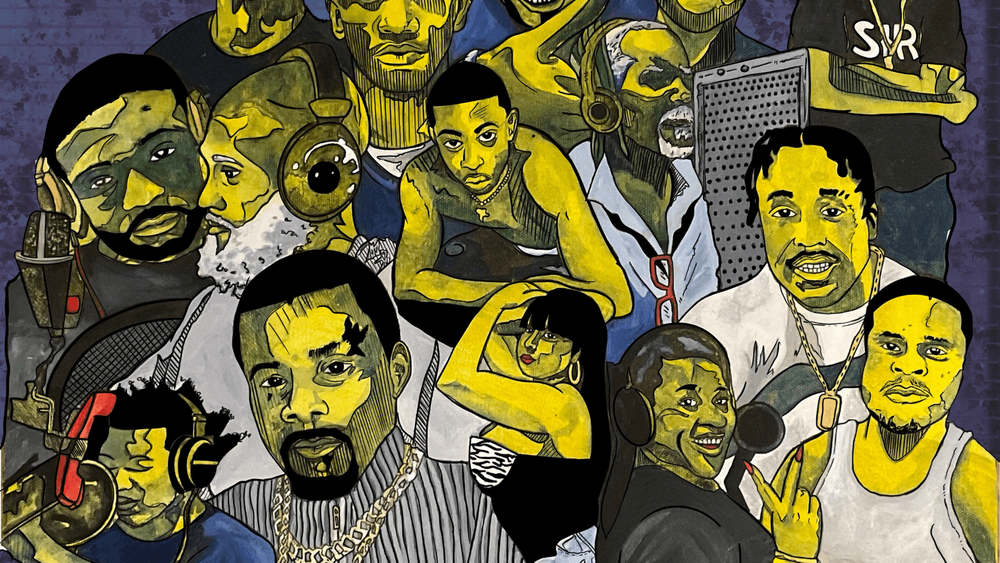
Creating art while incarcerated is an act of resistance – especially in an isolating environment increasingly hostile to self-expression. Barbie Rockstar appears on Bending the Bars, a 16-track album (available on all streaming platforms) written and recorded by currently and formerly incarcerated people, most of whom were in the Broward County Jail or a Florida state prison. Each person on the album has their own incarceration story and reasons for being in the system, many of which are not publicly known. The project doesn’t seek to erase accountability, but to offer space for self-expression and reflection.
Using the Community Hotline for Incarcerated People (CHIP), a prison abolitionist group based in South Florida, artists called producers on the outside, who recorded their voices and mixed the songs – often removing background noise and asking for re-records when the sound wasn’t quite right. The album, released this summer, took three years to produce, requiring both artists and producers to navigate punitive correctional regulations and bureaucratic roadblocks.
“Creating art while incarcerated is an act of resistance – especially in an isolating environment increasingly hostile to self-expression”
The United States has one of the highest incarceration rates in the world, imprisoning more than 2 million people across local, state and federal prisons. The mental and physical toll of life behind bars has already been proven, with prisoners experiencing elevated levels of depression, anxiety and physical illness, along with feelings of ostracization. While Ciara’s track is zippy and joyful, other songs on the album reflect the sorrow and loneliness a carceral setting can bring. Larry Pak, who is currently in prison, grapples with past trauma in PTSD, with lyrics like: “Feels like these walls are closing in.” Another song, County Time, mourns the endless waiting for “justice that never seems to arrive,” while Prince Jooveh, who has since been released, said in one interview that he wanted his song Hands Up to “create a picture for outsiders to imagine what’s going on behind Florida prison walls”.
“Six feet apart in a 5 by 5 / I write the truth and they say the truth hurts,” raps Christina “Chance” Hardcastle, whose track Locked Down features her sister, AK. The two women address one another in the song, rapping about the struggles of both being incarcerated and having a loved one incarcerated during COVID-19. “We speak to one another on the song so the world can hear what I was going through, and what she was going through,” says Christina. “It’s a testimony.”
This kind of honest storytelling is what first inspired the album. Producers Nicole Morse, now a professor of LGBTQ+ and media studies in Baltimore, and Noam Brown, a children’s music instructor, were working together as organizers at CHIP when they noticed that amid the grim reports of medical neglect and abuse coming through the hotline, people were also calling in to share poetry and song lyrics. An idea clicked: the hotline could become more than a lifeline – it could be a studio. Nicole started writing grants and crowdfunding, raising enough to cover the often-prohibitive cost of phone calls, postage and the clunky prison-issued tablet “emails”.
To bring the idea to life, they needed someone on the inside who could help connect with the artists. Gary Field, an activist and artist being held at Broward County Jail at the time, quickly became a key collaborator. When he was first incarcerated aged 44, he said he was surprised at how much music was already being performed in the jail. “I was not really prepared for hearing the outbursts and the eruptions of the rap battles that were taking place – the beating on the bars and the banging on the chest, trying to outdo each other,” he says. “But then eventually it dawned on me that there was a tremendous amount of talent there.” Gary began serving as a de facto talent scout for the album, disseminating information about CHIP and the album on scraps of paper in different areas of the jail. Eventually, a network of artists emerged.

“We ended up getting 50 or so demos recorded over the jail phone lines – and so many of them were amazing,” Nicole said. “We had a listening party where we brought in outside producers, beat makers and musicians, where they listened to the demos.” Collaborators like Alphabet Rockers, a Grammy-winning children’s music group, and SaulPaul, an Austin-based rapper, also joined the album, providing backup vocals and beats. About half the songs were recorded in a studio while artists were out on pre-trial release, or after having been released; the other half were recorded over the phone – a remarkable feat, given the unreliable technology and strict 30-minute time limit for calls.
Getting Bending the Bars onto streaming platforms and into listeners’ hands then required a partner experienced with prison music. BL Shirelle is the co-executive director of FREER Records, a New York-based grassroots record label for incarcerated musicians that has produced 3 LPs, 4 EPs, 18 singles and runs an organisation that provides people in prison with musical instruments. It was also FREER’s distribution arm that helped get Bending the Bars onto streaming platforms. Some prisons officially sanction music programmes, allowing instruments and access to professional recording equipment, which can make producing an album much easier. “In our case, we couldn’t do that,” says Nicole. Relying instead on phone recordings and digital messages makes the album’s creation all the more impressive.
But in many cases, prisons and jails control which songs are released, and which artists are allowed to appear on an album – and that remains, according to BL, the biggest challenge facing incarcerated musicians: censorship. Bending the Bars stands out because it was produced entirely outside the jail’s control. “You’re not in a partnership with a prison or jail, and they can’t micromanage your work,” says BL. “But when you go in and get access and you build a real studio inside and the [Department of Corrections] knows you’re there, and that this is what you’re doing, a lot of times, they really like to curate the message.” For Gary, this message is as important as the music. “I recognise the power of music to influence behaviour,” he says. “It’s also a powerful tool for social change. One of the lines in my song says that: “We criminalise mental illness and treat addiction as a crime / How long do you think until this moves from the shadows to prime time?”
But as the project took shape, logistical hurdles piled up. In Larry Pak’s facility, the phones were positioned too far apart for him to hear any playback – so producers played him each line over the phone, and he sang it back a capella. Nicole and Noam also zig-zagged around barriers like mail bans that prohibited mail larger than a postcard from going in or out of Broward County Jail, making it nearly impossible for artists to sign contracts. (Each artist retains ownership of their masters and tracks.) When the jail would sometimes shut down the hotline, that distance from institutional oversight served a purpose: the freedom to sing freely about their experiences without fear of censorship.
“The biggest challenge facing incarcerated musicians: censorship. Bending the Bars stands out because it was produced entirely outside the jail’s control”
Advocating for an overhaul of the US prison system – not simply raising awareness – was the goal of this album. “Everything that we’ve learned about how to work with folks incarcerated in our county, we can then share with their loved ones,” says Nicole. During the course of producing the album, Nicole and Noam communicated with lawyers, located people inside when online registries were unavailable or incorrect, and developed strategies for keeping track of people as they moved through the labyrinthine Florida correctional system. In that way, the process itself became part of the activism – proving that care, connection, and persistence can be forms of resistance, too.
That belief – that music can do more than tell stories, that it can open doors – is one BL shares deeply. She credits her mentor, Naomi Blount Wilson, as a powerful example of how music can be a force for justice. A gospel singer and member of the prison choir The Lady Lifers, Naomi wrote the song This Is Not My Home, which the group performed during a TEDx event at Muncy State Prison in Pennsylvania. In 2019, after serving 37 years, her life sentence was commuted.
The spirit of resistance through community is apparent on Bending the Bars. Nicole, who took the Barbie Rockstar demo over the phone, remembers the support Ciara received from other women in her wing: “It was so beautiful, so powerful and a real example of kind of finding joy in extremely difficult circumstances,” she says. The reception of the album has also been gratifying: “We’ve heard really moving responses from formerly incarcerated people who have talked about how much they identified with some of the songs – and how much they appreciate these artists’ voices being amplified,” adds Nicole. A reminder that even behind bars, some voices break through – and challenge us to understand the complexities of incarceration beyond the headlines.