Dear Choir,
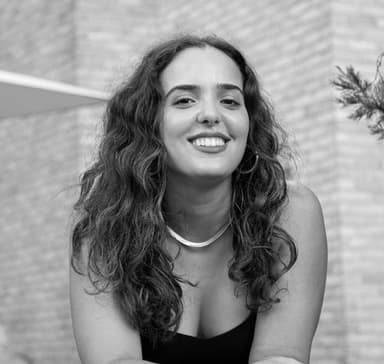
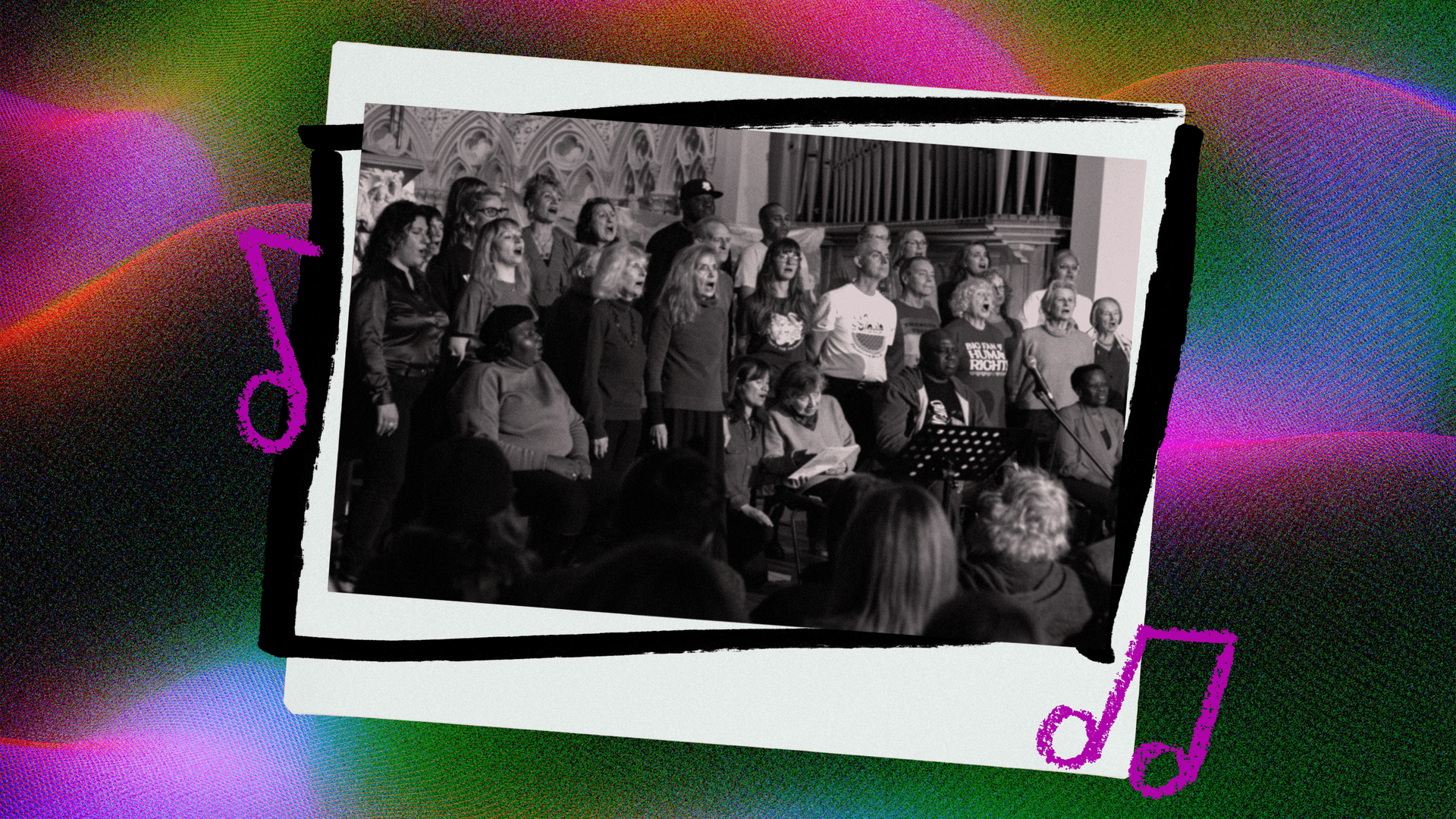
On one heavy Tuesday evening in late September, I walked into the buzzing annex of a church in North London feeling weary and anxious. After a year full of bold life moves – quitting my job, leaving New York after 15 years, moving across the Atlantic – joining this choir felt like another courageous step into the unknown. I had never sung in front of anyone before, yet here I was, ready to show up with all of you.
I took a seat, made awkward eye contact with a handful of you, and then the opening bars of a familiar 2000s song floated from the piano during our vocal warm-up.
“Can anyone tell me what song this is?”
Jeremy, our choir director, tapped out the melody again. Without thinking, I hummed along. And then – too loudly, I think – I yelped, “That’s Taio Cruz! Dynamite.” Guessing a tune quickly is a secret skill of mine, and I had accidentally outed myself in a room full of strangers. But you didn’t stay strangers for long. Jeremy gave me a slight, knowing smile, and nods of recognition from the rest of you instantly made the space feel like a little bit of home.
The idea of joining a community choir wasn’t entirely mine. It was my acupuncturist, Annette, who suggested it one week while I sat across from her in tears, spilling my despair over moving countries, my self-doubt and the sadness that had been weighing me down. The transition was tougher than I imagined – the small differences between American and British life felt vast, and I felt adrift. In New York, I felt connected to my voice in the way I carried myself, in the rhythms of daily life, in the words I could say without hesitation. In London, that connection felt muffled, as if my voice had slipped to the back of the room and I had to strain to find it.
Knowing that singing on its own wouldn’t necessarily sway a hardened New Yorker – or anyone, really – to give it a go, Annette spoke to me about breath, vibration and qi – the life force that moves through us. My qi felt stagnant and lacklustre in that moment, but the thought of belting out a song in a room full of people stirred something inside me – maybe some qi, or maybe my own curiosity. I started to think that in a choir, qi doesn’t just live inside one person. It moves between voices, weaving through the room, lifting each singer while holding them together. After feeling like a jellyfish, untethered and languishing, perhaps the idea of singing with others could help me find my own voice again.
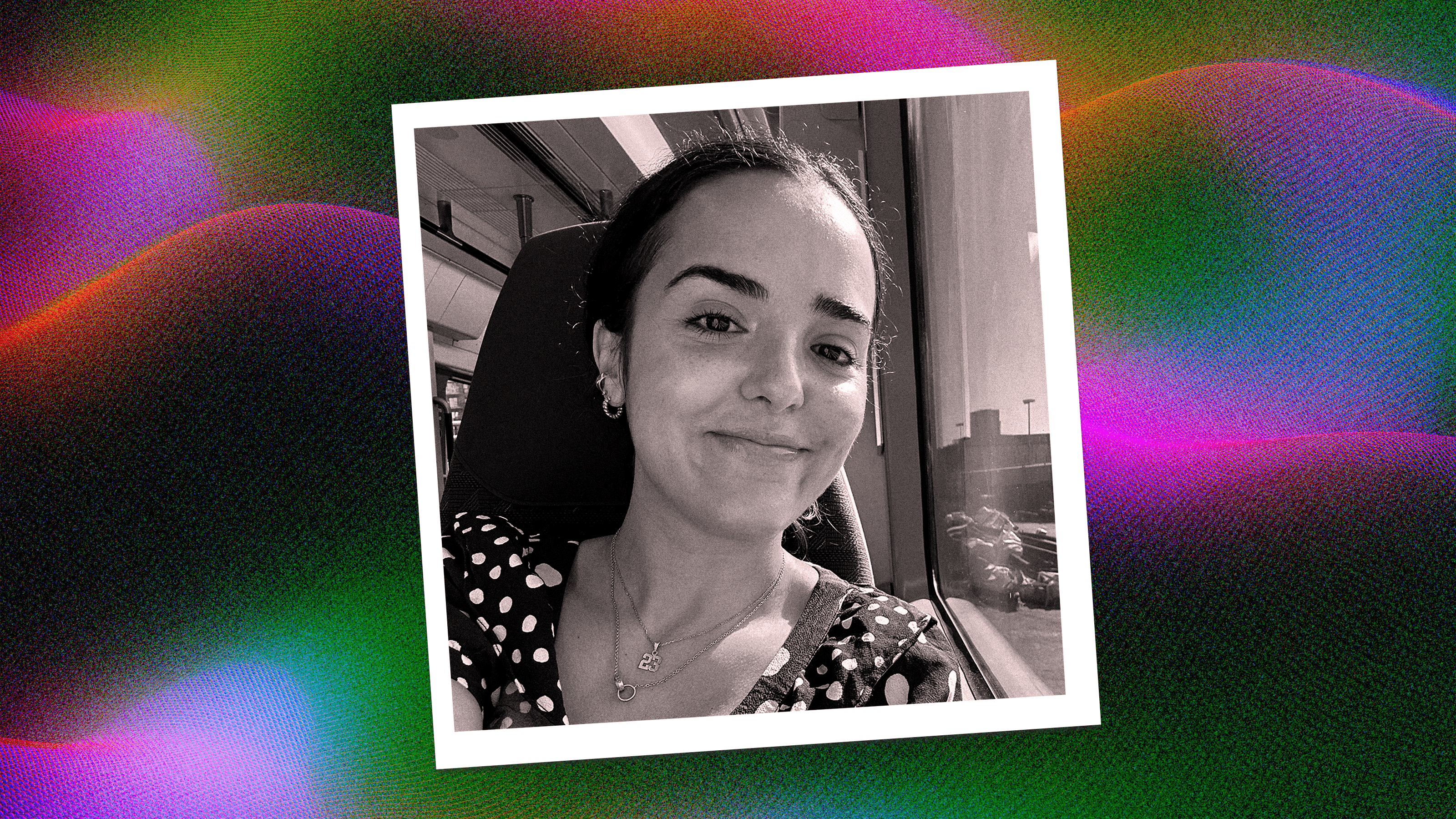
Before I met you all, I spent several hours searching choirs across London – checking postcodes, showing up to taster sessions, trying to get a sense of the vibe. There was the choir that spooked me with its exclusive focus on opera, another where I was the only soprano and clearly not suited for the job. But the moment I landed on our Together Productions website, something clicked. I read about our sister choir, Sing For Freedom – bringing torture survivors and allies together in song, embodying joy, hope and solidarity with the oppressed. Then I came to the description of Mixed Up Chorus – a group that gathers people of different beliefs, faiths, cultures and life experiences to foster understanding and empathy – and it immediately piqued my interest.
As a first generation Iranian American, I’ve felt “mixed up” for as long as I can remember. I’ve always found solace and comfort in others with mixed-up experiences, whether they’re third-culture kids or immigrants, or anyone who feels they don’t neatly fit in a box. What the Mixed Up Chorus has built is a space that’s intentional but unpretentious, where trained singers and complete novices alike can share their voice and feel equally welcome. These choirs sit at the intersection of art, community and social justice – something you feel the moment you step into the room, in shared breath, laughter and the music we make together.
On my first day as a member of the Mixed Up Chorus, I saw their mission come to life in the group of people that surrounded me – a motley crew of brilliant, kind, loving humans who were all gathered for one beautiful reason: to practise harmony. Conversations bubbled up between songs, over a delightful tea break, and as we tidied the space and organised chairs at the very end of the night. After my first session, I learnt that my choir has sung in 27 different languages over the years, that every season has a theme ranging from courage to protest songs (the focus of this past season), that several members are asylum seekers and survivors, and that many commute from far and wide across the city to spend two hours singing together week after week.
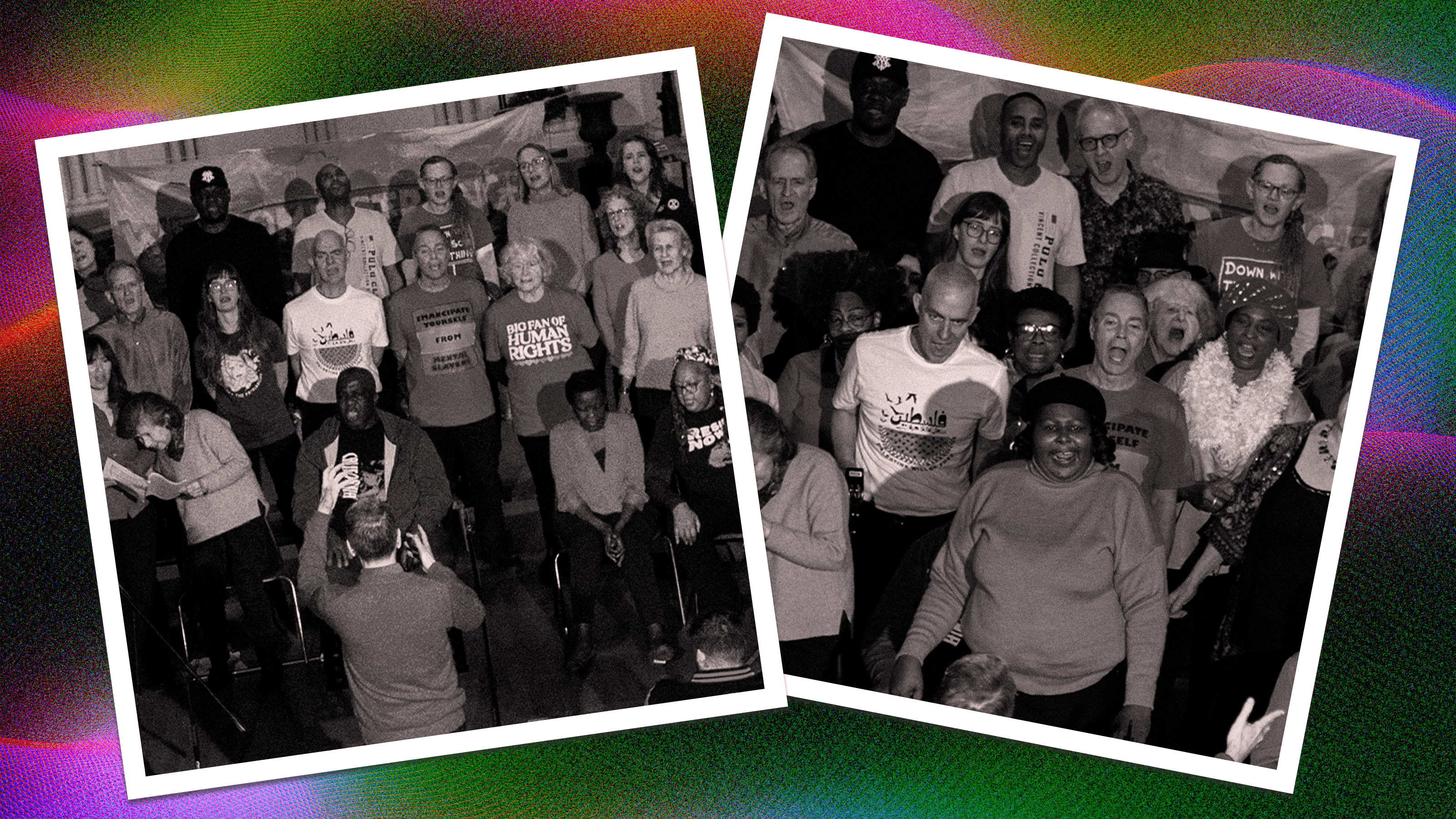
After several weeks of choir practice, I discovered that I am an alto – and that singing Sam Cooke makes me feel alive in my body again. One member has a voice so dazzling and stirring that the entire room melts into smiles whenever she belts out. Another has a massive collection of protest shirts generously lent to them for a concert performance, which he also painted a beautiful banner for. One woman always greets me with a tight hug and insists I sit beside her in the front row, and I always do. I’ve learnt that the concert potluck is no small affair. Someone will make Nigella Lawson’s luscious vegan gingerbread – and I’ll always go back for thirds.
Small moments, day in and out, keep the choir alive long after rehearsals. Weeks after we performed the labour and feminist anthem Bread and Roses, I watched the inauguration of Mayor Zohran Mamdani back home in New York. When Lucy Dacus began singing that same song during the ceremony, I felt a jolt of recognition as if something we’d practised in a church hall in London had suddenly echoed across an ocean. Something we had sung in London was suddenly echoing across an ocean in a place I call home, carrying a piece of all of us with it.
That recognition of how collective voices travel feels especially sharp now, at a time when disconnection and division seem to structure so much of daily life – when institutions falter, trust frays and people are increasingly left to navigate uncertainty alone. Creative spaces rooted in shared joy and purpose, like my choir, aren’t indulgent. They’re essential.
They remind me that belonging doesn’t have to be earned, optimised or mediated; it can be made, patiently and imperfectly, week after week, song after song. These communities hold people gently when systems fail – me included, as I struggled to find my footing in a new country’s healthcare system. There are countless moments mid-practice when I look around in quiet awe, struck by how rare it is to find a place where people gather across neighbourhoods, cultures and continents, simply to make something beautiful together.
“In a country often known for having a ‘stiff upper lip’, I realised I’d found a room where people arrive exactly as they are”
Occasionally, all of this crystallises into a single moment. Like one night in December: I was standing onstage in the church during our rehearsal, hovering for space, squished tightly as both choirs united for a shared song – an anti-apartheid Zulu folk tune, its harmonies reverberating through the pews. I felt a warmth I so desperately needed as a new immigrant. A dazzling auntie from the other choir danced beside me and soon I was dancing too. “I love your outfit,” I whisper in her ear. She looked at me, beaming, and said, simply, “I love you.”
Then, just last week, as we geared up for a new season of the choir, Jeremy asked if there were any Farsi speakers, and I raised my hand (albeit with more caution than I did for Taio Cruz). It turns out one of our seasonal songs is in my native language. Singing it for the first time, translating the lyrics for my newfound friends, I felt a deep sense of gratitude take root within me. My voice, once muffled and uncertain, felt full and alive again. In a country often known for having a “stiff upper lip”, I realised I’d found a room where people arrive exactly as they are.
So to my wonderful choir, this is what I’ve always wanted to say – in person, in our group chat, at every practice and between every song: thank you. You may never fully know what you’ve given me, or how deeply it has landed in my body and my life. Thank you for making a place where belonging is not negotiated but offered, where joy arrives even in the damp, wintry darkness. You’ve taught me that harmony doesn’t require sameness or assimilation, but rather just listening, generosity and the courage to show up. Singing with you has given me an essential reminder: connection doesn’t have to be complicated.
Sometimes it’s just a room, a shared breath, and people choosing each other again.
Love, Roya x