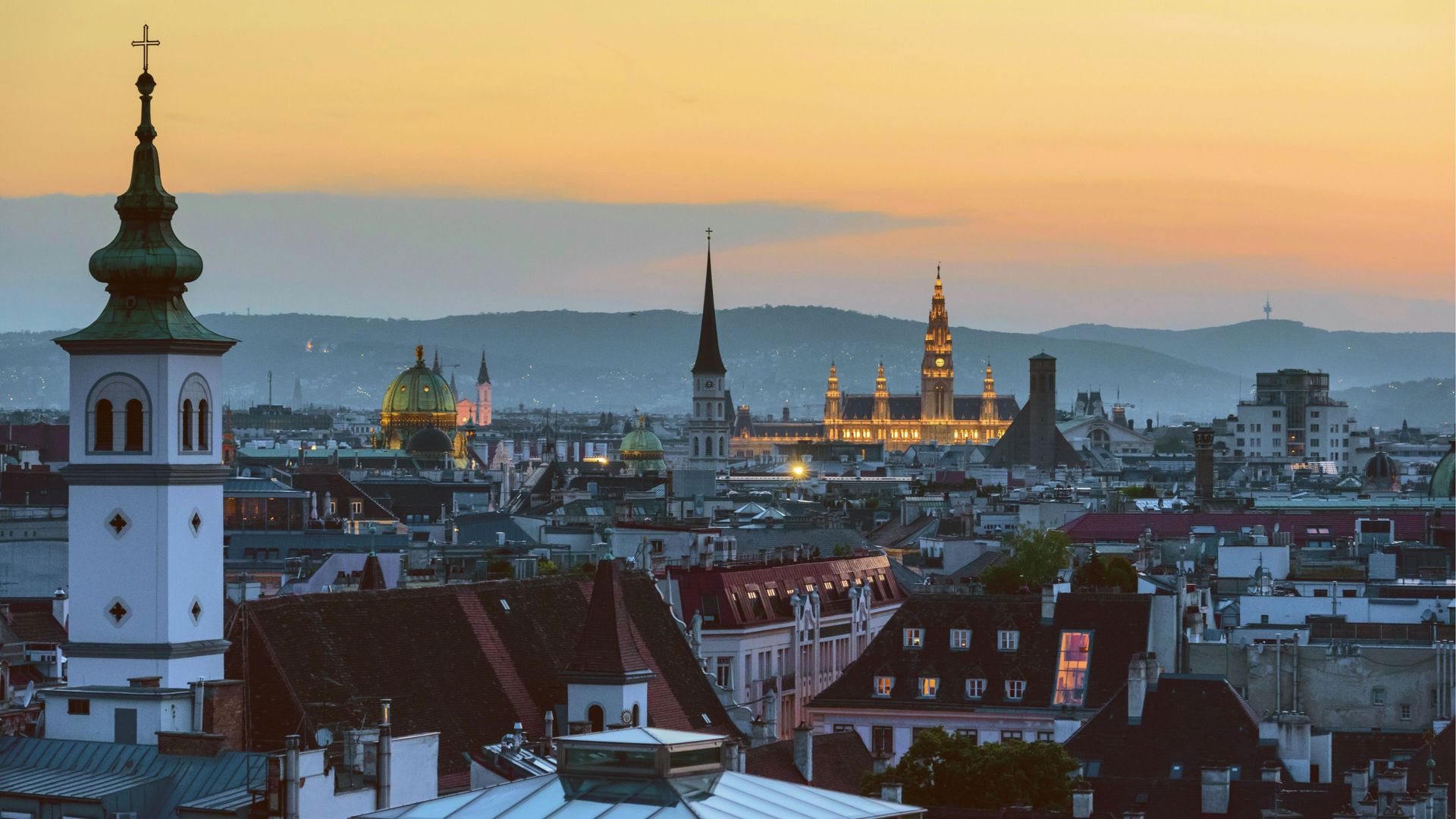
For any believers in the health-giving benefits of the arts, Vienna must feel like the most wholesome place on the planet. Six centuries of Habsburg wealth have funded blockbuster institutions with formidable art collections and a State Opera that’s hosted a who’s who of classical composers. At the turn of the 20th century it was a global capital of culture, where big thinkers rubbed shoulders with artists, poets and dictators alike in Vienna’s timeless coffeehouses, which remain a vital third space for residents today.
But for all its high-brow leanings the Austrian capital is incredibly easygoing. Simple to navigate on the tram and U-Bahn, its swimmable stretches of the Danube, green spaces and world-class wineries dotted along walking routes above the city make it easy to see why Vienna frequently tops quality of life indexes. Beyond the ornate palaces of the Innere Stadt, daily life plays out among its Grätzels – a scattering of charming inner city “villages” centred around communal squares. Meanwhile in districts like Neubau, Mariahilf and Leopoldstadt, a new generation are reimagining Vienna’s traditional beisls (bistros), launching wine bars that skew natural and opening creative spaces, proving Vienna is far more than former glories alone.
Then of course there’s winter. Few cities are more festive than Vienna, where the twinkling lights of its Christmas markets remain a ritual even for its least sentimental residents. While the Christkindlmarkt, with its vast tree outside the Rathaus, and the picturesque Schönbrunn Palace are two of the biggest draws, most inner city Grätzels offer lower key yet no less festive alternatives with wooden cabins stocked with traditional crafts, spiced Punsch and roasted chestnuts.
From iconic art to cutting-edge cuisine, nightlife and shopping, here’s how to spend a long weekend in Vienna.
Day One
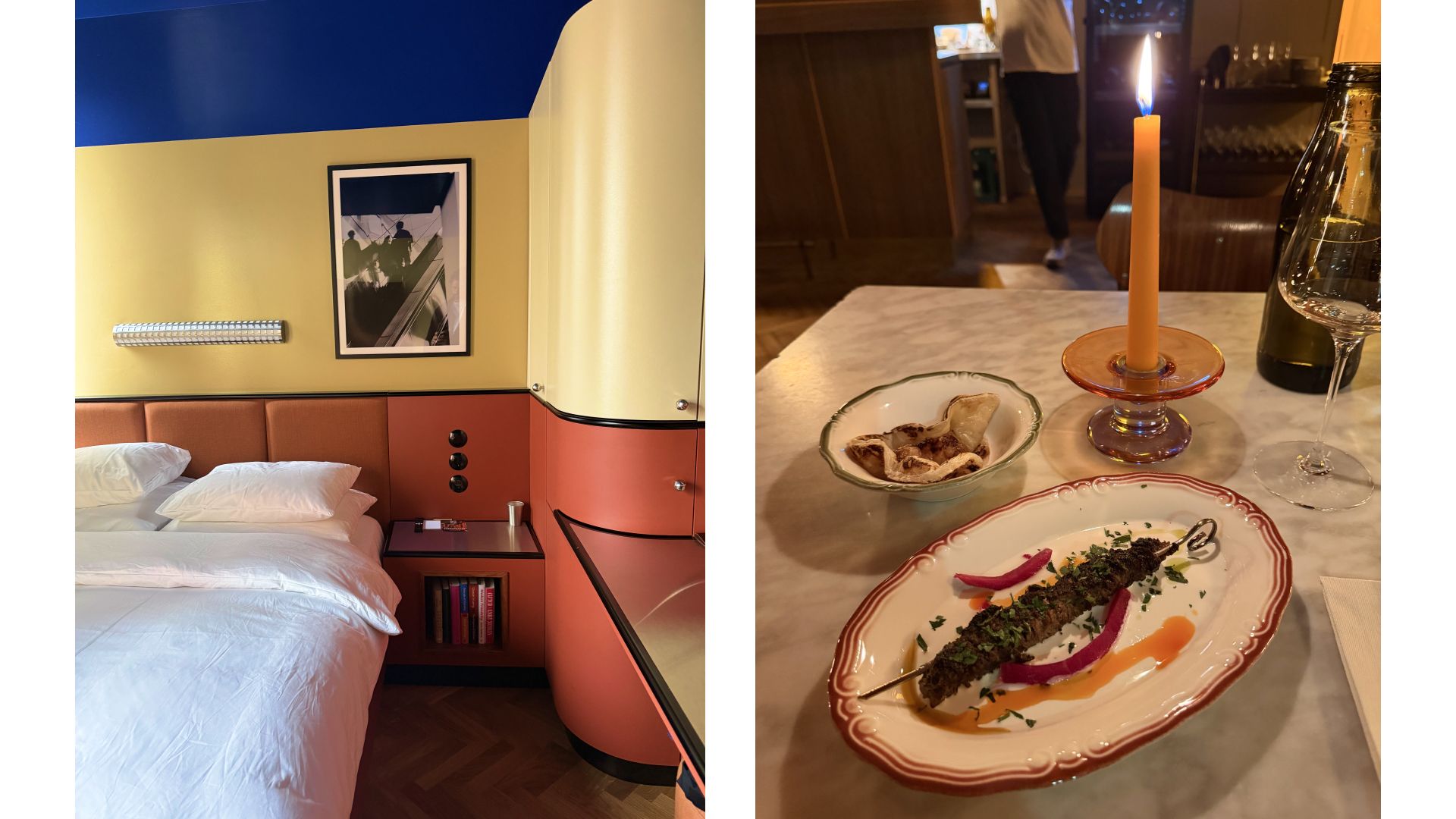
Check In To The Companion. This competitively priced boutique is a recent addition to the city’s hotel scene, occupying a smartly renovated 19th-century building across the road from the Westbahnhof in the up-and-coming 15th district. Period features, earthy tones and geometric accents shape its stylish rooms and shared spaces, while its ground-floor restaurant serves an impressive breakfast buffet to fuel further exploration.
Spot A Masterpiece by one of Vienna’s most celebrated sons. Painted during his golden period, The Kiss is Gustav Klimt’s most famous creation – an oil-on-canvas that shimmers with gold, silver and platinum leaf, and one of 20th-century art’s most reproduced images. Witness it first hand at the beautifully baroque Upper Belvedere palace, south east of the city centre – book an advance timed slot early morning or late afternoon for unhurried viewing.
Recaffeinate In A Classic Coffeehouse. These storied meeting spots have existed for centuries and their neatly folded newspapers, brusque waiters and revolving cast of cakes endure today. The wood-panelled Cafe Sperl, ornate 1950s decor of Cafe Pruckel and Café Hawelka’s moody dark walls lined with jazz posters are all worth a look. Order a melange (coffee topped with milk foam) and slice of sachertorte and let the world go by.
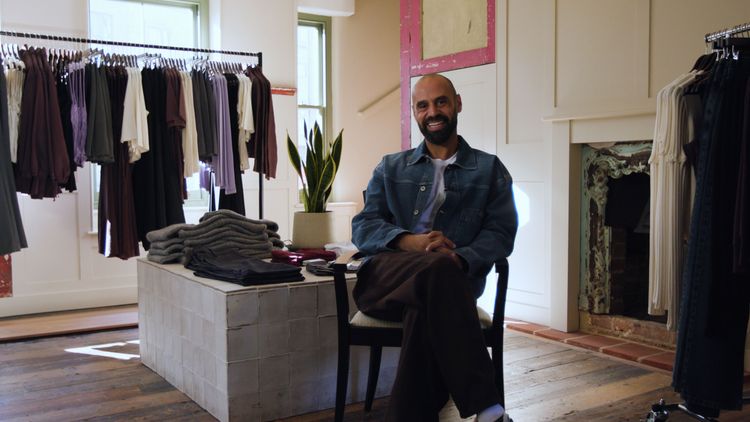
Go Shopping In Neubau. For some years, Vienna’s 7th District has been one of Vienna’s coolest postcodes. Step back in time in Spittelberg – a historic Grätzl whose alleys are lined with Schanigärten (terrace cafés) galleries and indie cinemas – before turning onto Burggasse. Along here and the intersecting Neubaugasse, find artfully curated vintage at Burgi 24; books and homeware at Musette Shop; excellent coffee amid towering plants at Calienna and heritage hat brand Mühlbauer.
Drop In For Drinks At Cafe Espresso. Open since 2004, Espresso welcomes all-comers throughout the day, from early morning pastries to natural wine and oysters on its outdoor terrace. Retro in style, with neon signage and mid-century decor, regular DJ sets and chef popups make it one of the district’s vibiest spots for sundowners.
Book Dinner At Das Drittl. This classy low-lit reimagining of a Viennese beisl, or bistro, has colourful art on the walls, candles on tables and serves a contemporary spin on regional staples. Chilled cucumber soup comes with pani puri, deconstructed kebabs pay homage to Vienna’s multicultural 10th district, and hearty dishes like cod cheeks and schnitzels ensure you won’t leave hungry.
Still Going Strong? Choose your own adventure: a couple of blocks west, various dive bars in the railway arches under the Gurtel (belt ring road) such as Venster 99 and Rhiz host live bands; or head north to the banks of the Donaukanal where Grelle Forelle – an inclusive, no-camera space specialising in techno – ranks among the city’s best clubs.
Day Two
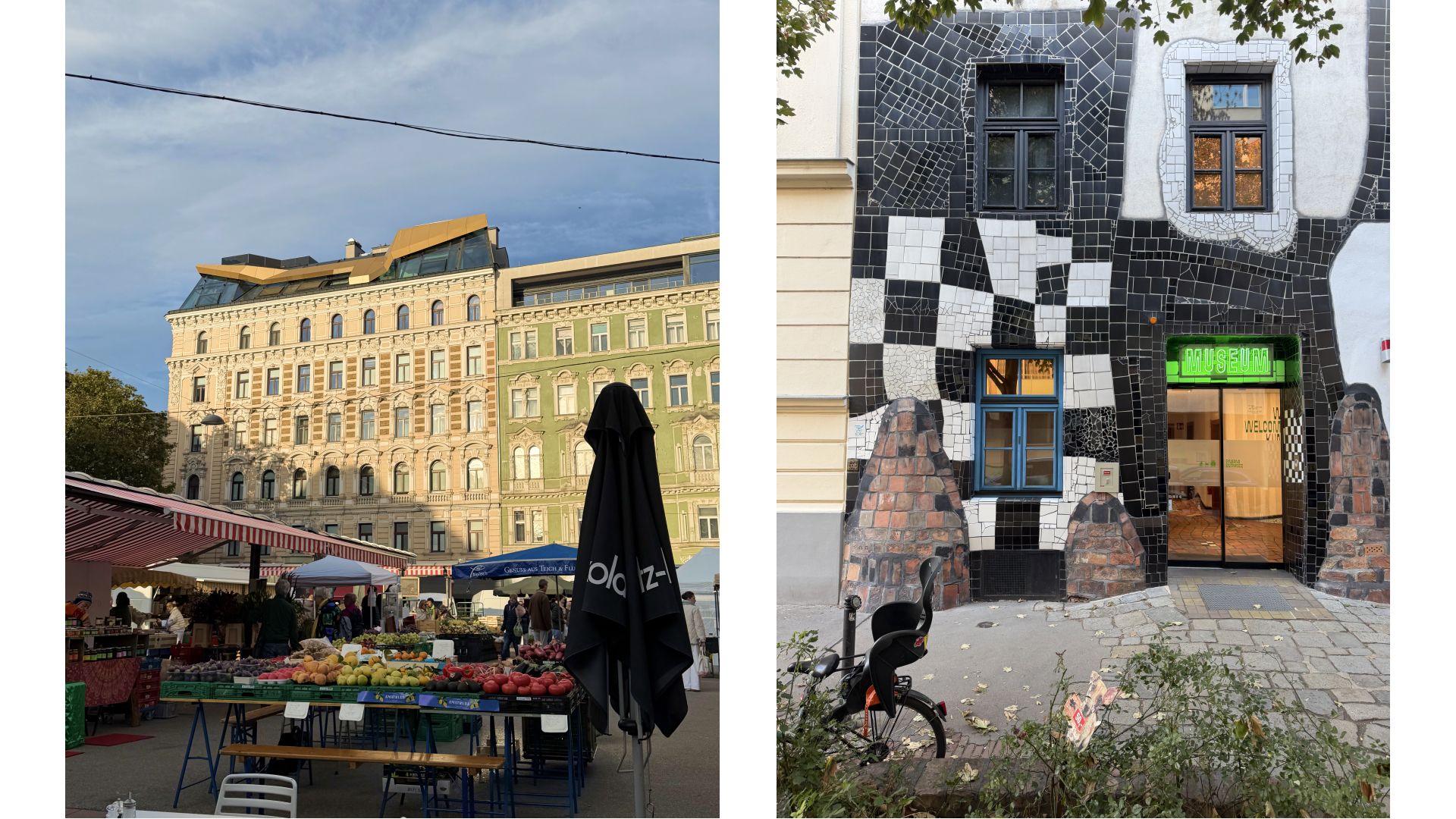
Hunt For Brunch At Karmeliter Market. Find one of Vienna's oldest food markets in the city’s historic Jewish quarter. Here, among rows of smart striped canopies, vendors sell flowers, fruit and veg as young couples, local families and pensioners peruse stalls and pitstop at Kaas Am Markt for platters of organic eggs, ham and cheese, Cafe Tachles for pierogi and Tewa for Middle Eastern-inspired dishes.
Fall In Love With An Eccentric Artist. Follow the canal eastwards and beeline for KunstHausWien – a museum designed by and dedicated to Friedensreich Hundertwasser. An artist and ecological activist who described straight lines as “godless and immoral” – this curvaceous, colourfully tiled townhouse is an architectural joy, with a permanent exhibition of his work found amid its wonky floors and mosaic walls.
Grab Lunch At Ca Phe Lalot. Head central to his inventive mint green-walled Vietnamese spot, where iced matchas and herbal teas provide a pick-me-up alongside “banhmini” sandwiches and Asian salads.
Walk The Ringstrasse. When the Habsburgs knocked down the city walls around 150 years ago, they replaced it with a wide, elegant boulevard that gives the Inner Stadt its sense of space. Forming a five-kilometre loop around the city centre, it’s a ready-made walking tour: look out for the State Opera, Otto Wagner’s spectacular Post Office Savings Bank and the neo-gothic city hall. Reward yourself by heading into the centre to the small but perfectly formed American Loos Bar for a martini.
Head For Dinner At Bistro Fantasy. This classy all-day diner has become one of the city’s hottest reservations since opening in 2025. Exposed concrete walls, flower-adorned tables and vinyl soundtrack set the tone for an evening menu of small plates – think marinated mussels and beef tartare – mezcalitas and natural wines.
Hit The Zollergasse Strip. Known as Tinder Alley thanks to its sweep of bars to suit any first date, Zollergasse buzzes after dark. Walk past lively crowds sipping spritzers and pints of Ottakringer on the terraces and take your pick according to mood – with the legendary Cafe Europa, Liebling and – around the corner on Schadekgasse – Futuregarden all standouts.
Day Three
Start The Day With A Swim. In summer the Danube and its islands come alive with picnickers, paddleboarders and swimmers. Pack a towel and head for the platforms and sunbathing decks of Pier 22 or Copa Beach on either side of the New Danube – a swimmable side channel of the rivera where reflections of the Donauturm shimmer on the water. For an all-weather alternative, hop between pool, sauna and steam room at the stunning Art Deco Amalienbad municipal baths.
Dive Into Vienna’s Art Scene. On Sundays, Vienna’s shops (and most restaurants) close, making it a great time to dive into its formidable art scene. Occupying the former Habsburg stables, Museumsquartier is a great place to start: head to the Leopold Museum for the world’s largest Egon Schiele collection and works by Austria’s modernist pioneers; Mumok for contemporary art. A 15-minute walk away, Warhols, Basquiats and Chagalls line the walls of the Heidi Horten Collection, making it a more than worthy detour.
Hungry? Drop Into Glacis Beisl. Hidden in a foliage-draped courtyard around the corner from Mumok, this is a time-honoured spot for traditional Austrian fare between galleries, including crisp wiener schnitzels and goulash.
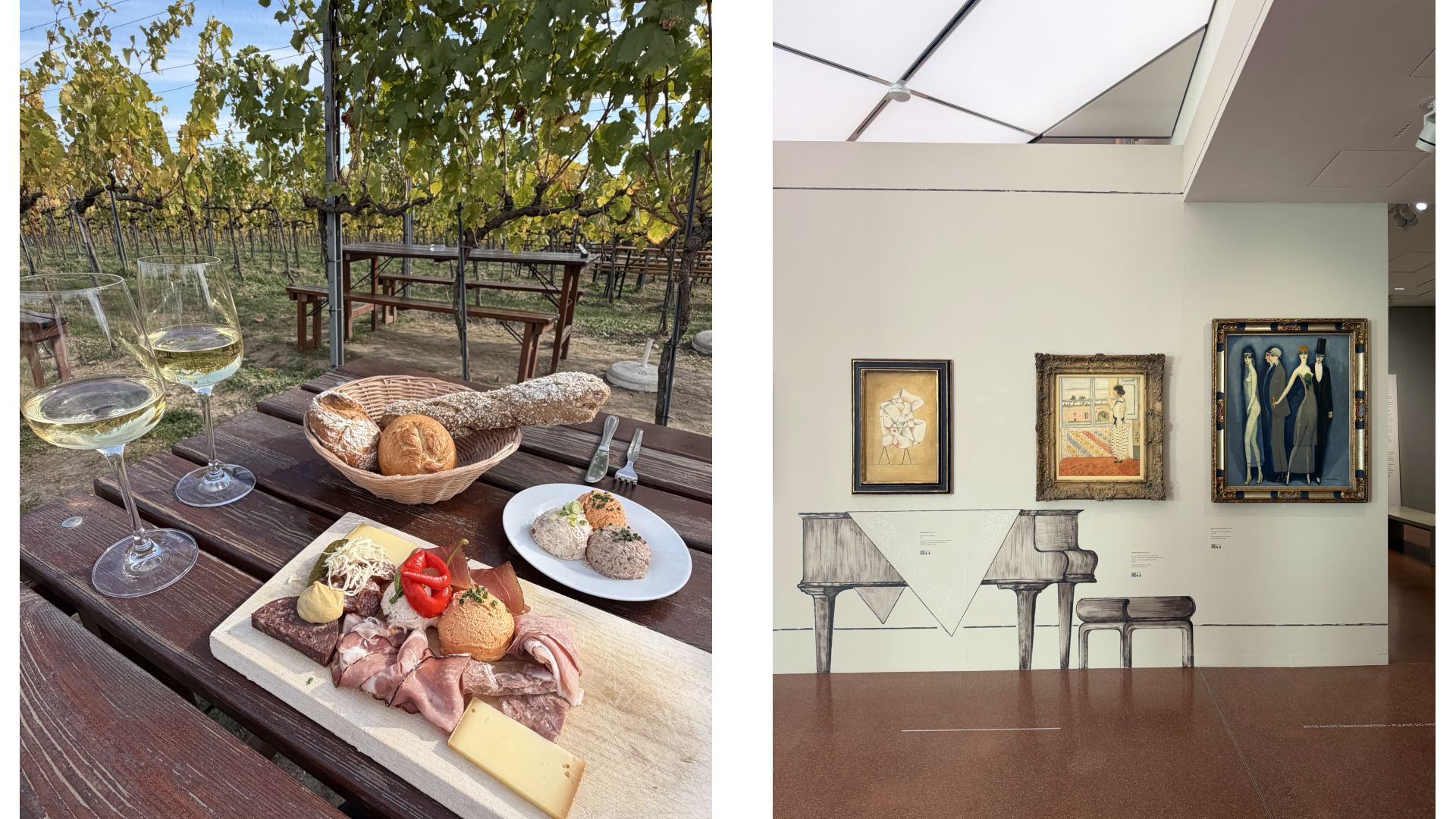
Head To The Hills For Wine At Sunset. It’s rare for a city to boast its own wine regions – especially with the quality of those in the hills at Vienna’s northern borders. Here there’s a strong tradition of wineries selling their wares in Buschenschanks, or wine taverns, specialising in field blends of native varietals, with many connected by wine hiking trails. Take the D Tram to Nussdorf and follow the well-signposted trail up through the vines, where, between May and October, a choice of open-air taverns will pour recent vintages and glasses of lower alcoholic Sturm alongside meat and cheeses. Time your arrival for sunset for stunning views back over Vienna and the Danube.