They don’t always march. They don’t always raise banners. But in Iran, a growing number of women are redefining what resistance looks like: through art, music, online and in everyday acts of defiance.
Social media is now so full of photos and videos of women going about their daily lives without the mandatory hijab – and even riding mopeds (also forbidden) – that in October this year, some news sites even incorrectly announced that the law had been changed.
However, the hijab laws still stand. In Iran, the hijab has been a visible marker of the Islamic Republic’s legitimacy, a pillar of the government’s principles since the revolution of 1979. To question the veil is to question the very revolution that brought the clerics to power – the state has woven control of women’s bodies into the fabric of its political identity.
In September 2022, the world watched as the Zan, Zendegi, Azadi (Woman, Life, Freedom) protests – sparked by the death of Kurdish-Iranian woman Jina Mahsa Amini in custody while she was being detained for ‘incorrect hijab’ – were violently quashed by Iran’s so-called Morality Police.
After the protests, the regime rushed to strengthen existing legislation to force women to comply with hijab laws. Towards the end of 2023, Iran’s parliament quietly passed the Hijab and Chastity law, which proposes a tiered system of punishments for women who display “nudity, lack of chastity, lack of hijab, bad dressing and acts against public decency leading to disturbance of peace”. Alongside punitive fines and jail time, the law empowers public institutions to deny essential services to non-compliant women, taking the policing of this unpopular law off the streets and into the realm of cyber surveillance and digital punishments – considered a better ‘look’ for the regime than footage of women being dragged and beaten in public by the Morality Police.
“To question the veil is to question the very revolution that brought the clerics to power – the state has woven control of women’s bodies into the fabric of its political identity”
But despite the state backlash to the protests, the resistance didn’t go away, it evolved. Now Iran’s women, particularly Gen Z, are staging a quiet rebellion of civil disobedience through fashion, art and culture.
On 11 December 2024, Parastoo Ahmadi, a 27‑year‑old Iranian singer, streamed a 27‑minute concert from the courtyard of a traditional caravanserai. She sang without any hijab: bare‑shouldered, bare-headed and accompanied by an all-male backing band. In the video’s introduction, she said: “I am Parastoo, a girl who wants to sing for the people she loves... this is a right I could not ignore.”
Hers was an act of breathtaking disobedience, because in Iran, not only are women prohibited from appearing in public without the mandatory hijab, they are also banned from singing in public, especially in mixed company. Parastoo’s unveiled appearance, opening her set with a haunting rendition of Az Khoone Javanane Vatan Lale Damide (From The Blood Of The Youth Of The Homeland, A Tulip Blooms) – a traditional protest song dating from the Constitutional Revolution more than a century ago, which she had performed during the Woman Life Protests – carried deep meaning for the millions of Iranians who watched it online. Her viral message of defiance, courage and memory was clear and understood by all those who watched it on YouTube.

Ahmadi’s breaking of two of the most rigid taboos in the Islamic Republic elicited a swift response. Three days after posting her ‘imagined concert’, the singer was arrested and two of her male musicians were also detained. But by 23 December, Ahmadi and her bandmates were released on bail. The national body for musicians, Iran’s Music House, condemned the arrests and the broader ban on female artists, describing the laws as a stain on artistic freedom. And while Ahmadi’s case is ongoing – she is still on bail awaiting trial – the authorities’ reaction has been milder than many would have anticipated.
Ahmadi’s real‑world act is mirrored in fiction by the recent film Bidad, directed by Soheil Beiraghi. The movie tells the story of a young woman, Seti, whose ambition to sing publicly becomes a political act. Under Iran’s laws, solo performances by women in mixed company is forbidden. In the film, Seti turns the street into her stage, attracting the attention – and anger – of authorities. At the 2025 Karlovy Vary International Film Festival in Czech Republic, Bidad won the Special Jury Prize. It is regarded by many as more than a movie, but a document of generational impatience, reflecting Gen Z’s pushing back against the rules.
“How ridiculous is it that I can’t sing in public?” Homa*, a young singer who also defies the authorities to sing in undercover music venues, tells me. “Like Seti in the movie, I am making my own music and career in these protected spaces that we have in Iran. We aren’t heroines, we are just ordinary young people demanding what should be normal.”
Ahmadi’s caravanserai concert, and Bidad’s story, are part of the new resistance movement: cultural, private, quietly viral. In a state where public demonstration is risky and often violently repressed, these women turn sound, video, film, streaming, photography and performance into weapons of expression.
“I am making my own music and career in these protected spaces that we have in Iran. We aren’t heroines, we are just ordinary young people demanding what should be normal”
Homa*, a young Iranian singer
In October 2025, footage of an impromptu gig on a Tehran sidewalk went viral, showing the band rocking out playing a cover of the White Stripes, the bassist a hejab-less woman, a mixed audience bopping along, not a headscarf in sight. Although the authorities made some arrests after the scenes were posted on social media, there is a different atmosphere among the Gen Z creatives behind these events.
Kaveh* was one of the many young Iranians present. “You know, some Morality Police walked by,” he says on a call from Tehran, “But they just looked the other way. Like, literally. That’s what you see a lot, they just look the other way. Either they’ve been told to do that, or they are as fed up with upholding this nonsense as we are. I mean, they’re Iranian too and I think they’ve had enough of, you know, abusing their fellow Iranians.”
Speaking to me on a video link from a co-working space in Tehran, Parvaneh* explains how her generation have grown up seeing their parents’ and grandparents’ traditional acts of resistance fail. “We watched their protests get squashed,” she shrugs, her pierced eyebrow arching. “And then we – my generation – had our protests after they killed Jina, and the regime showed us it could care less about our legal peaceful rights. They shot at us, they arrested us, got false confessions. So now,” she indicates the room behind her, full of other hijab-less women, many with tattoos and piercings (which are also officially frowned upon), “we just ignore them! We’ve decided to just live a life as close to the one that we want. And so far, the regime seems like it’s holding back from too much enforcement or punishment.”
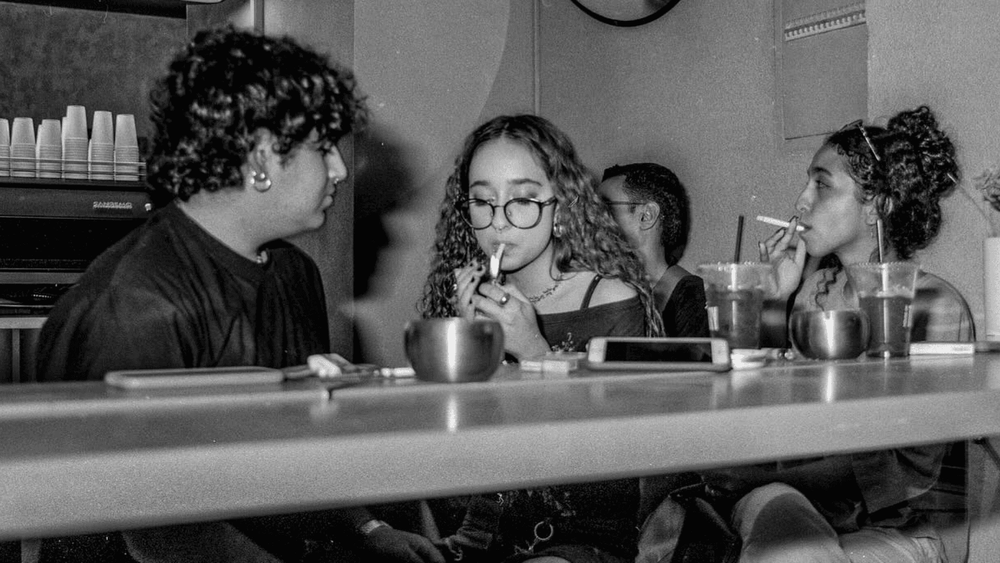
This quiet revolt takes many forms. Photographers such as Ali Mohammadi regularly post portraits of Gen Z women in Tehran, who could just as easily be spotted on the streets of Berlin, London or NYC, some smoking, with piercings or brightly coloured hair – and not a headscarf in sight. And Zoha Hashemi has become known for her videos of daring feats, including swinging over extraordinary heights from skyscrapers – laughing and shaking her hair out in the wind – inspiring her 100k followers to challenge the regime’s imposed limits.

Given the reduction in the enforcement of hijab and other modesty laws, it seems that the state is tacitly allowing these changes. “Nowadays, if you’re driving without a headscarf, you no longer immediately get a fine for being ‘unveiled’,” Maryam, an artisan from Esfahan, explains. “Similarly, the security officers at metro stations, who used to stop you from boarding if your hijab wasn’t ‘correct’, are no longer present. It feels like they have been told not to push us too far.”
Maryam is referring to the mounting civil discontent in the face of environmental mismanagement. Tehran is in danger of running out of water, air pollution is so bad that schools have been closed this winter, and a raging wildfire has been destroying one of Iran’s most ancient forests for several weeks now. The economy is tanking, inflation at an all-time high, and the threat of more attacks from Israel (which bombed Iran for 12 days in June 2025, supported by the US) still hangs over the people. There is a sense that the authorities do not want to risk enraging them further.
“We had to survive it all on our own, Israel’s bombing,” says Parvaneh*. “We were being bombed because of their policies, and the regime did nothing to protect us. And the economy is still in freefall, we have power outages and water shortages... there is so much anger that I think they don’t want to antagonise us.”
What’s more, unlike previous generations, Gen Z have grown up with smartphones and satellite internet; the dissonance of state‑imposed modesty in sharp contrast to what they see on their Instagram, TikTok and YouTube accounts.
Yet for all the digital applause their acts of resistance inspire, the personal cost can still be high. Ahmadi’s prosecution is pending; her future as an artist is uncertain. Beiraghi, Bidad’s director, reportedly faces sentence. This is resistance with a price tag. And yet – for many women and Gen Z Iranians – it seems a price worth paying. Because silence, by now, feels like consent.
Ahmadi’s concert may have been illegal under the regime, but it was heard. And in every note, every frame, every image that escapes – there is a future Iran being imagined by a generation that has ceased to obey laws they see no sense in.
*Names have been changed to protect identity