Music has always been able to traverse borders. It carries culture with it and creates space for stories that might otherwise go unheard. At WOMAD Festival this July, that was easy to see.
For more than 40 years, the festival, whose UK edition is held in Wiltshire, has brought together artists from around the world, inviting audiences to discover new music, try food and share ideas and perspectives. This year's line-up included musicians from Palestine, the Democratic Republic of Congo, Syria, Lebanon and Iran – countries whose people continue to live with the realities of war, occupation, political repression or ongoing conflict.
After the festival, Service95 sat down with four international acts to talk about memory, sound and bringing a sense of home to the stage – and why, even in the hardest moments, creating remains an act of hope.
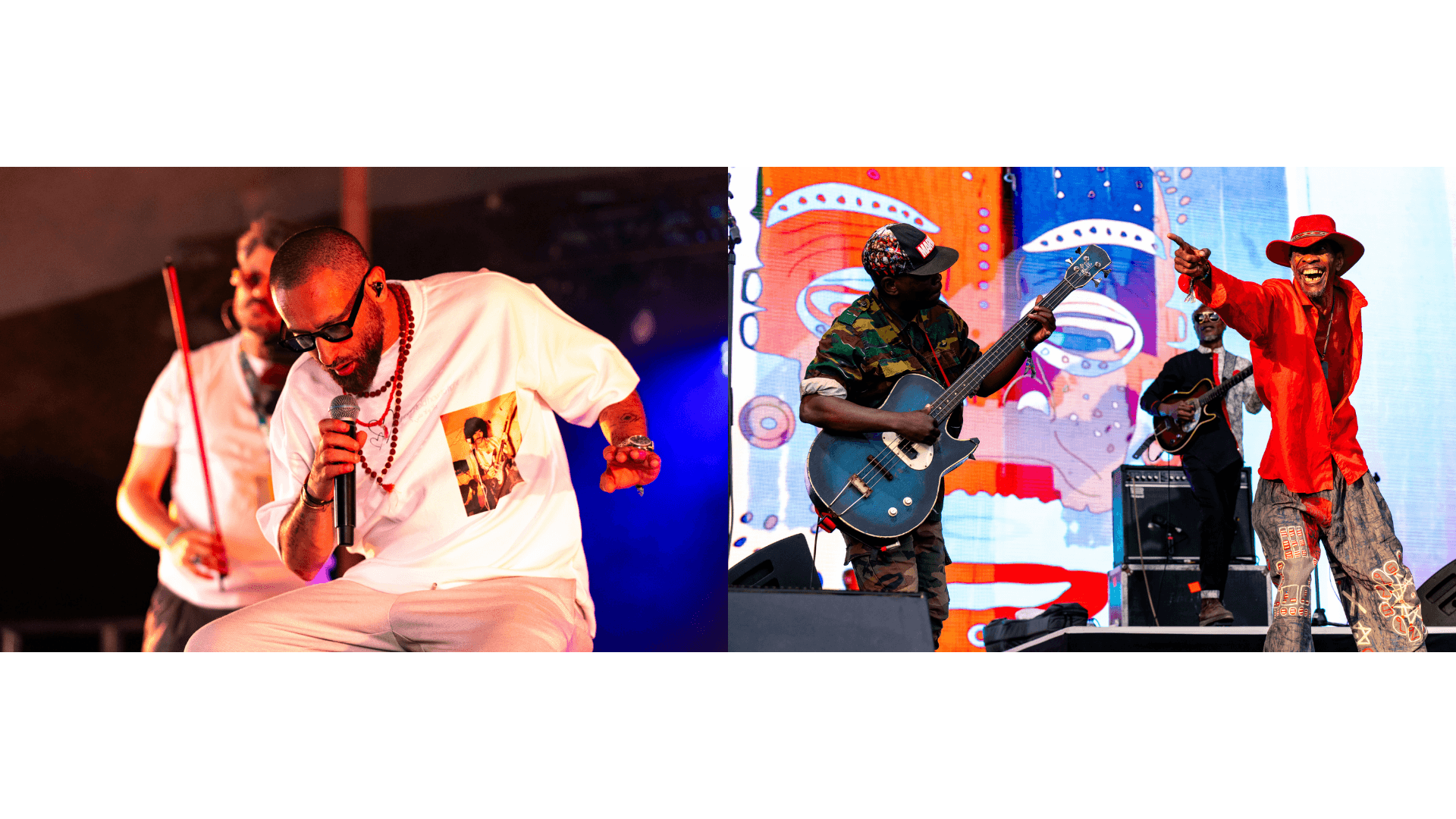
Tamer Nafar – Rapper, Palestine
I often find myself returning to the small bedroom I shared with my brother. It was cramped and messy, clothes piled everywhere. But there was one thing that was always in perfect order: our CD collection. Dozens of albums, arranged alphabetically with almost obsessive precision. I think that was my first attempt to create order within chaos. In many ways, that's still what my work is about today: finding rhythm, meaning and stories within a reality that often feels impossible to make sense of.
For most of my life, I resisted having my home reduced to a political headline. As an artist, I wanted to be seen first as a human being and a creator – not only through the lens of conflict or national identity.
But over the past three years, as our Palestinian home has come under existential threat, that struggle has started to feel like a privilege.
I still believe that art feeds the soul. But when two million people are facing starvation, food for the stomach becomes more urgent than food for the soul.
Every story I tell on stage brings home with me. My neighbourhood, my family, my friends and the people I grew up with – they're all there, even if they're thousands of miles away.
At first, performing felt meaningless. Tens of thousands of people were being killed, and I kept asking myself: What am I doing? Singing songs? Really?
That feeling paralysed me. I couldn't stop the bombing. I couldn't cross the border to rescue children. I couldn't deliver food or put out fires. Then one day I asked myself a much simpler question: What can I do?
The answer was simple: I can write. I can speak. I can sing.
It's a very modest role in the middle of a tragedy that is much bigger than me. Believe me, if I knew how to save even one child, I would gladly put down the pen and the microphone and never pick them up again.
But this is what I know how to do. Now, every time I step on stage, I know exactly why I'm there: to tell stories that must not be forgotten.
Jupiter & Okwess – Music Collective, Democratic Republic Of The Congo
People often only talk about the conflicts linked to the mines, but the Democratic Republic of the Congo is home to immense cultural diversity that remains largely unexplored and underestimated. There is so much creativity, knowledge and beauty that the world doesn't get to see.
Whenever I dance, I think about home. I think about dancing with my grandchildren and, in that moment, wherever I am in the world, I feel at home. Every country in the world has its own struggles. If you only focus on those struggles, you stop living and you stop creating. Performing is my way of continuing to share hope, joy and life.
For me, art is a doorway to another dimension. It takes people into a different sensory state, where they can feel, imagine and connect beyond everyday life.
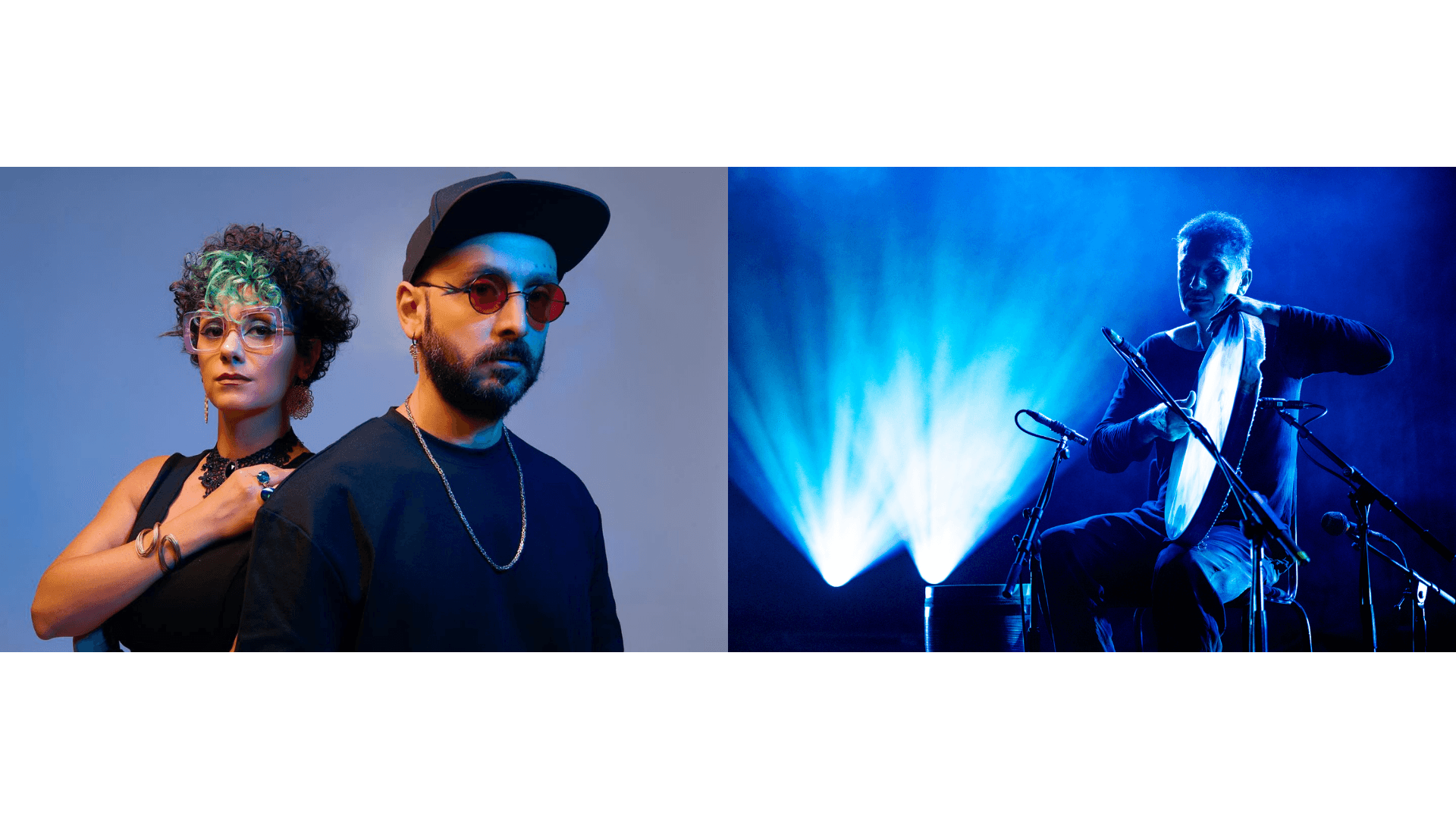
RUST – Syrian/Lebanese duo, Prague
Our work is deeply rooted in traditional Arabic music, as well as the rich poetry and melodies of the Levant and Egypt. We often return to raw, unfiltered recordings from the early 20th century – they help us reconnect with our roots and spark our imagination. We also keep coming back to the sound of religious chanting, which has preserved our musical traditions in their purest oral form.
There's a common stereotype that Arabic culture is either stuck in the past or defined entirely by struggle. We want people to know that our music and culture are alive, evolving and deeply contemporary.
For us, home isn't a physical place – it's the people we love. As partners in both life and music, Petra and I create a warm, supportive space for each other wherever we go. We are each other's home.
Performing while our homeland is experiencing war and crisis is, in itself, an act of resistance. It gives us a platform to keep our voices heard and remind the world that, regardless of what politics does to our countries, the people still have something powerful to say. We feel incredibly fortunate to be artists. Making music allows us to create a parallel reality where we can express our deepest emotions and reflect on the world around us.
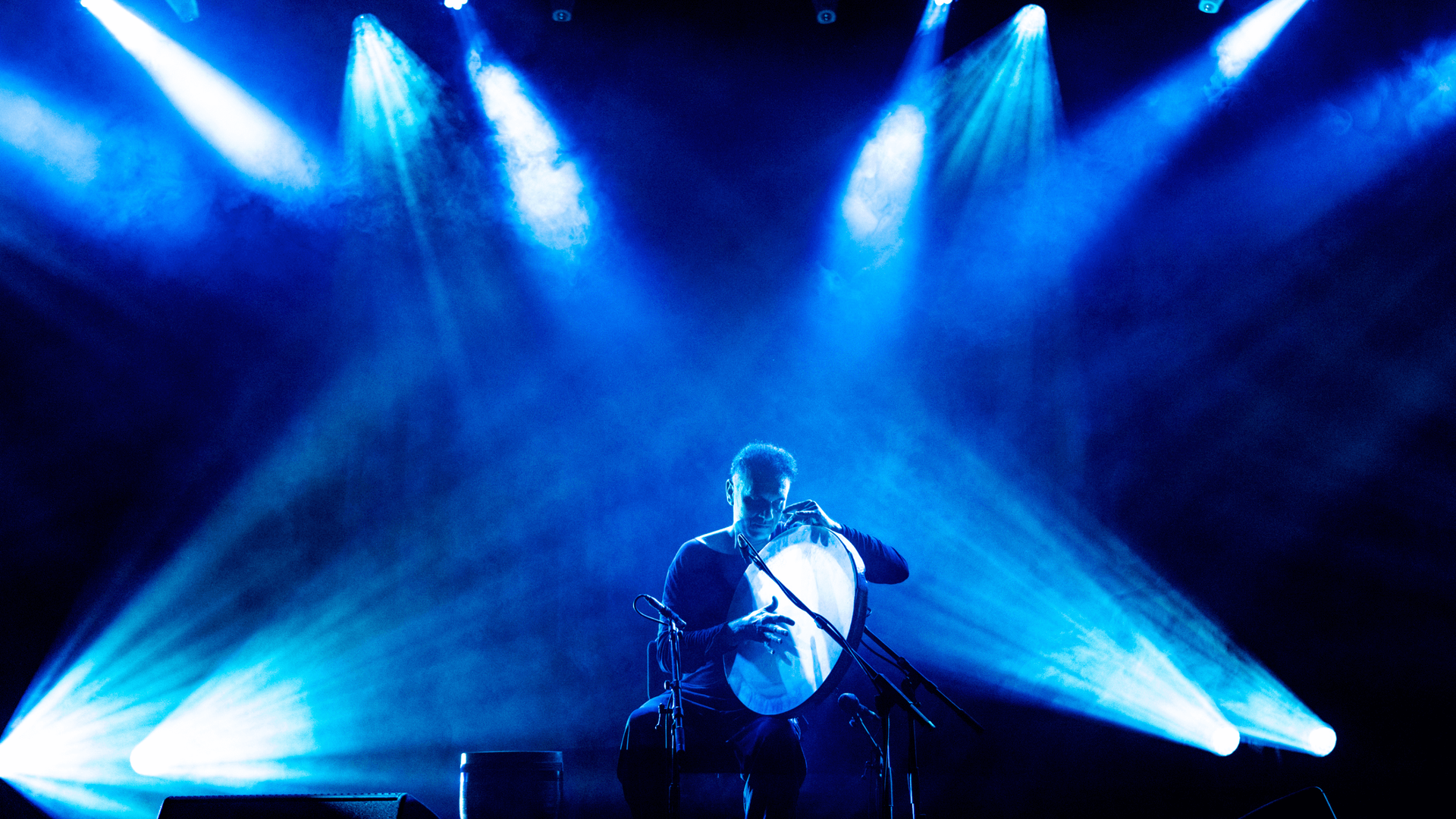
Mohammad Reza Mortazavi – Multi-instrumentalist, Isfahan, Iran
Over 41 years of performing, I've gradually come to realise that certain elements of nature have always been part of my inner world. Each carries its own feeling, quality and sound, capable of drawing me into a state of trance that leads towards a familiar, deeply recognised silence.
My work returns not to a particular place or memory but to that familiar silence.
Music has taught me that my homeland exists not only as a place outside me, but also somewhere within me. I was born in Iran and I carry a deep and inseparable connection to its people, its memories and its land.
What I hope people around the world understand is that Iran should not be seen only through official narratives. Since the Islamic Revolution, many Iranians have faced repression, imprisonment, execution and the violation of their basic human rights in their pursuit of freedom and dignity.
When I perform away from home, I don't carry anything physical with me. What I carry are the memories, experiences, silences and emotions that have shaped my life and continue to find expression through music. Music is the place where sound and emotion communicate without the need for translation. That is why, even when I am far from home, I never feel disconnected from it.
For me, true art begins with letting go of oneself. In that release, we reflect the vastness of the universe and our deep connection to everything around us.
Letting go of the self means moving beyond the limits of individual identity and discovering a deeper relationship with existence and with one another. For me, that release is healing.