There’s so much more to love than we give it credit for. While the romantic kind always steals the spotlight, it’s not the only one we should be celebrating. So often, it’s the other iterations that carry us through life: the friendships that have seen you through school and beyond; the family member whose eyes you meet across the dinner table for a conspiratorial flash of solidarity; the colleague that stepped into your office – and your life – in the years when you thought your days of making new bonds were over. Because, when it comes down to it, love is really just about being seen. Heard. Understood.
We’re guilty of focusing on the pursuit of love, on the desire to be loved – to the point where it can be easy to forget that love is an action, not just a state of being. Loving someone shapes you, for better or for worse, and those experiences bring the kind of life lessons that stay with you forever.
Here, six writers share the unexpected lessons they’ve learned – about themselves, and how and why they love – from the relationships that changed them...
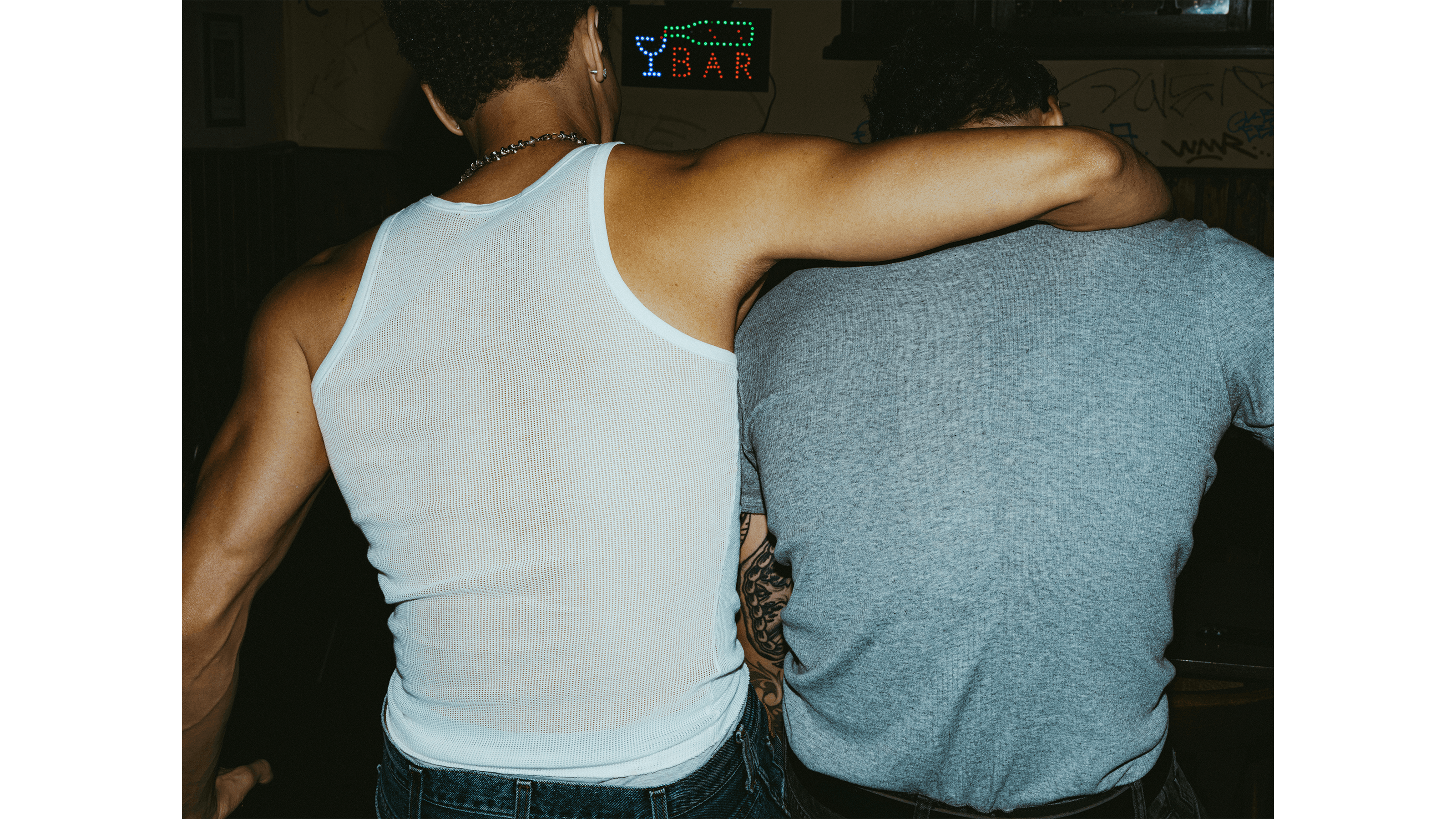
“Out Of All My Relationships, My Friendships With Other Gay Men Are The Ones That Will Endure”
By Lukas Ferreira
I must have been 18 when I realised that being gay would cost me a timeline. Milestones of adulthood (marriage at the sensible age of 30, a white picket fence, a kid with my bone structure, and the rest) became obsolete. My aunts stopped asking me if I had anyone special in my life, while my uncles only saw me through the kaleidoscope of my career. It’s not that they were necessarily uncomfortable, it’s that a queer life is often considered directionless and hidden; a mysterious taboo that made me feel nebulous.
After college, I made a concerted effort to find gay friends in Los Angeles, which honestly came from wanting more of a nightlife. Over time, these friendships slowly began to evolve, dissolving whatever hang-ups I’d had about being vulnerable with gay men until then – the irrational and common fear that admitting the insecurities of my sexuality somehow made me smaller.
With gay men, there’s an understanding that we’ve all moved through the world having faced rejection – socially, culturally, wherever – an experience that granted my friends a sense of permission to live without rhyme or reason. They wore this weightlessness with confidence, willing me to do the same. One was divorced, one was in law school, one was figuring it out, one taught me how to flirt. All of them genuinely seemed to want more for me. I’m almost romantic about how much they lifted me up.
I was lucky enough to find a similar community when I later moved to New York City, the winter cool making us cosy up in bars and plan our lives with promise. It’s the way we plan the future together that oddly gives me clarity of the moment: conversations swaying between how chic a courthouse wedding would be to the idea of retiring in Portugal, and how early we’d introduce our kids to Charli xcx.
“It’s the way we plan the future together that gives me clarity of the moment: conversations swaying between how chic a courthouse wedding would be to how early we’d introduce our kids to Charli xcx”
It’s not so much that the gay men in my orbit have given me a timeline I thought was pulled away from me, nor that they rekindled some kind of hope I once had for a conventional life. It’s that they confirm that my path always had direction: one with the luxury of choice and the luck of friendship. I just had to live it.
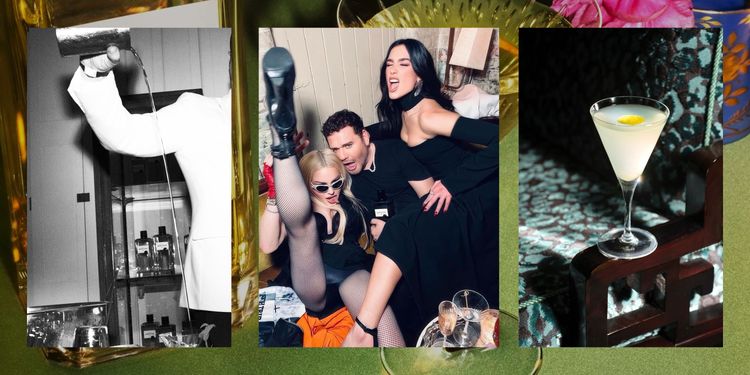
Somewhere in the city on a Friday night, you’ll find us hunched over our martinis, catapulted into chatter that lasts for hours. It will be 2am when we realise it’s time to move on to the next spot, the olives in my glass still swimming. Colin’s already out the door, the car is here and we have to go. We’ll pick up where we left off at the next place, like always.
It is so unexpectedly, wonderfully simple: it took my friends seeing me for me to finally see myself.
Lukas Ferreira is a New York City-based writer who focuses on culture, identity, and entertainment. You can follow him on Instagram at @lukasaferreira and Substack at @lukasferreira
“Distance Doesn’t Have To Keep You Apart – You Just Need To Find New Ways To Show Your Love”
By Dinan Alasad
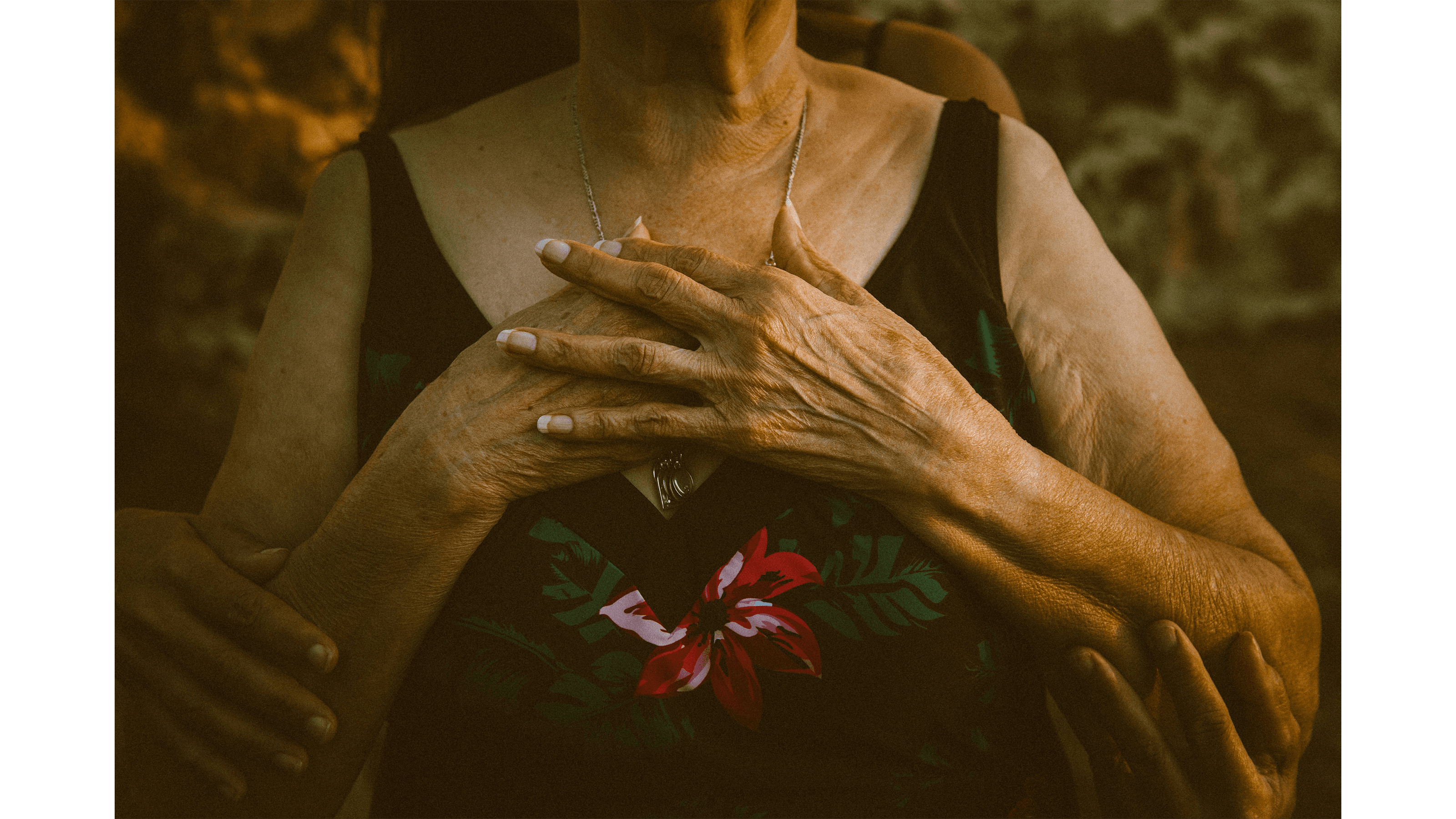
It’s always been long-distance love for me and my grandmother. When I was little, I’d count down the days for her and my grandfather’s arrival in Khartoum each December. The gifts they brought were always special and thoughtful, but what I was always most excited for was the stories they would bring.
Late in the evening, as she did her nightly routines, I would sit on the floor next to my grandmother and she would tell me about her travels, her parents, her grandparents and how everything I could see around me now came to be. She would recount anecdotes from her youth, of how she met her closest friends and the love stories that formed the lineages around us. Sometimes, she had pictures to show me. Often, I would close my eyes and try to imagine the people and places she was describing.
In the early 2000s, when I was in primary school, my grandmother taught me how to email and we began writing to each other in that way. We’d send birthday greetings and updates every few months. In the 2010s, smartphones started being a part of daily life. Despite being in her 60s, she learned how to use one because it would allow her to reach us faster. Now, we feel closer than ever.
We live 3,500 miles apart but, every morning, my grandmother checks the weather in my city and texts me to dress warmly, or take an umbrella, or remember to drink water. We greet each other and then share little snippets of our days as they unfold. I show her what I’m having for lunch. She sends me pictures of the seagulls returning to the lake.
When I first moved to London, she used to worry about me. She comes from a time where security meant living with your family and then living with a husband. My life felt unfamiliar to her. I understand that unfamiliarity can feel scary.
“We live 3,500 miles apart but, every morning, my grandmother checks the weather in my city and texts me to dress warmly, or take an umbrella, or remember to drink water”
But we both worry a lot less now. From the anecdotes and images we share, we are able to paint better pictures of each other’s lives. Instead of imagining me alone and afraid, she can now imagine me surrounded by the love of friends whose names and faces and kindness she knows. Instead of imagining her alone and afraid, I can imagine her sitting by the lake, knitting and reading and being cared for by all her neighbours who love her as dearly as she deserves.
My grandmother and I have never lived in the same city, but I’ve never felt far from her. She has consistently persevered to make sure that I can always feel her love. Even here, in this flat she’s never been to, I look around and see all the evidence of her love in the little bags and tablecloths and jumpers she’s crocheted for me. I feel incredibly grateful, because no matter what, my grandmother will find a way for her love to reach me. She has taught me that even across thousands of miles, love can be present in small, ordinary acts that say: I see you, I care for you, I’m here. And that realisation – that it can be this quiet, this sustaining and this alive – has changed how I understand love entirely.
Dinan Alasad is a writer and mathematician from Khartoum, Sudan. She writes to an audience of Sudanese women and others who relate via her Substack. Her essays have also been published in GQ Middle East, Briarpatch, Logic Magazine, Muse SD and other publications that resonate
“You Can’t Always Be The One To Fix Things – Sometimes, You Have To Let Someone Else Look After You”
By Lucas Oakeley
I always thought love was a bit like football. That the most important thing was to give as much as you can, leaving it all on the pitch so that, afterwards – when your lungs are burning, and your legs are quivering like they’ve been cast out of jelly – you can feel proud of yourself for all that tireless running around you’ve done. I’ve since learned that’s not the case. A relationship which has made me a bigger and better man has taught me that love is as much about receiving as it is about giving. (No, not in that way. Get your mind out of the gutter.)
I’ve learned that it’s okay to be taken care of. That it’s not a failing of character to simply sit still, do nothing, and let someone adore you.
You see, I’ve always felt that it was my responsibility to be the provider in a relationship. That I have to be the one to bring home the bacon. Put food on the table. Keep a roof over our heads. And it’s been ingrained in my broken male psyche that I’ve got to do all of that while somehow keeping the wolf from the door, its white muzzle and slobbery jaws snapping at my fingertips.
“It’s okay to be taken care of. That it’s not a failing of character to simply sit still, do nothing, and let someone adore you”
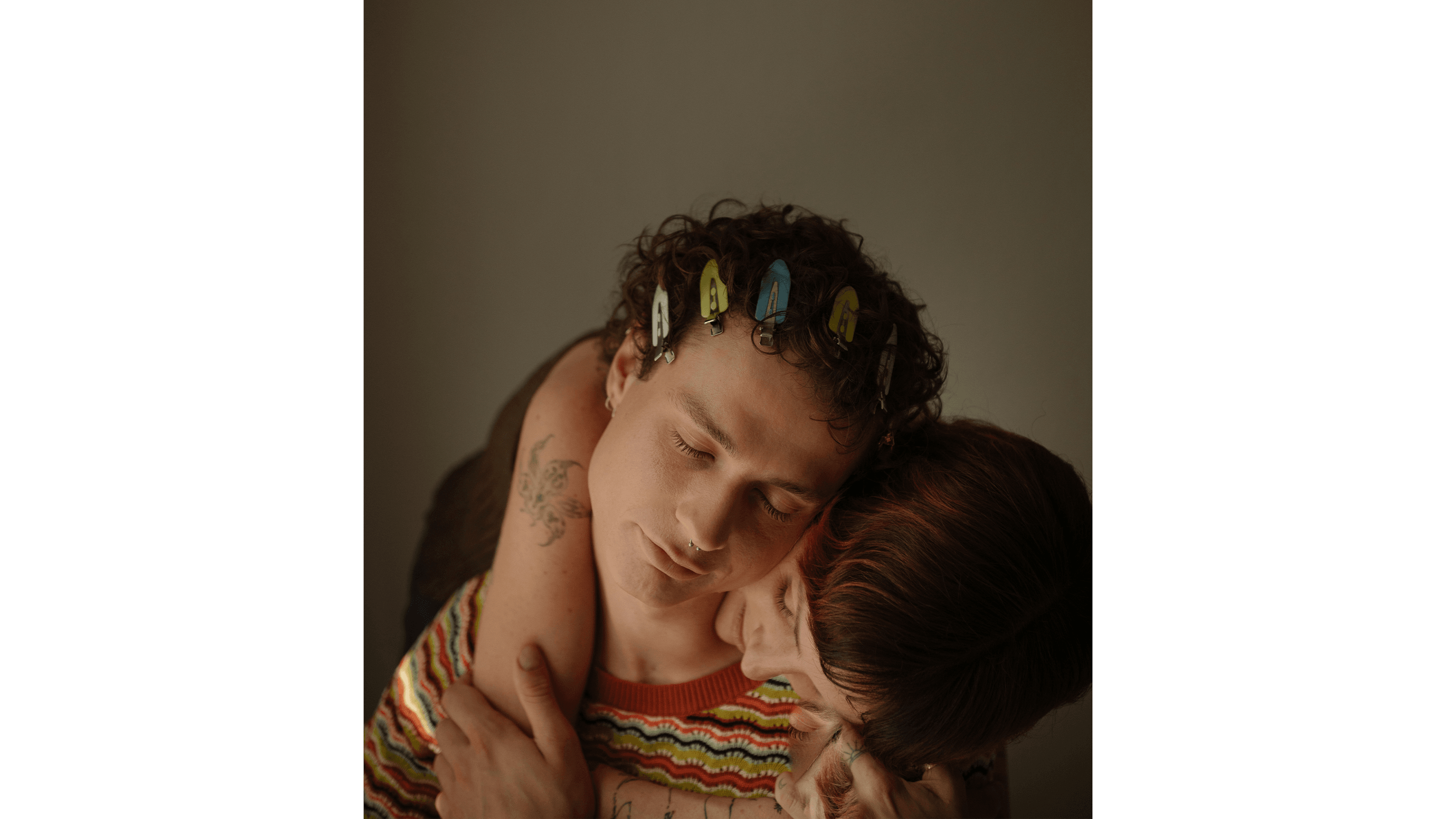
Like most men, my instinct is to say I’m okay, even when I’m not. Katherine, my partner, has taught me that it’s okay not to be okay, and that it’s equally okay to ask for help. I’ve had to unlearn a lot of needless stoicism over the years, and her gentle love has helped me realise that being held, or cooked for, or cared for isn’t weak. It’s necessary. Being your own person is important, but there’s no shame in depending on someone, either.
Love is reciprocal. It’s not a one-way street; it’s a river. You need to take turns caring for one another – there will be ebbs and flows, because that’s how rivers work, baby – but you need to make sure you’re opening yourself up to being loved in the moments you’re offered it.
Yes, you have to work at relationships, and sometimes you’ve got no choice but to love as hard as you can, and white-knuckle what you’ve got so it doesn’t pour through your hands. But it’s just as important to relax your grip and allow yourself to feel loved. To let someone in. Which isn’t much like football at all.
Lucas Oakeley is a writer and journalist who has written for a range of publications, including VOGUE, GQ, The Independent, National Geographic, The Guardian, The Economist, Esquire and Time Out. He loves long walks on the beach but hates getting sand in his shoes. His debut novel, Nearly Departed, is out now. You can find his Instagram, TikTok and Twitter all under @LucasOakeley
“I Haven’t Learned To Care Less In Love – I’ve Learned To Stop Leaving Myself”
By Blithe Saxon
I used to be the kind of girl who cared too much. I was the type to wait anxiously by the phone, then slip into full-blown euphoria over a sliver of attention. A ‘pick-me’ feasting on a breadcrumb. The ball was always in their court.
I told myself it was romantic. But it wasn’t. It was embarrassing. I was so envious of people who seemed effortlessly detached. The less they cared, the more attractive they became. I tried to copy it, but I failed. Because no matter how much I tried to pretend I didn’t, I did care. Deeply.
Near the end of my relationship last year, he grew distant and I began contorting myself to earn back his affection. I cared for him so much that the self-assured version of me that he fell in love with vanished, leaving behind a yes-girl negotiating herself down in real time. My boundaries had evaporated: Standards? What standards? I stopped asking for what I needed, made excuses for inconsistency and convinced myself that being easy-going was maturity. I bent over backwards, performing all kinds of mental gymnastics to excuse his lack of effort.
I thought I’d grown up and evolved. I thought this time was different. But there I was again, crying myself to sleep over a man who wasn’t willing to meet me halfway. I’d made another man the centre of my world, and in doing so, lost myself. One weekend, after crying myself to sleep for two nights, something shifted. I didn’t wake up and decide to stop caring about him. I still do. But I was able to zoom out, take a good look at myself and realise that pining after him had become a conflict of interest – because in doing so, I’d abandoned myself. And, for the first time, I could no longer ignore it. I’d run out of excuses.
I broke up with him the next day.
I used to wonder which came first: do you care less because you’re always being chosen, or are you chosen because you care less? Now, I think it’s simpler than that. You attract people when you’re rooted in yourself. And you keep them when you don’t abandon that position. It’s not ‘not caring’ that’s attractive. It’s self-possession that makes someone magnetic. What draws people in isn’t indifference, but the steadiness of someone who refuses to leave themself.
“I didn’t wake up and decide to stop caring about him. I still do. But I was able to realise that pining after him had become a conflict of interest – because in doing so, I’d abandoned myself”
I’ve realised that not caring isn’t something you can learn to perform. It’s what happens when self-abandonment stops. Not as a tactic, but as truth.
What I’ve done since is commit to myself and my needs – pouring into friendships that leave me weak with laughter and building a home I don’t rush to escape. I’ve cultivated incredible friendships that make me feel whole and grounded. As a result, there’s no room for someone else’s half-efforts or emotional crumbs.
I’ve not sworn off dating, I’ve just flipped the narrative. The bar is higher because I put it there. I don’t need to be the one proving myself. He does. Anyone I let in has to earn a place in the life I’ve built. Why would I care whose court the ball is in? I’ve got plenty of balls.
Blithe Saxon is a London-based writer, poet, musician and actor. A self-proclaimed professional yearner, she writes about womanhood, feminism and modern dating, chronicling her own experiences of love and heartbreak in her Substack, The Diary of a Lover Girl
“A Walk of Shame is Anything But – It’s Actually A Path Of Liberation”
By Laura Roscioli
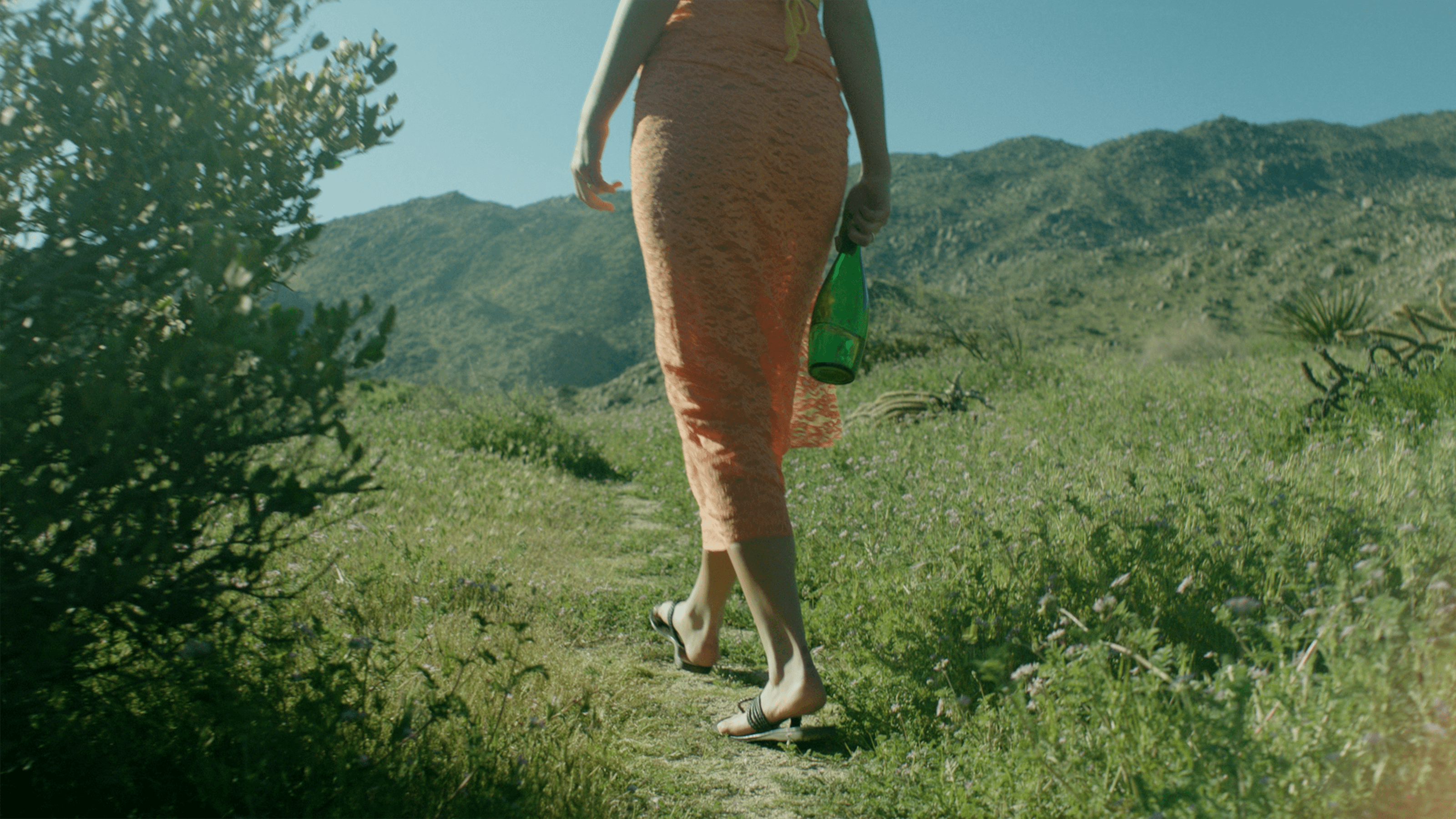
Stilettos in one hand, cross-body bag in the other; I knew my mascara had smudged beneath my eyes. All I-haven’t-been-home-yet cues. Walking away from his apartment, the road felt warm and rough under my bare feet. My stomach churned, last night’s margs at the back of my throat. Lime, acid, salt. I could feel people’s eyes on me. Getting home – without being noticed, as quickly as possible – was the only aim.
I smoothed down my hair, my dress; put on sunglasses to hide myself away. In that moment, I felt the familiar tug of apology – the societal suggestion that sex isn’t something you’re meant to do as a woman, just because you want to. That transactional sex cheapens our value, that pleasure is never without consequence.
But as I made my way home, on what we call the ‘Walk of Shame’, I wondered who the shame is really for. Do men feel it too? Or is this just another silent instruction that lives within women?
One-night stands have never been a problem for me, but other people’s reactions have often made me feel as though they should be. The eye rolls from housemates as another unnamed man slips out my bedroom door in the morning. The shame-laced questions disguised as curiosity: Whose heart have you broken this week, Laura? It’s always felt less like my sexuality was the issue, and more the freedom in which I experience sex that bothered others most; my lack of needing commitment to feel worthy.
On this stroll back to my apartment, I realised that perhaps what I was carrying with me was not my shame, but a little of theirs. It was a wake-up call, a realisation that I could choose not to carry it. That I could rebrand that feeling into something else. And just like that, I’d walked my last Walk of Shame. Not because I would never leave another man’s house in the wee hours of the morning again, but because I will no longer be ashamed for it.
“As I made my way home, on what we call the ‘Walk of Shame’, I wondered who the shame is really for. Do men feel it too? Or is this just another silent instruction that lives within women?”
Another early morning, several months later: The suburban street was lined with people society would deem successful: showered, exercised, dressed neatly, coffee in hand; out walking their dogs, speaking on their phones, on their way to buy an expensive bagel or to begin their office job. An annoyingly attractive woman in her thirties looked me up and down as she passed. Who looks that put-together in the morning? I felt bad about myself for a moment, as she intended. But it didn't last long. I reached for my sunglasses again, and then stopped. I decided not to put them on at all. Because I was not ashamed.
I’d spent the night at a man’s house I barely know because I wanted to have sex with him. I wasn’t looking for love, or emotional support, or a boyfriend. I was horny. For him. For me.
I left before he woke up. Neither of us needed the awkward theatre of discovering the daylight version of someone you only really want in the dark. It wasn’t that I didn’t like him. But what we wanted from each other was physical, and it was mutual.
That morning, I also left feeling alive. My body charged by the night’s orgasms. My creativity humming. I felt hungry for something deep fried. Perhaps an old movie. And a cup of herbal tea. I was inspired. Sexual liberation inspires me, I’ve learned. Being unapologetic about my actions inspires me too. So does walking home in last night’s clothes, feeling comfortable in decisions I made, just for me. What is it for, if not to be relished?
Laura Roscioli is an Australian-based writer whose work explores sex, desire, relationships, and modern womanhood. She writes sex and relationships columns, often drawing on her own personal experience to create space for open, nuanced conversations about intimacy. Laura is the author of the Substack The Things We Don’t Say and hosts the podcast The Sex That Changed My Life.
“It Comes Down To Having Someone Who Accepts You, Exactly As You Are”
By Lydia Wilkins
‘In sickness and in health’ is a promise we usually reserve for marriage. But why? Why do we expect romantic relationships to endure life’s worst moments, and yet it is friendship that often shapes the longest chapters of our lives. ‘Becoming sick, even chronically ill, is a life-changing experience, one I have come to know intimately in the last four years. Disability is something most of us fear – and it has a way of revealing who is willing to stay, and who is not.
By March 2022, Covid 19 had finally found me. A week in quarantine was transformative, for all the wrong reasons – and ended up leaving me physically disabled and unable to return to work for months. I had assumed that the bonds I’d nurtured for years would hold, that these were people who would stand by me when life went sideways. But friends I had been close to – and had trusted with countless girlhood secrets – seemed to see me ‘scary’ when I showed visible struggles, 'weak' for asking for help, or would disappear entirely even after we had made plans to meet.
When your energy is limited, caused by a condition originating from your brain, serious fatigue can strike unexpectedly. I found myself stranded on doorsteps unable to get home, shut out when ghosted. In moments like that, indignity chips away at your self-worth, piece by piece.
Then I met Steph. I like to joke that in another life, she’d have been my wife. Over the flowers of horticultural life in a Sussex garden one day, we planted the roots of our friendship. It was a radical act of love – the quiet act of allowing a person to cry, and to just listen. She did not interject herself, try to sway or advise; in a world of overwhelming information, there is something to be said for just listening, without restraint.
“Genuine Friendship (caps intended) is the act of showing up in a world so utterly unrelenting. It’s the person who says ‘I’ve got you’ when all seems lost”
Holding space is something we rarely commit to – often believing instead that we owe no one a thing, or that the small inconveniences of modern life are an intrusion on carefully drawn boundaries. When I was struggling with fertility issues, she welcomed me into her world, introducing me to her two children – my informally adopted niece and ‘nibling’ – who quickly became two of my favourite people. We tag-teamed museum trips to educate her kids, swapped ‘war stories’ over cocktails in Soho, danced the night away at a karaoke party for her landmark birthday last year – the kind of moments that restore a person’s sense of humanity.
Steph has shown me that Genuine Friendship (caps intended) is the act of showing up in a world so utterly unrelenting. It lives in the tiniest of gestures: advocating for venues to have seats and wide enough doors for mobility aid users; understanding last-minute cancellations; choosing each other day after day, week after week. It’s the person who says ‘I’ve got you’ when all seems lost.
Friendship is messy, complex, ever evolving. For years, I was met with fear and pity, silence and irrational aggression from people I had regarded as friends. Steph, however, ‘saw’ me – truly saw me – as myself, not as a ‘thing’ to be feared. To be seen exactly as you are – in sickness and in health, for better or for worse, richer or poorer, and to be celebrated for it – is to feel fully recognised and valued. It is a love I can only hope to repay.
Lydia Wilkins is an award-winning freelance journalist and editor of Disability Review Magazine. She is the author of the upcoming book, Criminally Misunderstood