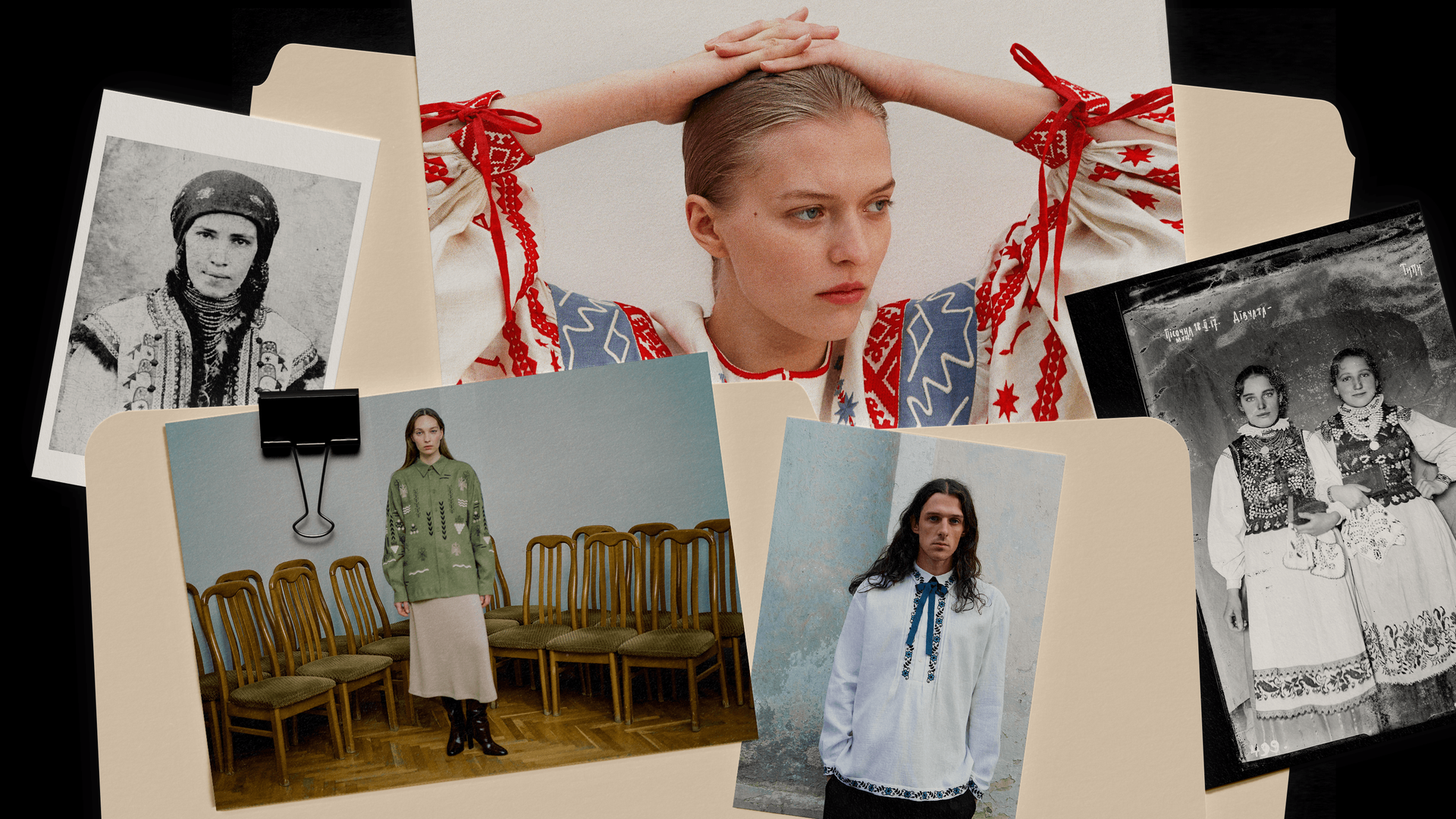
On a chilly January morning in the western Ukrainian city of Uzhhorod, 16 women are seated around long tables, deep in concentration, hands busy with needle and thread. Under the guidance of local designers Studio Kosytsya, they stitch the vyshyvanka – Ukraine’s iconic loose-fitting embroidered shirt or dress – with each pattern a thread in the fabric of their culture. They are far from the frontlines, nearly 700 miles away, yet the war’s shadow lingers. Every stitch becomes more than decoration; it is a statement of resilience, a claim to identity.
The vyshyvanka, often crafted from cotton or linen, has changed little over centuries, but in the hands of a new generation, it is reborn – vibrant, defiant and unmistakably Ukrainian. Because in the four years since Russia began its attack, the Ukrainian spirit remains unbroken. Across the country, these traditional garments and the time-honoured techniques behind them are being passed down by elders and revived in workshops, keeping the craft alive while carrying pride and resistance into a new era.
“At home, we use black threads and floral symbols,” Svitlana, an internally displaced participant from the embattled eastern Ukrainian city of Kharkiv, tells me. “Here, it’s full colours and diamond shapes,” she adds, noting how embroidery patterns vary by region. As she holds up her work-in-progress, she says she stitches every evening. “Even if there’s no electricity, I turn on a power bank and work, stitch by stitch.” For Svitlana, it’s more than craft – it’s a steady ritual in a country at war.
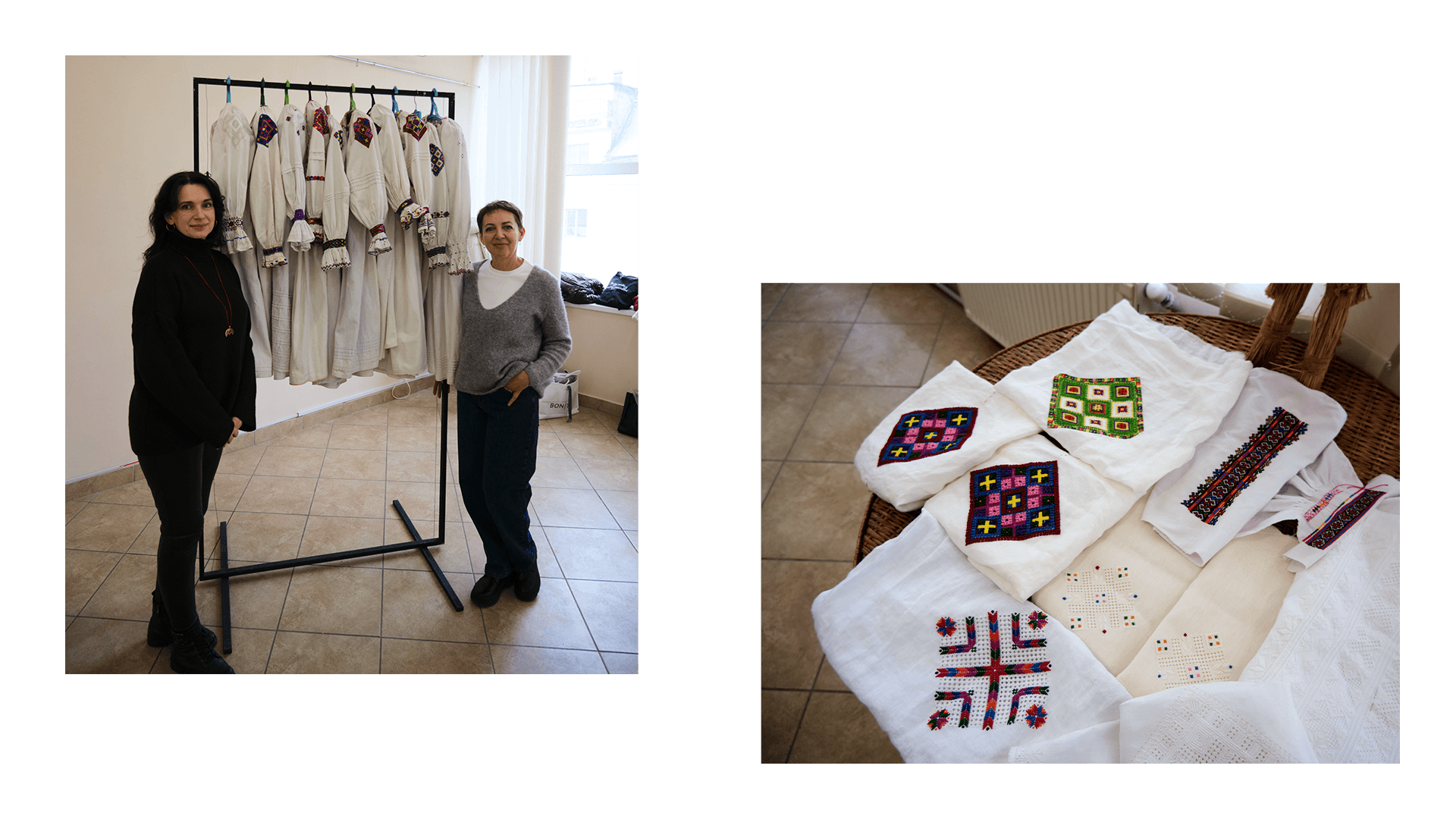
Despite their different skill levels, these women share the same goal: creating a tangible piece of Ukrainian heritage.“ For years I dreamt of having my own shirt that was made by me, not a machine,” says Yaryna, showing her work inspired by a vyshyvanka from the Uzhhorod Transcarpathian Museum of Folk Architecture and Life, where the classes are held.
“Despite different skill levels, these women share the same goal: creating a tangible piece of Ukrainian heritage”
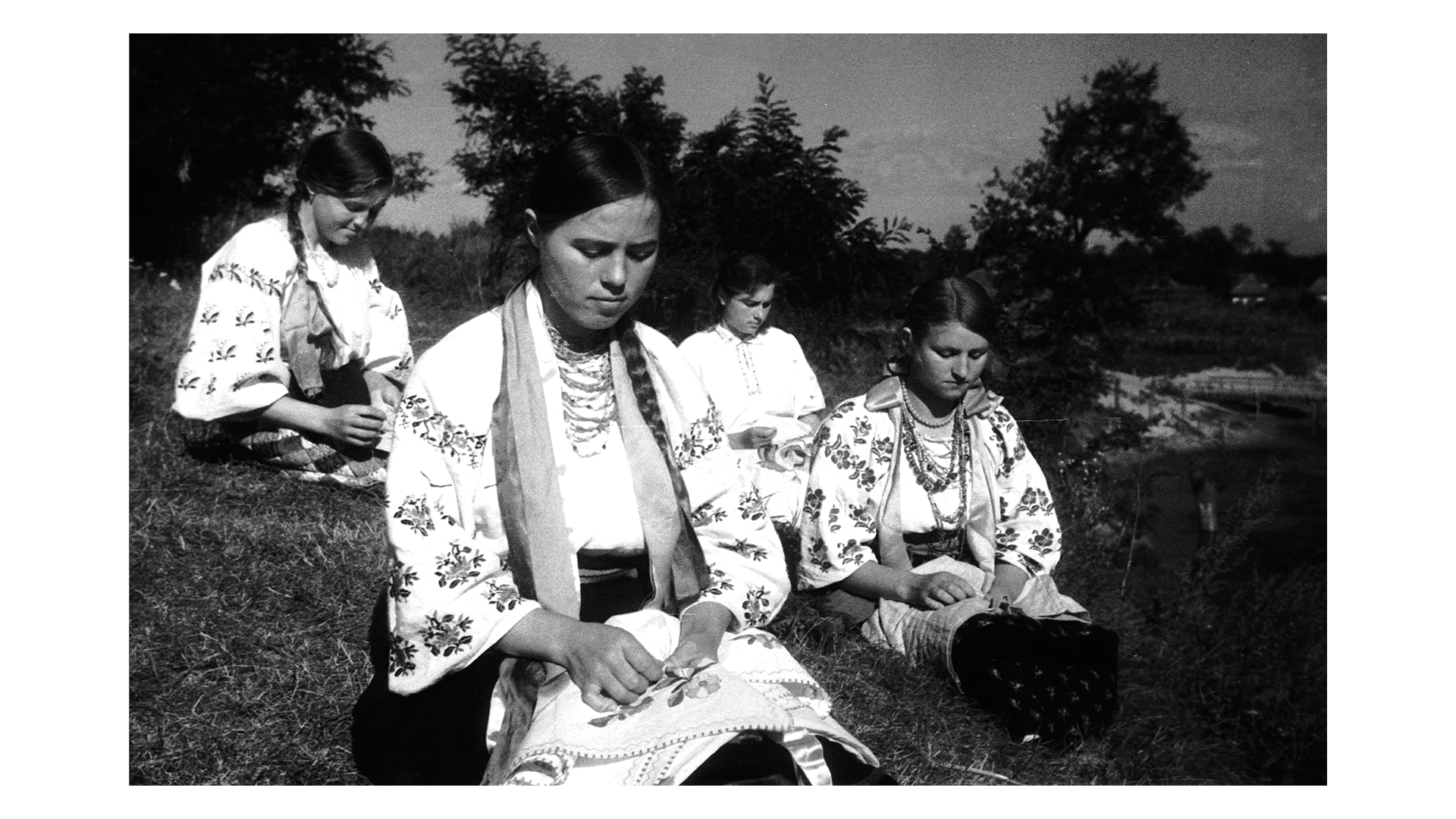
The museum is a fitting setting: embroidered garments thought to be precursors to modern-day vyshyvankas date back to the 5th century BC. During the Soviet era, authorities suppressed the vyshyvanka, even jailing Ukrainians in the 1950s and 1960s for wearing or making them, while promoting generic “folk” outfits to impose a narrow vision of Ukrainian identity. “That's why the museum only has [a few] pieces,” explains Victoria Spivak, one of the founders of Studio Kosytsya. “The technique was passed down from grandmother to mother to daughter, until a long break [caused] a lot of techniques to be lost.” The studio, which recently marked its 10th anniversary teaching traditional embroidery techniques, now plays an even more vital role in keeping the craft alive.
Identity Through Colour And Form
Today, Victoria and her co-founder Galina Munchak are finding ways to recreate complex traditional styles using modern tools. And every Ukrainian region has its own palette and embroidery style with differences in pattern placement, colour schemes, symbol combinations and garment cuts. Galina points to the Carpathian Mountains region, which has at least eight distinct styles. Hutsul vyshyvankas from the Ivano-Frankivsk region, for example, are famous for their bright geometric patterns, dense stitching and plant motifs.
The students in their classes aren’t shy with colour, either. Most of them work full-time and squeeze in an hour or two each night of sewing, so a single shirt can take up to six months to finish. But for these women, it’s not just about the final piece – it’s the act of creating it together.
“Displaced people have joined the classes, and it’s become a kind of therapy for ladies from the Kyiv region,” says Victoria. During the early days of the assault on the Ukrainian capital, the nearby city of Bucha was occupied by the Russian Armed Forces and became the site of war crimes, including mass murder. Bucha and the surrounding regions are now liberated, but the trauma remains. “They are trying to relax and fix their mental health,” Victoria adds, highlighting how embroidery helps them process their experiences.
Apart from a few pieces of old fabric and a traditional rushnyk cloth, Yaryna has nothing handmade from her grandparents. “For the past year, I got deep into my heritage and I tried to build my family tree back to my great-great-grandparents,” she says while stitching. “A lot was lost. I feel some emptiness inside me because of this.”
“Displaced people have joined the classes, and it’s become a kind of therapy for ladies from the Kyiv region. They are trying to relax and fix their mental health”
Her mother, Valeria, peers through a magnifying glass. “I’m very pleased that my daughter shows an interest in this historical heritage... I want these past memories to be the memories of my daughter, too,” she says. It’s why Yaryna hopes to inherit the vyshyvanka her mother is working on one day. “It’s great to understand this will remain in my family for my children and then for my grandchildren. For us, it's like filling this hole that had nothing before,” she says, smiling.
Designing Under Siege
Later, I take a Zoom call with designer Elvira Gasanova from my hotel. Even though her studio is just a 10-minute taxi ride away, the air-raid alarm means the hotel’s underground shelter is the safest place to be. Elvira, whose menswear label Damirli and womenswear line Gasanova both incorporate traditional embroidery, explains: “Embroidery is a part of the DNA of our national culture,” says Gasanova.
That connection to tradition was on full display last year on 15 May – World Vyshyvanka Day – when President Volodymyr Zelenskyy wore a black vyshyvanka from Damirli, embroidered with red berries and viburnum branches to signify soldiers’ blood, for Ukraine, resilience and national identity. It was a vivid reminder of how deeply the vyshyvanka continues to matter to Ukrainians everywhere – and how designers like Elvira are keeping that legacy alive.
“I cried because it was special to see the president in our embroidered shirt for the first time. Right now, it’s super hard for Ukraine, and it means a lot for us that [Zelenskyy] always wears a Ukrainian brand,” says Elvira, who keeps all production inside the country to support the nation’s wartime economy. The challenges aren’t just physical – air raids, limited power – but emotional, too, with the realities of war touching nearly every staff member. “Every day we hear from our team that their husbands and sons are in the war. Around once a month, some of them come and tell us that someone died,” says Elvira.
These struggles are mirrored across Ukraine’s fashion industry. Brands like Etnodim – a leading contemporary vyshyvanka label – are adapting to preserve tradition. “We are continuing traditions that our soldiers are fighting for, but in a new way,” founder Andriy Cherukha, who started the brand during his second year of university, later tells me.
“Every day we hear from our team that their husbands and sons are in the war. Around once a month, some of them come and tell us that someone died”
Since 24 February 2022, Russian air raids and the constant hum of drones and missile launches have become the everyday experience, raining terror on tens of millions of people. The ongoing Russian bombardments of essential energy infrastructure have plunged the vast majority of Kyiv businesses and residents into bitter cold and darkness. “We have two big diesel generators because for about 80% of the time we have no power,” says Andriy. “It’s costs maybe five times more than before. It’s cold; people work in jackets and hats. It’s not comfortable. But people don’t have heating at home, either. Spring is coming and we’re waiting for it to be warm.”
And yet this doesn’t halt creativity. If anything, Andriy says, the conditions fuel it. For Etnodim and many Ukrainian vyshyvanka producers, it’s about more than clothing; it’s a statement. Take their ‘Qirim’ collection: the Crimean Peninsula, internationally recognised as part of Ukraine and under Russian military occupation since February 2014, is Etnodim’s way of presenting a side to Crimea that was “authentic and free from stereotypes.”
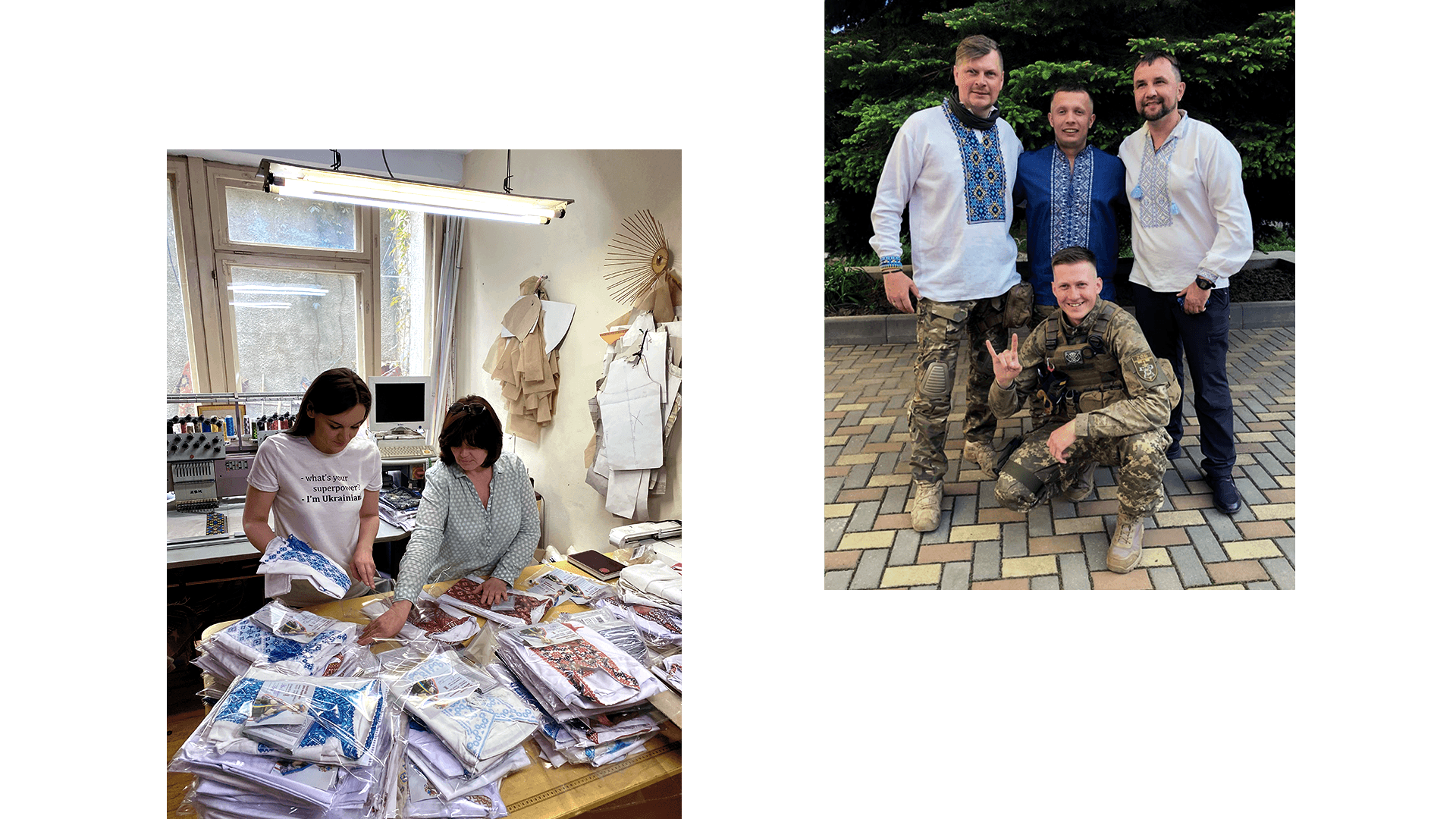
When I enter their production site, the chill in the air is felt immediately. Despite the cold workshop and the threat of attack, the seamstresses chat as they work. “I need to follow the threads, so they don’t get swallowed by the machine,” says one, trimming fabric by hand. “There’s no other way to do this than by hand. Do you want to try? It’s relaxing,” she asks.
In the “experimental office”, sketches are turned into digital embroidery designs beneath a signed Ukrainian military flag. “This is from someone who worked here and went to the army. He brought this signed flag back from the frontline,” says designer Olha Filonchuk. Some pieces are partly handmade, others machine-stitched. One shirt that outlines Ukraine with the embroidered words “hero cities” catches me eye. “These are the cities in Ukraine that were most affected by war,” Olha says. “Maybe you can see my hometown, Kherson.”
Indeed, the conflict hasn’t just shaped the designs – it has shaped the team itself. After the Russian invasion, Ethnodim grew as craftspeople from eastern regions under occupation, like Kharkiv and Luhansk, moved to Kyiv and joined the brand, bringing their skills and personal stories into the studio’s vyshyvankas.
Vyshyvankas For A New Generation
That resilience is reflected beyond the studio walls. In Kyiv, luxury store TsUM stocks vyshyvankas from local brands like Foberini and Vita Kin alongside international labels. Once worn only at Christmas or Independence Day, they’re now popular year-round. Of course, contemporary twists reflect a changing society and an at-war nation: army-green men’s shirts from Indposhiv feature folk motifs alongside drones and tanks, while LGBTQIA+ rights organisation KyivPride’s rainbow vyshyvankas donate 40% of sales to support soldiers.
Ultimately, these garments are more than fashion – they carry meaning in daily life. “They embody pride in our nation and its centuries-old traditions,” says Nadiia Vakulenko, director of the All-Ukrainian Center of Embroidery and Carpet. “The signs and symbols of this embroidery serve an apotropaic – or protective – function.”
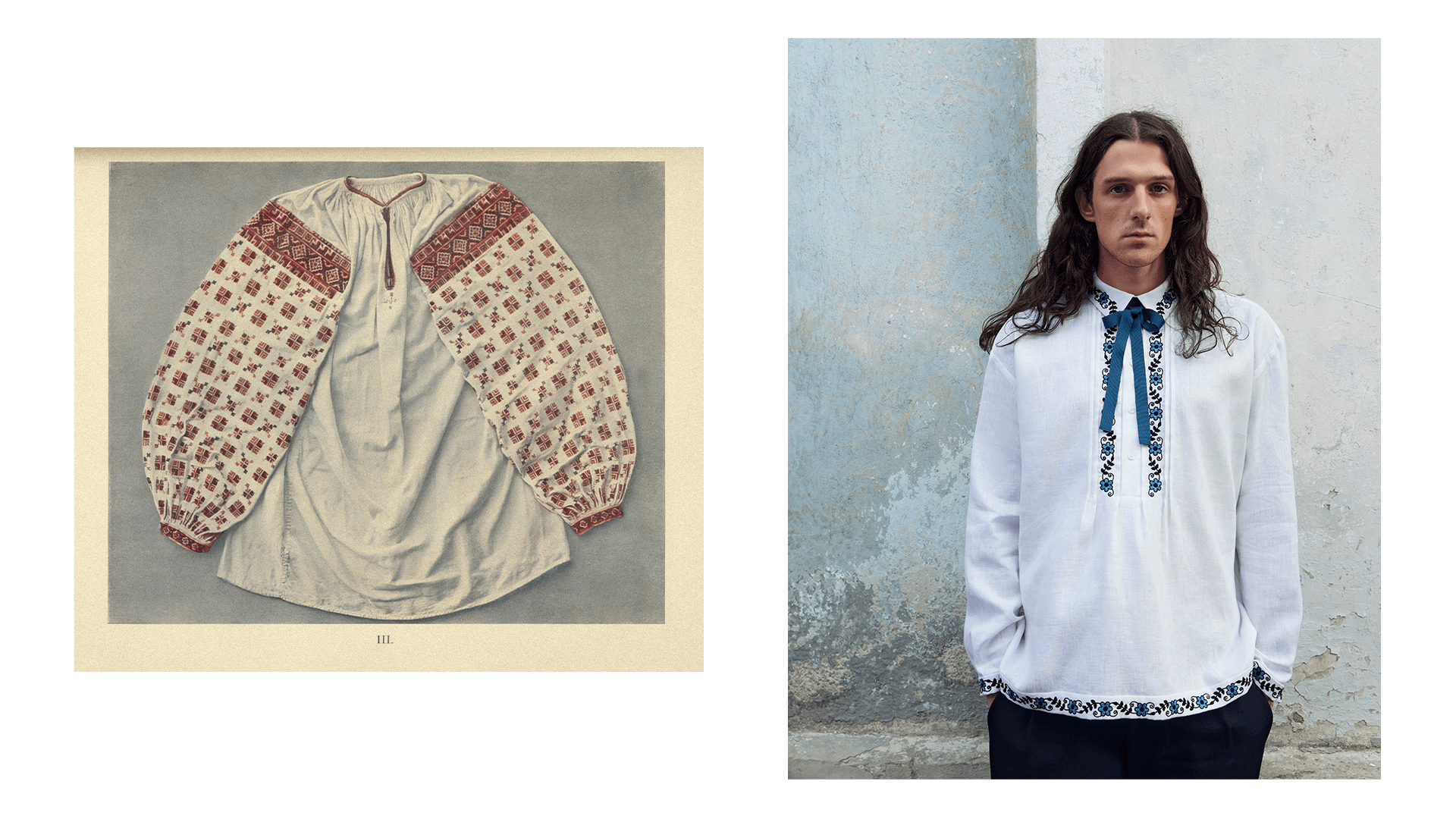
Twenty years ago, young Ukrainians barely knew the significance of Vyshyvanka, explains Lesia Voroniuk, the founder of World Vyshyvanka Day. “The were totally covered by Russian culture, films, books and music. Now, it’s not just a physical war, but also an information one. We understand now: vyshyvankas are the symbol of Ukrainian fight, independence and, of course, love. It’s not just what is embroidered on the vyshyvanka, but who made it and for whom. When a mother embroiders vyshyvankas for her son who is a soldier, it means so much.”
From the first day of the full-scale invasion, Lesia and the team behind World Vyshyvanka Day began fundraising for the Ukrainian armed forces. “I remember when we bought the first ambulance and [sent] it to our soldiers in Kherson,” she says. “They thanked us – and then asked: ‘But where are the vyshyvankas?’ I was so amazed.” The team collected more than 100 vyshyvankas from master embroiderers, sending them to troops on the frontline. “In that moment, I understood that vyshyvankas are really important, not just for cultural creators or museum workers, but for each Ukrainian.”
“Vyshyvankas are the symbol of Ukrainian fight, independence and, of course, love. It's not just what is embroidered on the vyshyvanka, but who made it and for whom”
Recently, as I shared photos of Etnodim’s craftswomen with my friend Anna Ustenko in Kyiv, she told me she had chosen one of the brand’s vyshyvankas for her university graduation. “I was drawn to a white piece with delicate red detailing, minimalist yet slightly unconventional, which felt relevant to a 17-year-old me,” she says.
Today, the garment now carries even greater weight. “When I put mine on, I simply know I have my family with me – if not in blood, then in spirit,” adds Anna. “For our enemy, the ultimate prize of this war is to make us Ukrainians forget who we are.”
From the women stitching in Uzhhorod to designers in Kyiv, the vyshyvanka has become more than a piece of clothing. It is a statement of resilience, a thread in the wider fabric of Ukrainian identity, and a living symbol of culture, pride and resistance that endures – even in wartime. Each stitch, each pattern, each colour is a quiet act of defiance, a claim to heritage and a reminder that Ukraine’s identity refuses to be erased.