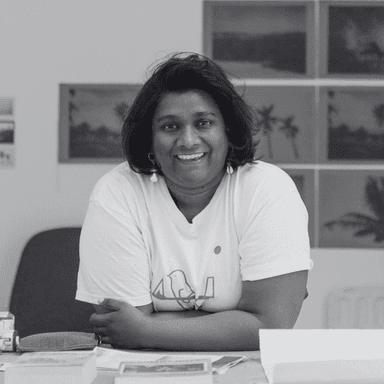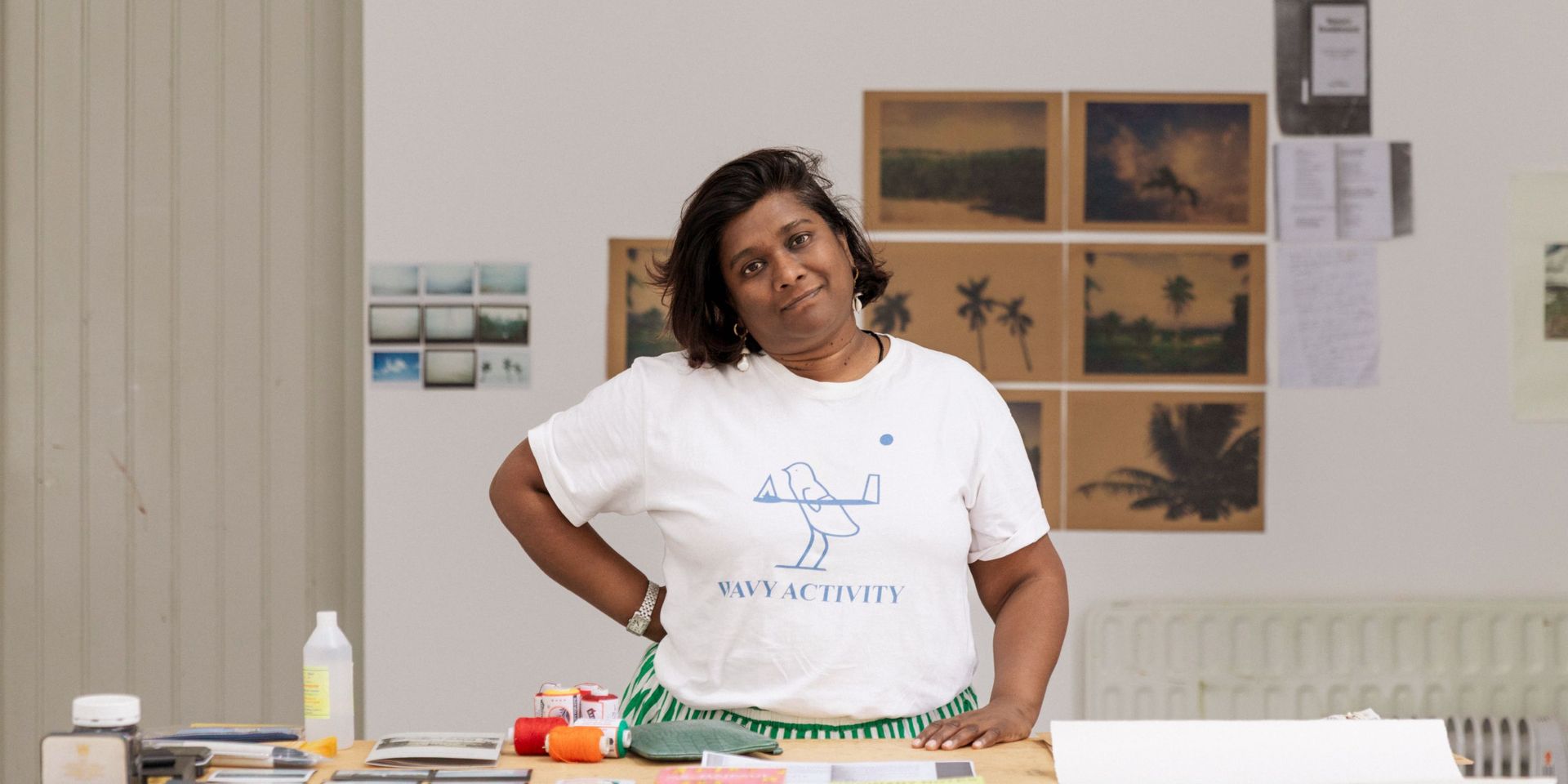
Shivanjani Lal did not set out to be an artist. She studied politics and then spent a year teaching English in Taiwan. “When I came back, I decided to pursue a more creative life – I didn’t know if that meant curation or actually becoming an artist,” she says. She has since built a career that does both, the echoes of her political studies steadfast: “It means I come to art with more criticality than art history – particularly Western Art history – allows,” she says.
Her practice looks backwards in order to look forwards. “I think about ancestry as a way to think about the future, about how we share history in tangible ways. My perspective is shaped by the Indo-Fijian word ‘Kal’. In Hindi and Urdu, Kal means both ‘yesterday’ and ‘tomorrow’. There is something incredible about a word where the past and the future coexist. It’s a way to take what I know about my ancestors and use it to reshape or mend the future to feel more possible.”
Two archives shaped her approach: one was domestic – the photographs she watched her father take as a child and the collection kept by her Nanni (Shivanjani’s maternal grandmother). The other is institutional: storytelling, video, photographs, sound and objects to account for the lost stories of the Girmitiya (the 1.6 million Indian indentured labourers transported across the Indian and Pacific oceans by the British Empire from 1834 to 1920).
“The work I make is for the women in my family, and the foundation that this place is filled with love and abundance. I am not in deficit here,” she says. Her grandmothers, Nanni and Aaji, have both died, but remain her touchstones.“I think about how they got to remake their lives because they were both young widows. Because of them and their actions, I think about the possibility and capacity we have to change ourselves at any point in time.”
Her aim is to confront the history of indenture without transferring the pain to the viewer. “I am trying to figure out how to return voices into these archives while remaining open-ended and poetic,” she says. “I am also interested in making sure that in sharing these documents I am not replicating systems of violence.”
Shivanjani doesn’t have any kind of typical working day. Her process runs on small rituals, multitasking and quiet (which is when ideas tend to arrive). Here, on residency in Taiwan, she shares moments that shape her practice.
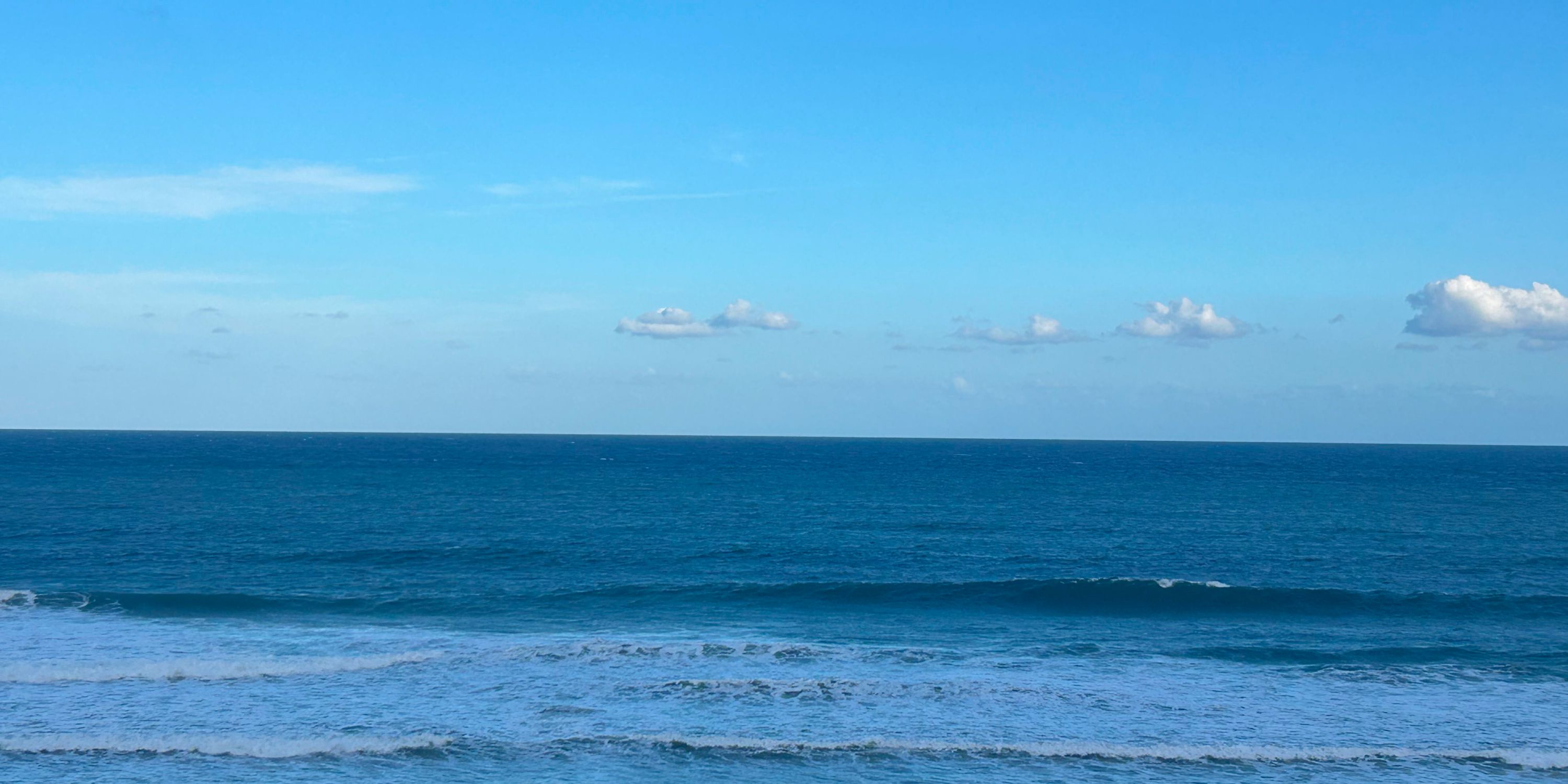
“When I am on residency, I try to focus on rest and also on play. I like to do something for myself in the morning, whether that is going to the beach or doing pilates, or getting a coffee; before focusing on the studio.”
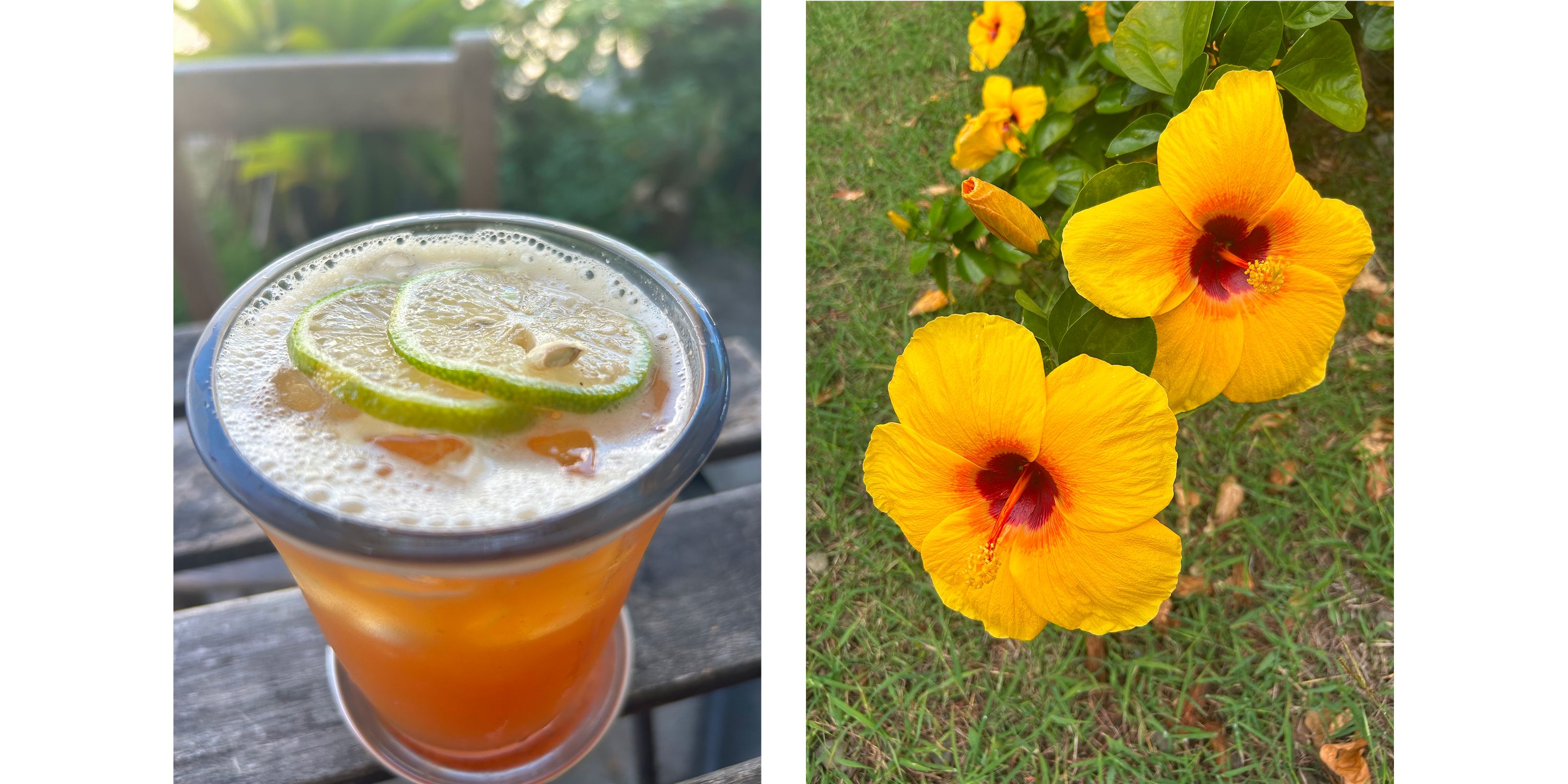
“It’s a little surreal to be back in Taiwan, as I lived here in my early twenties before I made the decision to become an artist. My time here made me really want to pursue a more creative life when I went home to Australia.”
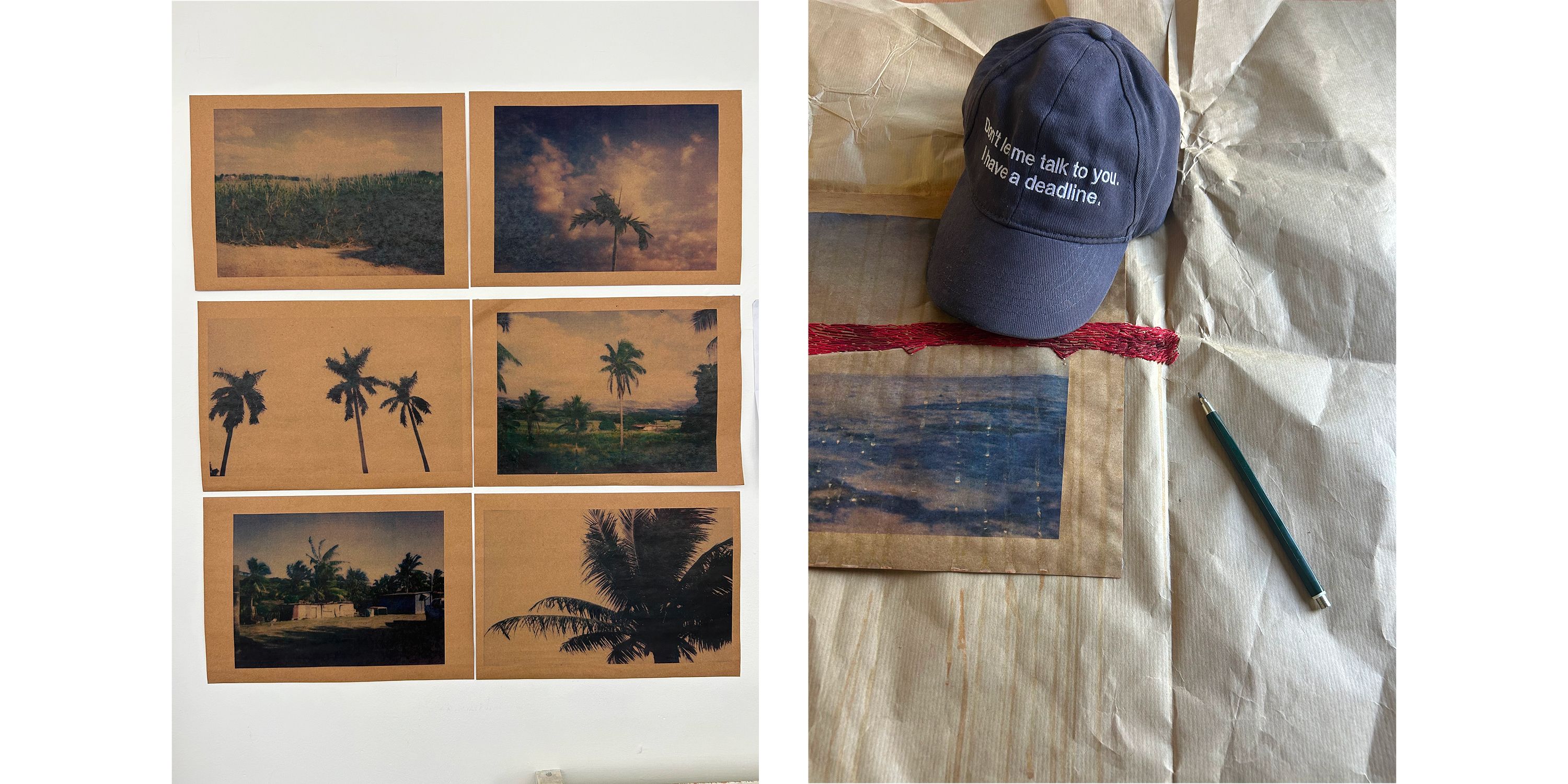
“I like sitting with work, and seeing if it wants to tell me something. Also I want to trust myself to make mistakes, so I can figure out how to return to them or pivot into the new directions these mistakes might lead to.”
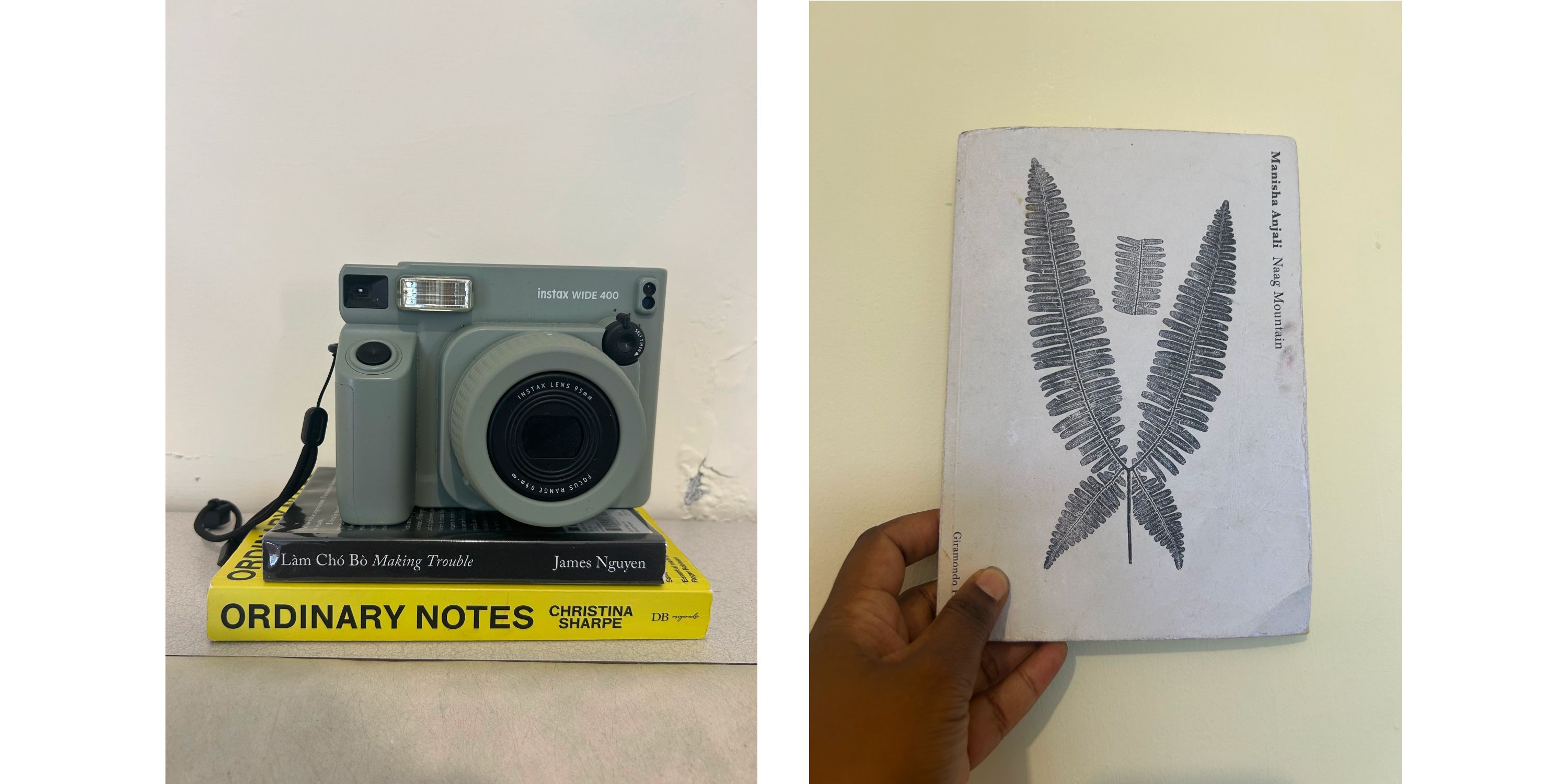
“When I am in the studio I have a few things I like to work on simultaneously, a stitching project, an editing project and some writing.”
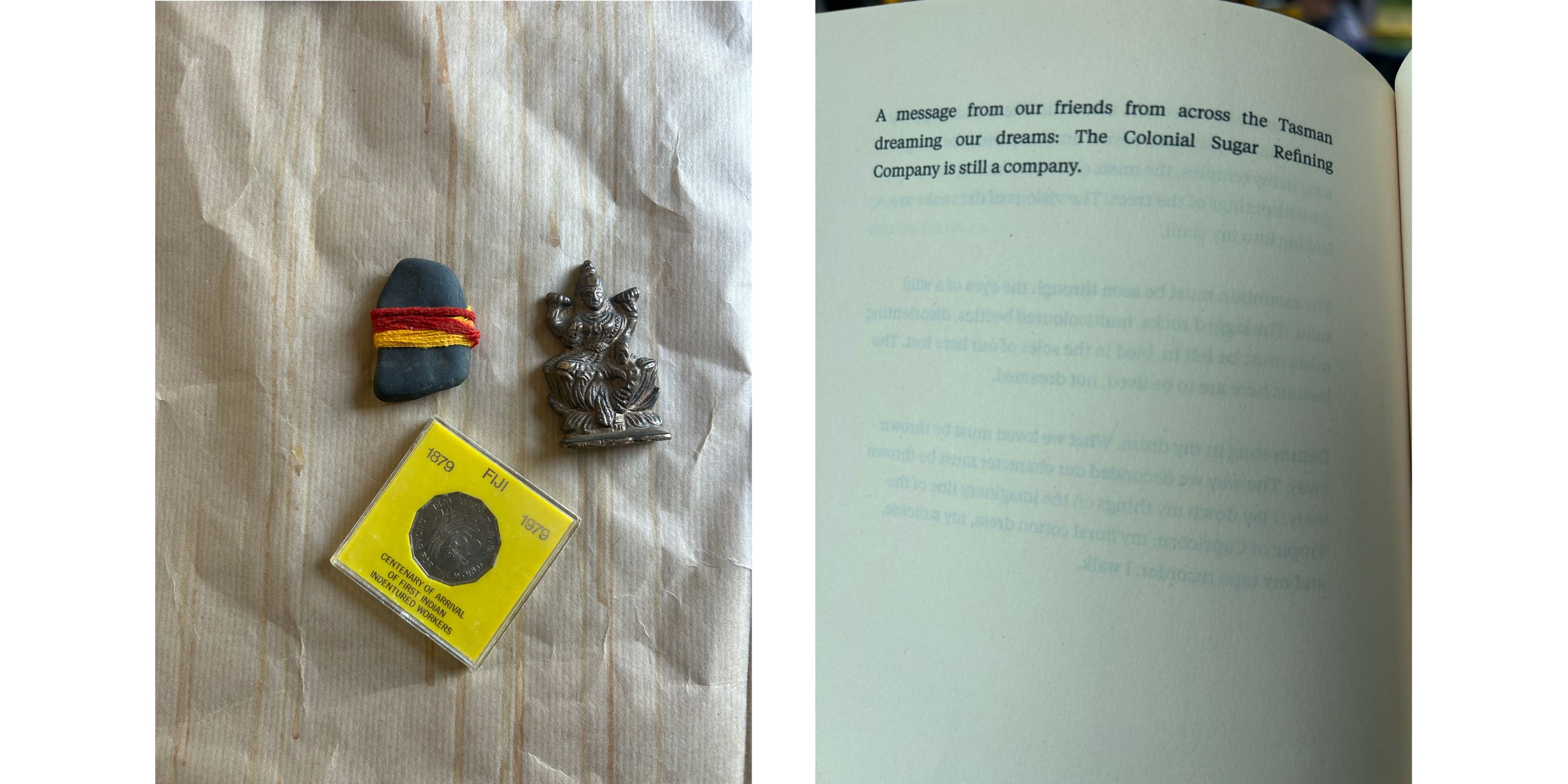
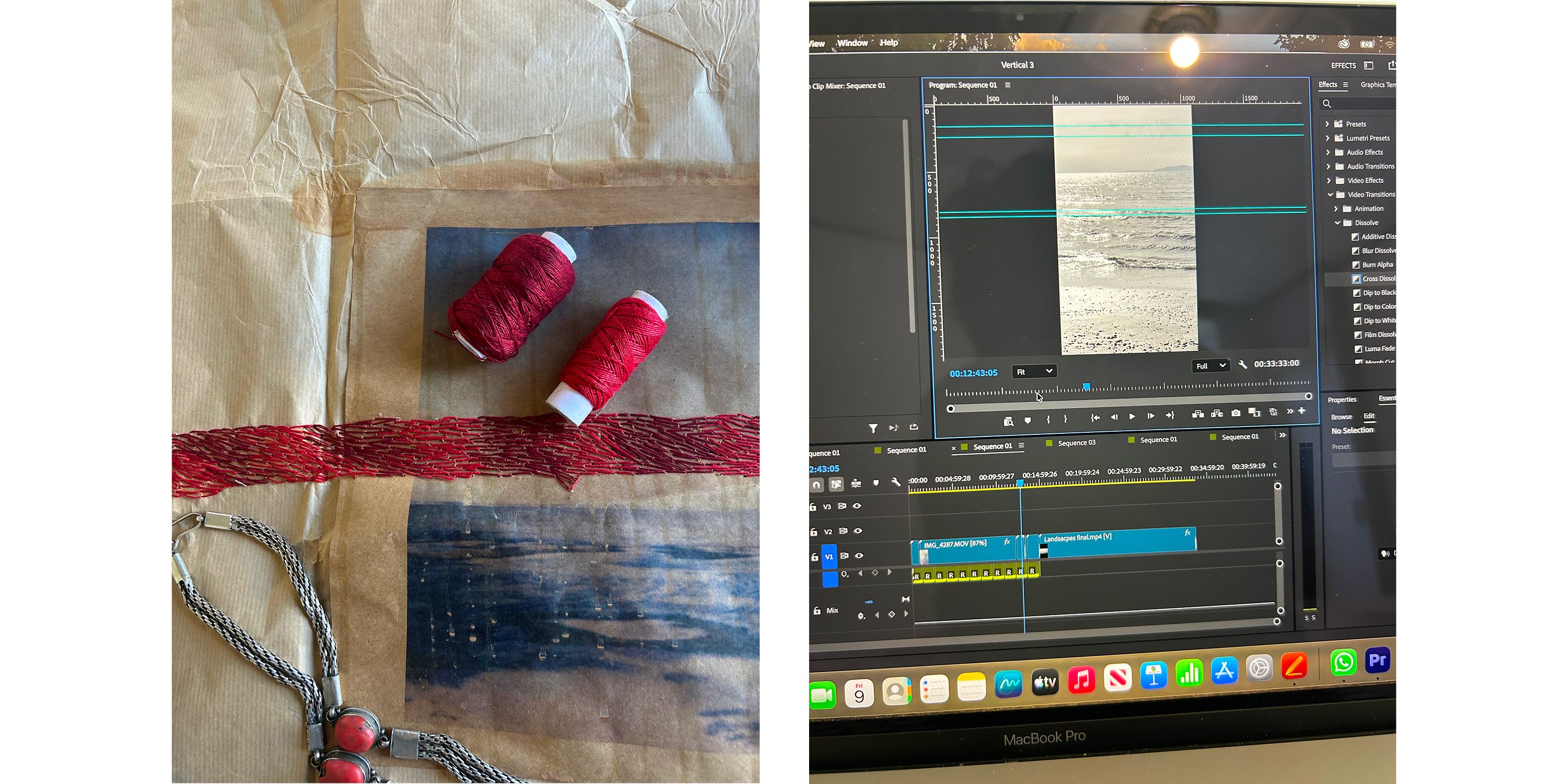
“I am using this time in Taiwan to redevelop a five-channel video work that looks at the emigration documents of my community – the indentured Indian community that ‘left’ India for Fiji. The work looks at the documents and waterways connected to departure. It’s also using songs and sounds of grieving to account for movement.”
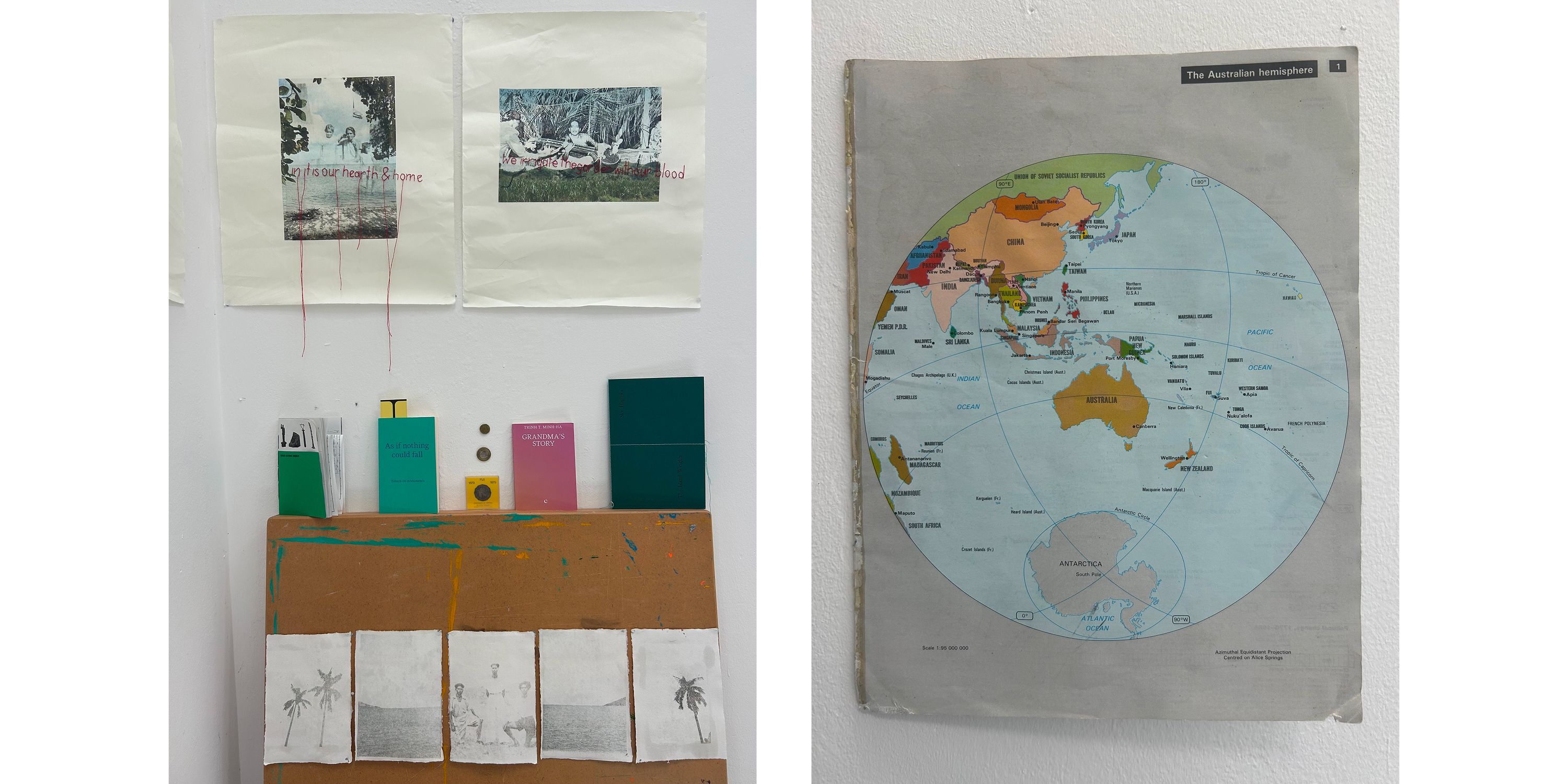
“What do I want people to take from my work? I want people to feel safe, but also questioned. I want people to feel that maybe they benefit from colonial wealth in insidious ways, and that they have the capacity to hold the histories I am sharing with me and not to continue to remain a neutral witness.”
Discover Shivanjani’s work at current shows: Animacies at Kunsthaus Meran in Merano, Italy, and Tannic Bonds at Wangaratta Art Gallery, in Wangaratta, Victoria, Australia. Upcoming works will be on show at Pan Pacific Triennial in Taitung, Taiwan, in October, and in the exhibition Dressing Room at the Liverpool Powerhouse, Sydney, Australia, in November.