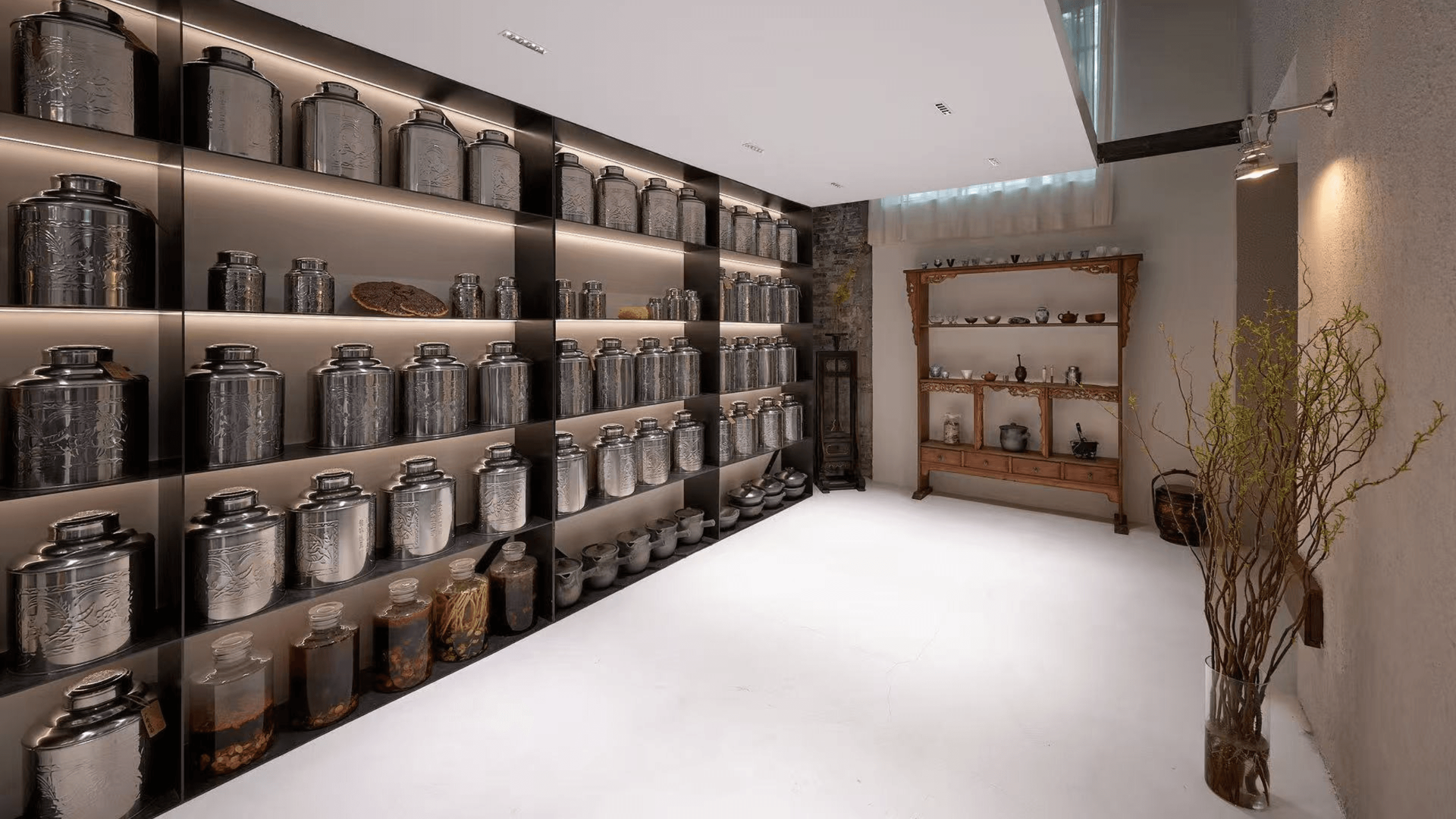
Picture this: you’re done with a day’s shopping along Shanghai’s busy Huaihai Zhong Lu and walk into a softly lit room. A woman in a white coat asks you to sit down and have your pulse read. Behind her, a grid of apothecary drawers line the wall, releasing the earthy scent of goji berries, angelica root, poria and the like. In the background, you can hear ice rattling against a cocktail shaker.
The woman in the white coat turns out to be a student from the Shanghai University of Traditional Chinese Medicine (TCM) and, after a brief examination, she writes you a “prescription” for a cocktail. This is Niangqing HerbalBar – one of several spots in the city where this particular collision of worlds takes place. Across China, it has a name: pengke yangsheng, or “punk wellness”. Roughly translated: you’re wrecking yourself while saving yourself.
The trend emerged from the country’s so-called “996” generation – 9am to 9pm, six days a week, a working pattern that stemmed from China’s tech boom in the 2020s and continues today, despite stricter labour laws. It’s resulted in a nation where almost 70% of young people report being in suboptimal health. Their answer has not been probiotics, ice baths or any of the wellness trends that have taken hold in the West. Instead, it’s a very 2026 approach to TCM, blending ancient traditions of herbal medicine to balance the body’s energy flow with the realities of their fast-paced, modern world: everything from drinks infused with medicinal herbs to having a meridian masseur at your table at the club.
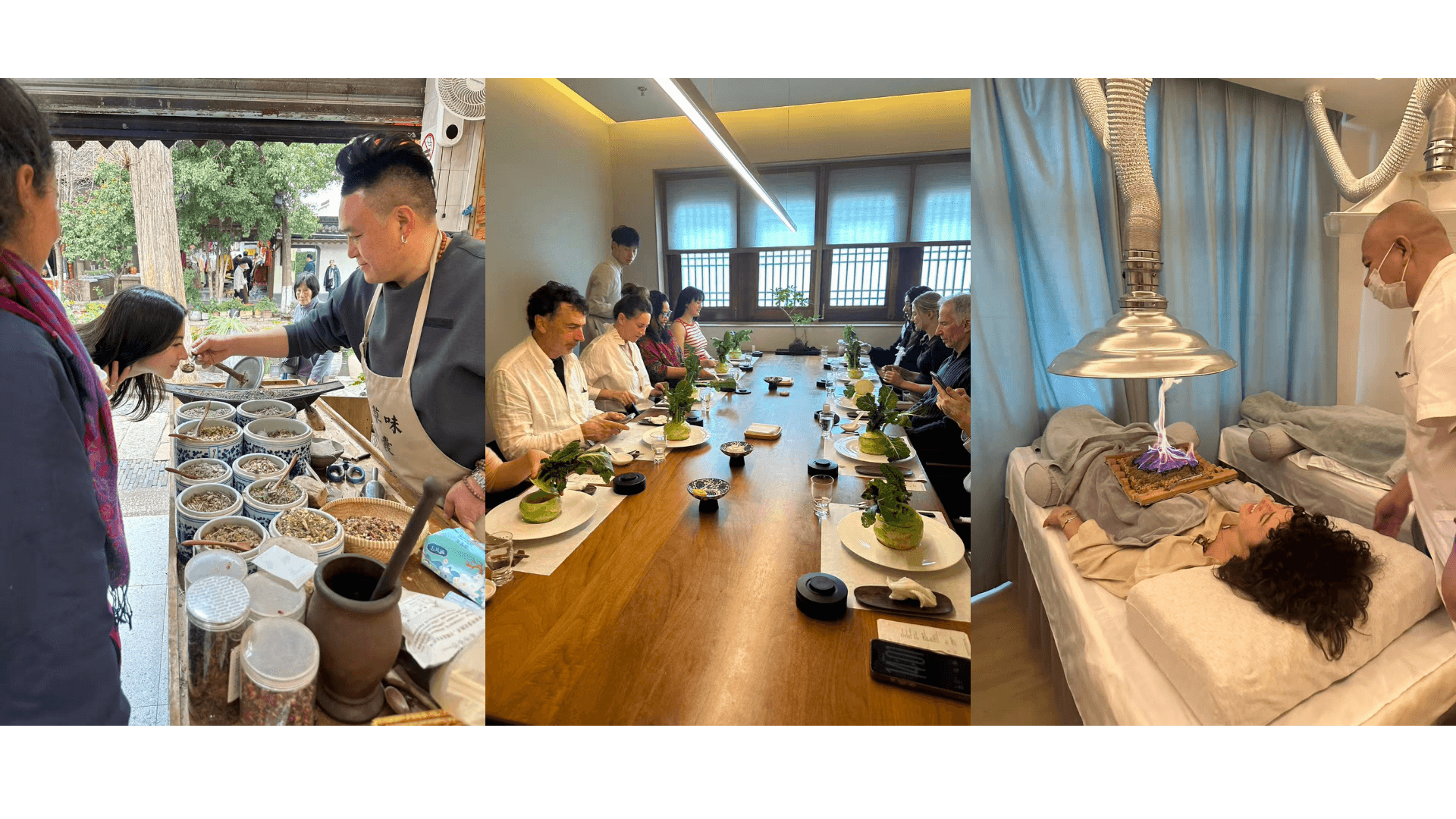
Zoey Gong, a dietician and TCM food therapist who runs Silver Root Apothecary and China Wellness Tours out of Shanghai, embodies this tension perfectly. She works and parties hard like most twentysomethings, while also maintaining a TCM-conscious lifestyle of teas, food and therapies. “TCM is quite a flexible medicine,” she tells me. The all-Zen, yoga-and-crystals version of wellness isn’t terribly useful for most people, she says. Wellness, in her view, is about balance – not living like a monk.
Consider Selection by Du, the Michelin-starred Chaoshan restaurant perched on the 56th floor of a glass skyscraper in Pudong. Two hundred metres below, the city gleams on either side of the Huangpu River and the high-octane clientele here is the kind that expects their enjoyment to double as restoration. Chef-owner Jianqing Du threads TCM through his cooking in the same way as most Chinese home cooks: as common sense passed down through generations. Double-boiled broth of scallop and pearl meat is said to be good for the eyes – useful for those of us spending our lives staring at screens. The restaurant’s sea cucumber, deep-fried to a beautiful golden crisp, is pure protein, Du explains. It’s traditionally known to be good for the skin and collagen science has since shown this ancient wisdom rings true. The deep-frying, of course, is a minor sin by TCM standards, but you come to this restaurant to indulge. Punk wellness is all about balance.
Across the river in Hongkou, Muk Resort Hotel isn’t really a hotel at all. It’s a 24-hour spa and bathhouse with an all-day buffet, hot and cold pools, and, of course, massages. You can book a private room equipped with Nintendo Switches and get your legs pummelled while you play Mario Kart, then emerge to snack on free-flowing lobster, fruit and dim sum. Some of Shanghai’s more futuristic wellness spas and TCM hospitals have even introduced AI robots that read your pulse, photograph your tongue and face, run a questionnaire and print out a TCM diagnosis on the spot. Zoey has tried one but wasn’t impressed: “No machine is able to do what a TCM doctor does,” she says, “not even remotely close.” She also tried an AI massage and felt fine while it was happening, but exhausted afterwards. Real treatment, she insists, requires a human exchange of qi.
No machine is able to do what a TCM doctor does – not even remotely close
Even Shanghai’s street food and snacking culture has absorbed the trend. At Shun Shi’er Yin, a tea brand owned by centuries-old TCM herbalists Changchun Tang, bubble teas are reformulated by season – jujube and ginger for winter, chrysanthemum and mint for summer. Zhong Yao Tang, an emerging gelato chain, sells scoops from apothecary-themed counters in flavours like yam with angelica and wolfberry, ginger and cinnamon, or black sesame tangyuan. “Most of these places are not really TCM,” says Zoey with a laugh. “Those are food trends,” adds Tony Wu, the TCM therapist at Peninsula Shanghai. What it does reveal is that TCM tradition is seeping into modern practices across the city, from the treatments on offer in your local spa to the drinks you wind down with after work.
How can you weave this into your own life and achieve actual balance? Tony and Zoey agree that herbs are not the only answer. You can begin your TCM journey simply, wherever you are, by eating with the seasons and listening to your body. Tony recommends simple daily rituals – an evening hot foot soak, an early bedtime (by 11pm) and a morning ceremony of rubbing your palms together until they’re warm, then gently massaging your ears, which he says regulates the internal organs. Zoey’s advice for anyone new to TCM is to see a specialist doctor at least once, even if you feel fine, just to know your body’s “constitution”. From there, the AI tools become more useful and the broths, cocktails, buffets and massages make more sense – and become more fun. You could call it informed indulgence. Really, it’s punk wellness.