TW: This article contains mentions of underage marriage, sexual abuse, violence and death.
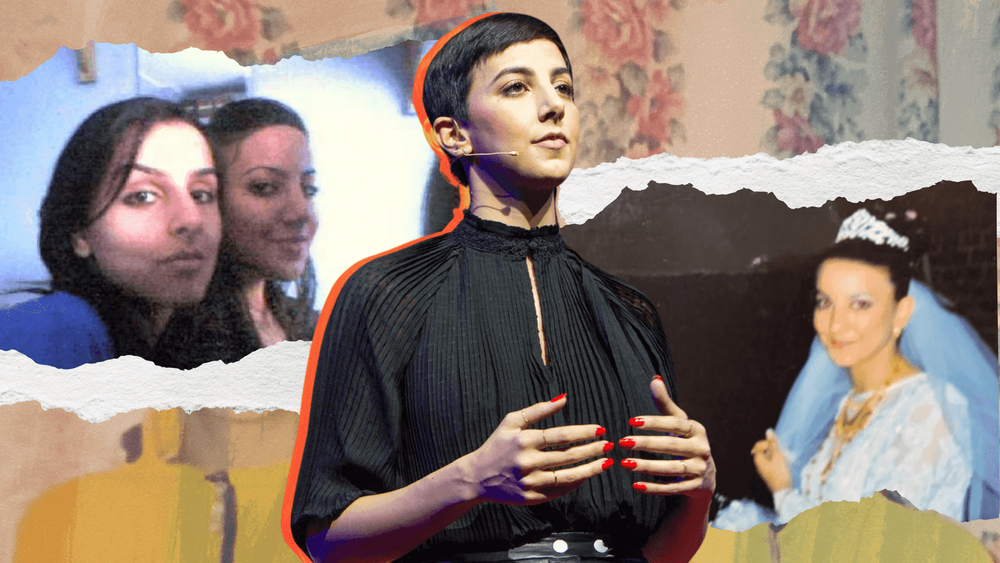
Payzee Mahmod remembers carefully peeling the Britney Spears posters off her childhood bedroom walls. It was 2003, and she was about to move into her new husband’s flat in Croydon. She had imagined decorating her new room with the posters – but he wouldn’t allow it. “What do you think this is? A five-year-old’s bedroom?” he said. She was 16. He was 30. A complete stranger. “I didn’t really have a clue as to how my life was going to change,” she recalls.
Payzee is a survivor of child marriage and ‘honour-based’ abuse, and now, at 38, she dedicates her life to protecting other women from the suffering she endured. In December 2003, she was married in south London, just months after her sister Banaz – who was only 18 months older – had wed. A loophole in the law in England and Wales allowed both under-18 girls to marry, with parental consent. Their father arranged the marriages, framing them as a means to uphold the family’s honour within their conservative Kurdish community.

From the start, Payzee’s marriage was controlling and abusive. “The overarching feeling was suffocation,” she says. He forced her to cook, clean and have sex on demand. He constantly criticised her appearance, stopped her from going to college if he thought she wasn’t being a “good wife” – and didn’t want her to have any friends. He also tracked her every movement, ensuring he always knew where she was. “I always dreamt of the day that I would not be with him,” she says.
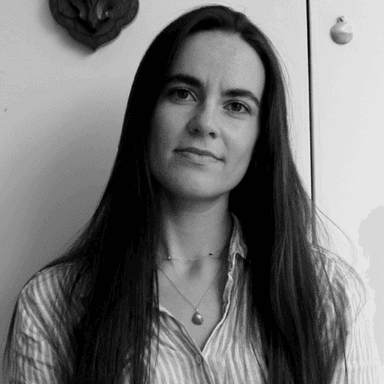
Two years later, tragedy struck. Banaz was murdered in an ‘honour’ killing, after she fled her own abusive marriage and fell in love with another man. When she confided in her family about her husband’s violence, they blamed her instead of helping. Banaz went to the police five times, warning them she feared for her life after receiving death threats – but her pleas were ignored. In January 2006, Banaz was raped, tortured and strangled to death. Her father and uncle were later found guilty of arranging the murder – and were both sentenced to life in prison in 2007.

Fearing the same fate as her sister, Payzee found the courage to leave her husband. Her parents had previously refused her appeals for a divorce, however this time they had “no choice” but to accept it due to the pressure of the police presence around them at the time. “[My husband] would say to me, ‘What happened to your sister can happen again, it’s not so rare, I can do the same thing to you,’” she says. Five months after Banaz was murdered, Payzee’s divorce was finalised – in the same month as her sister’s funeral. The timing was agonising. “I don’t even know what word to use,” she says. “There was so much joy that I might have a second life, but at the same time, it was the end of my sister’s life. I know that sounds really selfish and childish considering everything else going on, but all I kept thinking was: I’m going to be free.”
“My husband would say to me, ‘What happened to your sister can happen again, it’s not so rare, I can do the same thing to you’”
Payzee and Banaz were the closest in age of all their siblings and often found themselves in trouble together. “We were partners in crime,” she recalls. “We really stuck together and stayed close, even as we got older.” The sisters were born in Iraqi Kurdistan, alongside an older sister and brother, with a younger sister arriving after Payzee. When Payzee was 11, her father moved the family to the UK, but most of her childhood had been spent in the Kurdish region of Iran, where they fled across the border during the Iran-Iraq war. She remembers it as a “very basic, simple life,” with no access to education or healthcare because of their immigration status. The four sisters would spend hours watching television together or playing under the big walnut tree in their garden, shaking its branches to make the fruit fall.

After her divorce, Payzee did everything she could to start her life again: she went to university, passed her driving test, and got a job. In 2018, she heard about the case of Raneem Oudeh – a Syrian woman living in Solihull who had been murdered by her ex-partner, along with her mother, Khaola Saleem. The West Midlands Police failed to respond to 10 domestic abuse incidents reported against the perpetrator in the year before the two women were killed. On the night of the murders, Raneem made at least seven calls to the force asking for help. “I had this burning rage inside me that was like, How could this happen to this other girl? Has nothing changed since Banaz’s death?” It was the spark that made Payzee become a campaigner; she wanted to use her voice to make sure this didn’t happen again. She contacted IKWRO, an Iranian and Kurdish women’s rights charity, which she remembered from their campaigning during her father’s trial – and began working with them straight away. “As crazy as it sounds, my whole life basically trained me for the work that I do now.” She describes her main role as “putting a face to the issue” – showing that this can happen to anyone, even the everyday person you pass on the street.
Payzee’s advocacy was pivotal in the passing of the Marriage and Civil Partnership (Minimum Age) Act in 2023, which raised the legal age of marriage in England and Wales to 18 – finally ending the loophole that allowed 16- and 17-year-olds to marry with parental consent. Her 2019 TEDx talk, in which she spoke candidly about her own forced marriage and Banaz’s murder, has since been viewed more than 1.2 million times and helped “open the conversation, especially with MPs”. For Payzee, the legal victory was deeply bittersweet. “It was a very proud moment, but also so emotional – because if only this had existed before. Imagine if this had been the case when I was 16?”

In many ways, the law felt like a form of justice – not only for herself, but for Banaz, whose story had once been silenced. “It felt like a dedication to my sister that this is happening almost in her name, in her memory, in her legacy,” she says. “And I think it showed me, probably for the first time ever, just how powerful women are, because we were a group of women [who changed the law].”
And her campaigning did not stop there. ‘Honour-based’ abuse (HBA) – abuse that is done in the name of perceived honour or reputation, including female genital mutilation, virginity testing, forced marriage and coercive control – is still shockingly prevalent in the UK. The number of ‘honour-based’ offences recorded by English police forces has soared in recent years. “This is happening a lot more than we think – and I think a lot of victims really do feel very isolated, in that nobody knows what they’re going through,” she says.
But the problem extends far beyond Britain’s borders. According to the Honour Based Violence Awareness Network, 5,000 ‘honour’ killings – the most extreme form of HBA – happen each year around the world. However, this is considered a severe underestimate due to a lack of reporting and recording. Although it is a global issue happening across religions and cultures, ‘honour-based’ abuse is more widespread in the Middle East and South Asia, where there tends to be a culture of impunity.
“According to the Honour Based Violence Awareness Network, 5,000 ‘honour’ killings – the most extreme form of ’honour-based violence’ – happen each year around the world”
While it can also affect men and boys, the majority of victims are women and girls – and many are women who have a migrant background and are falling through the cracks of the system, just like Banaz and Raneem. “These are women who come from communities where a lot of the time they’re othered and not understood,” Payzee says. But she argues that you don’t need to understand every culture to understand abuse, “because it literally crosses all cultures and all communities and all languages.”
New measures announced by the UK government in August to combat ‘honour-based’ abuse offer some hope. As part of the government’s pledge to halve violence against women and girls within a decade, the measures include a plan to introduce a legal definition of ‘honour-based’ abuse, as well as a community awareness campaign and training for frontline professionals to help them better spot the signs. Payzee says the measures are “really important” and she has been involved in pushing for a legal definition. “I think there’s such a lack of connection in what honour-based abuse is, so for professionals it’s very difficult to tackle. This is why [what was happening to] me and my sisters were never spotted, because people didn’t know what it is. It’s lifesaving that we know about it, and that we talk about it.”

But the global picture is still bleak. Each year 12 million girls around the world are married before they turn 18, according to UNICEF, with legal systems failing to protect them. Earlier this year in Iraq, where Payzee was born, the government passed an amendment to the personal status law which allows girls as young as nine to marry. It triggered widespread condemnation from human rights groups. “Until you have a real red line between what is acceptable or not acceptable for citizens in law – and that includes informal marriages, too – child marriage will continue to thrive,” she says.
“Each year, 12 million girls around the world are married before they turn 18. Earlier this year in Iraq, where Payzee was born, the government passed an amendment which allows girls as young as nine to marry”
Payzee also points to places like California, where there is still no legal minimum age for marriage, if a parent or guardian consents and a court grants approval – yet you must be 18 to file for divorce. “It’s absolutely crazy,” she says, adding that in Scotland, 16-and 17-year-olds can still marry without parental consent. “We recognise children can’t consent, but we’re saying they should consent to something that brings them so much harm.”
All UN member states have committed to ending child marriage by 2030 through the Sustainable Development Goals, but a lot more needs to be done by countries to ensure they reach that deadline, and Payzee thinks the UN could also be doing more: “Although we have the clarity over the age and what child marriage is and that it’s a violation of rights, there is not enough being done to actually set that precedent.” Despite this, she is still hopeful: “I see that things can change,” she says. “I think we, as the human race, are capable of so much. It’s just deciding: Will I do that thing? Will I take that small action, or that big action? Is it worth it? Is it going to change anything? Yes. It does.”
Payzee kept all her Britney Spears posters – relics of a childhood interrupted. But when she tried to put them back up at her parents’ house after her divorce, she realised they had all stuck together with Blu Tack and weren’t salvageable. Now, in the west London home she shares with her partner and three-year-old son, the walls are alive with pictures and posters, including of their favourite musicians. She says she can’t wait until her son is at an age where he wants to put up posters. “I will be like, Let me help you with that,” she says, smiling.
Those posters, once a symbol of a childhood snatched away, now represent something entirely different: choice, freedom, and a life she gets to shape on her own terms. From the girl whose life was once controlled by others, Payzee has become a woman changing laws, saving lives and inspiring others to speak out. Her journey shows that even in the face of unimaginable loss and abuse, it is possible to reclaim your story – and help ensure no one else has to lose theirs.