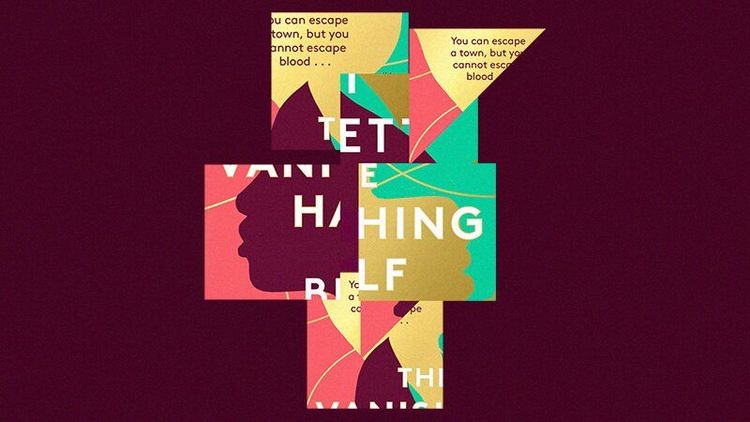
In Service95 Book Club’s Monthly Read for November, The Vanishing Half, Brit Bennett explores the act of passing. Here, we find out more about its history – and why people chose to do it
‘You were supposed to be safe in Mallard... But even here, where nobody married dark, you were still colored and that meant that white men could kill you for refusing to die. The Vignes twins were reminders of this, tiny girls in funeral dresses who grew up without a daddy because white men decided that it would be so.’
Brit Bennett’s The Vanishing Half begins in the fictional town of Mallard, Louisiana. In Louisiana, the act of ‘passing’ (a term to describe a light-skinned person of colour living as white) is known as ‘passe blanc’. Before the American Civil War of 1861-1865, ‘passing’ could be a means of escaping slavery, staying alive by becoming ‘free’. Yet even after the abolition of slavery in 1865, it was clear that emancipation did not mean equality or even safety for Black Americans.
The Jim Crow laws of segregation in the South – where anti-Black racism was legitimised and Black Americans were second-class citizens – ran from 1877 to the late 1960s. The ‘one drop rule’, which asserted that any person with even one Black ancestor (‘one drop’) was considered Black, was codified into the law by Arkansas in 1911 and stood until 1967. This made interracial cohabitation a felony in the South, and upheld white supremacy.
Within all of this, ‘passing’ remained a means of survival for some – the ‘some’ being descendants of the slave plantation where the systematic rape by white ‘owners’ and overseers meant that enslaved Black mothers were forced to give birth to mixed-race children for generations. Take the formerly enslaved, light-skinned Alphonse Decuir from The Vanishing Half, whose white plantation father gifts him the ‘strange town’ of Mallard, where ‘each generation’ is ‘lighter than the one before.’ The Civil Rights Act of 1964 and Voting Rights Act of 1965 promised Black Americans legal equality, but when does the act of passing shift from an historical survival tactic to a chosen option within a racist society?
In The Vanishing Half, Stella and Desiree Vignes are the light-skinned twins from Mallard who run away to New Orleans. But is it the trauma of her father’s lynching or a momentary decision that leads Stella Vignes to walk into the department store building, Maison Blanche, as a white woman? Severing familial and cultural links with your community is a heavy price, and passing was often regarded by the Black community as a betrayal.
Passing was fluid: sometimes permanent, often situational and, as Desiree Vignes observes, it was invisible: ‘The passe blanc were a mystery... the act could only be successful if no one ever discovered it was a ruse.’ This ‘mystery’ is a fertile literary theme and trope. ‘The tragic mulatta’ became a stock character of abolitionist literature: the depressed but beautiful bi-racial woman who passes for white is found out, and tragedy ensues (often suicide or enslavement). From white abolitionist Lydia Maria Child’s short stories The Quadroons (1842) and Slavery’s Pleasant Homes (1843) to the more uplifting passing novel Iola Leroy (1892) by Black activist-author Frances EW Harper. During the Harlem Renaissance, a golden age of Black American culture (1910s-1930s), Nella Larsen’s novel Passing (1929) became a seminal text in this tradition. But during an interview with the LA Times in 2020, Brit Bennett claimed the Douglas Sirk film Imitation of Life (1959) as her foundational text: “I think it’s an entry point for a lot of us... a canonical film about passing. It’s a melodrama, and there is also a sense of punishment in the film. One of the ways that I wanted to deviate... was I didn’t want to write a moralizing story. I had no interest in the question: Is Stella (the twin who passes) right or wrong?”