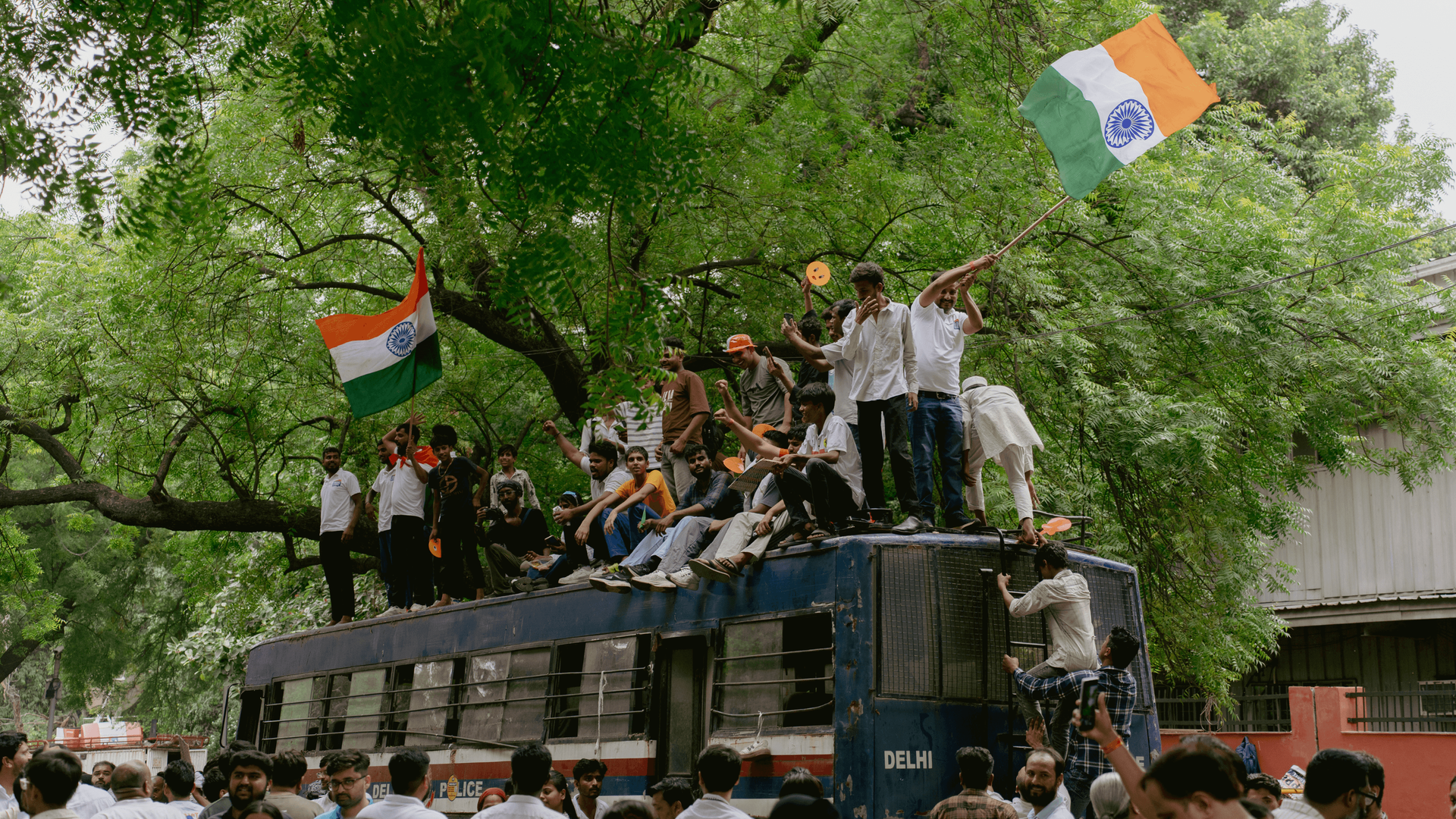
“It felt as though an entirely new language of protest had emerged,” says photographer Ali Monis Naqvi of the scenes outside New Delhi observatory Jantar Matar this past weekend. “Memes, pop culture references, handwritten jokes and sharp slogans sat alongside speeches and chants, as Gen-Z students and young people used the vocabulary they had grown up with to ask difficult questions and demand accountability. “
For seven weeks, tens of thousands of students and young people have lined the streets of New Delhi, calling for change surrounding India’s education system. It’s a demonstration triggered by the recent cancellation of the NEET exam, which determines admission to medical and dental undergraduate courses. Just days after 2.27 million students sat the 410-question test in early May, their results were invalidated due to concerns of leaks. People were forced to re-sit later in the month.
“My younger sister took the NEET exam for the first time this year, and seeing what she and millions of other students had to go through was heartbreaking,” says protestor Anish*, 34. “Students spend years preparing for this exam, often studying day and night, only to have their future thrown into uncertainty. We’ve seen the immense emotional toll this has taken on young people across the country.”
What began as an online movement led by the Cockroach Janta Party – the self-titled “Voice of India’s Burnt-Out Youth” – has grown into a wider conversation about democratic and civil rights concerns, playing out in real-life demonstrations. The cancellation of this test has shone a light on lapses in the examination system in India – this is not the first allegation of leaks – and India’s youth has responded.
“People travelled from across India, bringing with them concerns that went far beyond education,” says Ali, who captured the atmosphere for Service95 below. “It became a space where frustrations that had been bottled up for years could finally be voiced.”
On Saturday 25 July, India’s education minister Dharmendra Pradhan resigned.
Ali took to the streets of New Delhi to capture the protests from within. These are the people and moments he encountered.
Please note: the quotes below do not correlate to those pictured.
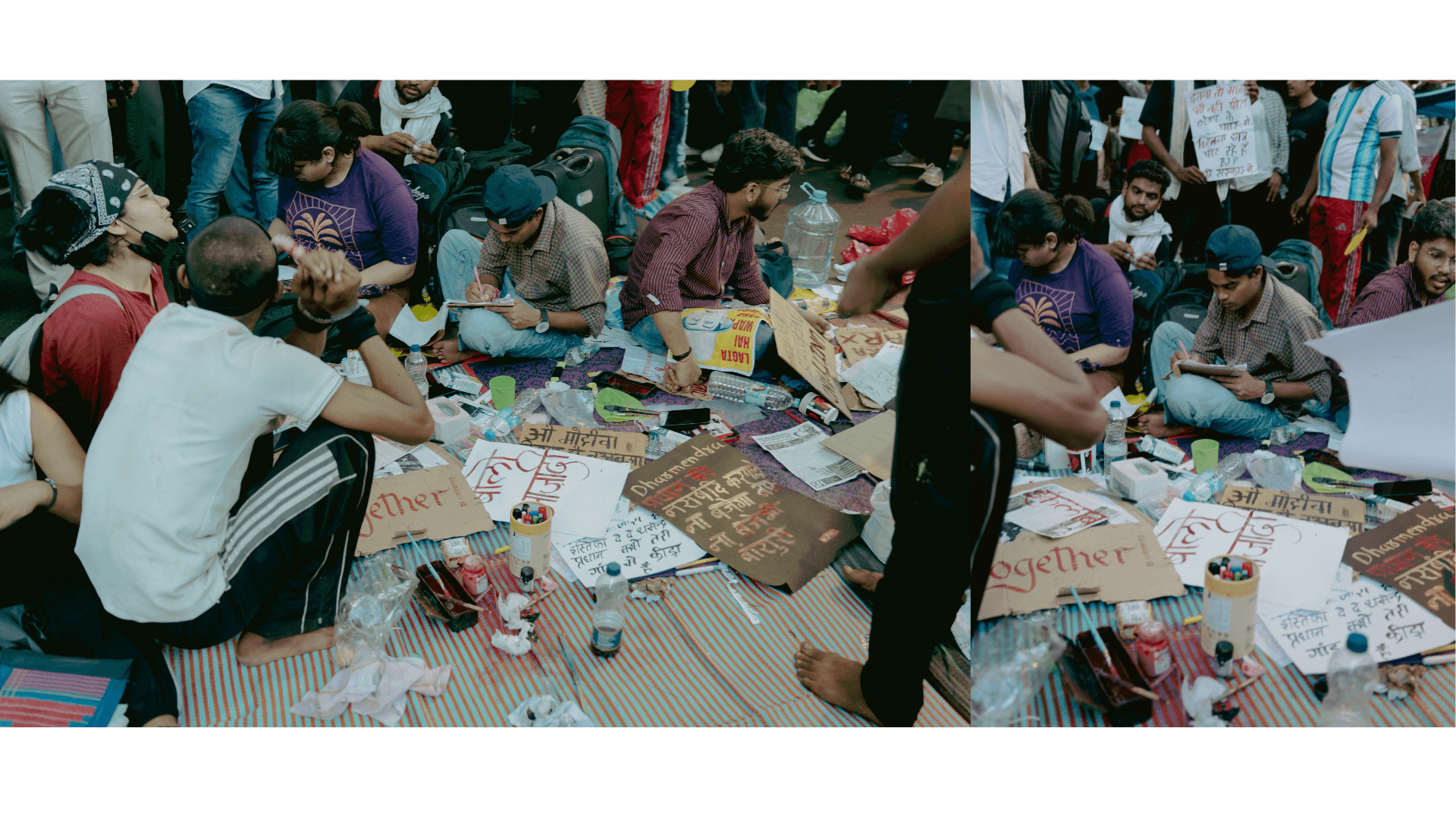
“My family was against me coming to the protest, and most of my friends stayed away because they’re so apolitical. But I wanted to show up, and I’m so glad I did. There was a real sense of community. Art became such a big part of the movement: People my age were making posters, painting, performing music, dancing. With the internet shut down in the area, everything happened in person, and that made the atmosphere feel even more alive.” – protestor Gouri*, 21
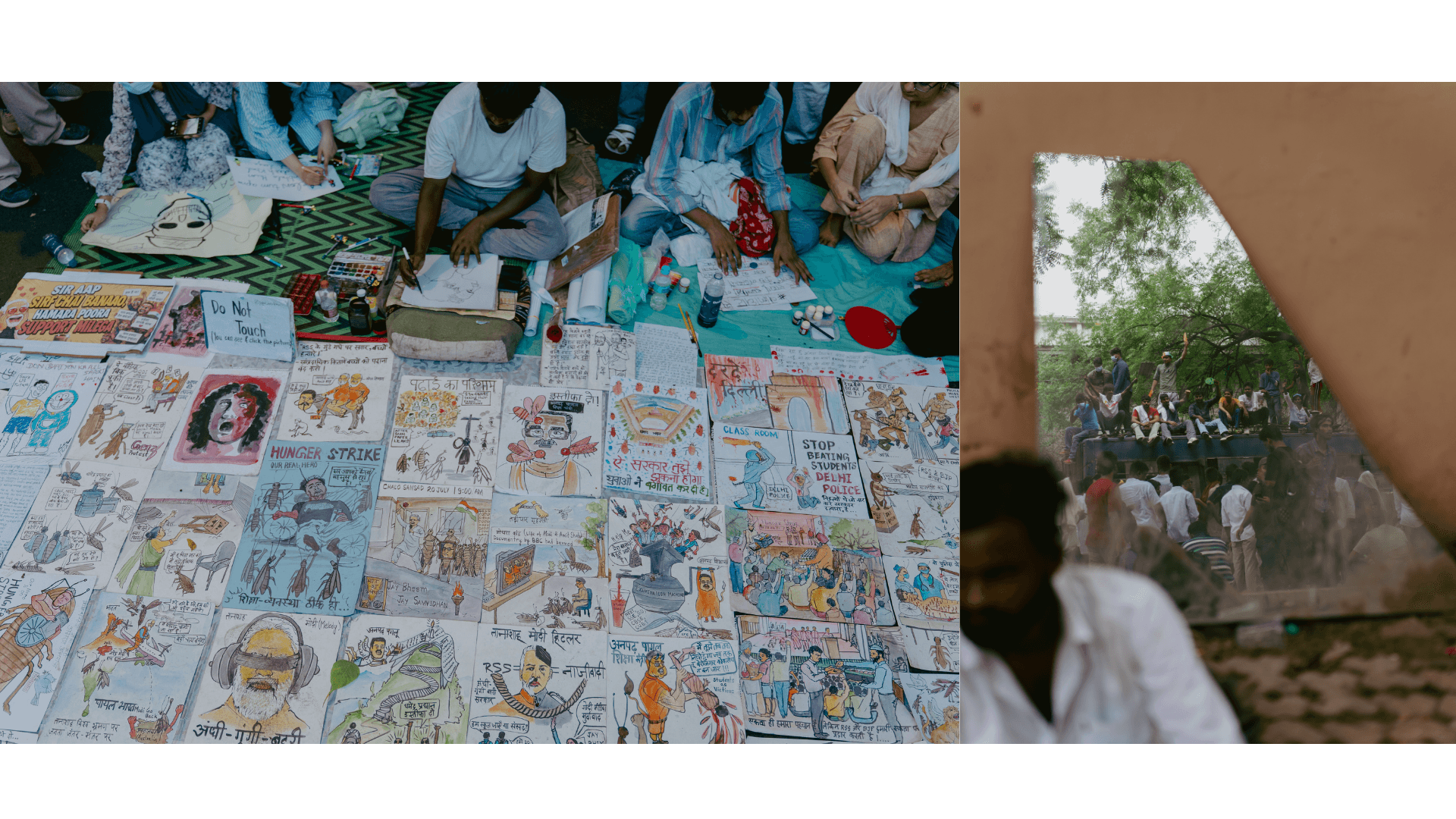
“There was a sense of collective care and people made sure to avoid any miscreants that could sabotage the movement. In Delhi’s relentless heat, people organised food, water, medicines, hand fans and everyday essentials.” – photographer Ali Monis Naqvi
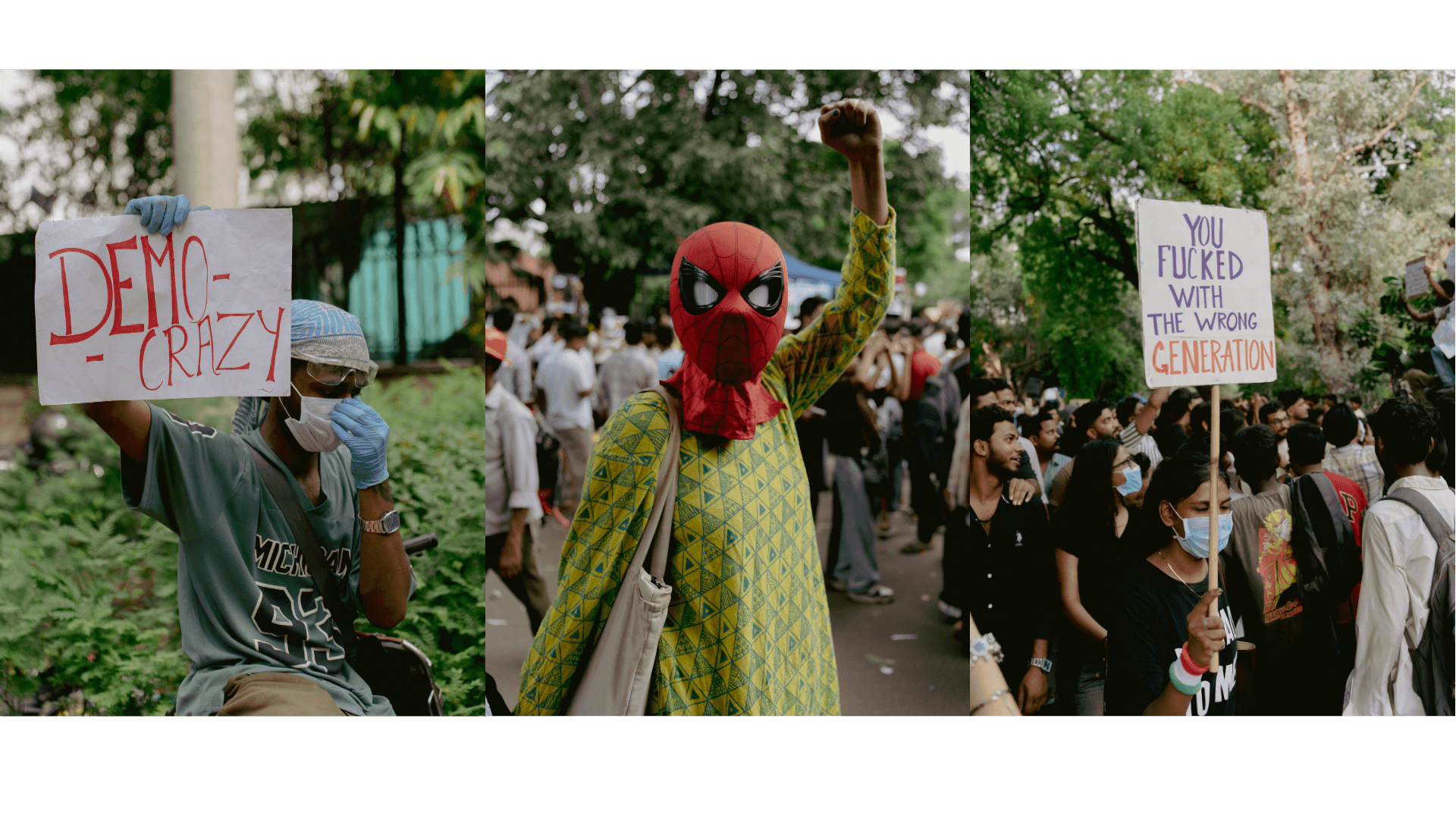
“I’m a content creator, and I’ve been at Jantar Mantar since the protests began. For my people, creating and sharing content became another way of participating in the protest. We turned memes and relatable moments into a way of reaching people who might not otherwise have paid attention. We are the future and we want to ask questions.” – protestor Amir*, 19

“Even as authorities responded with lathi [baton] charges, tear gas, pellet guns, internet shutdowns, constant surveillance, road barricades and the detention of some students, people continued to find ways to reach the site. Rather than shrinking, the movement seemed to strengthen. Beyond the slogans, what these photographs capture most is a generation that showed up for one another as much as for the cause itself.” – photographer Ali Monis Naqvi
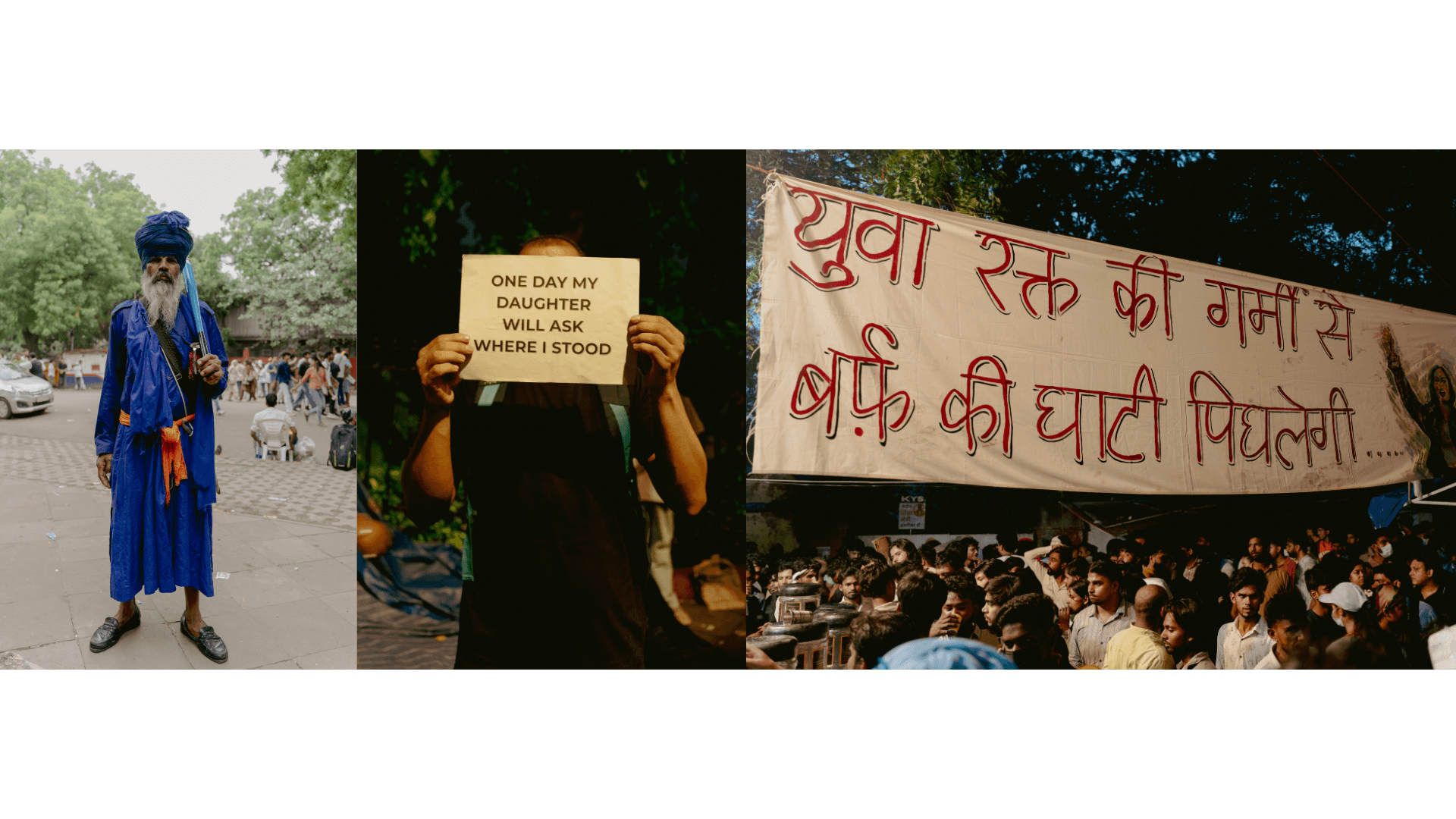
“Nihang Sikhs, members of a traditional Sikh warrior order who carries ceremonial arms as part of their faith, joined the student protest at Jantar Mantar following reports of police violence, with many positioning themselves between students and police.” – photographer Ali Monis Naqvi
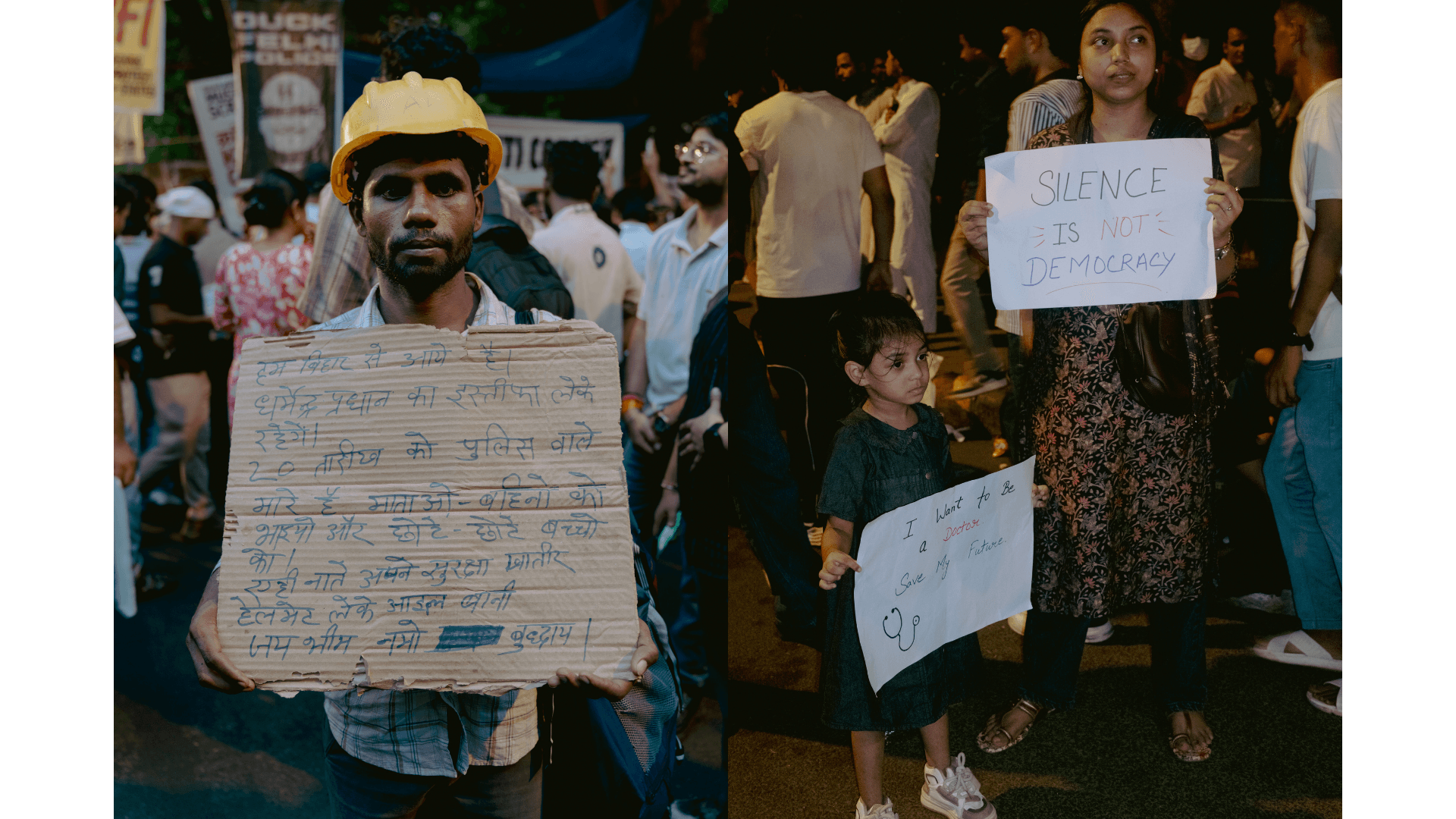
“As a political satirist, I thought it was my duty to also show up as a protester. Little did I know that I’d see the same oppressive and inhuman behaviour offline that I was fighting online. I experience[d] atrocious levels of police brutality against unarmed protesters, most of whom were first time Gen-Z protesters.” – protestor Ramit (also known as @OfficialPeeingHuman), 34
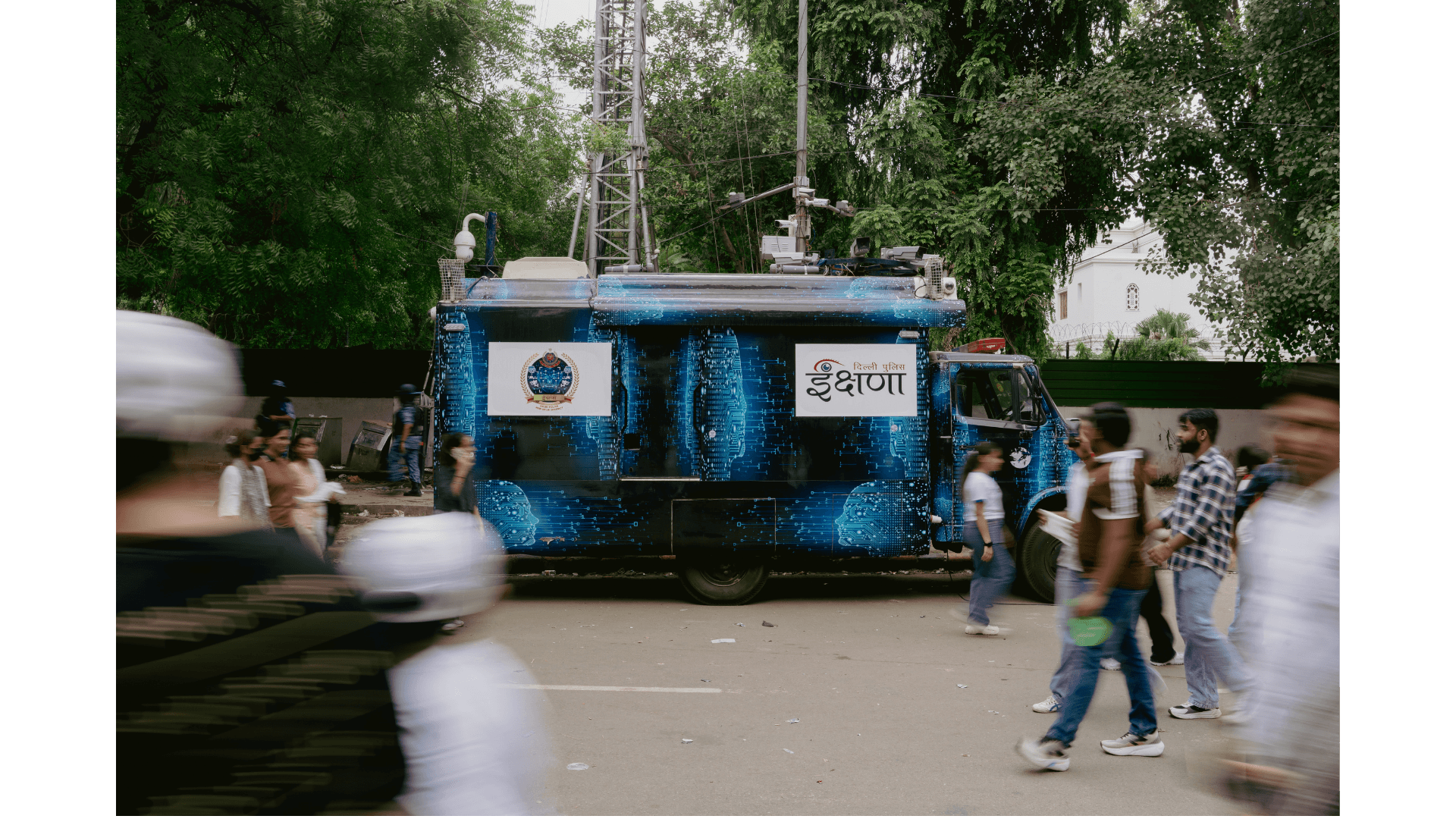
“The Ikshana facial recognition surveillance van, deployed to monitor demonstrators, reflects the growing use of AI-enabled surveillance at public protests.” – photographer Ali Monis Naqvi
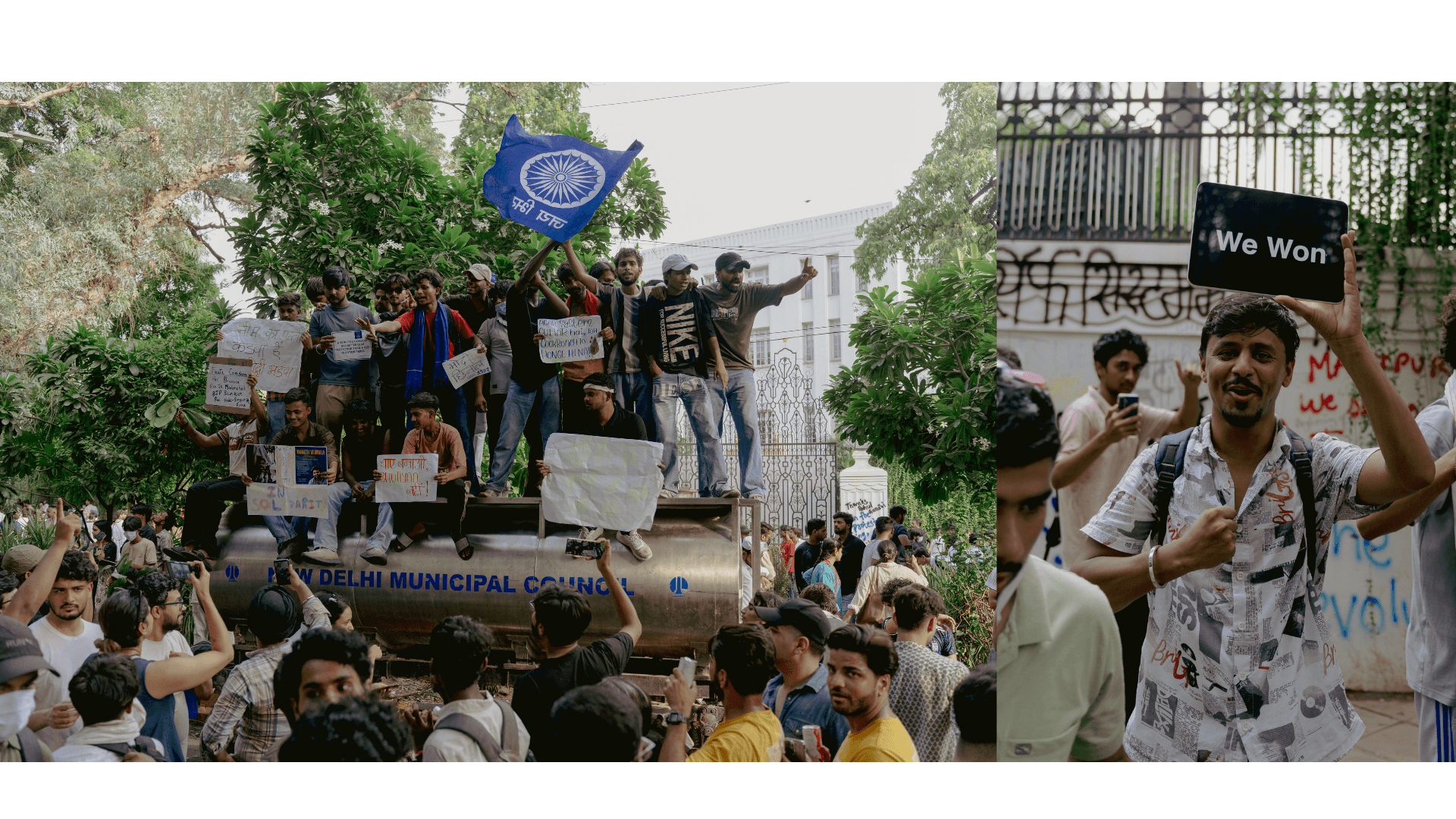
“If millions of young people feel unheard, it’s our responsibility to stand with them. I’m angry, and I want answers. We have too much at stake to stay silent. The India I imagined didn’t look away from the needs of its people. We call ourselves a democracy, and I believe that means we must keep asking questions of those in power, together.” – protestor Savita*, 43
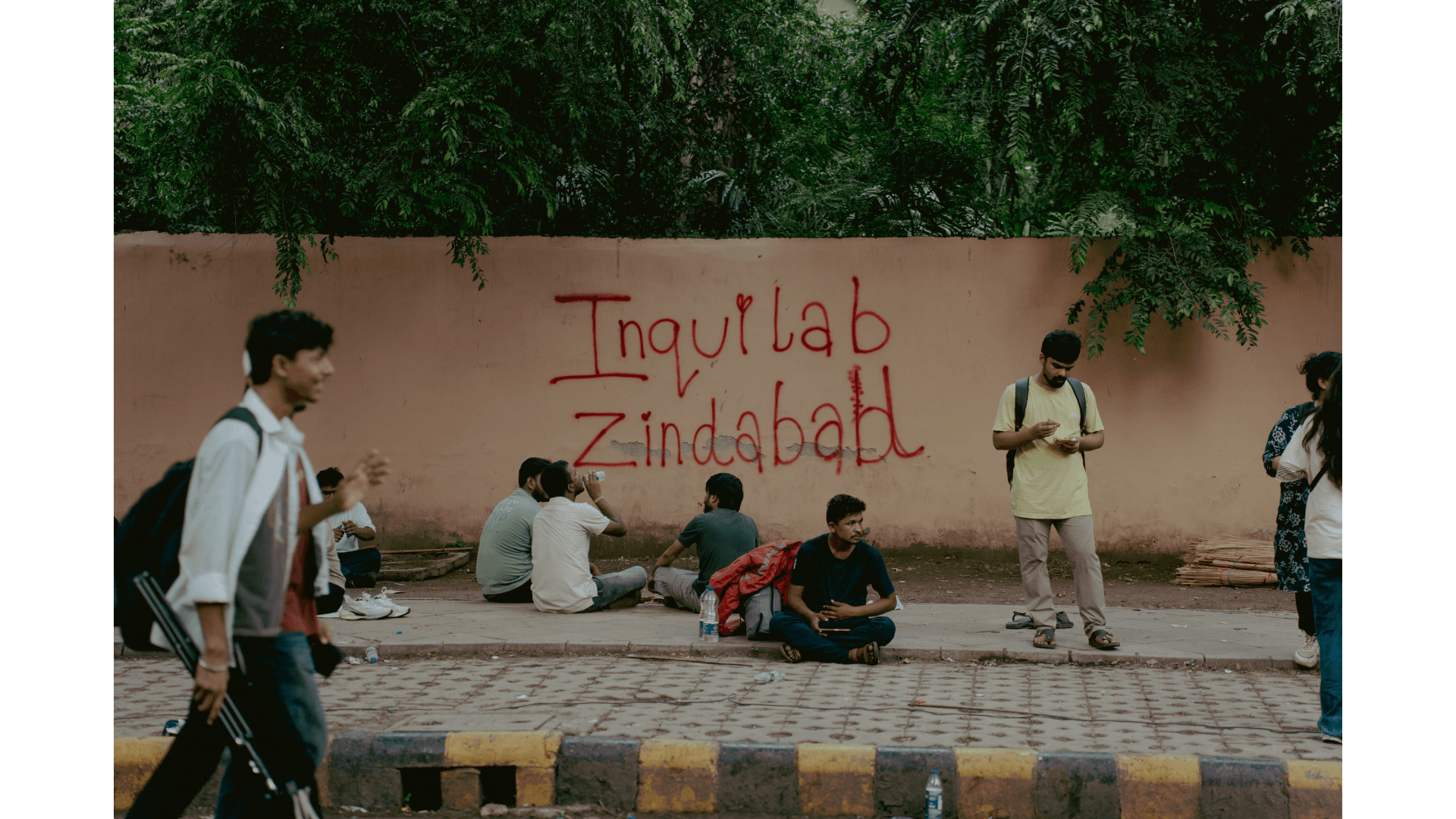
“When the Cockroach Janta Party’s demands were accepted, the protest was called off and the site was cleared. There was celebration, but there was also a quiet sense of uncertainty about whether the momentum of the protest could be carried forward for the many other urgent issues that had brought people to Jantar Mantar. It left me wondering whether this rare moment of collective energy will continue to shape how a generation engages with the issues it cares about long after this protest has ended.” – photographer Ali Monis Naqvi
*Names have been changed