The ground started shaking again. Chants against the regime reverberated off murals of ayatollahs and martyrs of the Islamic revolution painted across the city. Their faces – smiling or serious – split by time, cracks cutting through them. I imagine there is something new on them now: fresh bullet holes, fresh paint; a deep red, almost black as those chants were met with the sharp, deafening sounds of gunshots.
Here in London, when my friends first asked about the protests in Iran, I repeated my usual line: “It’s going to be the same as the ones before,” but I couldn’t deny the flutter I felt, the voice whispering, This could really be it. That was the exciting bit; it lasted for a few seconds, and then the horror took over. The numbers of the dead, first in the tens, then hundreds, then thousands. Surely that can’t be right, I convinced myself.
How frightened has the regime become? How cornered must they feel to resort to violence on this scale?
News of the internet blackout was when the chill set in my spine; when I knew things would get ugly. The only way to get any news was (and still is) to scroll social media. Unverifiable videos, posts and rants pouring in. Videos showing protesters on streets I know like the back of my hand, alleyways where the only dangerous act once was stealing a kiss in a dark corner. One video showed a gutter next to the streets tinted crimson. Part of me wants it all to be fake news. The same part that imagined friends first joining the protests, adrenaline pumping through their veins, hope sparkling in their eyes.
“How frightened has the regime become? How cornered must they feel to resort to violence on this scale?”
Nearly three weeks after total silence, my phone rang. A random number from Slovenia flashed on the screen, and then I heard my maman’s voice. [Direct calls from Iran go through a third country when they connect.] I had to let her speak, so my voice would not break. I exchanged a look with my partner and he knew exactly who was on the other end. Maman said that she was safe before launching into a selfless speech about how she was ready to be martyr, should another war start. The familiarity of it felt warm and, unlike previous times, I smiled instead of rolling my eyes. Baba cut her off. His main worry being the cost of calling directly, which on its own was also a relief to me; Baba worrying about everyday life matters, even if the world has turned upside down. I didn’t get a chance to ask about anyone else, that will have to wait for the next call... whenever it happens.
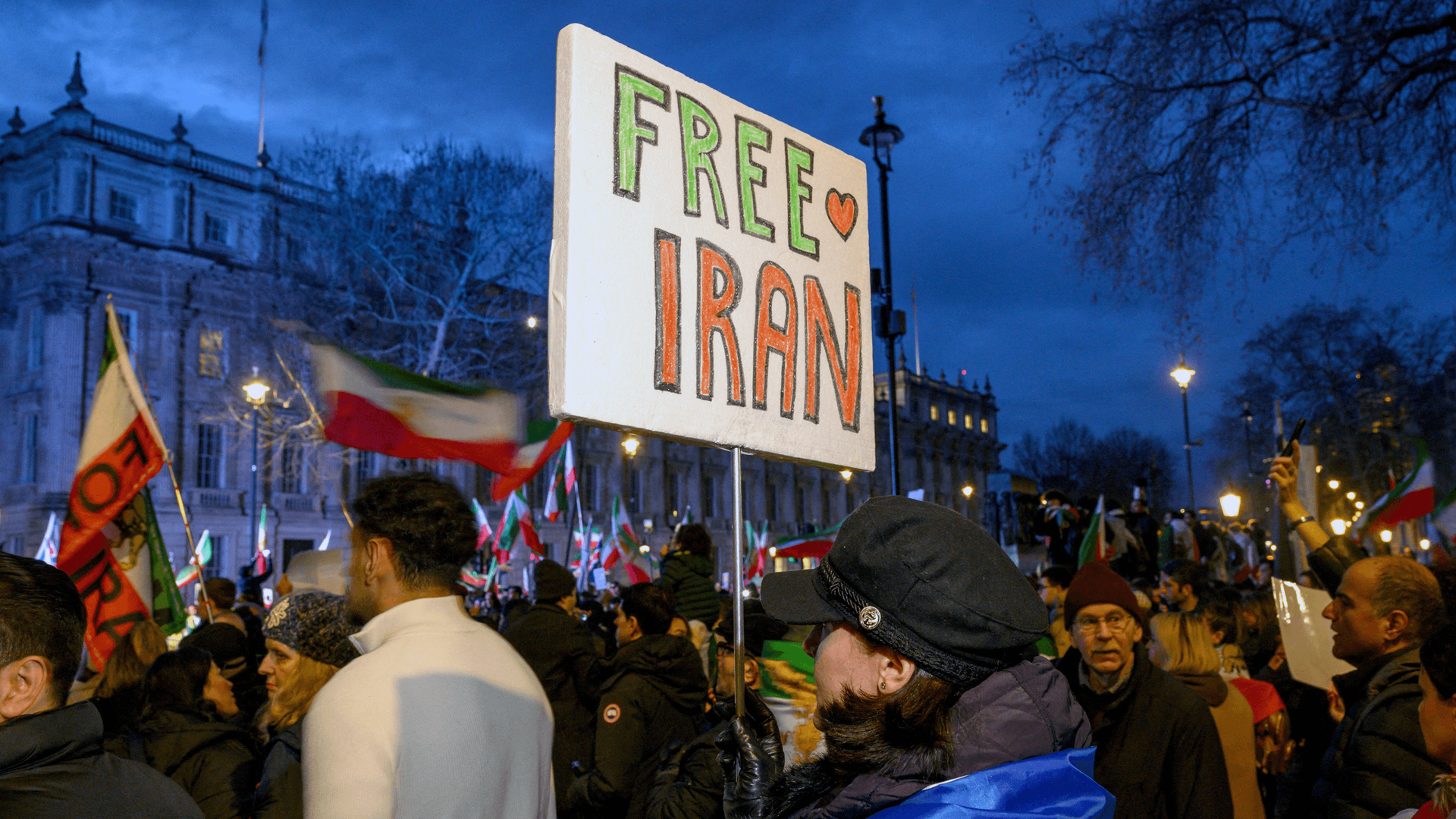
Then, two days ago, my cousin called on WhatsApp. I put on my jolliest voice and said, “Salaaaaam.” “Majid, how are you?” she said immediately followed with, “My VPN suddenly connected, but I don’t know how long before it’s shut down again.” I quickly asked for information – if everyone was OK and what was happening. “We don’t talk on the phone about these things at all,” she replied, again in English, her voice shaking. She hoped English was safer – that the IRGC [Islamic Revolutionary Guard Corps] agent tapping her phone wouldn’t understand it. So we did what we always do. We talked about ordinary things. And I was reminded how easily I can join other Iranians protesting in London, while I can’t even touch the subject with my cousin on the phone. A reminder not to take freedom for granted.
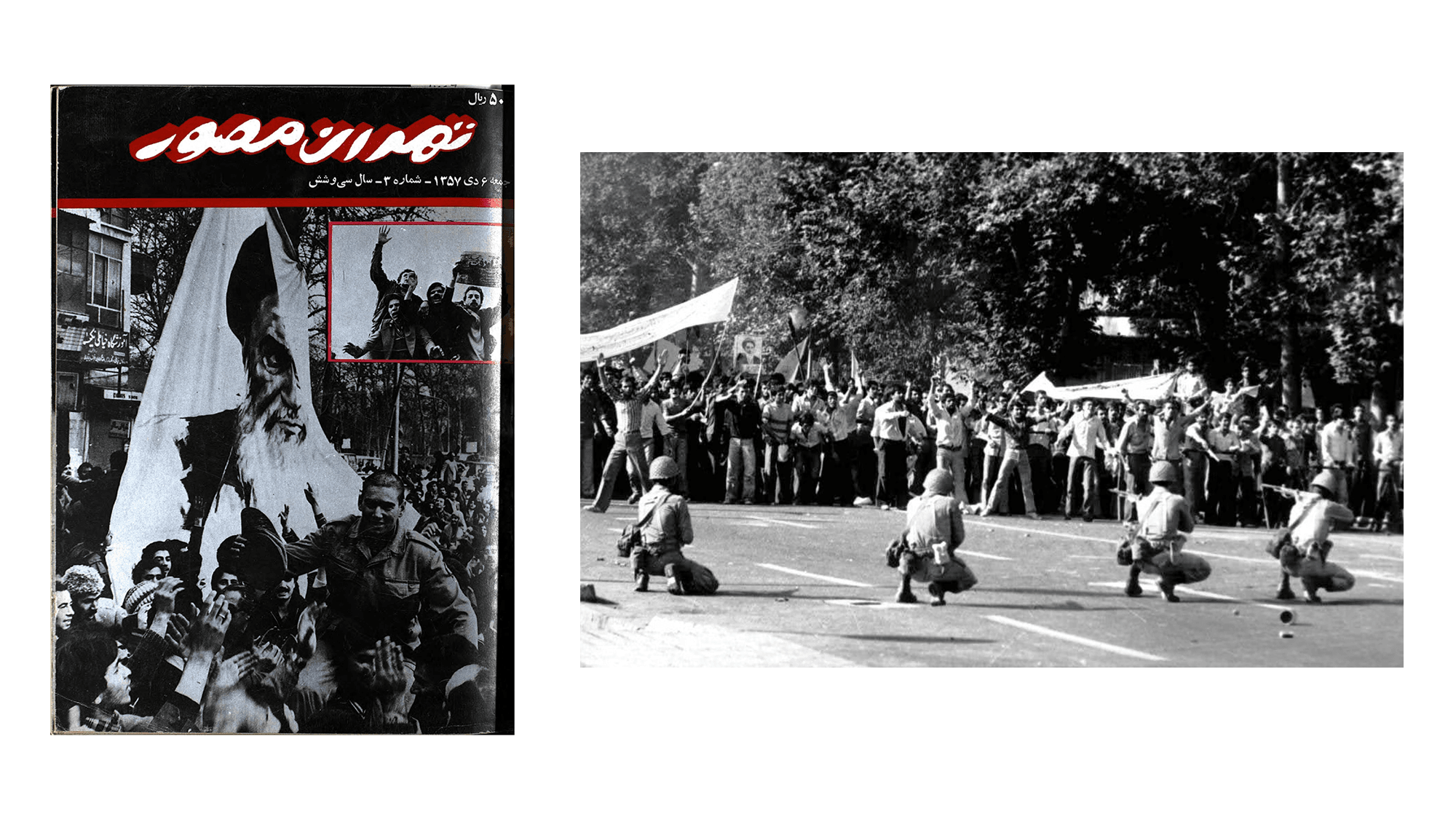
My parents were pro-1979 Islamic Revolution. Forty-seven years ago, around this same time of year, mid-winter, youths of that generation took to the streets and rallied behind Ayatollah Khomeini, founder of the Islamic Republic, to topple the Shah. A revolution that ended 2,500 years of monarchy. One which promised freedom, ironically. Khomeini’s victory speech on his return to Tehran is infamous. He promised not only freedom for all, but also free water, free electricity and free public transport. One could say we have come full circle, when the trigger for current unrest was economic hardship. My parents lived abroad during the 1979 events. Maman was always religious, but the Ayatollah brought out the idealist in her and my dad. They returned to Iran after the revolution and at the beginning of the Iran-Iraq war, when defending the country was more than duty, it was Allah’s will. The Ayatollah called it the “Holy Defence”.
“I was reminded how easily I can join other Iranians protesting in London, while I can’t even touch the subject with my cousin on the phone. A reminder not to take freedom for granted”
It meant I grew up in a house whose walls were adorned with pictures of the late Ayatollah Khomeini. I chanted “Death to America, death to Israel” shoulder-to-shoulder with my brothers in pro-regime rallies, my small fist clenched, punching an imaginary Uncle Sam. Baba went to the front lines of the eight-year war with Iraq to fight for his religion. That same religion would later create a tug of war with who I am, shaping not just politics, but casting an unrelenting shadow over me and dictating silence.
I grew up gay in a household where I was taught that saying Khomeini’s name without the respectful “Imam” prefix was a sin. I knew my desires were considered haram (forbidden in Sharia), so I fought them and when I realised that it is who I am, I got good – no, great – at hiding them. I kept it a secret from my family and learnt how to blend in like a chameleon. Yet, as the revolution’s promises fizzled into autocracy, as Islam became a tool to justify state violence, and as I realised my country punishes my own identity with the death penalty, my beliefs faded. A gap formed between me and my family, especially my religious brother.
I had become part of Tehran’s gay scene – an underground life, ever flamboyant, colourful and defiant. I chose my path then. I stuck with my chosen family and, much to my parents’ dismay, parted ways from Sharia – Iran’s Islamic law, which governs both public behaviour and private morality. The heavy fist of Sharia has been trying to crush us for decades. We tried a peaceful transition. We lined up in long queues to vote for a mullah (religious leader) in 1997, hoping Mohammad Khatami would bring the change we wanted. It did not come. And then in 2005 the presidency was passed to another hardliner, Mahmoud Ahmadinejad. “There are no gays in Iran,” Ahmadinejad said in 2007. But we were there – and we had been all along. Denying our existence was an affirmation that queers have no rights. Gay men have been hanged for being who they are. Women have died at the hands of the morality police for showing their hair.
“As the revolution’s promises fizzled into autocracy, as Islam became a tool to justify state violence, and as I realised my country punishes my own identity with the death penalty, my beliefs faded”
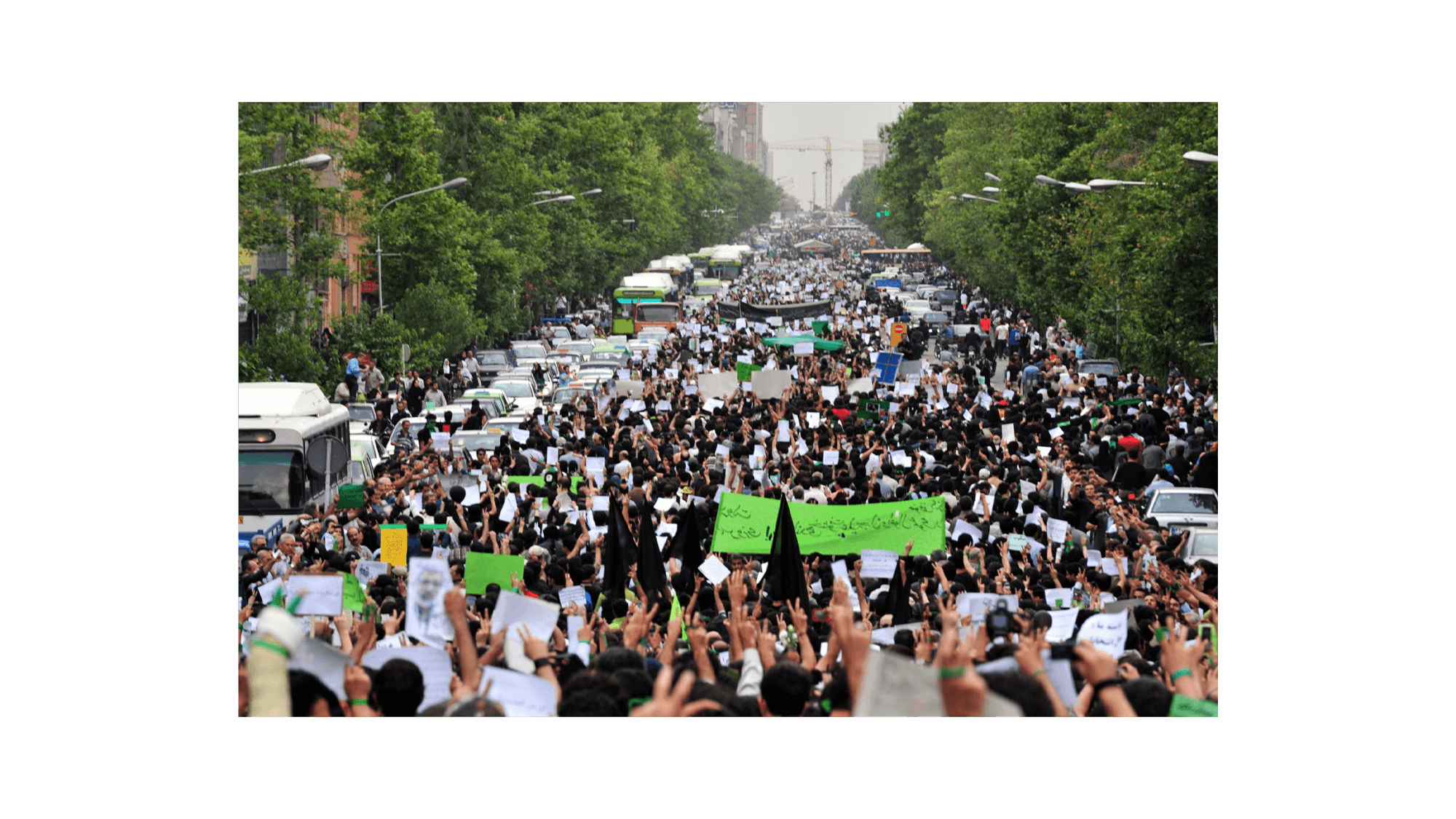
In 2009, following disputed elections for Ahmadinejad’s second term, millions came to the streets demanding freedom. I joined them, fists clenched again, knuckles white, with a real purpose this time. At 10pm every night, the city trembled with shouts of “death to the dictator” from balconies and rooftops. That was when I first witnessed the full force of a crackdown. Maman banned me and my brothers from attending rallies when news of arrests, rape and murder by the Basij militia began to surface.
In the eyes of Sharia, my desires and a woman’s hair are the same: harams that must be governed. The regime’s obsession with the hijab is not just about a piece of cloth, just as its pursuit of gay men is not just about a private act. Both stem from a frantic need to maintain a facade of “purity” by erasing anything or anyone that does not conform. The morality police who beat a woman for a loose headscarf are fuelled by the same theology that justifies the gallows for a man who loves another. We are the twin anxieties of a regime that knows its survival depends on controlling the most intimate parts of our lives. To exist as a gay man, or to show a strand of hair, becomes a shared act of rebellion.
I left the country 16 years ago in 2010 to study, but I did not leave because I was gay. Even though living under the shadow of Sharia law and morality police was not pleasant, I found a lot of unexpected joy in the gay scene of Tehran. Even from abroad, I never lost sight of how life in Tehran balanced danger and desire. In 2022, the Woman, Life, Freedom movement gave the regime another shock. My religious sister-in-law added the hashtag to all her Instagram posts. I imagined her protesting on the streets, her chador floating behind her. It was beyond religion, beyond politics.
I wonder if she has joined the demonstrations this time as well.
Two weeks ago, I found myself looking at Trump’s “HELP IS ON ITS WAY” post hoping it was not just another theatrical performance. I pictured my maman seeing the same post, tutting and whispering, “Astaghfirullah” – I seek forgiveness from Allah. Condemnations poured from every corner of the world. Today, I look at pictures of the dead surfacing. No threat or condemnation will bring these young faces back to life. It won’t even help with their cause. I cannot ignore the flutter that metamorphosed into an ache; that the lives were lost in vain.
I am gay. I knew Tehran’s gay scene intimately. It was my source of joy and pride; they were my family. While I want a change of regime, I worry about the “after”. Will my sister-in-law be harassed for her chador in a new Iran? Will Maman keep her picture of the Ayatollah on her dressing table, not as an emblem of the current regime, but as a relic of the hope her generation once carried? Over time, that hope curdled into the keffiyeh-wearing militia and morality police we fear today. The same morality police at whose hands Mahsa Amini died in 2022, for wearing an “un-Islamic” hijab. Through the prism of history, watching these protests feels both familiar and painfully fragile, a reminder of what has been fought for – and lost. I do not know how this ends. I only know that I am waiting through the blackouts for a sign that my family is safe, both the one I was born into and the chosen one. I still hope they can coexist.
Now, when I am asked, “How are things in Iran?” I don’t want to repeat my practised cynical reply. I want to believe there is hope for change and, although I am not there, I want everyone to know what is happening. I don’t want Iran to be just the next headline in the news. Iran is still in an internet blackout. I wish for the new Iran to deliver on that promise of freedom which was not realised in 1979.
I wait for the familiar conveyor belt of Maman’s sermons. Revolutionary blood still pulsing through her atherosclerotic arteries. She still sends me streams of Quranic verses and sermons on WhatsApp. She still prays to Allah that her gay son will find the light.
I wait in hope.
I wait in fear.