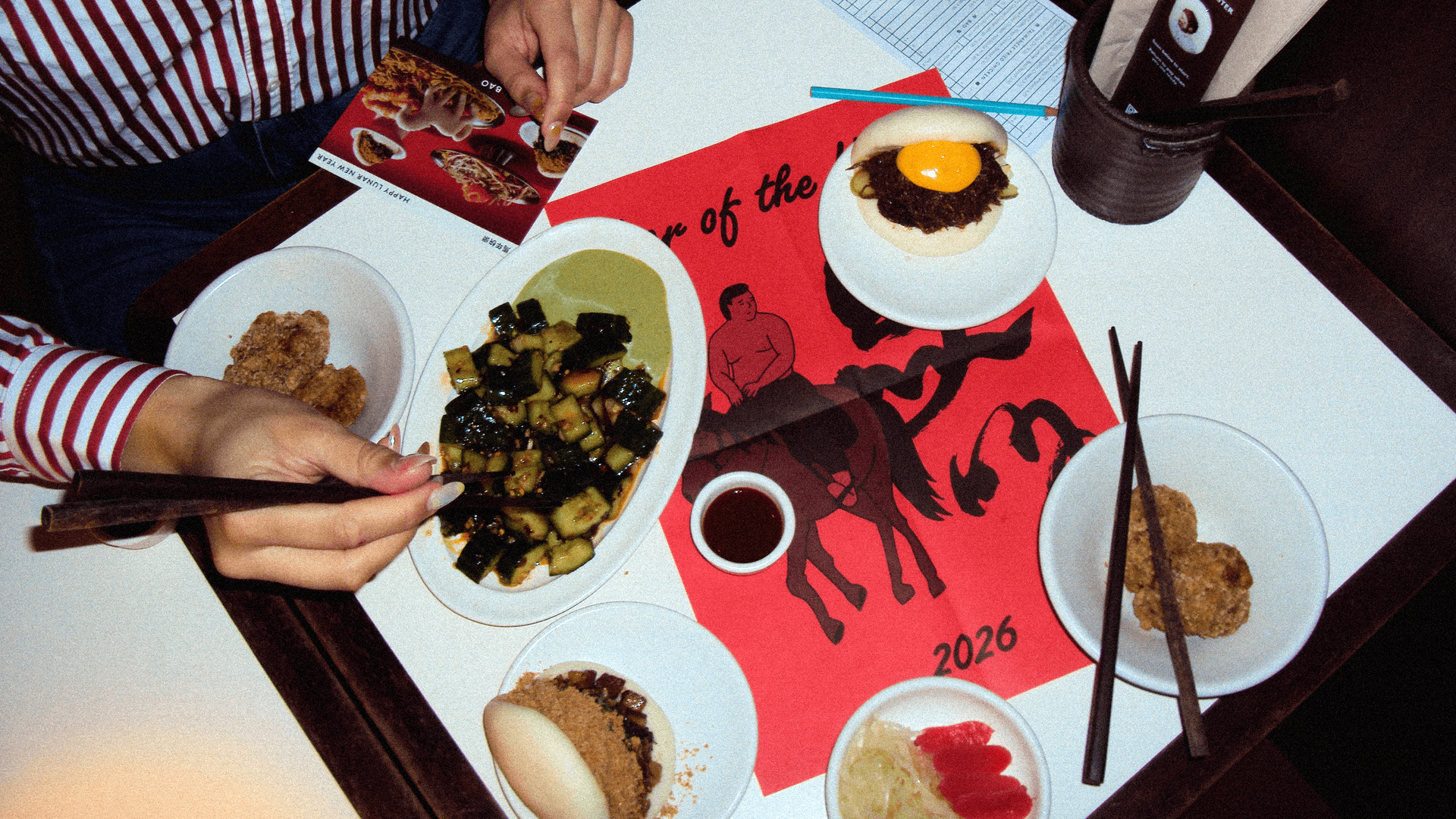
There are many ways to mark Lunar New Year. You could start by clearing out your house to remove dust and bad luck (known as ‘chucheng’), or wearing and decorating your space in (lucky) red. Us? Well, as you might have come to expect, we’re all about the food – and so is this occasion, calling for family and friends to come together for a feast to bring good luck and fortune.
This rings true for foodie friends of Service95, too. “Lunar New Year is one of my favourite moments of the year, bringing back memories of family gatherings when I was growing up in Taiwan,” says Erchen Chang, creative director and co-founder of one of our London go-tos, BAO. ‘It has always been a time to pause and reflect on the year gone by, to reconnect with loved ones, and to look ahead with optimism. As we welcome the Year of the Horse, we celebrate its energy of movement, change and fresh beginnings.”
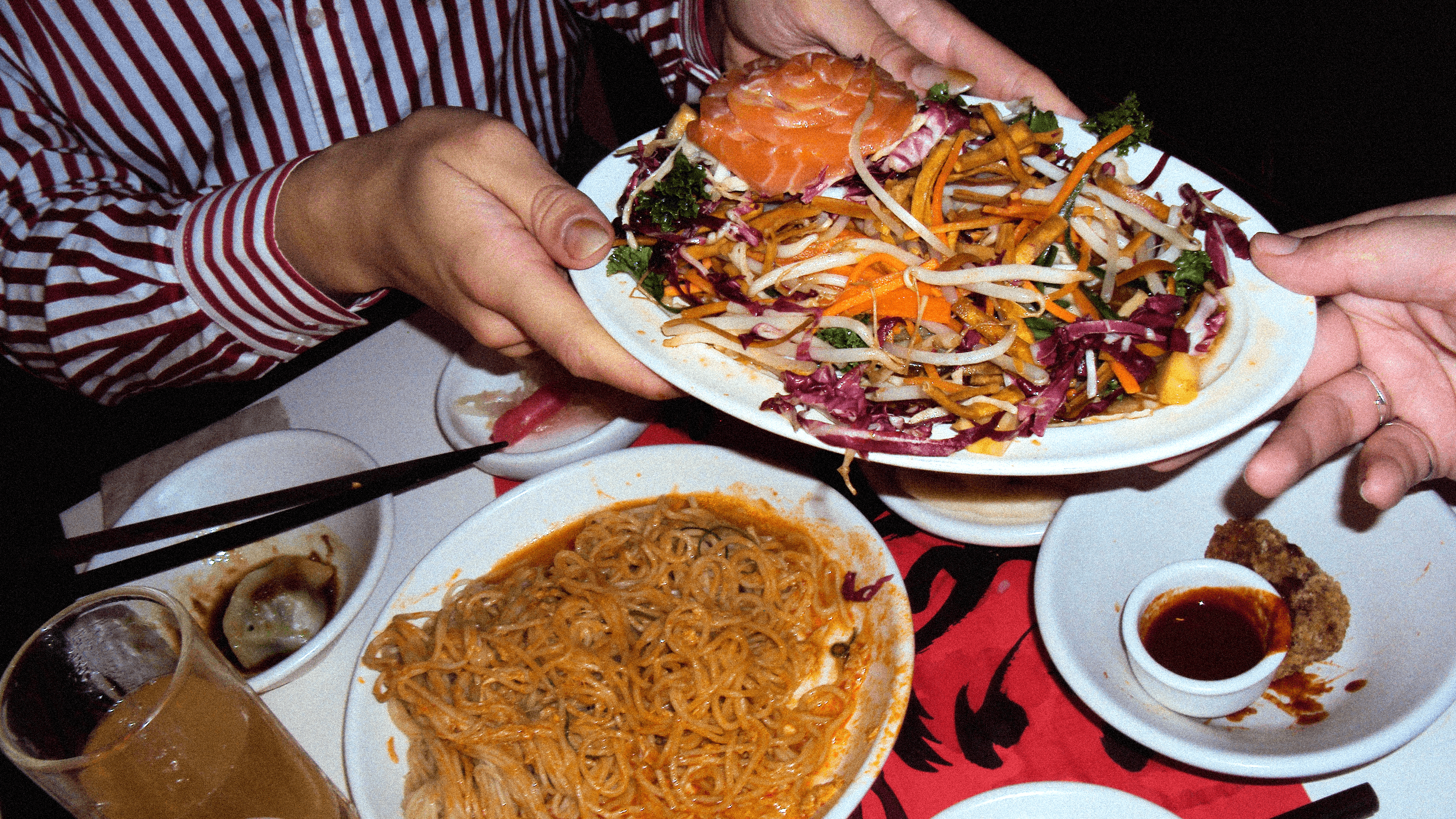
Speaking of foodie friends, you might be wondering what to make for your Lunar New Year celebrations. Well, we’ve got you. To mark the Year of the Fire Horse (read more about what that has in store for us all here) we asked four of our favourite foodies, chefs and restaurateurs – Erchen, Chubby Dumpling’s Chantel Yeung, Mambow’s Abby Lee, and Amy Poon of Poon’s London – to share their tried-and-tested recipes to serve up for a celebratory feast...
The Dish To Kick Things Off: Chantel Yeung’s Crab Dumplings
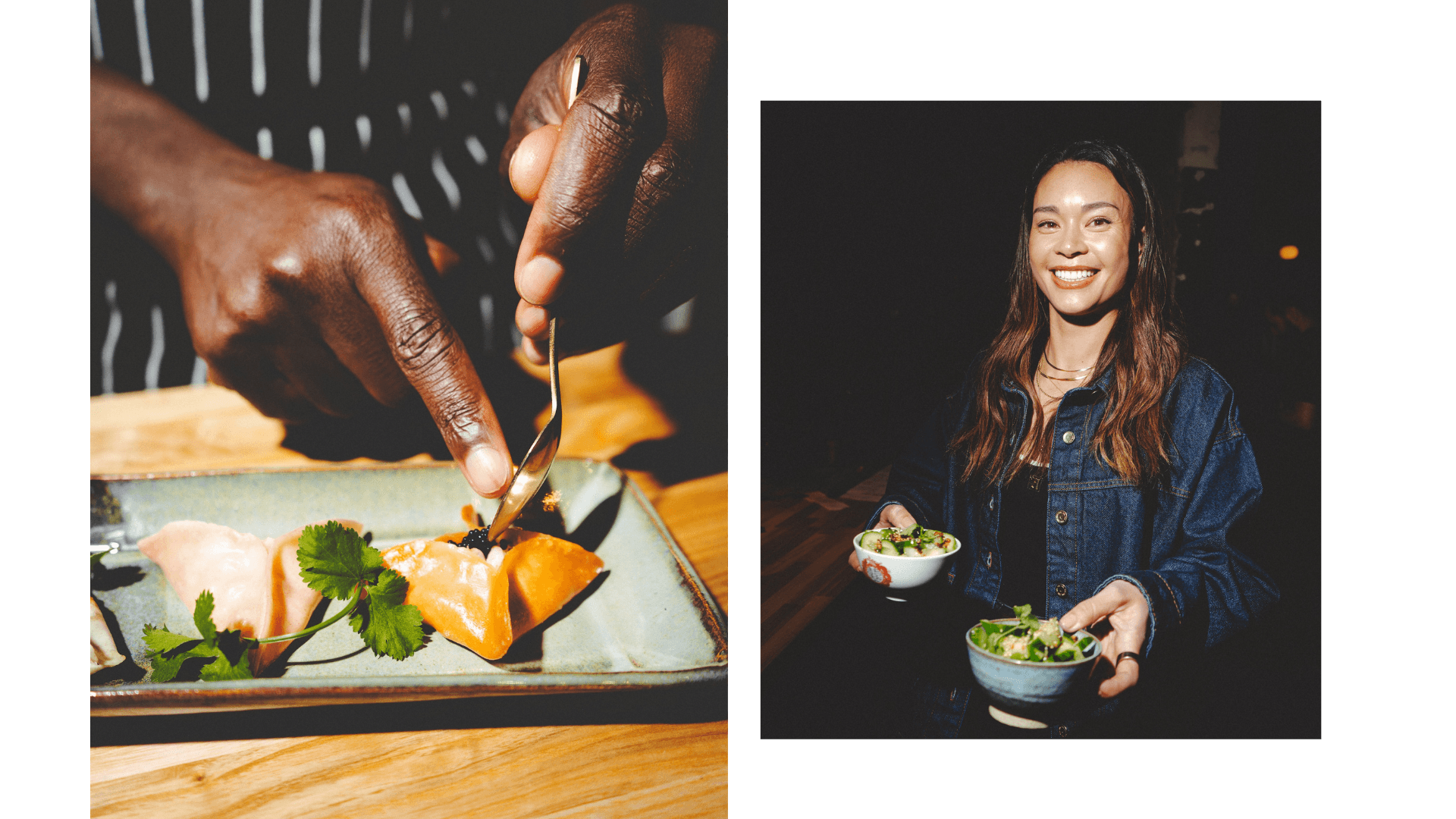
“Crab is a lunar new year staple for us. It represents prosperity and luck,” says Chantel Yeung, who runs every Londoner’s favourite food truck, Chubby Dumplings, with her dad, Joe. “The claws are a metaphor for ‘grabbing’ opportunities and success in the year ahead.” So, what better way to start your Lunar New Year dinner party than with her recipe for crab dumplings? Chantel‘s tips: “This recipe makes about 30 dumplings but you can scale it up or down as you like. If you want to use shop bought wrappers you can, but if you have time to make your own it really does make a difference!” And if you really want to turn it into an occasion? “Serve them will a little caviar on top for an extra special touch of luxury!”
Ingredients
Makes 30
To make the crab filling:
450g crab meat
70g waterchestnuts, chopped
100g diced white onion
Pinch of white pepper
4g salt
4g sh stock powder
3g sugar
8g cornour
27g vegtable oil
To make the wrappers:
400g plain our
160g tepid water
Method
1. Make the wrapper dough by mixing the flour and water and kneading it. It will feel quite sticky at first and not totally smooth – that’s normal. Roll it in to a ball and place in bowl, cover with a damp tea towel and leave at room temperature to rest for 10-15 mins.
2. Meanwhile, you can mix the ingredients together – you want to put the dry in first, before adding the oils after. Then, thoroughly mix together and keep in a bowl to the side.
3. Back to the dough – knead again untill it’s smooth and pliable (this might take 10-15mins of kneading). If you’re making a larger batch, you may want to divide the dough up into halves or quarters at time, leaving the remaining dough covered so they don’t dry out.
4. Then, roll out the dough: you can either use a pasta roller to make a sheet and cut out circles, or you can roll them individually, following the traditional method. To do that, you make the dough into a sausage shape, then cut it into small pieces, about 12g each. Using a lightly floured rolling pin on a floured surface, roll the dough out into a circle, turning the dough around each time between rolling to keep it even. They will form a circle and be about 1mm thick and 8cm across.
5. To make the dumplings, hold the wrapper in your hand and add about a teaspoon of filling to the centre or the wrapper. Then lift two opposite corners to meet in the centre. Next, lift the remaining corners, sealing them by pinching along the join – just don’t pinch all the way to the middle so you have a four-pointed star shape with small gap in the centre.
6. Steam the dumplings in a bamboo steamer for 9 mins. Take them out and fry just the bottom of the dumpling in a little oil to add a crisp to it. Plate with a little caviar in the hole in the top, and serve with chilli oil or soy dipping sauce.
The Failsafe Main: Erchen Chang’s Dan Dan Noodles
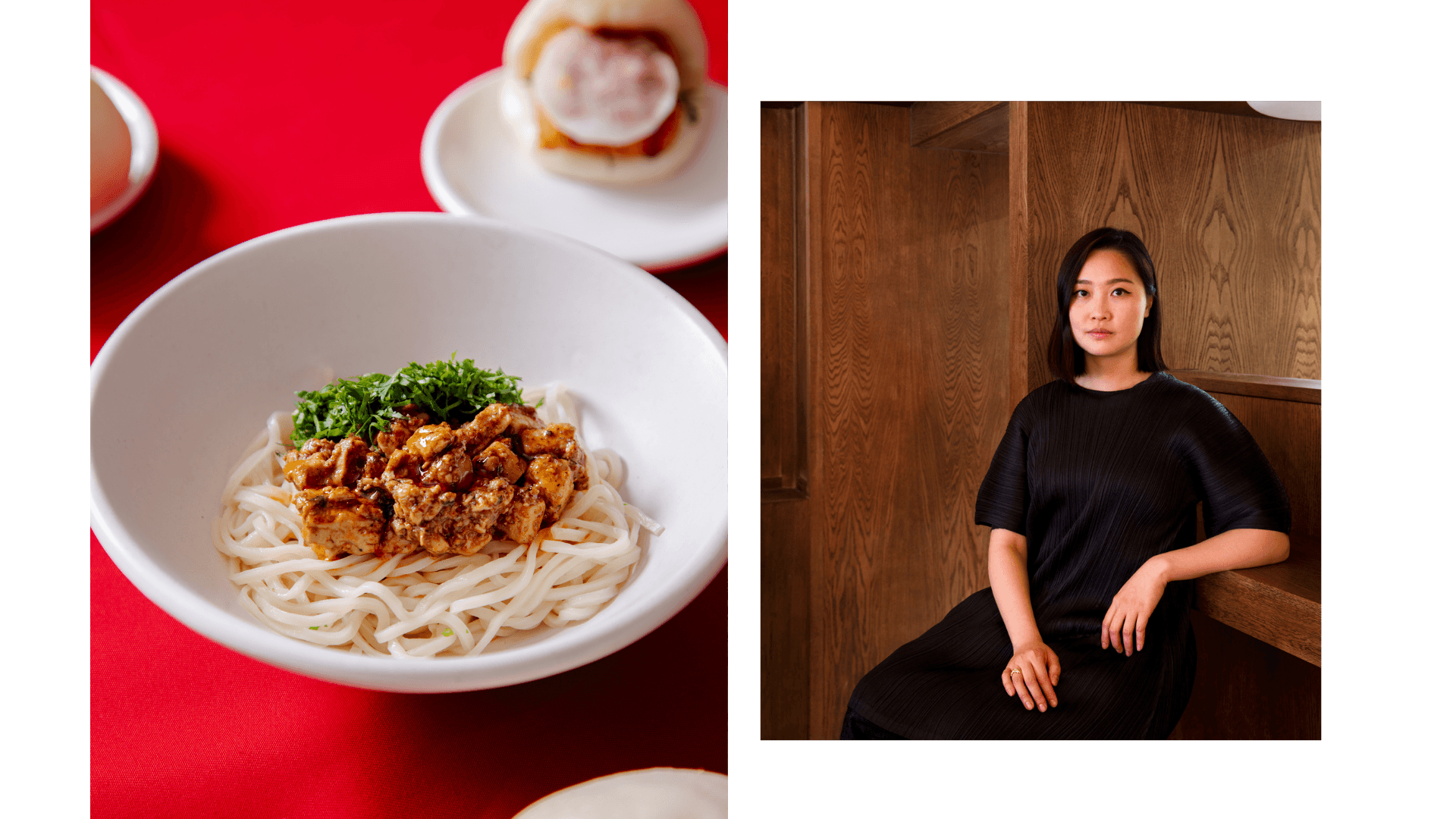
Founder and creative director of BAO, Erchen Chang, regularly travels back to Asia to gain further inspiration for her Taiwanese eateries across London, all of which are going big for Lunar New Year, with a dedicated Dark Horse set menu (until 26 February). What would she make to celebrate with friends? A rich, steaming bowl of noodles. “When I was travelling around Chengdu, China, I tried so many different bowls of dan dan noodles,” says Erchen. “The balance of seasoning is crucial, so make sure you measure these to a T when making your own. I like to appreciate the oily residue and bits of fermented vegetables left at the end – finishing a bowl is the ultimate way to show my respect to those who’ve cooked it.”
Ingredients
Serves 4
For the Dan Dan tofu:
250 ml cold-pressed rapeseed (canola) oil
1 x 200-g block firm tofu, crumbled into coarse 1cm pieces
2cm piece of fresh ginger, peeled and finely diced
2 tsp chilli powder
1½ tsp ground white pepper
1½ tsp caster (superfine) sugar
2½ tsp whole bean soy sauce
Pinch of salt
For the Dan Dan tofu dressing:
3 tsp mirin
8 tsp whole bean soy sauce
2 cloves garlic, grated
4 tbs fermented mustard greens
2 tsp Tung Choi Preserved Vegetable (you can find these in most Asian supermarkets)
4 tsp Chinkiang vinegar
8 tsp Sichuan chilli oil
400g plain wheat noodles (or use ready-made noodles)
4 generous handfuls of coriander (cilantro), finely sliced
Method
1. For the Dan Dan tofu, heat the oil in a frying pan (or skillet) over a medium heat. Add the tofu and ginger, then pan-fry for 2 minutes before adding the remaining ingredients. Cook gently for 10 minutes, allowing the tofu to soak up all the flavours and develop a tender, fluffy texture. Remove from the heat and set aside.
2. For the Dan Dan tofu dressing, preheat the oven to 150°C/300°F/Gas Mark 2 and place 4 bowls in the oven to warm.
3. Put ¾ teaspoon mirin, 2 teaspoons soy sauce, grated ½ clove garlic, 1 tablespoon fermented mustard greens, ½ teaspoon preserved vegetable, 1 teaspoon Chinkiang vinegar and 2 teaspoons chilli oil, including some pulp, into each bowl. It’s important to measure into each warmed bowl rather than make a batch of dressing, because the flavour balance is key to this dish.
4. To assemble, cook the noodles in two batches. Bring a large saucepan of salted water to the boil, add half the noodles, then give it a stir with chopsticks to separate the strands. Once the water comes to the boil again, cook for 1 minute and 10 seconds. (If the noodles aren’t freshly prepared, it may require longer cooking time. Have a test bite before straining.) Drain and immediately divide into 2 bowls by picking up half of the noodles with a pair of chopsticks. Gently lay the ends of the strands into the bowl and fold them over so the noodles are all uniformly sitting snug next to each other. Repeat for the second batch of noodles.
5. Top each bowl of noodles with 4 tablespoons of the Dan Dan tofu. Be sure to include the oil as it will give it extra flavour. Top each bowl with a generous handful of the coriander (cilantro). Mix the noodles thoroughly before eating.
The Crowd Pleaser: Abby Lee’s Kam Heong Mussels
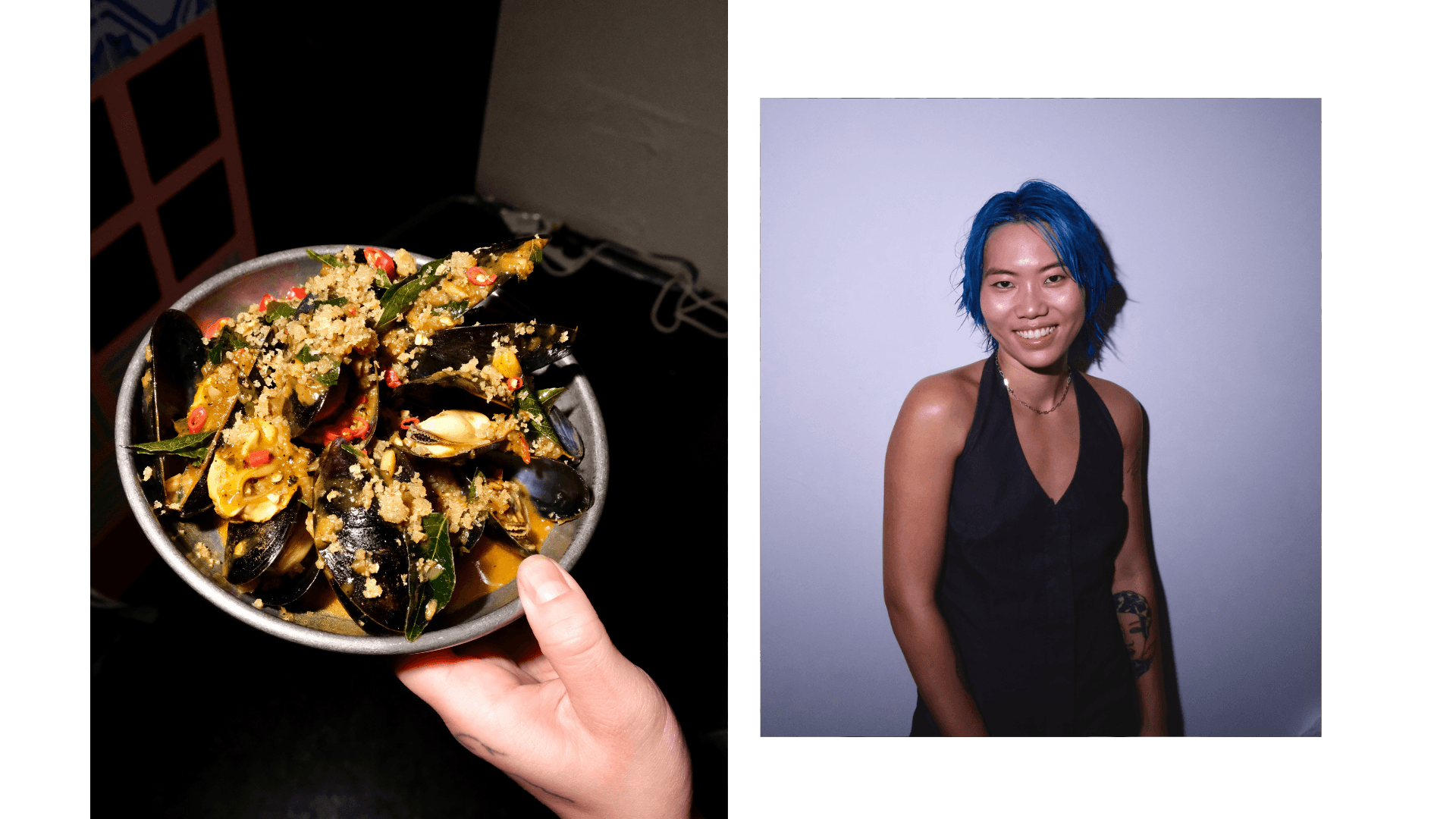
At her east London restaurant Mambow, Abby Lee serves up her fresh take on Malaysian cuisine, inspired by the food she grew up eating during her childhood. What would she dish up for Lunar New Year? These Kam Heong mussels. “Kam Heong translates to ‘golden fragrance’, and this dish is truly its name, with the fragrance of curry leaves and curry powder and the deep umami flavours of soybean paste and dried shrimp,” she says. “It’s a real celebration dish, that can also be used with clams, prawns or crab. Get some jasmine rice ready to mop up all the sauce!”
Ingredients
Serves 4
For The Prawn Floss:
50g dried shrimp (soak in warm water, covering shrimp completely, for 10 minutes before cooking)
25g vegetable oil
For The Kam Heong Paste:
250g banana shallot
45g garlic
25g ginger
5 red bird’s eye chilli
15g meat curry powder (Baba’s brand is most ideal)
For The Kam Heong Sauce:
45g oyster sauce
25g soybean paste
1.5 tsp light soy sauce
5g dark brown sugar
2 tsp black pepper
1kg mussels, cleaned and debearded
5 fresh curry leaf stalks, picked
Method
1. To make the prawn floss: after the shrimp has soaked, drain and reserve the water for cooking later. Pat them dry before blending until it reaches a fluffy consistency. Mix with the vegetable oil and cook in a pan on low heat, stirring regularly until lightly caramelised and dry. Spread onto a piece of kitchen roll, to catch any excess oil.
2. To make the Kam Heong paste: roughly chop all ingredients, before pulsing in a food processor, until reaching a chopped texture (rather than a smooth paste). Stir in curry powder at the end.
3. To make the Kam Heong sauce: whisk all ingredients in a bowl until well combined.
4. For the mussels, you’ll need a wok or wide saucepan – ensure you’ve got a lid or a plate ready to cover your pan later. Heat up 4 tbsp of oil to medium heat. Once ready, add the picked curry leaves (they take a second to pop).
5. Add the paste: keep stirring until the shallots look transparent and it smells fragrant, around 5-10 minutes.
6. Add the mussels and the sauce – really coat each mussel well. Then, pour over the reserved shrimp water and get the lid on the pan. Steam mussels for a few minutes, shaking the pan occasionally, until they have all opened.
7. With a slotted spoon, add just the mussels onto your chosen platter. Now reduce the sauce until it coats a spoon lightly – I like to add an additional pinch of sugar at this point, too. Taste for seasoning, if you’d like more black pepper, sugar or salt.
8. Drizzle the sauce all over the mussels. Top with prawn floss all over and serve!
The Sweet Treat: Amy Poon’s Chinese New Year Cookies
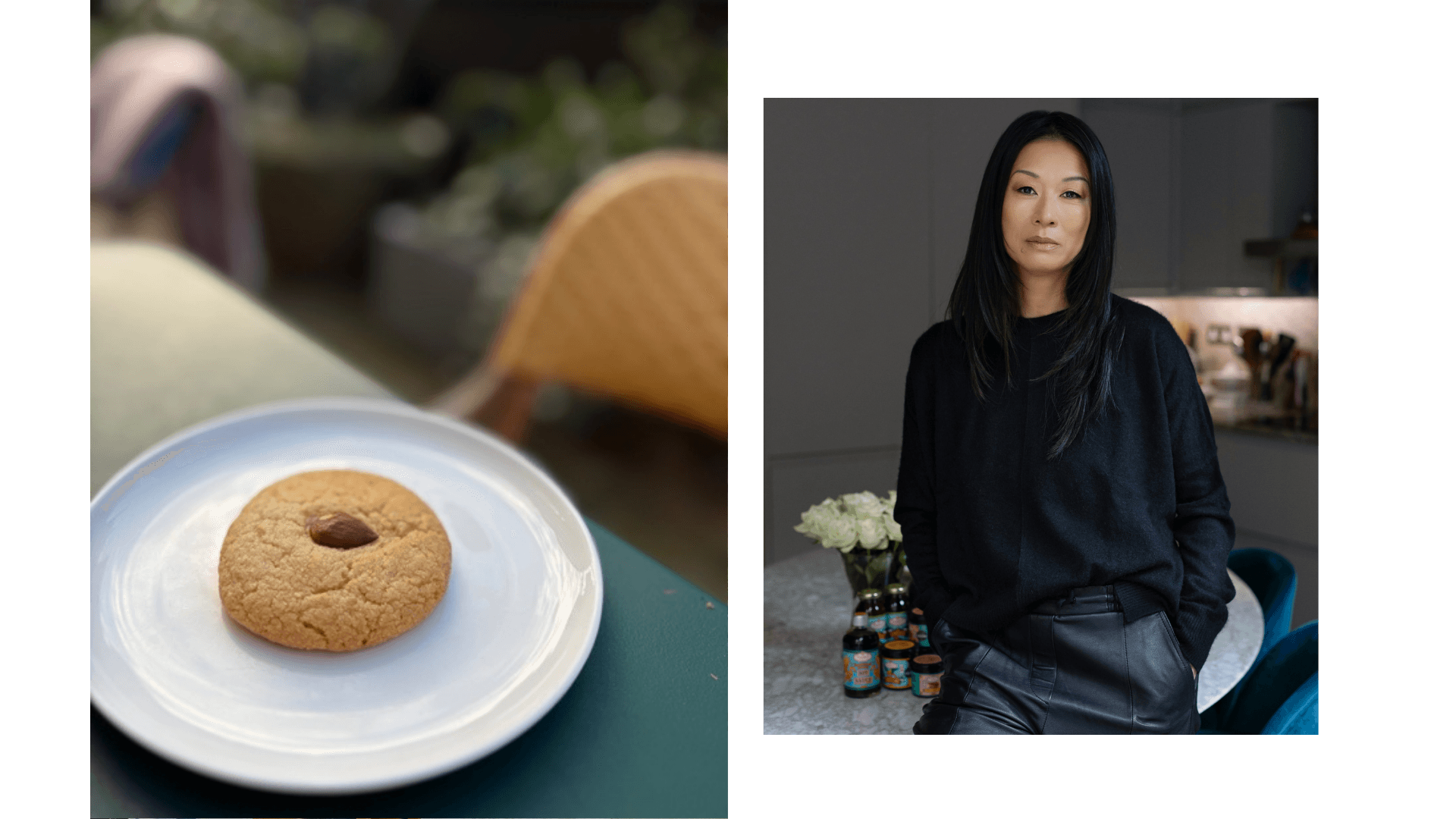
Amy Poon is the founder of Poon’s London – the Chinese heritage food brand, with a physical store in London’s Bermondsey as well as online (the chilli oil belongs in every condiments cupboard). “Chinese New Year is an incredibly special time for myself and my family,” says Amy. For me, these cookies are the embodiment of edible love. Traditionally, they symbolise coins which are an emblem of good fortune, and they are often gifted at Chinese New Year to bestow prosperity on the recipient.”
Ingredients
Makes 24
220g unsalted butter, softened
200g caster sugar
Zest of 2 lemons
1 whole egg
150g ground almonds
220g plain flour
1/2tsp bicarbonate of soda
1/2tsp salt
24 whole almonds
Method
1. Cream together butter and sugar until just combined.
2. Add the lemon zest and egg, then add all the dry ingredients – except for the whole almonds – and bring together.
3. Put the mix in the fridge for 30 minutes, then shape into spheres and flatten on a tray. Make sure they’re well-spaced out, then add a whole almond to the centre of each cookie.
4. Bake at 160 degrees celsius (fan oven), for 12-14 minutes. Allow to cool, then serve.