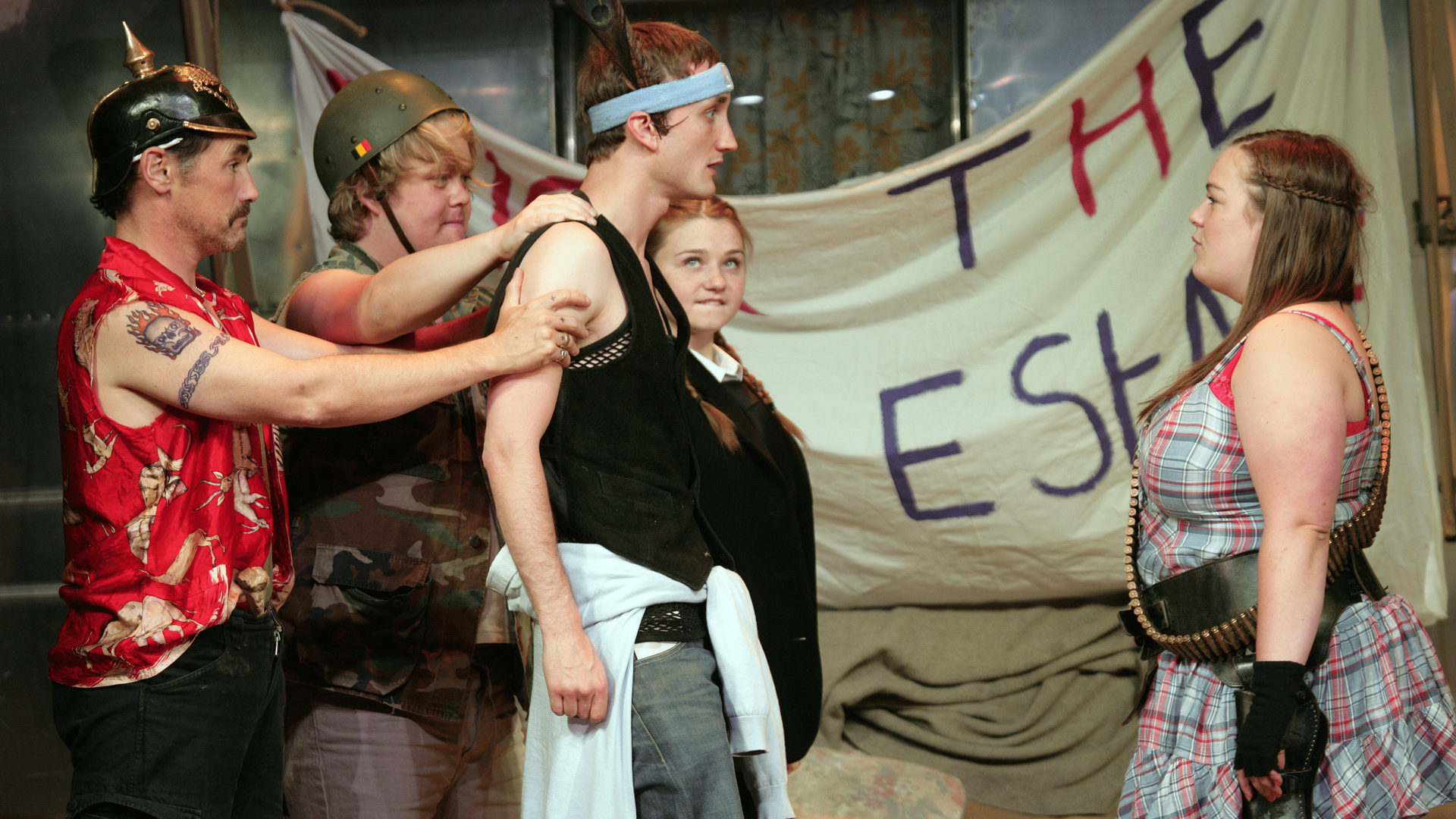
Taking on a role in a play for the first time is one thing. Originating it is another. Service95 met with Charlotte Mills, who played Tanya in the original production of Jez Butterworth’s Jerusalem (Dua’s Monthly Read for April), to discover what it was like to experience the play coming to life in real time.
“Jez was still writing the play while they were auditioning for it,” says Charlotte of those early days, reflecting on how the cast – including Mark Rylance as Rooster and Mackenzie Crook as Ginger – helped to shape the script through improvisation for the play’s first run at London’s Royal Court Theatre in 2009. “It felt like an inspiring space for us and for Jez.”
Here she shares how her first professional acting job shaped the rest of her career; what it was like to transfer the show to the West End and then Broadway; and the full-circle moment that’s seen her reunite with cast members 17 years on.
What does Jerusalem mean to you?
Anarchy, joy and utter playfulness – in both the play and all the feelings it evokes in me when I think about it. It was an utterly joyous period of my life that felt very anarchic on and off stage.
Jerusalem was your first acting job – but it almost didn’t happen. How did you end up being involved?
I originally auditioned for a different part. The script called for three young girls, then it changed to two and I didn’t get it. I was devastated. Weeks later, I was told they did want another girl, and auditions were the next day. I went, had no idea how it had gone, so I met one of my best friends, saying: “I need a wine!” An hour and a half later, I got a call saying, “You’re starting tomorrow.” It was my first job out of drama school, I would have been just turning 23 or 24.
You said that Jez was still writing the play during rehearsals. How did that impact the process?
We were doing loads of improvisation during those early rehearsals. The next day, there’d be additions to a scene that had all been born out of that. Halfway through, we had a brand-new draft. Jez had worked on the script so much that we had to sit down and read it all again in its entirety. When I reread Jerusalem a year or so ago, I could feel all of us interwoven into that script.
You, and much of the original cast, saw Jerusalem through its first three iterations: at the Royal Court, its first West End run and Broadway run. How did the play develop and adapt?
It was always evolving – even during the previews! With Mark’s playful nature, it never felt stagnant. A while ago, I found the first ever draft [of the play] from my first audition in spring 2009; it was vastly different. Rooster’s character was in a wheelchair, which completely changes the dynamic. Then when we took it to New York, we changed references, so they would land better [with a US audience].
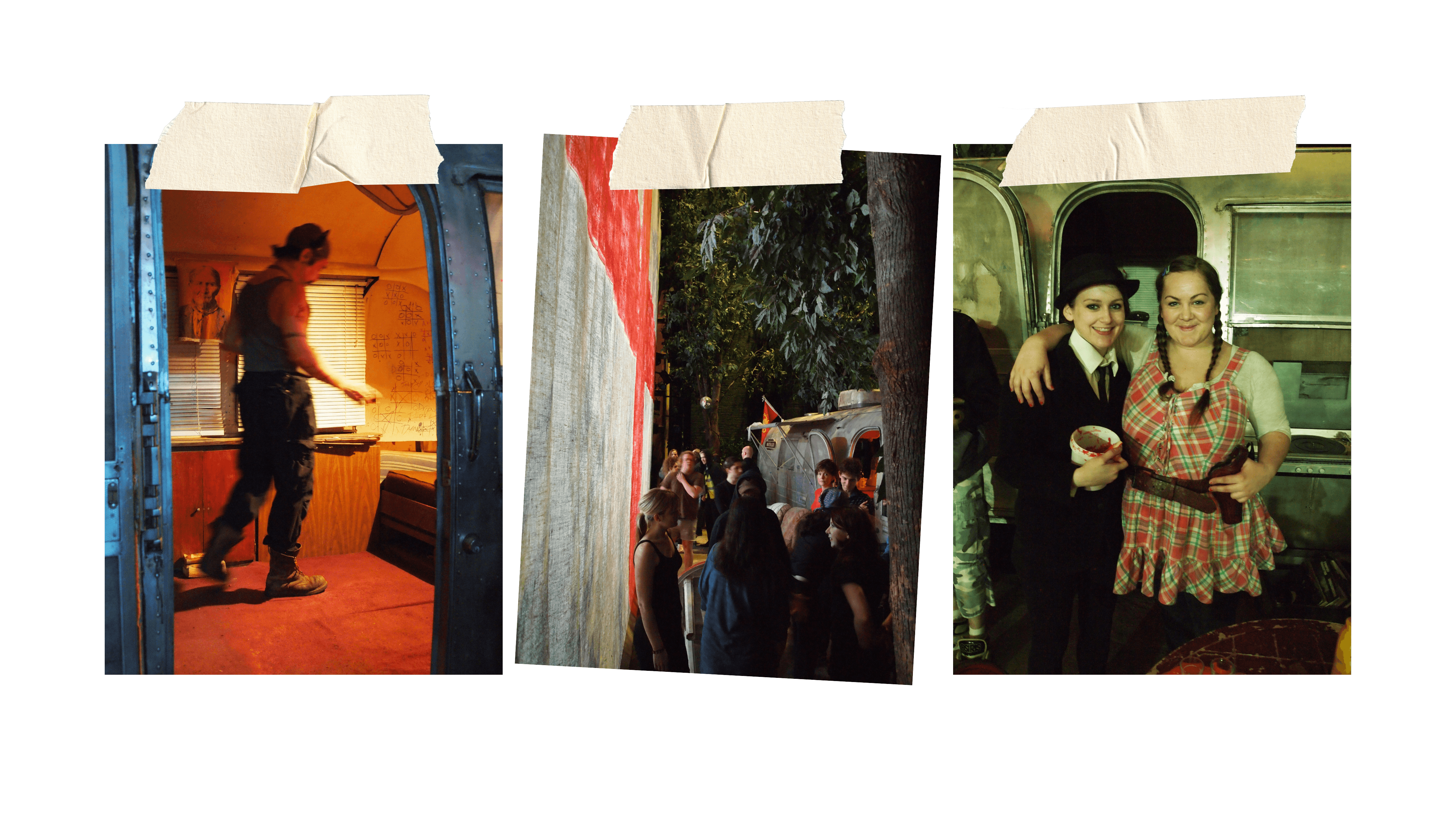
How did it feel, taking such an inherently British play to New York? How was it received?
We were excited to be telling the story overseas together. The responses were so different, in a brilliant way. I remember people being shocked by how feral these characters were. It was the England that America didn’t feel they saw or knew.
We changed a few tiny references – Girls Aloud became The Pussycat Dolls, just so the audience got whatever story Rooster was telling. In the end we thought, ‘We need to dig into the fact that it is very English, otherwise you’re compromising it.’ Different things got laughs, but it was clear the anarchic energy of all those characters translated.
Is there a standout moment from that experience that’s stayed with you?
Mark, as a leading man. I knew at the time that it was very, very special. But now, having had a nearly 20-year career, he is still hands down the most inspiring, giving, open, leading person I’ve ever worked with. His performance was a gift.
Have you stayed in touch with the cast?
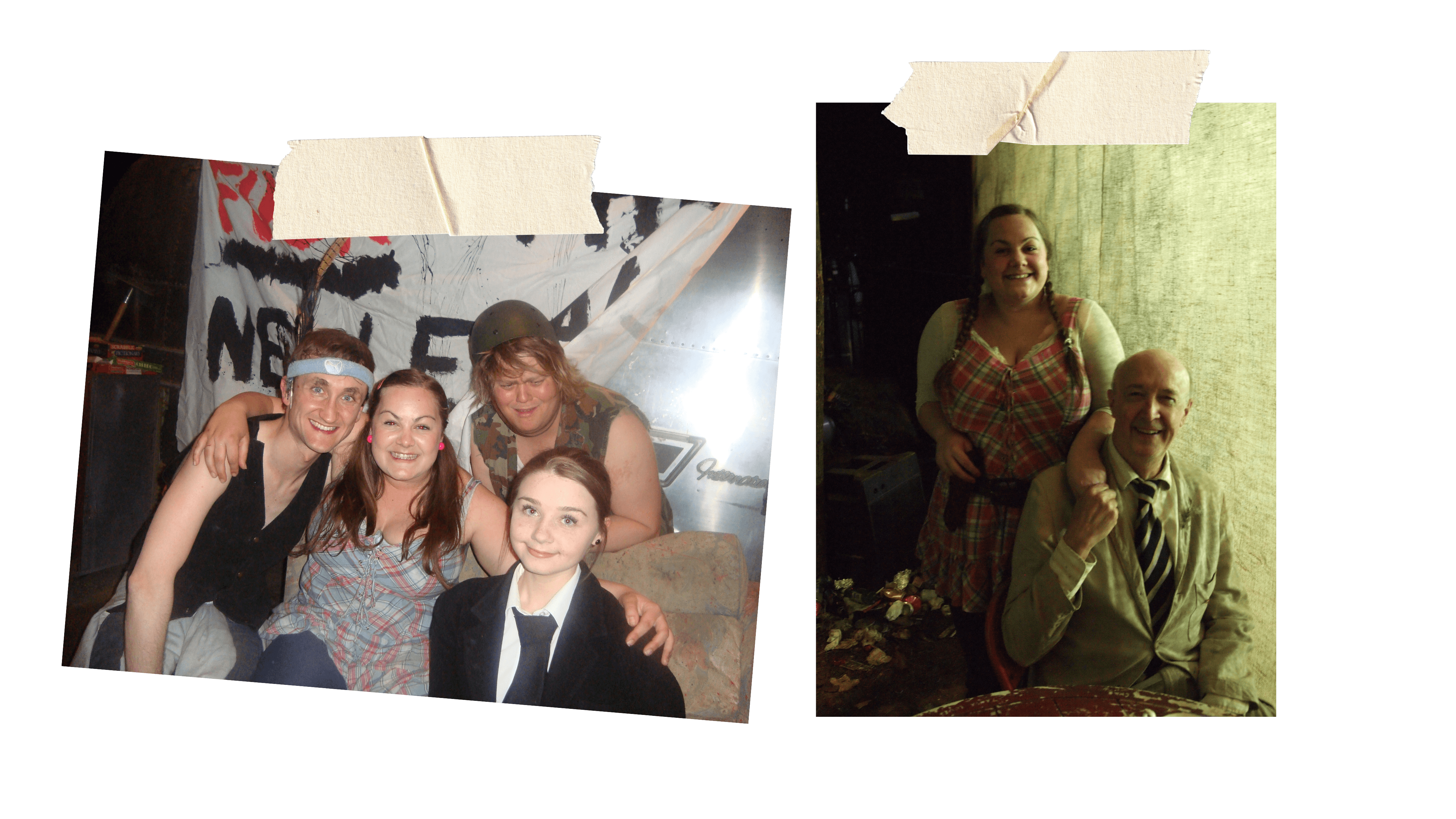
Jerusalem has been the gift that keeps on giving throughout my life. I’ve just seen Aimée [-Ffion Edwards], who played Phaedra, and Sophie [McShera], who played Pea the second time we came to the West End, is one of my best friends.
I’ve also just done Mackenzie Crook’s new comedy [Small Prophets, in which she plays Hilary]. He’s a beautiful writer, so getting to say his words and be on a set with him was joyous.
Speaking of Mackenzie, in 2022, Jerusalem had a West End revival, with him and Mark reprising their roles. What was it like to finally see it from an audience’s perspective?
It was a kind of out-of-body experience. I remembered everyone else’s lines, but not my own! Me, Aimée and Sophie went to see it together [the three young girls, reunited]. Mark, being Mark, was delivering loads of the lines to us. In one of his speeches, when he’s with the council officers, he lists the people who have signed the petition and he added my name in – ‘Charlotte Mills’. It was lovely to feel part of that world still.
There’s More – Delve Deeper Into Jerusalem With The Service95 Book Club...
WATCH Dua’s interview with playwright Jez Butterworth
LISTEN to their conversation with the Service95 Book Club podcast
NOTE the books, films and TV shows that inspired Jerusalem
LEARN more about the origins of Jerusalem from Jez
PRESS PLAY on Jez’s writing soundtrack