Humanity has always grappled with the need for radical hope in dark times: our attempt to reason the unreasonable; to make sense of a nonsensical reality. Across centuries this hope has been captured by the works of writers who have documented and searched for meaning during volatile times.
In moments like these, when the news cycle is relentless and requiring our attention, it makes sense that we may turn to books to offer a different lens through which to view the world. And it seems that you do ,too. A while back, we asked you what kinds of reading lists you’d like to see more of (via @service95bookclub on Instagram). The topic that came up more than any other? Books to give you hope when the world feels as dark as it does right now. And here is that list.
So settle in and let yourself be transported by these absorbing, inspiring memoirs and non-fiction reads. We hope you can find some solace in them. (And if you’re looking for ways to face up to the news cycle and take action, we’ve got some advice for you here.)

Reading Lolita In Tehran by Azar Nafisi
Professor Azar Nafisi’s moving and hopeful memoir tells the true story of her illegal book group of specially selected female students, who meet every Thursday in a living room in Iran to discuss works of banned Western literature; Lolita, The Great Gatsby, Austen and Henry James. As they crack the spines of books, they also open up about their pasts and their hopes for the future. It’s a wonderfully uplifting diary of intellectual protest and extreme courage in the face of unimaginable danger, sure to lift your spirits and inspire book groups across the world.
The Eyes Of Gaza: A Diary Of Resilience by Plestia Alaqad
Palestinian graduate Plestia Alaqad had dreams of becoming a journalist. But as war emaciated Gaza, she began documenting her and her community’s experiences via social media from the epicentre of the devastation, quickly becoming a widely followed witness. Taking the form of diary entries, The Eyes Of Gaza is the honest account of one young 21-year-old author who documented not only the destruction of her home, but the resilience, care and dignity of the people in her shared community.
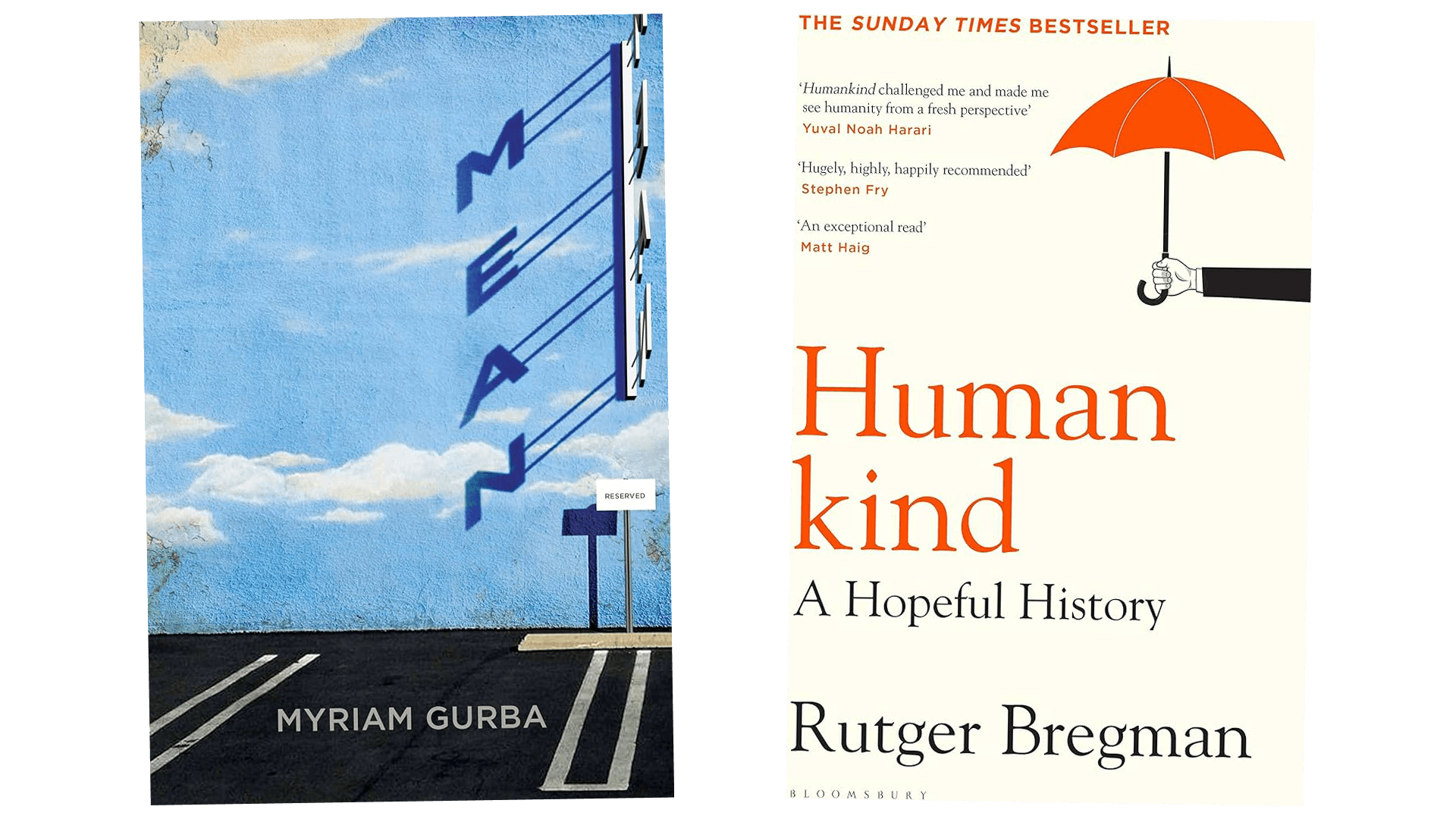
Mean by Myriam Gurba
Myriam Gurba’s darkly funny memoir about growing up queer and Chicana in California is full of unapologetic verve. Despite Gurba confronting trauma, violence, racism and misogyny head-on, she is nothing but strong and defiant throughout. Rather than dwelling in tragedy, she instead writes with a biting, acerbic confidence that often slips into brilliant comedy. She prompts us to consider how a certain kind of bracing ‘meanness’ can become a source of strength, self-expression, sharp observation and a means to wield her voice. It’s a powerful read that will resonate with anyone seeking connection and cultivating resilience.
Humankind: A Hopeful History by Rutger Bregman
Sometimes, you just need a reminder that humans aren’t all bad. Rutger Bregman is your remedy in this optimistic book that rewrites history with a positive spin. Bregman challenges the notion that humans are inherently selfish and sets out a manifesto for cooperation and collaboration between human beings, rather than competition. The focus on communal spirit and selflessness makes for invigorating reading: a welcome book in our current times.
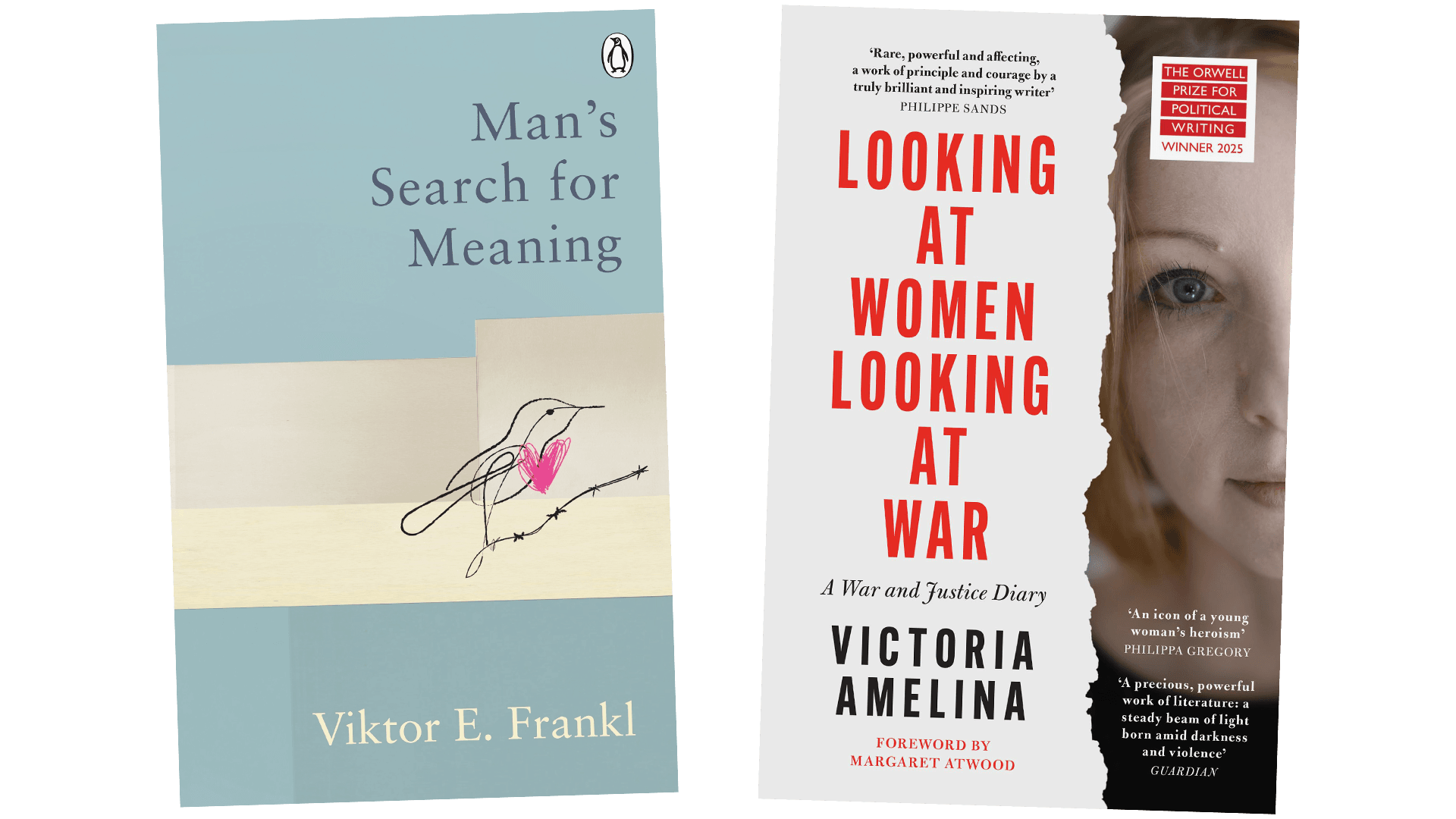
Man’s Search For Meaning by Viktor E Frankl
Viktor E Frankl’s tale of finding hope and purpose after experiencing extreme suffering is an incredible feat of personhood and writing. Frankl believes that even in the hellish conditions of a concentration camp, there is meaning and hope to be found. He contends that finding this purpose acts as the driving force to enable us to live on, even as cruelty is endured and everything seems dire. It’s simultaneously devastating and heartening, and a reminder of humanity’s ability to find hope in even the darkest corners of the world.
Looking At Women Looking At War by Victoria Amelina
The manuscript of this book was left unfinished when its author, Victoria Amelina, was tragically killed in an airstrike in the eastern Ukrainian city of Kramatorsk. Posthumously published in 2024 through the efforts of her colleagues and friends, it foregrounds Ukrainian women’s voices to document the courage, humanity and collective memory experienced during the conflict by its writers, volunteers, photographers and journalists. It’s an incredible, polyphonic depiction of Ukraine, and a bitter-sweet reminder of legacies able to live on through writing.
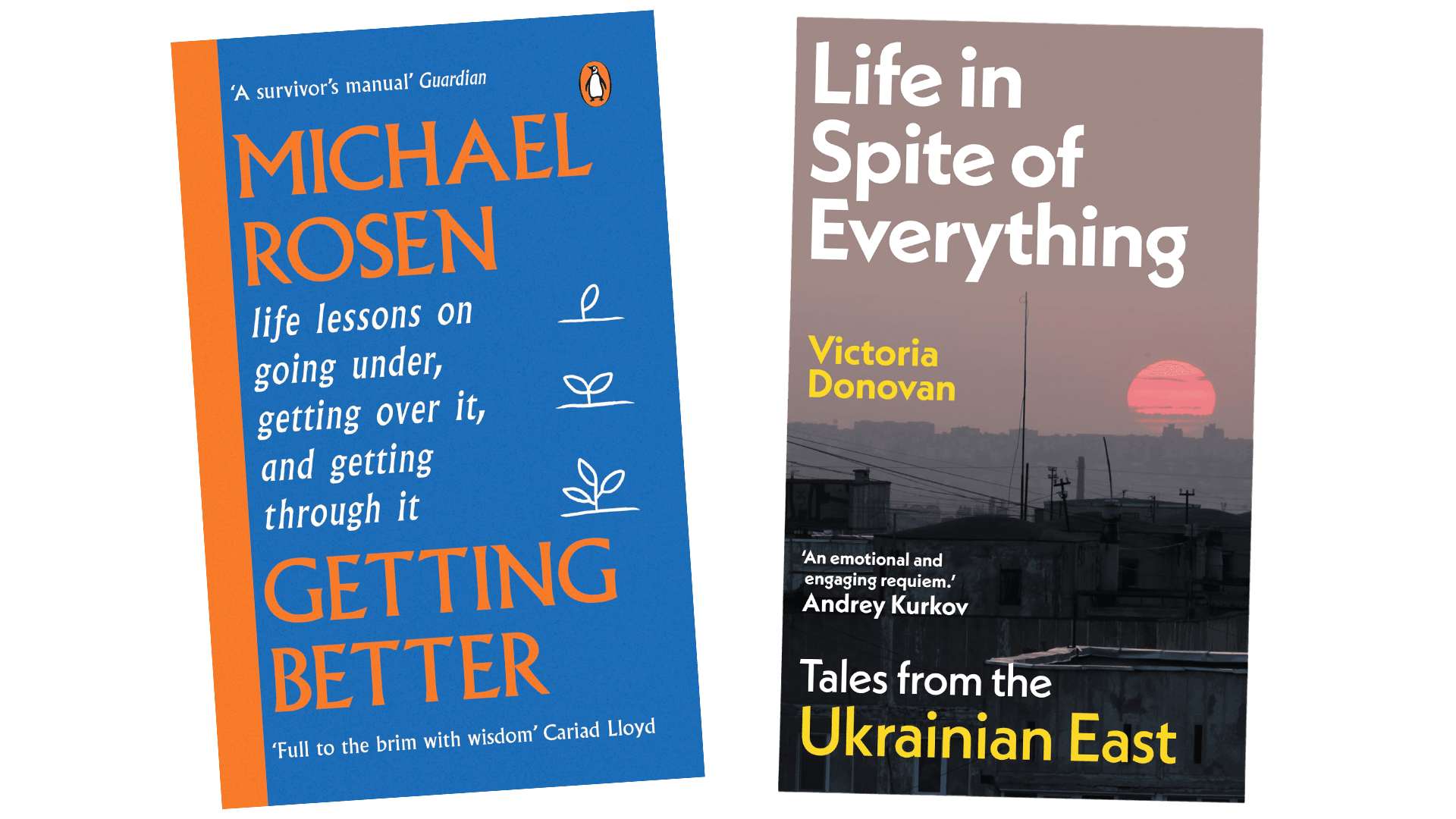
Getting Better by Michael Rosen
When Michael Rosen caught Covid in 2020, he was rushed to hospital and spent 40 days in a coma. His brush with death prompted him to write this memoir. The author behind the modern children’s classic We’re Going On A Bear Hunt brings his characteristic tongue-in-cheek tagline to this memoir: “life lessons on going under, getting over it, and getting through it.” Combining how he overcame the tragedy of the loss of his son, his own debilitating chronic illness and his near-death experience, Getter Better is an unconventional self-help manual that blends the bleakness of Rosen’s experiences with his characteristic humour to look toward a hopeful future.
Life In Spite Of Everything by Victoria Donovan
Taking inspiration for its title from Victor E Frankl’s Yes To Life: In Spite Of Everything, Victoria Donovan tells the stirring tales of civilians and workers continuing on despite war raging around them in the Ukrainian East. The region of Donbas itself has a rich industrial history, as well as archaeological sites and stunning nature reserves. Now a site of devastation, the book shares the lives of everyone from railway workers to artists to young people growing up amid destruction. Derived from over a decade of boots-on-the-ground journalism, Donovan allows us to see the region of Donbas from the inside, centralising the memories and lived realities of its inhabitants, and reminds us that life can and must continue, in spite of it all.
Looking for more literary escapism? Find books with a happy ending here, light-hearted reads here, and ones guaranteed to bring a dopamine hit here.