Rising up on the eastern bank of London’s River Lea, a series of heavyweight new cultural institutions have been remapping this former industrial corner of the capital as the legacy of the 2012 Olympic Games finally takes root. Alongside landmarks including the Olympic Stadium, Anish Kapoor’s looming sculpture-meets-slide and the new Sadler's Wells East dance theatre, one of the most dramatic additions to the skyline comes in the angular form of the V&A East: the Victoria & Albert Museum’s newest outpost, which launches this month.
Alongside a permanent collection spotlighting themes including identity, social justice and environmental action, the V&A East’s inaugural display does just that: a landmark exhibition charting the origins and evolution of Black British music, and its lasting impact on culture.
Told though a compelling blend of art and artefacts, interwoven with audio-visuals and a stirring soundtrack, The Music Is Black: A British Story, celebrates key pioneers, communities and cultural moments – from lovers rock and 2-tone to jungle, garage and grime, capturing their energy and creativity, while emphasising the ongoing legacy of a slave trade that endured over four centuries.

“The exhibition acknowledges larger histories and deeper truths; of the violent cross-continental displacement that created what constitutes the African diaspora,” says curator Jacqueline Springer, “as well as the retention of traditions and cultural practices that form the sonic building blocks of the Black music we listen to today.”
Unfolding across four chapters, the exhibition traces the roots of African origins of Black music, exploring the impact of jazz and reggae, before zeroing in on the subcultures that define Black British music. “There’s been a great deal of political and cultural interrogation in this exhibition,” says Jacqueline. “The use of ‘Black’ to prefix the word ‘music’ is both an accepted and resented form of reference – Black music describes African culture and musical practices through dissent; practices that survived. As such, Black music is global proof of resilience.”
Here, we explore five narratives that bring the exhibition’s powerful story to life.
Fashion
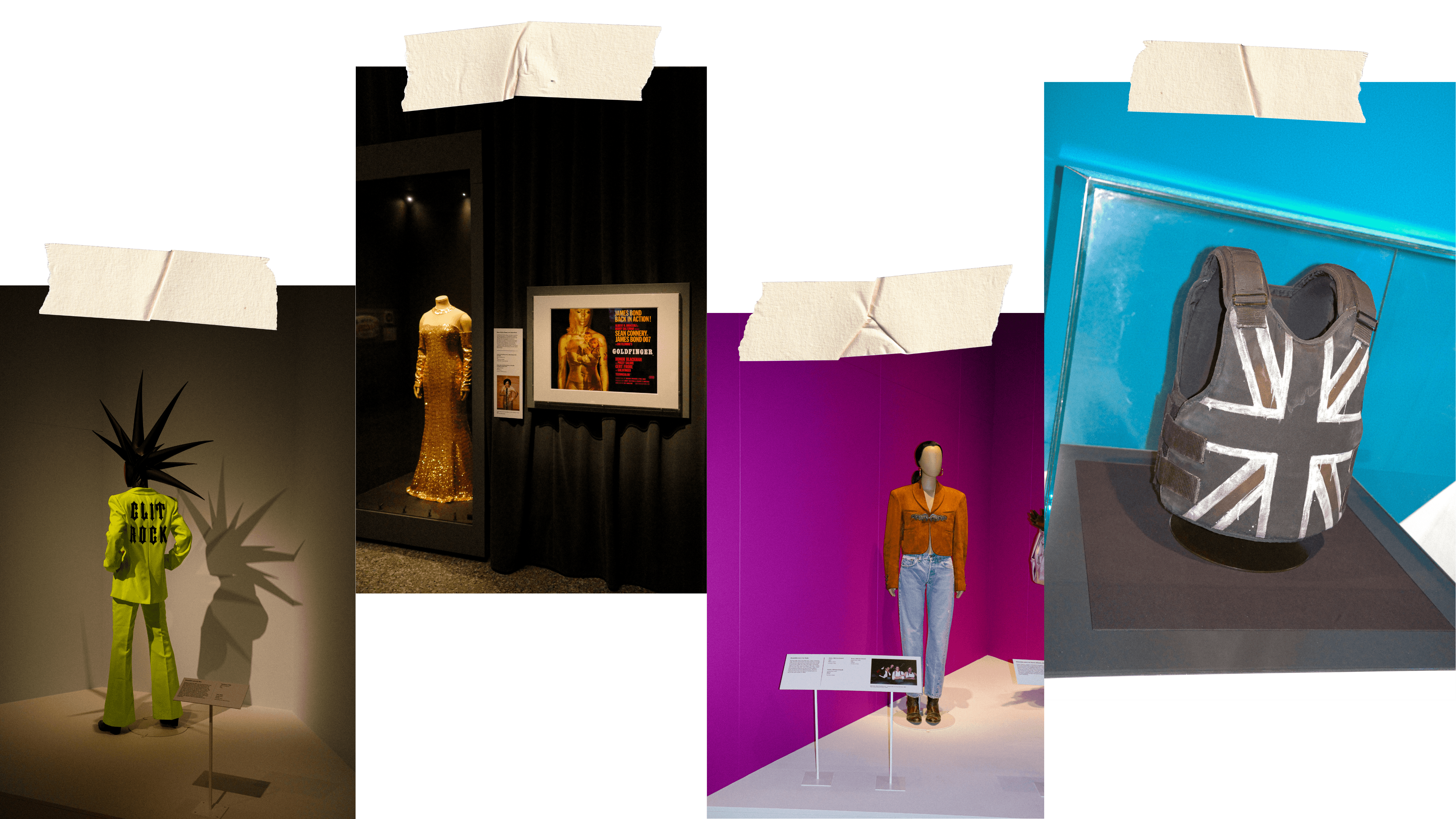
Stormzy’s headline slot on Glastonbury’s Pyramid stage in 2019 – described as a “victory lap” for Black British culture, as he became both the first Black British artist and grime artist to do so – was as memorable for a set derived from breakthrough album Gang Signs & Prayer as the now-iconic Union Jack stab vest he wore onstage, designed by Banksy. Costume is a strong suit throughout the show, with (notably) Black-skinned mannequins dressed in clothing from artists that defined each era of music. Highlights include the military jackets of Black band leaders at the turn of the 20th century, the smart tailoring and pork pie hats of the 2-tone era and the sequinned stagewear of DJ Paulette (the first Black woman to play Manchester’s 1980s dance haven the Haçienda). Not to mention the the bowler hat worn by Megaman, founder of So Solid Crew (the collective who helped drive the shift from UK garage to grime in the early 2000s) and the golden gown worn by Dame Shirley Bassey (the first Black artist to record a James Bond theme) during her tribute to the film series at the 2013 Academy Awards.
Photography
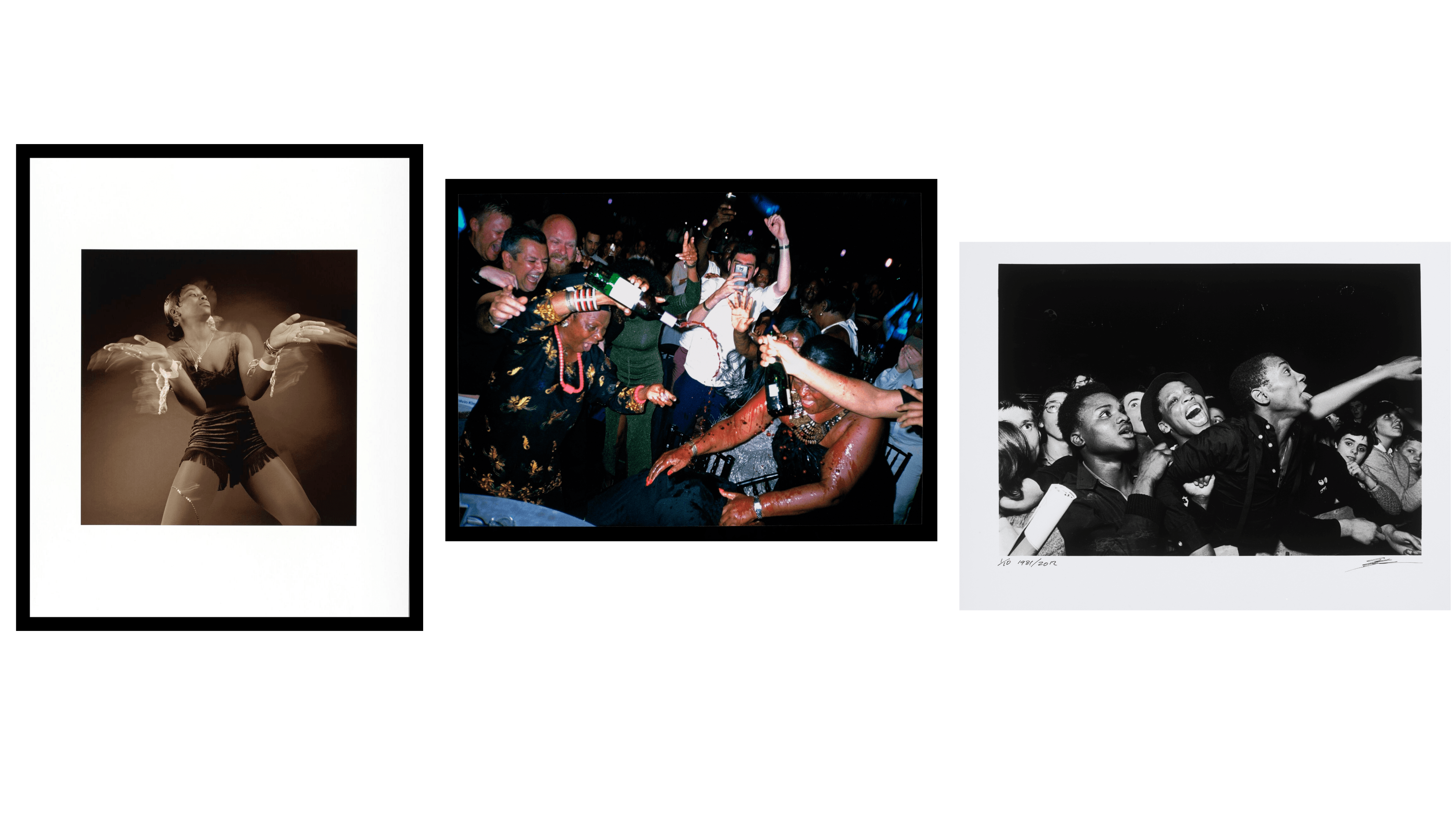
From candid shots of the race equality marches that preceded Notting Hill Carnival to glitzy revellers shot at later events, a strong photography strand – including work by the likes of Dennis Morris and Jennie Baptiste – captures telling moments in social history. There’s striking portraits of ’90s and ’00s pioneers including Tricky and Dizzee Rascal, backflipping northern soul dancers at Wigan Casino (spotlighting a movement that emerged from the underground rhythm and soul scene in the 1970s) and a cleverly curated triptych where blues, gospel and rock and roll pioneers Sister Rosetta Tharpe and Big Mama Thornton sit alongside Elvis Presley, nodding to the debt the latter owed the former in his music. The Music Is Black also reveals lesser-known (and equally fascinating) narratives, such as photography from candomblé ceremonies of enslaved Africans in Brazil, which feature samba music that later influenced, according to Jacqueline, the rise of buoyant 1980s genre Britfunk.
Soundtrack
A standout element of The Music Is Black is, of course, the music. Spanning more than 100 tracks, the soundtrack is delivered via headphones that accompany visitors throughout their journey, triggered by location, which helps bring narratives to life. Stand in front of some of the earlier exhibits and you might hear the earliest known musical notations of African music outside of Africa, reinterpreted by artist Bankey Ojo. As you continue, you might catch the sound of calypso, courtesy of Windrush passenger Mona Baptiste, Janet Kay’s lovers rock anthem Silly Games, Massive Attack’s Unfinished Sympathy or, when stood in front of his Glastonbury stage look, Stormzy’s Big For Your Boots – all of which gives plenty of reason to linger.
Instruments
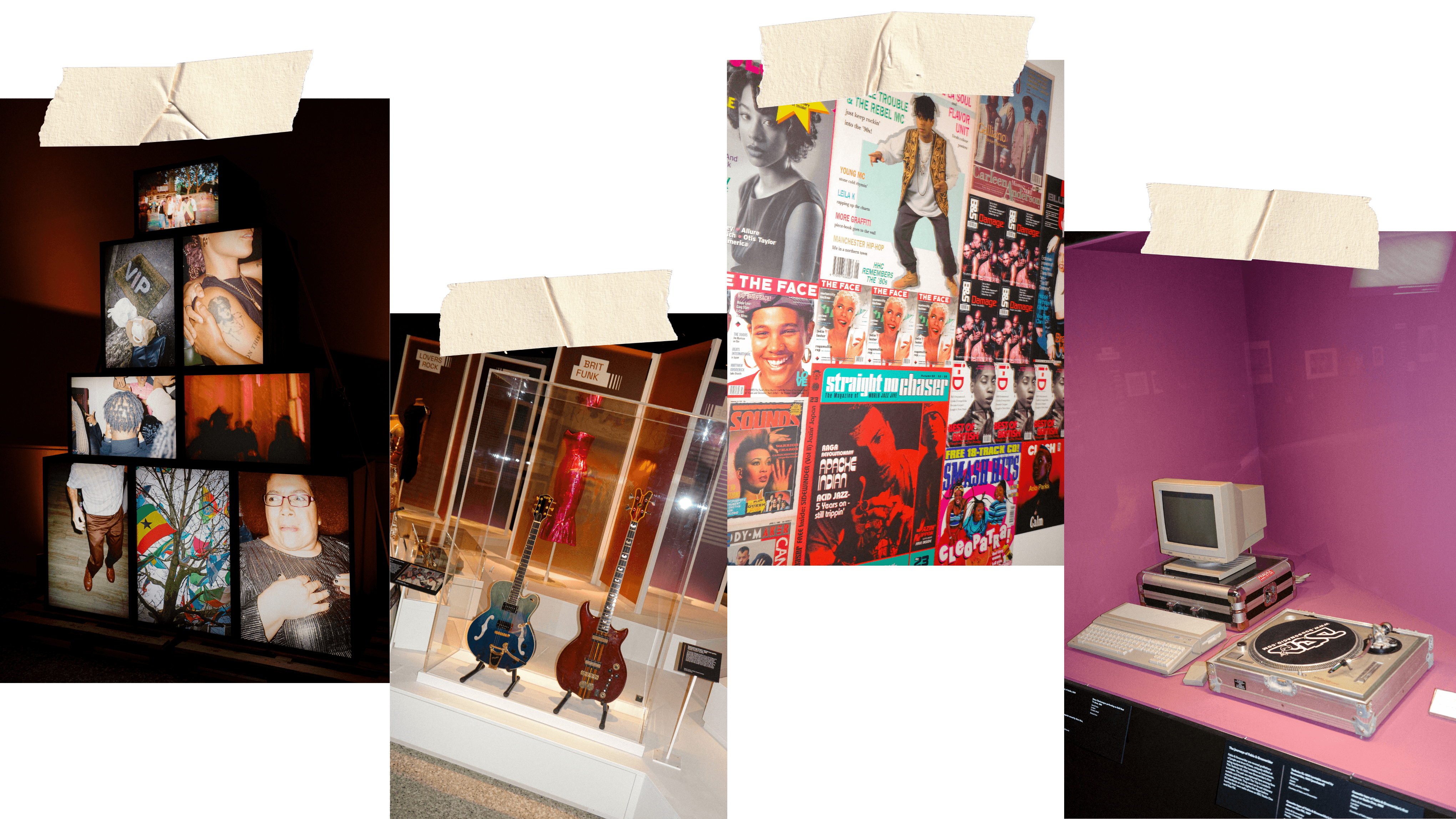
A scattering of instruments and equipment highlight the artistry and innovation underpinning Black British music, from bowed instruments made by gourds – among the oldest known stringed instruments – to a Super Nintendo accompanied by a copy of Mario Paint, which artist and Boy Better Know cofounder Jme used for early music experiments. Elsewhere, look out for the batons of acclaimed 20th conductor Samuel Coleridge-Taylor, who wove influences of traditional African music into his classical compositions, an acoustic guitar donated by Joan Armatrading, a steel drum pan from Russ Henderson – who became one of Notting Hill carnival’s founding fathers – and a pre-amplifier from Jamaican sound engineer Percival Miller, whose technical skills shaped British soundsystem culture.
Artefacts
The sobering sight of a signed royal charter legalising slavery is among the early exhibits here, reinforcing the brutal oppression at the heart of the story of Black music. The rise of mass media, which saw ideas and sounds spread across both diaspora and colonies, is charted from the introduction of the gramophone to a wall of magazine covers, championing the figures at the heart of contemporary Black British music, from rapper Monie Love for The Face to M People’s Heather Small for i-D. Elsewhere, there are vinyl sleeves, club night flyers and the signage for legendary venues such as Blue Note (Hoxton Square’s hub for acid jazz and drum and bass in London), while a billboard for Dizzee Rascal’s Showtime album subverts the authority of the Met Police by mimicking their messaging (“Did you see or hear ‘Stand Up Tall’?”) – a reminder of the ongoing oppression faced by Black communities today.
The Music Is Black: A British Story is at the V&A East until 3 January 2027